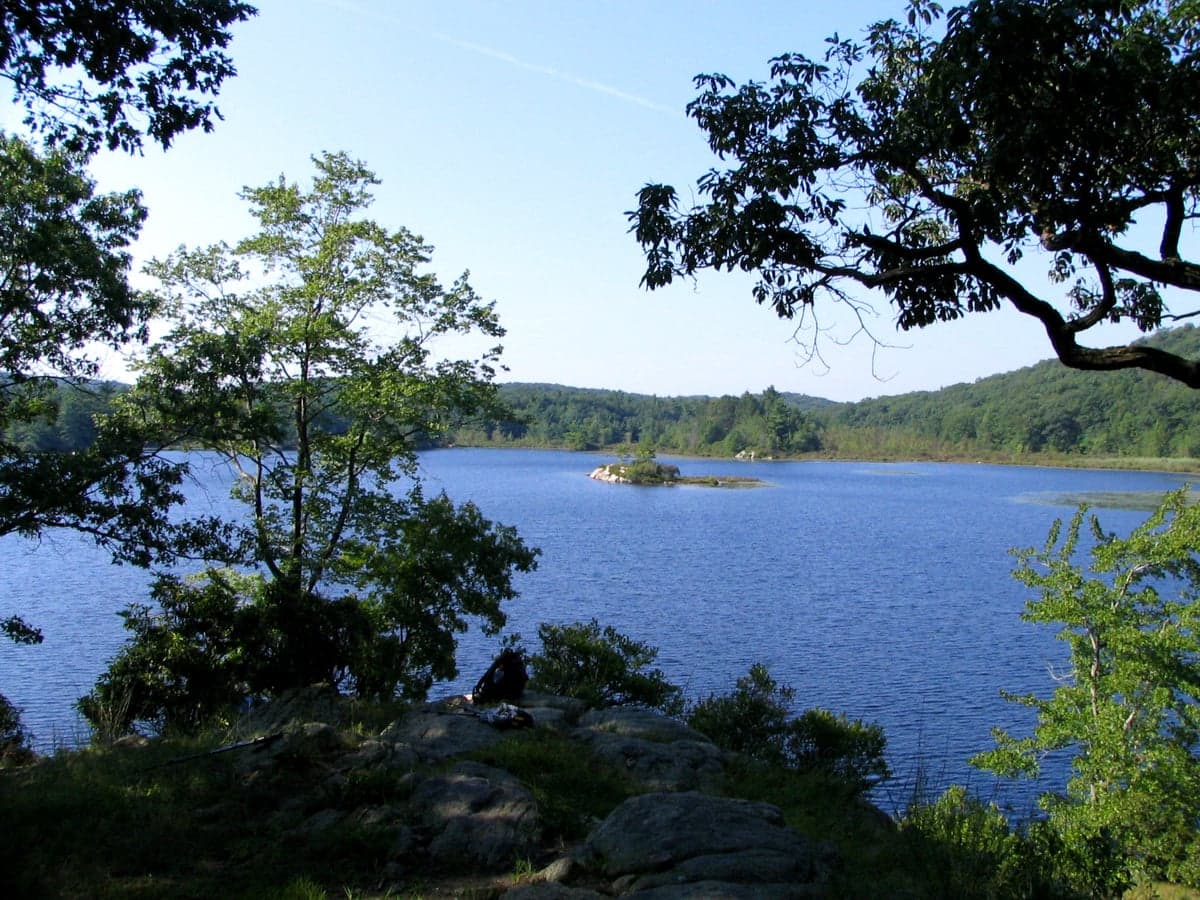
Photo: Wikipedia
Personal Sovereignty in Orange County
Moderate friction. Expect trade-offs in some aspect of personal liberty and independence.
What does Personal Sovereignty tell us?
Personal Sovereignty measures your capacity for self-reliance and independence with minimal government friction. Higher scores mean fewer barriers between you and the way you want to live... but it assumes you have the space you need and good neighbors.
What does this tell us?
Personal Sovereignty measures your capacity for self-reliance and independence with minimal government friction. Higher scores mean fewer barriers between you and the way you want to live... but it assumes you have the space you need and good neighbors.
State Policy
Energy independence: Importer (12% of energy produced in-state)
Personal Liberty
Homesteading

Personal Liberty Analysis
Orange County, New York offers a nuanced personal sovereignty environment that balances New York State’s progressive regulatory framework with a deeply rooted rural and suburban culture of self-reliance. While the state imposes some of the highest taxes and strictest gun laws in the nation, Orange County’s local governance, geography, and community norms create pockets where autonomy—whether through homesteading, property rights, or personal liberties—is more attainable than in downstate urban centers. For individuals and families weighing relocation, the key is understanding where within the county these freedoms are most accessible, as towns like Warwick, Goshen, and Port Jervis differ markedly from the more developed areas near Middletown and Newburgh.
Tax burden and regulatory posture in Orange County compared to downstate
Orange County’s tax burden is high by national standards but moderate relative to New York City and Westchester County. The combined state and local income tax rate for most residents falls between 6% and 8%, while property taxes average roughly 2.5% of home value—among the highest in the U.S. However, within Orange County, towns like Warwick and Goshen offer lower effective property tax rates than the county average, thanks to more conservative local budgeting and less reliance on municipal services. The regulatory posture is mixed: New York State mandates strict environmental review for new construction, but Orange County’s planning boards in rural townships like Deerpark and Greenville are generally more permissive than those in the Hudson Valley’s more densely populated corridors. Business licensing and zoning are handled at the town level, meaning a home-based enterprise in the Town of Wallkill faces fewer hurdles than one in the City of Newburgh. Overall, the tax and regulatory environment is heavy relative to Sun Belt states, but for those committed to the Northeast, Orange County’s lower-density towns offer a meaningful buffer.
Self-defense and gun law specifics in Orange County
New York’s gun laws are among the strictest in the country, and Orange County residents must comply with the state’s SAFE Act, which bans certain semi-automatic firearms and requires universal background checks for private sales. The county’s gun culture, however, is robust: the Orange County Pistol License Office in Goshen processes permits for concealed carry, which became shall-issue after the 2022 Supreme Court decision in NYSRPA v. Bruen, though the state’s subsequent Concealed Carry Improvement Act added restrictions on sensitive locations. In practice, towns like Port Jervis and Middletown have active shooting ranges and gun clubs, and local law enforcement in rural areas like the Town of Mount Hope is generally supportive of lawful gun ownership. Self-defense law in New York does not recognize a duty to retreat in one’s home (the Castle Doctrine), but outside the home, a duty to retreat applies before using deadly force. For residents prioritizing firearm access, Orange County is more accommodating than New York City or Long Island, but still far more restrictive than states like Texas or Florida. The key takeaway: legal gun ownership is possible, but requires navigating a complex permitting process and strict storage laws.
Self-reliance and homesteading viability: lot sizes, zoning, and off-grid feasibility
Homesteading viability in Orange County varies dramatically by location. In the western towns of Warwick, Greenville, and Deerpark, zoning allows for agricultural uses, keeping of livestock, and larger lot sizes—often 2 to 10 acres—without the restrictive covenants found in suburban subdivisions. The Town of Warwick, for example, permits up to two horses per acre on parcels over two acres, and the Town of Goshen allows backyard chickens and beekeeping by right. Off-grid living is legally challenging: New York State requires connection to the electrical grid for new construction in most areas, and solar panels must meet net-metering standards. Rainwater collection is legal for non-potable uses, but well water and septic systems are standard. Composting toilets are permitted under state health codes, but must be certified. The Town of Mount Hope and the Village of Florida have more flexible zoning for alternative housing like tiny homes and yurts, though building codes still apply. For serious homesteaders, the western half of Orange County—particularly the rural stretches of Port Jervis and the Town of Deerpark—offers the best balance of land affordability and regulatory leniency, with raw land prices around $15,000–$25,000 per acre, compared to $50,000+ near the Hudson River.
Personal liberties: parental rights, medical autonomy, speech, and property
Parental rights in Orange County are generally respected, with school districts like Warwick Valley and Minisink Valley offering conservative-leaning school boards that have resisted certain state mandates on curriculum and health policies. New York State mandates comprehensive sex education and LGBTQ-inclusive materials, but local districts have some discretion in implementation. Medical autonomy is limited: New York has strict vaccine mandates for school attendance and healthcare workers, and the state’s emergency powers during public health crises have been a flashpoint. However, Orange County’s rural towns have seen active parental-rights groups advocating for opt-out provisions. Free speech and assembly are protected under the First Amendment, and the county has a history of robust political activism, from gun rights rallies in Goshen to anti-lockdown protests in Middletown. Property rights are strong in practice: while the state’s environmental regulations can delay development, Orange County’s towns generally respect private property, with few rent control or land-use restrictions beyond basic zoning. The Town of Wallkill, for instance, has no rent stabilization, and the City of Newburgh’s rental registry is less onerous than similar programs in Albany or Buffalo. For families seeking to maintain control over their children’s education and healthcare decisions, Orange County’s more conservative towns offer a more favorable environment than the state’s urban centers.
Overall, Orange County presents a mixed sovereignty profile: it is not a low-tax, low-regulation haven, but within the constraints of New York State, it offers meaningful pockets of personal freedom. The western towns—Warwick, Goshen, Deerpark, and Port Jervis—provide the strongest environment for self-reliance, with larger lots, permissive zoning, and a gun-friendly culture. The eastern and central areas, including Newburgh and Middletown, are more urbanized and subject to tighter local controls. For a relocation-minded individual or family who values personal sovereignty but must remain in the Northeast for work or family reasons, Orange County’s rural and exurban communities represent a pragmatic compromise—offering more autonomy than the downstate suburbs while still requiring compliance with New York’s overarching state-level restrictions. The decision ultimately hinges on which town you choose, as the county’s internal diversity in regulatory posture and community norms is its defining feature.

* Values derived from national, state, county, city and local statistics and may differ in a specific area. Last updated: 2026-06-17T01:57:27.000Z
Narrative content on this page is AI-generated and may contain mistakes. Verify any details that matter before acting on them.
ReloMaps may earn a commission from affiliate links at no extra cost to you.

