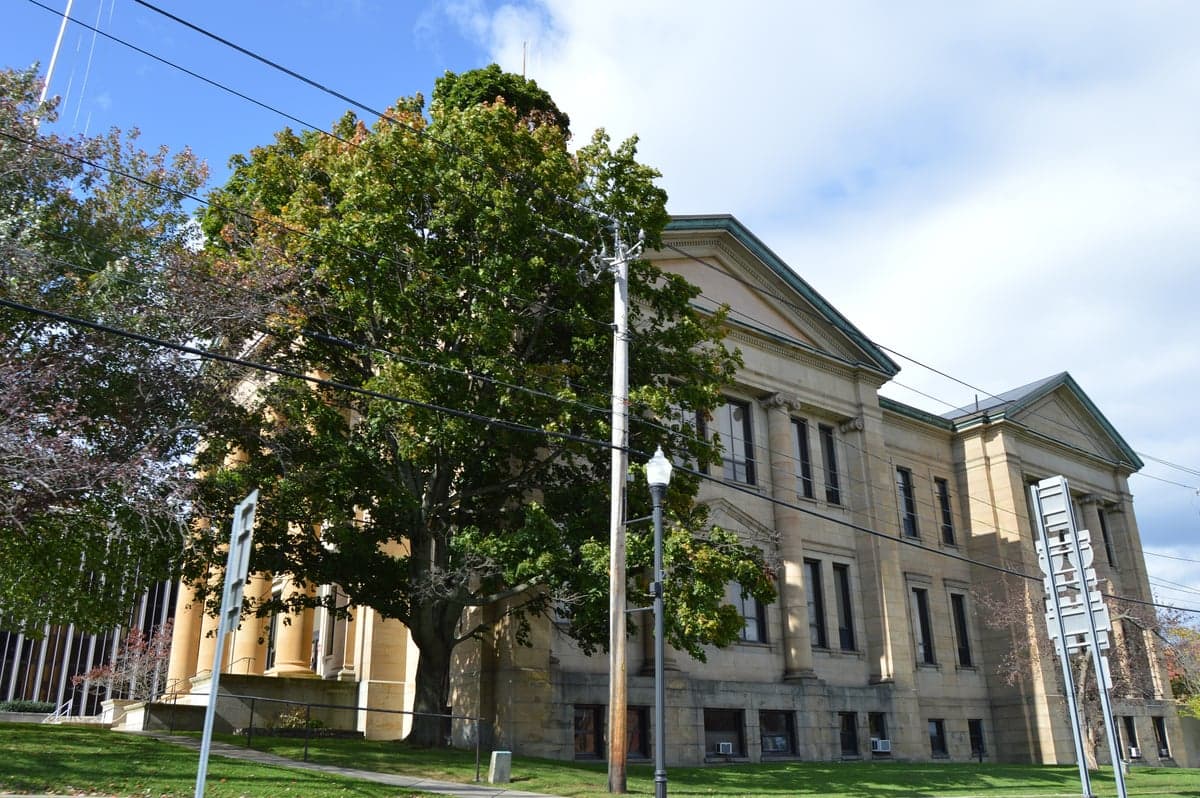
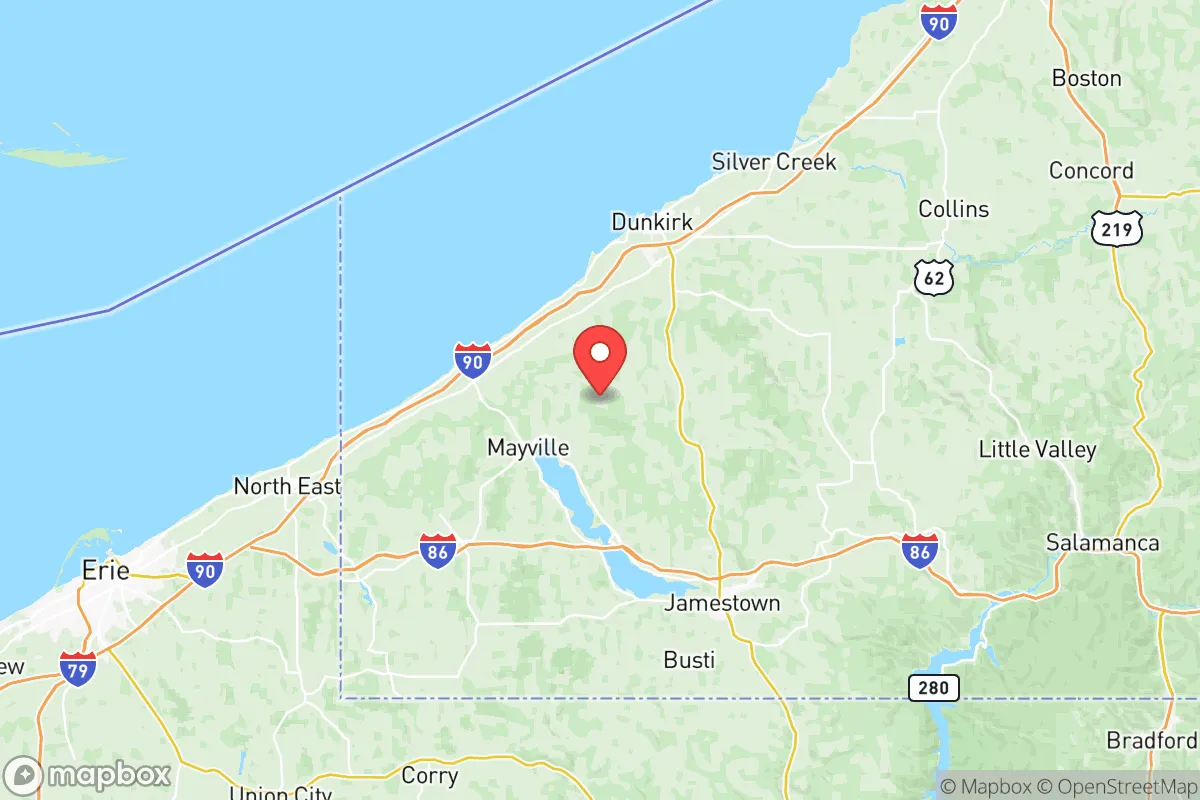
Photo: Wikipedia
Personal Sovereignty in Chautauqua County
Moderate friction. Expect trade-offs in some aspect of personal liberty and independence.
What does Personal Sovereignty tell us?
Personal Sovereignty measures your capacity for self-reliance and independence with minimal government friction. Higher scores mean fewer barriers between you and the way you want to live... but it assumes you have the space you need and good neighbors.
What does this tell us?
Personal Sovereignty measures your capacity for self-reliance and independence with minimal government friction. Higher scores mean fewer barriers between you and the way you want to live... but it assumes you have the space you need and good neighbors.
State Policy
Energy independence: Importer (12% of energy produced in-state)
Personal Liberty
Homesteading

Personal Liberty Analysis
Chautauqua County, New York, offers a notably higher degree of personal sovereignty than much of the downstate region, but it operates within the constraints of a state with some of the nation's most assertive regulatory and tax policies. For individuals and families prioritizing autonomy, the county represents a pragmatic trade-off: you gain significant local freedom, lower costs, and a self-reliant culture, but you must navigate New York's overarching legal framework on firearms, taxes, and medical choice. The key is understanding where the county's local character pushes back against state-level mandates.
Tax burden and regulatory posture in Chautauqua County
New York State imposes a high overall tax burden, but Chautauqua County's local property tax rates are a critical mitigating factor. The county's median effective property tax rate hovers around 2.1% of home value, which is high by national standards but significantly lower than in downstate suburbs like Westchester or Nassau County. Towns like Chautauqua and Ellery have slightly lower rates due to less municipal infrastructure, while Jamestown and Dunkirk carry higher city-level levies. The state income tax is progressive, topping out at 10.9% for high earners, but the county's median household income (~$52,000) keeps most residents in the lower brackets. Regulatory posture is mixed: the county's planning boards are generally pragmatic, especially in rural townships like Charlotte or Stockton, where zoning is minimal and building permits are processed quickly. However, state-level environmental regulations (e.g., the State Environmental Quality Review Act, or SEQRA) can add months to larger projects, even in the county's most remote areas. The overall message: local government is light-touch, but Albany's reach is long.
Self-defense and gun law specifics in a New York context
New York's gun laws are among the strictest in the nation, and Chautauqua County residents must comply fully. The 2022 Concealed Carry Improvement Act (CCIA) requires a permit for any public carry, mandates 16 hours of training, and designates "sensitive locations" (including many businesses unless they post a sign opting in) where firearms are banned. However, the county's culture is markedly pro-Second Amendment. The Chautauqua County Sheriff's Office, led by Sheriff James Quattrone, has publicly stated it will not enforce certain aspects of the CCIA it deems unconstitutional, and permit issuance is routine for qualified applicants. In rural towns like Cherry Creek and Villenova, open carry on private property is common, and shooting ranges are plentiful. The practical reality: owning firearms for home defense and hunting is straightforward, but carrying in public requires navigating a complex permitting system. The county's gun-friendly ethos is a buffer against state overreach, but it is not a legal shield. For those unwilling to comply with state law, neighboring Pennsylvania (a 30-minute drive from Bemus Point) offers a stark contrast in regulatory environment.
Self-reliance and homesteading viability across the county
Chautauqua County is one of the most homestead-friendly areas in New York State. Minimum lot sizes in unzoned townships like Harmony and North Harmony are often just one acre, and many parcels of 5-10 acres are available for under $50,000. Off-grid living is feasible but not frictionless: the state requires a building permit for any permanent structure, and the New York State Energy Research and Development Authority (NYSERDA) has strict standards for solar and wind installations. However, many residents in Poland and Kiantone successfully use composting toilets, rainwater collection, and wood heat without significant interference. The county's agricultural districts (covering over 60% of land) allow for farm stands, livestock, and small-scale processing with minimal local oversight. The biggest regulatory hurdle is the state's building code, which mandates insulation and septic standards that can raise costs for a DIY cabin. Still, compared to downstate or even the Hudson Valley, the county offers a realistic path to semi-self-sufficiency. The local culture of "make do and mend" is strong, with active grange halls and cooperative extension services.
Personal liberties: parental rights, medical autonomy, speech, and property
Parental rights are robust in Chautauqua County. The local school boards in districts like Chautauqua Lake Central and Frewsburg Central are responsive to parent input, and homeschooling is common with minimal state interference (a simple notice of intent and annual assessment). Medical autonomy is more constrained: New York's vaccine mandates for school attendance and healthcare workers remain in effect, and the state's telehealth laws restrict out-of-state providers. However, the county has a strong network of independent practitioners, including chiropractors and naturopaths, particularly in Mayville. Free speech is protected under the First Amendment, and the county's public forums (town board meetings, county legislature sessions) are generally open and civil. Property rights are the area's strongest liberty: zoning is minimal in rural towns, and there is no county-wide rental registry or short-term rental ban, unlike in many New York vacation spots. The county's right-to-farm law protects agricultural operations from nuisance lawsuits, a key advantage for homesteaders. The main limitation is the state's property tax cap (2% annual increase limit on levies), which constrains local government but also protects property owners from sudden spikes.
Overall, Chautauqua County offers a level of personal sovereignty that is rare within New York State but still falls short of the autonomy found in states like Texas, Florida, or New Hampshire. The county's local culture, low population density, and pragmatic governance create a buffer against many of the state's more intrusive policies, particularly on firearms and property use. For a relocation-minded individual or family who values self-reliance and is willing to navigate New York's state-level constraints, the county provides a viable middle ground: genuine local freedom within a high-regulation state. The trade-off is clear: you get affordable land, a homestead-friendly environment, and a community that respects personal choice, but you must accept the state's tax burden and legal framework as the price of admission. For those who find that balance acceptable, Chautauqua County is one of the most sovereignty-friendly options in the Northeast.

* Values derived from national, state, county, city and local statistics and may differ in a specific area. Last updated: 2026-07-16T05:23:35.000Z
Narrative content on this page is AI-generated and may contain mistakes. Verify any details that matter before acting on them.
ReloMaps may earn a commission from affiliate links at no extra cost to you.

