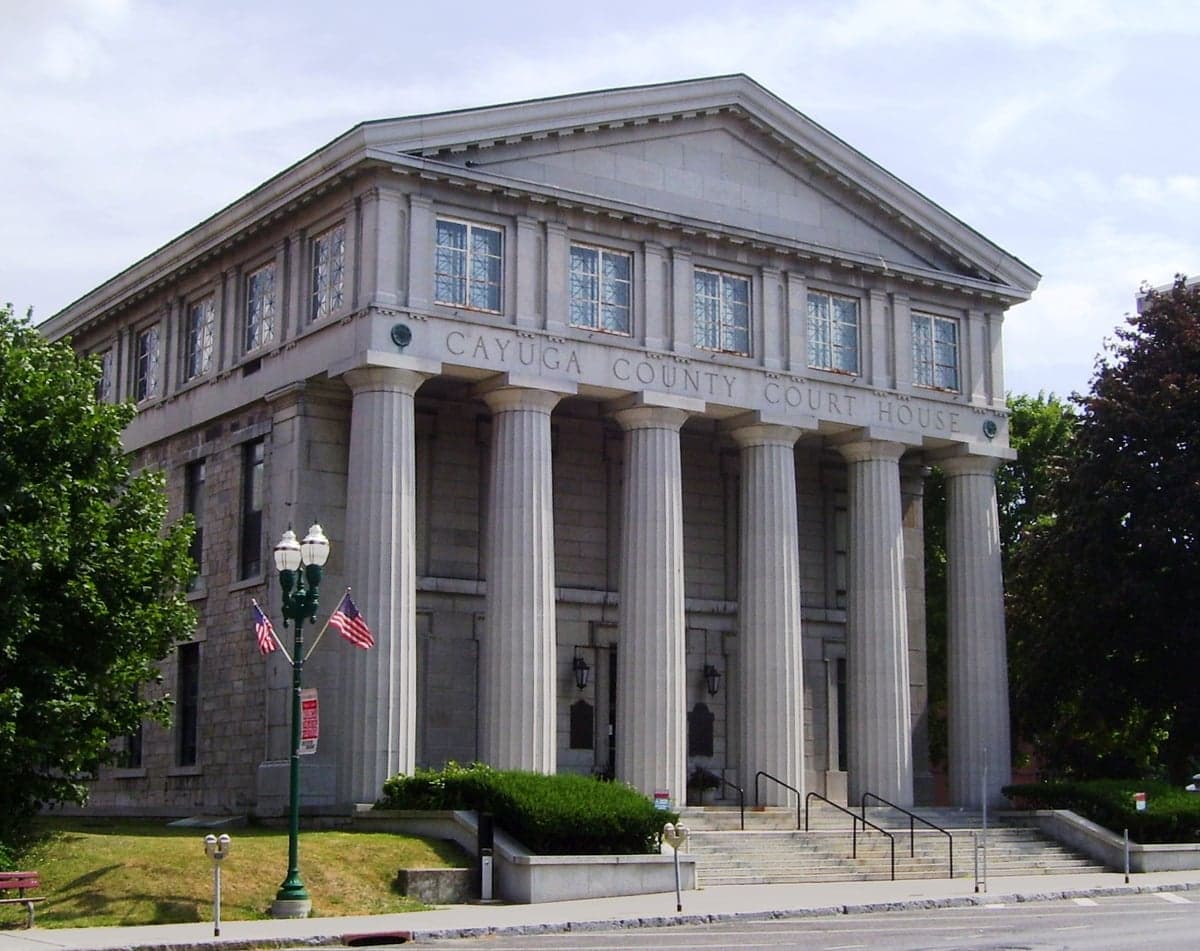
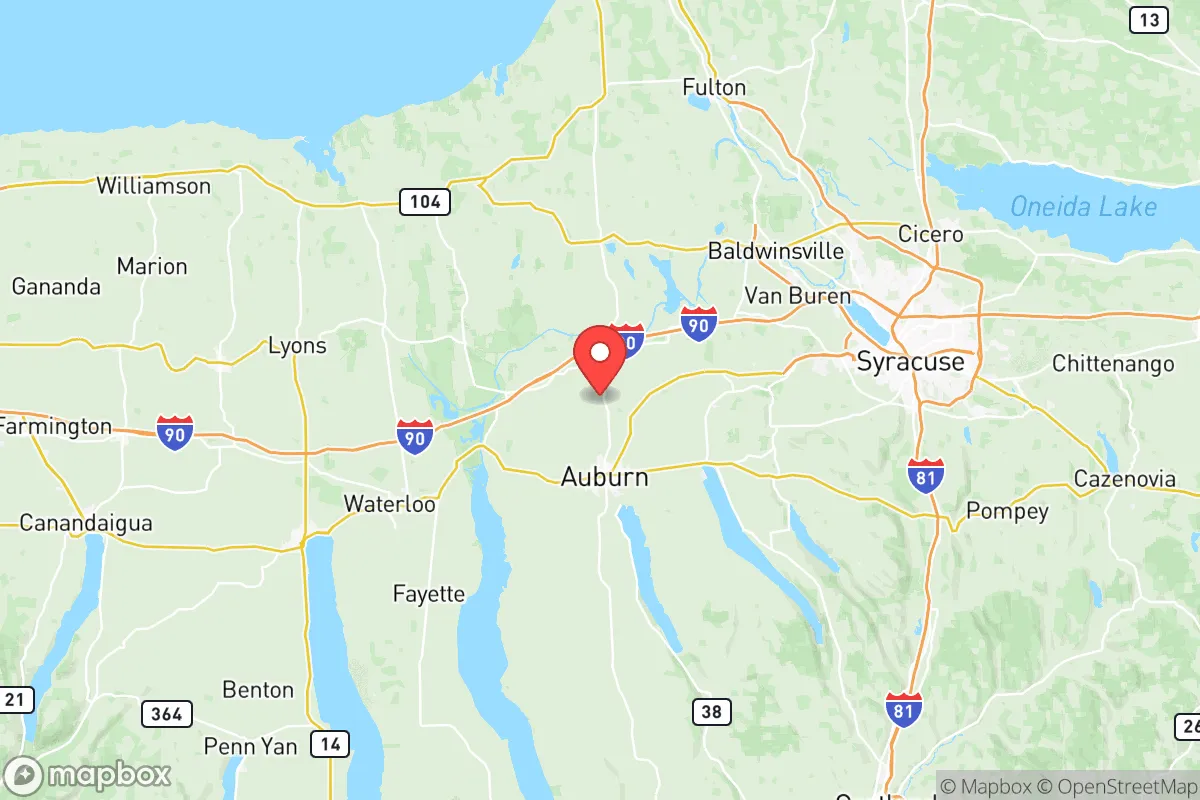
Photo: Wikipedia
Quality of Life in Cayuga County
A livable area that tracks near national norms for affordability, walkability, and neighborhood health.
What does Quality of Life tell us?
Quality of Life measures an area by evaluating factors like cost of living, nearby amenities, country club access, airport proximity, socioeconomic signals and neighborhood character. For large states, this is a general average — quality of life can vary dramatically between metro areas, suburbs, and rural communities within the same state.
What does this tell us?
Quality of Life measures an area by evaluating factors like cost of living, nearby amenities, country club access, airport proximity, socioeconomic signals and neighborhood character. For large states, this is a general average — quality of life can vary dramatically between metro areas, suburbs, and rural communities within the same state.
Cost of Living
31% below national average
142%
The Real Cost of Living in Cayuga County for 2026
| Tier | Individual | Family (4) |
|---|---|---|
| Survival | $14k | $27k |
| Comfortable | $32k | $47k |
| Luxury | $114k+ | $176k+ |
| Elite (Top 5%) | $134k+ | $207k+ |
Quality-of-Life Analysis
Cayuga County offers a genuine spectrum of living environments, from the compact urban feel of its largest settlement to deep agricultural countryside, all within a county where the cost of living index sits at 69—well below the national average of 100. The county attracts a mix of state employees, small business owners, farmers, and remote workers who value affordability and access to the Finger Lakes region. The character of daily life shifts noticeably between the county seat, the lakeside villages, and the quiet rural hamlets, giving prospective residents a real choice in lifestyle without leaving the county.
Largest town(s) & population centers
Auburn, the county seat and largest city, anchors the western side of the county with a population of roughly 26,000. Daily life here centers on a walkable downtown along Genesee Street, with local restaurants, the Auburn Public Theater, and the historic Seward House Museum. The city is a hub for county government, healthcare at Auburn Community Hospital, and manufacturing employers like ITT Enidine. Housing stock is older and dense, with median home values around $164,200 and median rents at $895—making it one of the most affordable county seats in New York. The average commute in the county is just under 23 minutes, and Auburn residents often work locally or commute east to Syracuse (about 30 minutes) or west to Seneca Falls. Weedsport, a village of about 1,800 along the Erie Canal and the Thruway corridor, functions as a secondary commercial node with quick highway access and a strong local school district.
Smaller towns & rural pockets
East of Auburn, the town of Owasco wraps around the northern end of Owasco Lake, offering lakefront properties, parks, and a quieter, more seasonal lifestyle. Further south, the village of Moravia (pop. ~1,300) sits at the southern tip of Owasco Lake and serves as a gateway to Fillmore Glen State Park; it has a small but active downtown and a strong sense of community around the Moravia Central School District. On the county's eastern edge, Cato (pop. ~500) is a classic rural hamlet surrounded by farmland, with basic services and a long commute to Syracuse or Auburn for work. The unincorporated hamlet of Union Springs, on the northern tip of Cayuga Lake, is a quieter lakeside alternative with marinas and a slower pace. These areas lack the retail density of Auburn but offer space, lower property taxes, and direct access to the Finger Lakes trail system and waterways.
Cost & lifestyle range
The cost spread within Cayuga County is modest compared to metro areas, but real differences exist. Auburn and its immediate suburbs (like the town of Aurelius) represent the higher end of local housing costs, with some homes near Owasco Lake reaching $300,000–$500,000, though the county median remains low at $164,200. Renters in Auburn pay a median of $895, while rural rentals in towns like Venice or Ledyard can be found for $700–$800 but with fewer units available. The lowest-cost housing is typically in the most remote townships—Niles, Sempronius, and Summerhill—where older farmhouses and mobile homes on large lots sell for under $100,000. Amenities thin out accordingly: Auburn has grocery stores, a hospital, and retail; rural residents drive 15–25 minutes for those services. Property taxes in the county are moderate by New York standards, but vary by school district, with Auburn and Moravia districts carrying slightly higher rates than the more rural Cato-Meridian district.
People who value walkable streets, local government jobs, and cultural amenities gravitate to Auburn. Those seeking lake access, quiet roads, and a stronger connection to the outdoors tend toward the villages around Owasco and Cayuga Lakes. Remote workers and retirees on fixed incomes find the county's low cost of living and short commutes especially attractive. The county works best for residents who want New York State services and Finger Lakes recreation without the premium prices of Ithaca or Skaneateles.

Crime in Cayuga County
Crime rates similar to the national median for U.S. locations.
Violent CrimeViolent Crime Analysis
Property CrimeProperty Crime Analysis
Crime Analysis
Cayuga County, situated in the Finger Lakes region of New York, presents a mixed safety profile where crime rates generally fall below the national average but remain elevated compared to the safest rural counties in the state. The county's violent crime rate of 362.1 per 100,000 residents and property crime rate of 1,536.7 per 100,000 place it in a middle tier for Upstate New York, with significant variation between the urbanized northern towns and the more rural southern communities. Residents in areas like Auburn, the county seat, face higher risks than those in smaller villages such as Skaneateles or Moravia, where community policing and neighborhood watch programs are more prevalent.
Crime in context
Cayuga County's violent crime rate of 362.1 per 100,000 is notably lower than the national average of approximately 380 per 100,000 but sits above the New York state average of roughly 340 per 100,000 when excluding New York City. Property crime at 1,536.7 per 100,000 is significantly below the national figure of around 1,950 per 100,000, though it tracks closely with other rural Upstate counties. The county's location between Syracuse and Rochester means it experiences some spillover crime from those larger metro areas, particularly drug-related offenses and vehicle thefts. Auburn, the county's largest city, accounts for a disproportionate share of reported incidents, with its downtown corridor and areas near the New York State Correctional Facilities seeing higher concentrations of larceny and assault reports.
What residents experience
Daily life for most Cayuga County residents involves relatively low exposure to violent crime, with the majority of incidents concentrated in specific neighborhoods of Auburn and along the Route 5 corridor. Property crimes like burglary and theft are the most common concerns, particularly in summer months when tourist traffic increases around Owasco Lake and the Finger Lakes wineries. The progressive-leaning judicial system in Cayuga County, including the elected District Attorney's office and local judges, has drawn criticism from public safety advocates who argue that lenient sentencing and diversion programs for repeat offenders contribute to recidivism. In 2024, several high-profile cases involving reduced charges for drug-related burglaries in Auburn and Sennett frustrated residents who felt the justice system prioritized rehabilitation over accountability. This ideological approach, while well-intentioned, has led to concerns about criminals returning to the streets quickly, particularly in the county's more densely populated areas where property crime rates have remained stubbornly high despite overall declines in the region.
Neighborhood-level variation
Safety in Cayuga County varies dramatically by location. The village of Skaneateles consistently reports the lowest crime rates in the county, with violent incidents rare and property crime limited to occasional thefts from unlocked vehicles. Conversely, Auburn's zip codes 13021 and 13022 see the highest concentrations of both violent and property crime, with the area around Genesee Street and the State Street corridor accounting for a significant portion of police calls. Smaller communities like Cato, Port Byron, and Weedsport fall in the middle, with occasional burglaries and domestic incidents but generally safe environments. Residents in the southern towns of Moravia and Locke benefit from low population density and strong community ties, though the lack of a dedicated local police force in some hamlets means response times from the Sheriff's Office can be longer. For those considering relocation, Skaneateles and the lakefront communities offer the safest environments, while Auburn's outlying residential neighborhoods provide a balance of affordability and reasonable safety compared to the city center.
* Values derived from national, state, county, city and local statistics and may differ in a specific area. Last updated: 2026-07-01T22:47:56.000Z
Narrative content on this page is AI-generated and may contain mistakes. Verify any details that matter before acting on them.
ReloMaps may earn a commission from affiliate links at no extra cost to you.

