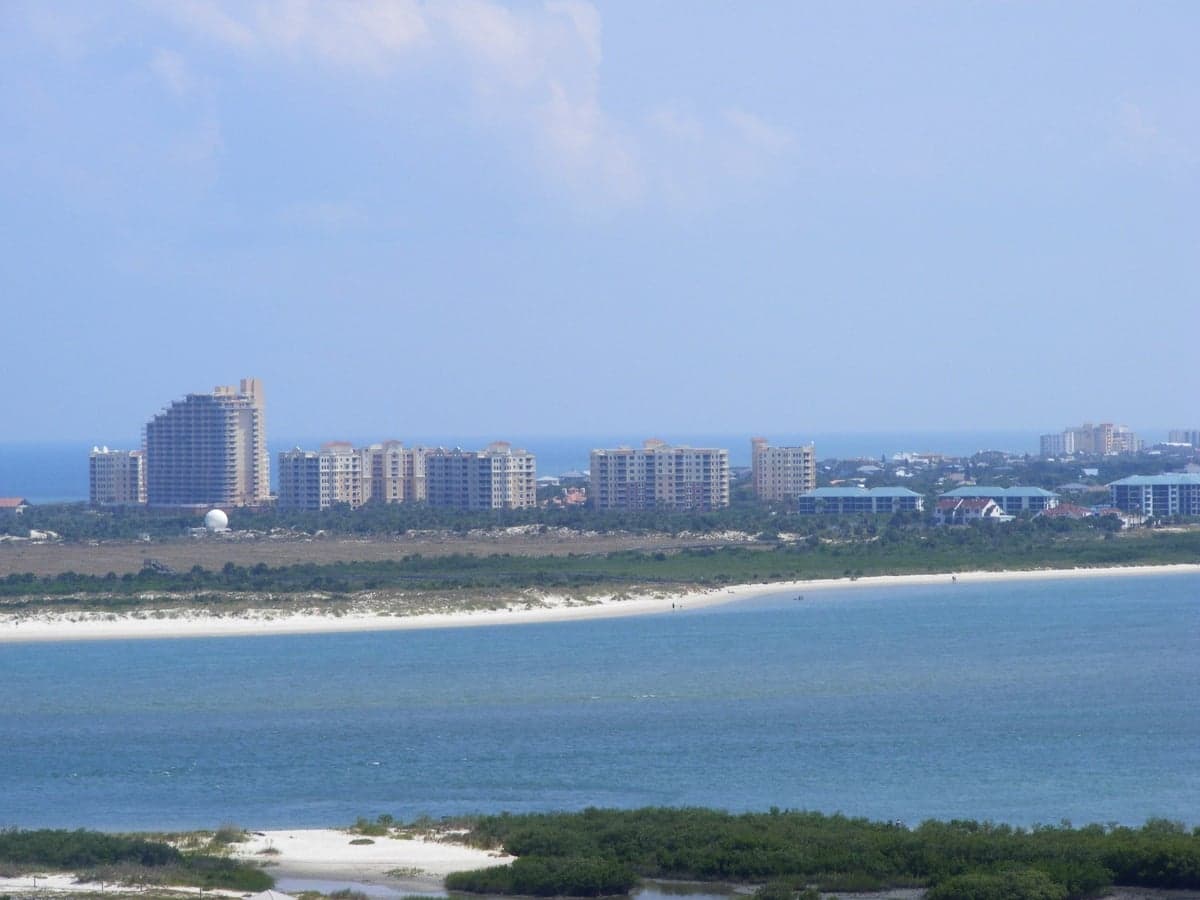
Photo: Wikipedia
Political ClimatePolitical Climate in New Smyrna Beach, FL
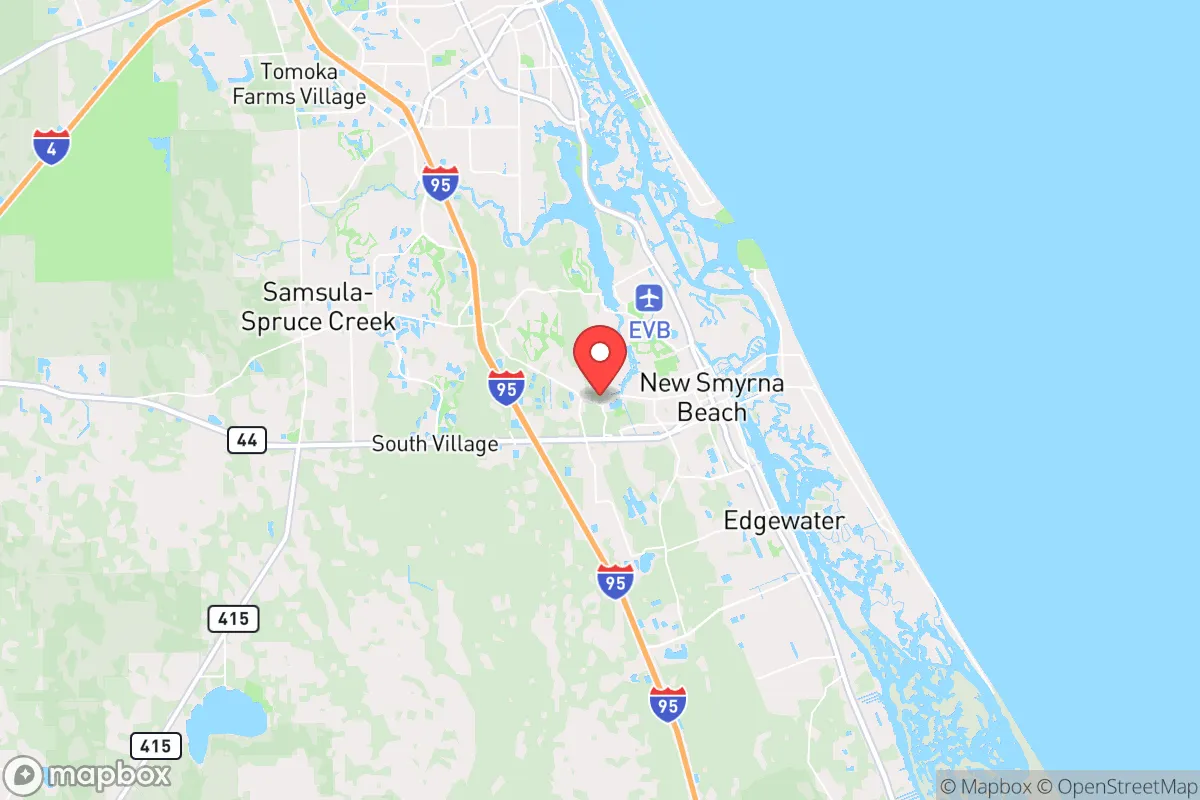
District shown is the primary district for this city’s centroid. Cities may span multiple districts.
Local Political AnalysisPolitical Analysis of New Smyrna Beach, FL
New Smyrna Beach leans reliably Republican, with a Cook Partisan Voting Index of R+5, meaning the area votes about five points more conservative than the national average. That's a solid red tilt, but it's not as deep as some of the inland Volusia County communities like DeLand or Deltona, which can feel more uniformly conservative. Over the past decade, the political trajectory here has been a slow, steady shift rightward, driven largely by an influx of retirees from the Midwest and Northeast who bring their conservative values with them. You'll still find plenty of old-school Florida Democrats, especially among the longtime fishing and surfing families, but their numbers are thinning as the population grows and ages.
How it compares
Compared to Florida as a whole, New Smyrna Beach is noticeably more Republican. The state itself is a purple-to-light-red battleground, with a Cook PVI that's essentially neutral (R+0 or R+1 in recent cycles), meaning statewide races are often decided by razor-thin margins. In contrast, New Smyrna Beach's R+5 rating puts it in the same league as places like Ocala or Naples, though without the same intensity of partisan activism. Drive 15 minutes south to Edgewater, and you'll find an even redder community, while heading north toward Daytona Beach Shores introduces a more mixed, tourist-driven electorate. The real contrast, though, is with the college town of Gainesville (Alachua County, D+8) about 90 minutes northwest, or the liberal enclaves of Orlando and St. Petersburg. In New Smyrna Beach, you're far more likely to see Trump signs than Harris signs during election season, and local offices—from the Volusia County Council to the school board—are dominated by Republicans.
What this means for residents
For conservative residents, the political climate feels comfortable and affirming. Local policies tend to favor low taxes, limited regulation, and a strong law-and-order approach. The Volusia County Sheriff's Office is well-funded and visible, and the city council generally avoids progressive social initiatives. For liberal residents, life is still perfectly fine—this isn't a place where you'll face hostility for your views, but you'll be in the minority. You won't find a thriving progressive activist scene, and local Democratic clubs are small and often struggle to recruit candidates for local office. The practical effect is that the city's growth management, beach access policies, and development approvals tend to lean pro-business and pro-property rights, which pleases many but frustrates those who want more environmental protections or affordable housing mandates.
Culturally, the conservative tilt shows up in subtle ways: the local newspaper's letters page leans right, the Chamber of Commerce is influential, and there's a strong "don't tread on me" vibe among the fishing and boating crowd. But New Smyrna Beach also has a laid-back, beach-town character that softens the edges. You'll see pride flags on some businesses along Flagler Avenue, and the annual Surfing Santas event is more about community fun than political statement. Looking ahead, the trajectory is likely to stay red, but not deeply so—the area's growing popularity with remote workers and younger families could slowly introduce more moderate or independent voters. For now, it's a place where politics is present but not overwhelming, and most folks get along fine regardless of party registration.

State Political ClimatePolitical Climate in Florida
State Political AnalysisPolitical Environment in the State
Florida has transformed from a quintessential swing state into a solidly Republican-leaning powerhouse over the past decade, driven by a massive influx of conservative-leaning migrants from the Northeast and Midwest. The state now consistently votes +3 to +5 points to the right of the national popular vote in presidential elections, with Republicans holding a trifecta in state government since 2023. This rightward shift accelerated sharply after 2020, fueled by pandemic-era migration, cultural backlash, and a deliberate branding effort by Governor Ron DeSantis to position Florida as a "free state" alternative to lockdown-heavy northern states.
Urban vs. rural divide
The political map of Florida is a study in stark contrasts. The Democratic strongholds are concentrated in the urban cores of Miami-Dade County, Orlando (Orange County), and Tampa (Hillsborough County), plus the reliably blue Tallahassee (Leon County) and the northeastern pocket around Jacksonville (Duval County). However, the most dramatic shift has been in Miami-Dade, which went from a 30-point Democratic margin in 2012 to a razor-thin 7-point margin in 2024, driven by Cuban-American, Venezuelan-American, and Nicaraguan voters who associate Democratic rhetoric with socialism. The sprawling suburbs of Fort Lauderdale (Broward County) and West Palm Beach (Palm Beach County) remain Democratic but are bleeding support among Jewish and retiree populations. Meanwhile, the entire I-4 corridor—from Tampa through Lakeland to Daytona Beach—has become a Republican firewall, with rural and exurban counties like Sumter (home to The Villages), Citrus, and Hernando routinely delivering 65-75% Republican margins. The Panhandle, from Pensacola to Panama City, is deep red, while the southwest coast from Naples to Sarasota has shifted right as wealthy retirees from the Midwest and Northeast settle in.
Policy environment
Florida's policy environment is defined by its no state income tax—a constitutional prohibition since 1968—which makes it a magnet for high-earners and businesses. The state relies on a 6% sales tax and local property taxes, with a homestead exemption that caps annual assessment increases at 3% for primary residences, a boon for long-term homeowners but a barrier for new buyers. Regulatory posture is aggressively pro-business: Florida is a "right-to-work" state, has weak labor unions, and offers generous corporate incentives. Education policy is a flashpoint: the state pioneered universal school vouchers (the Family Empowerment Scholarship) and has one of the nation's most expansive charter school sectors, while public school funding per pupil remains below the national average. Healthcare is a mixed bag—Florida did not expand Medicaid under the ACA, leaving roughly 800,000 low-income adults in a coverage gap, but it has a robust private insurance market and a large retiree-focused Medicare Advantage system. Election laws have been tightened: the 2021 SB 90 limited drop boxes, added ID requirements for mail ballots, and restricted third-party ballot collection, while the 2023 SB 7050 further restricted voter registration drives. The state also has a "stand your ground" self-defense law, a 15-week abortion ban (with a 6-week ban signed in 2023 but blocked by courts as of 2025), and a permitless carry law for firearms passed in 2023.
Recent policy direction
The last three years have seen an unprecedented flurry of legislation that has reshaped Florida's legal landscape. On gun and self-defense law, the 2023 permitless carry law (HB 543) allows any adult legally able to own a firearm to carry it concealed without a permit, though open carry remains illegal. On parental and education rights, the 2022 "Parental Rights in Education" law (HB 1557, dubbed "Don't Say Gay" by critics) banned classroom instruction on sexual orientation and gender identity through third grade, later expanded through 12th grade in 2023. The 2023 "Stop WOKE Act" (HB 7) restricted workplace and school training on race and gender, though parts were blocked by federal courts. On speech and privacy, the 2021 social media law (SB 7072) attempted to regulate platform content moderation, but was largely struck down. On medical and bodily autonomy, the 2023 6-week abortion ban (HB 7) was signed but is currently blocked pending a state Supreme Court ruling; a 2024 ballot initiative to enshrine abortion rights in the state constitution failed to reach the 60% threshold. On property rights, the 2023 "Live Local Act" preempted local zoning to allow affordable housing developments on commercial land, a major shift in land-use control. On taxation, the 2023 budget included a permanent 25% reduction in the business rent tax and a one-year sales tax holiday on diapers and baby products. On voting and ballot access, the 2023 SB 7050 made it a felony for third-party organizations to handle voter registration applications for more than 10 people, effectively shutting down many registration drives.
Civil unrest & political movements
Florida has seen relatively low levels of civil unrest compared to states like Oregon or Minnesota, but flashpoints exist. The 2020 George Floyd protests in Miami, Tampa, and Orlando were large but largely peaceful, with curfews imposed in Miami-Dade. The state's immigration politics are uniquely intense: Miami has been a hub for anti-communist activism among Cuban and Venezuelan exiles, while the 2022 "Operation Lone Star" busing of migrants from Texas to Tallahassee and Martha's Vineyard (organized by DeSantis) was a national flashpoint. Florida has no sanctuary cities—a 2019 law (SB 168) mandates local cooperation with ICE. The "election integrity" controversy peaked in 2022 when the state created a new Office of Election Crimes and Security, which arrested 20 former felons for voting illegally (most had been misinformed about their eligibility). Organized activist movements include the conservative "Moms for Liberty" (founded in Brevard County in 2021) and the progressive "Dream Defenders" (founded after the Trayvon Martin shooting in 2012). A new resident will notice the ubiquity of political yard signs, especially in suburban Pasco County and Lake County, and the prevalence of conservative talk radio and Spanish-language conservative media in Miami.
Projection
Over the next 5-10 years, Florida's political trajectory points further right, but with potential for a ceiling. The state is adding roughly 900 new residents per day, most from high-tax, high-regulation states like New York, California, and Illinois—and these migrants tend to be older, wealthier, and more conservative than the national average. The I-4 corridor will continue to harden Republican as exurban development spreads. However, the Miami-Dade shift may plateau as younger, more progressive Latinos (especially Puerto Ricans and Colombians) begin to vote more like their generational peers. The Orlando area, with its growing Puerto Rican population and tech sector, could become a Democratic counterweight. Climate change is the wildcard: rising sea levels and hurricane intensity could drive out coastal retirees (who vote Republican) while attracting climate migrants from the Caribbean (who lean Democratic). A new resident moving in now should expect a state where Republican dominance is the baseline, but where the margin of control could narrow if national Democratic trends improve or if the state's housing affordability crisis pushes out the very migrants who drove the rightward shift.
For a new resident, the bottom line is that Florida offers a policy environment that is deliberately conservative—low taxes, light regulation, strong gun rights, and parental control in education—but with significant trade-offs. You'll pay no state income tax, but you'll face high property insurance costs (the highest in the nation) and a housing market that has become unaffordable in coastal metros. You'll have broad personal freedoms on property and speech, but limited abortion access and a healthcare system that leaves many low-income residents uninsured. Politically, you'll find a state where conservative voices dominate the legislature and governor's mansion, but where local governments in Tampa, Orlando, and Miami Beach still lean left. If you're looking for a place where your vote for a Republican candidate will matter in state-level races, Florida is one of the most consequential states in the country. If you're a liberal, you'll find your voice in the cities, but you'll be swimming against a strong statewide current.
* Values derived from national, state, county, city and local statistics and may differ in a specific area. Last updated: 2026-09-17T20:26:14.000Z
Narrative content on this page is AI-generated and may contain mistakes. Verify any details that matter before acting on them.
ReloMaps may earn a commission from affiliate links at no extra cost to you.

