Photo: Wikipedia
Demographics of New Smyrna Beach, FL
Affluence Level in New Smyrna Beach, FL
An upper-middle-class area. Household wealth, education levels, and homeownership run ahead of national benchmarks.
People of New Smyrna Beach, FL
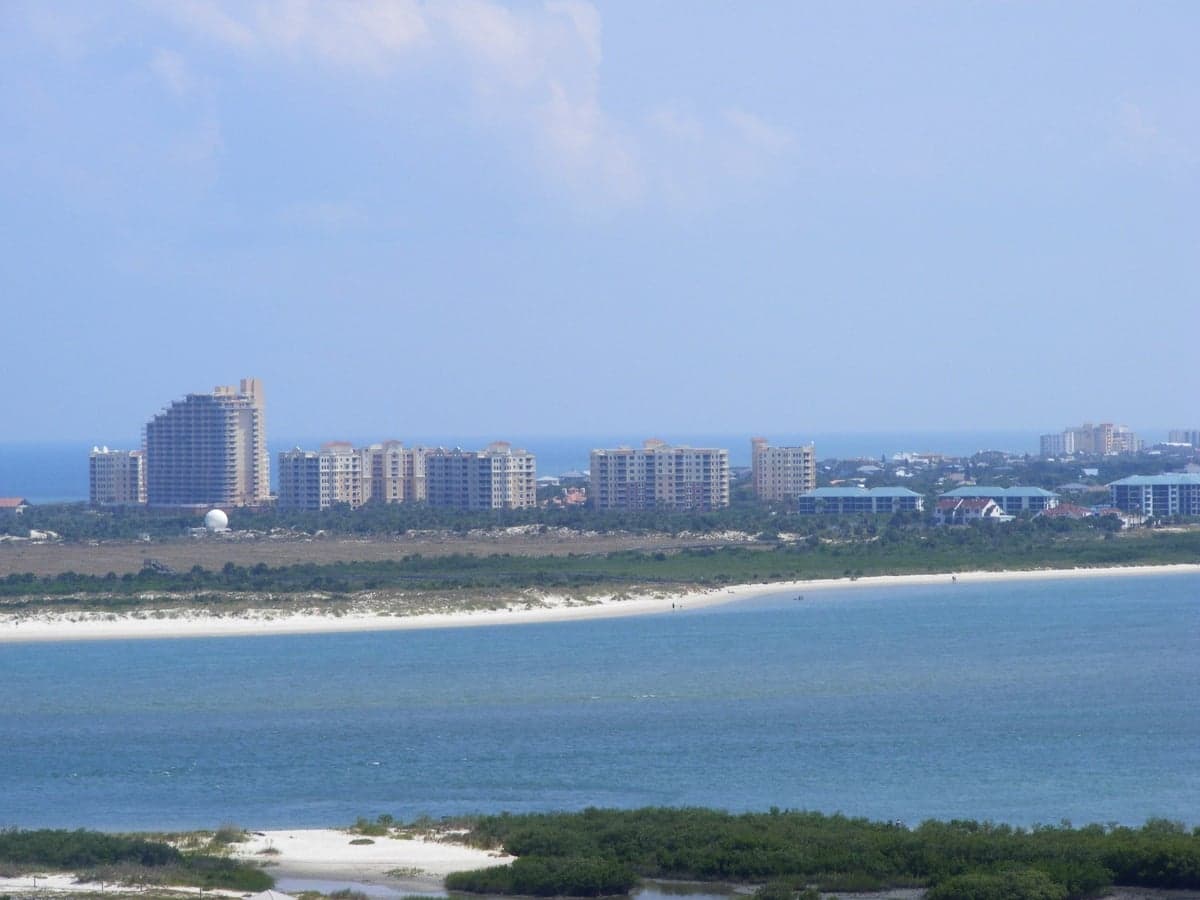
The people of New Smyrna Beach, Florida, today form a predominantly white (84.5%), older-skewing community of roughly 31,200 residents, known for its strong sense of local heritage and a noticeably low foreign-born population (just 1.3%). The city’s identity is rooted in its history as a working-class fishing and manufacturing town, now blended with a growing retiree and second-home owner base drawn to its uncrowded beaches and small-town character. With a college-educated rate of 38.7%, the population is moderately educated but not overwhelmingly professional, and the political and cultural tone leans conservative, particularly in the older, established neighborhoods. Newcomers will find a place where the past is still visible in the built environment and where demographic change has been slow and incremental rather than transformative.
How the city was settled and grew
New Smyrna Beach’s human history begins not with Spanish settlement but with a failed 18th-century British colony. In 1768, Dr. Andrew Turnbull brought over 1,200 indentured servants—mostly Greeks, Italians, and Minorcans—to establish an indigo plantation along the Indian River. This “New Smyrna” colony collapsed within a decade due to disease and harsh conditions, but the surviving Minorcan families dispersed and became foundational to the region’s early population. The modern city was formally incorporated in 1887, spurred by the arrival of the railroad and the development of the Turnbull Bay area, where many descendants of those original Minorcan settlers still live today. The early 20th century saw a wave of northern retirees and vacationers, drawn by the climate and the fishing industry, settling in the Historic West Side district, which retains many Craftsman and bungalow-style homes from that era. The fishing industry—particularly shrimp and mullet—anchored the local economy and attracted a small but stable working-class population, including a modest African American community that concentrated in the Riverside neighborhood near the Indian River.
Modern era (post-1965)
After the 1965 Immigration and Nationality Act, New Smyrna Beach saw very little of the large-scale international migration that reshaped other Florida cities. The foreign-born share remains minuscule at 1.3%, and the city’s Hispanic population (7.2%) and Black population (4.3%) are both well below state averages. Instead, the post-1965 growth has been overwhelmingly domestic, driven by retirees and second-home buyers from the Northeast and Midwest. These newcomers have concentrated in newer subdivisions like Venetian Bay and Spruce Creek, a large fly-in community that attracts aviation enthusiasts and affluent retirees. The Beachside area, along the Atlantic, has seen a surge in vacation rentals and condominium development, shifting the character of that district from a quiet seasonal retreat to a more transient, tourism-oriented zone. The East/Southeast Asian population (1.1%) and Indian subcontinent population (0.0%) are negligible, reflecting the city’s limited draw for immigrant professionals. The overall effect has been a gradual aging of the population, with the median age rising as younger families are priced out of the coastal housing market.
The future
Looking ahead, New Smyrna Beach’s population is likely to continue its slow, domestic-driven growth, with the Hispanic share edging upward modestly as service-sector workers from nearby Orlando and Daytona Beach seek more affordable housing. The city’s low foreign-born rate is unlikely to change dramatically, as there are no major employers or industries attracting international talent. New residential development is pushing inland, into areas like West New Smyrna along State Road 44, where larger, more affordable single-family homes are drawing families and younger professionals priced out of the beachside. The cultural identity is becoming more polarized: the older, conservative, long-time residents in the Historic West Side and Turnbull Bay areas are increasingly at odds with the newer, more transient population in the beachside condos and gated communities. For someone moving in now, the city offers a stable, low-diversity environment with a strong sense of place, but the trade-off is limited economic opportunity and a housing market that increasingly favors retirees over working families.
New Smyrna Beach is becoming a quieter, more expensive, and slightly more diverse version of its former self—still overwhelmingly white and native-born, but with a growing Hispanic service sector and a steady influx of northern retirees. For a conservative-leaning family or individual seeking a coastal community with deep local roots and minimal cultural disruption, it remains a strong fit, provided they can afford the rising home prices and are comfortable with a slower pace of life.

* Values derived from national, state, county, city and local statistics and may differ in a specific area. Last updated: 2026-09-17T20:26:14.000Z
Narrative content on this page is AI-generated and may contain mistakes. Verify any details that matter before acting on them.
ReloMaps may earn a commission from affiliate links at no extra cost to you.

