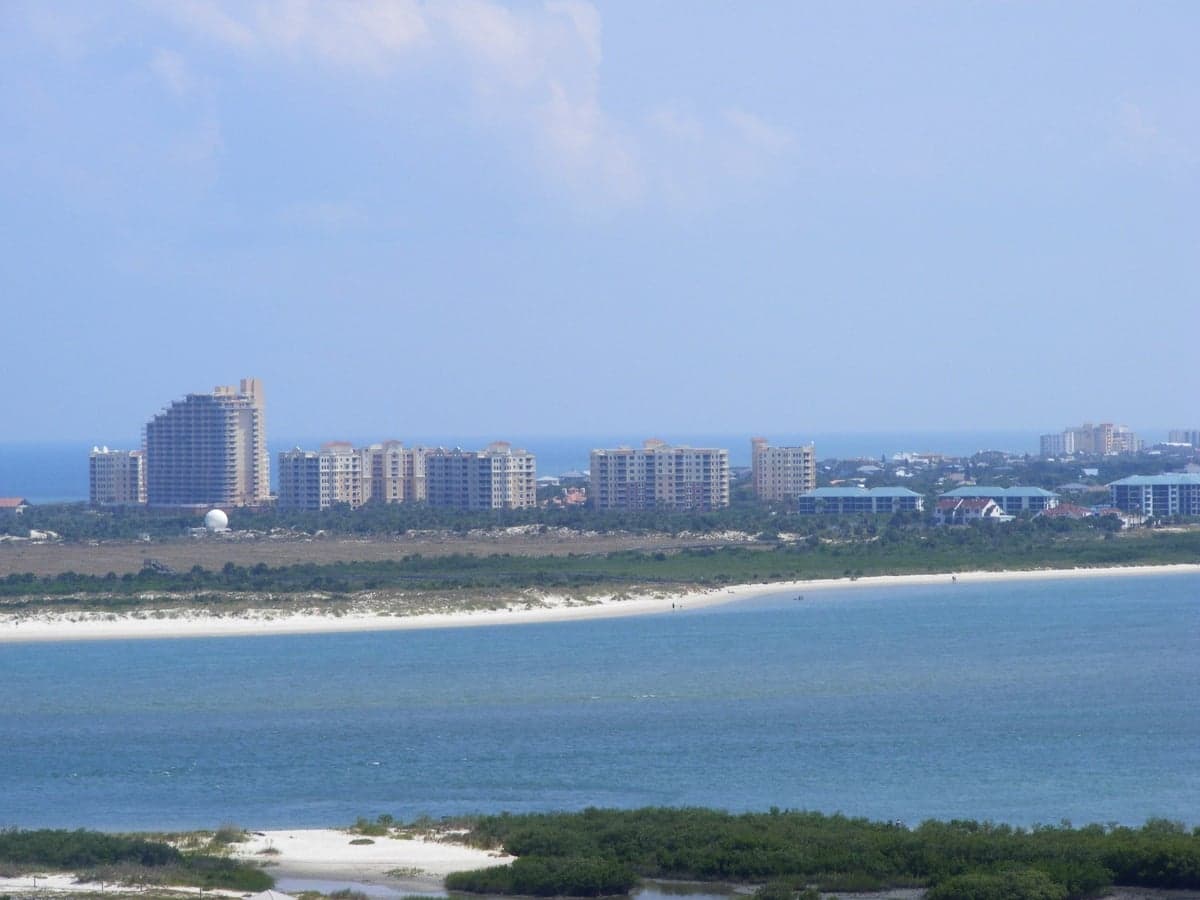
Photo: Wikipedia
Strategic Assessment of New Smyrna Beach, FL
Meaningful friction. Expect exposure to either population pressure, blast zones, or natural disaster risk. Consider buying a retreat property.
What does the Strategic Assessment tell us?
Our Strategic Assessment grades tactical survivability of an area. Major population centers, military targets, fallout zones, natural disasters, and border exposure all drive risk — lower exposure means a more defensible position in a crisis.
This is heavily inspired by Joel Skousen's Strategic Relocation book. Highly recommended you checkout the book ($)What does this tell us?
Our Strategic Assessment grades tactical survivability of an area. Major population centers, military targets, fallout zones, natural disasters, and border exposure all drive risk — lower exposure means a more defensible position in a crisis.
This is heavily inspired by Joel Skousen's Strategic Relocation book. Highly recommended you checkout the book ($)Strategic Pillars

Key Distances
Regional Safe Places
Below is our recommended "safe zones" in Florida and the surrounding area based on our strategic heuristics. For most people, it's unrealistic to live in a “safe zone” full-time due to work, family or other personal reasons. They tend to be more rural. However, many of these areas are perfect for second homes and retreat properties that double as a vacation home or even a short-term rental.

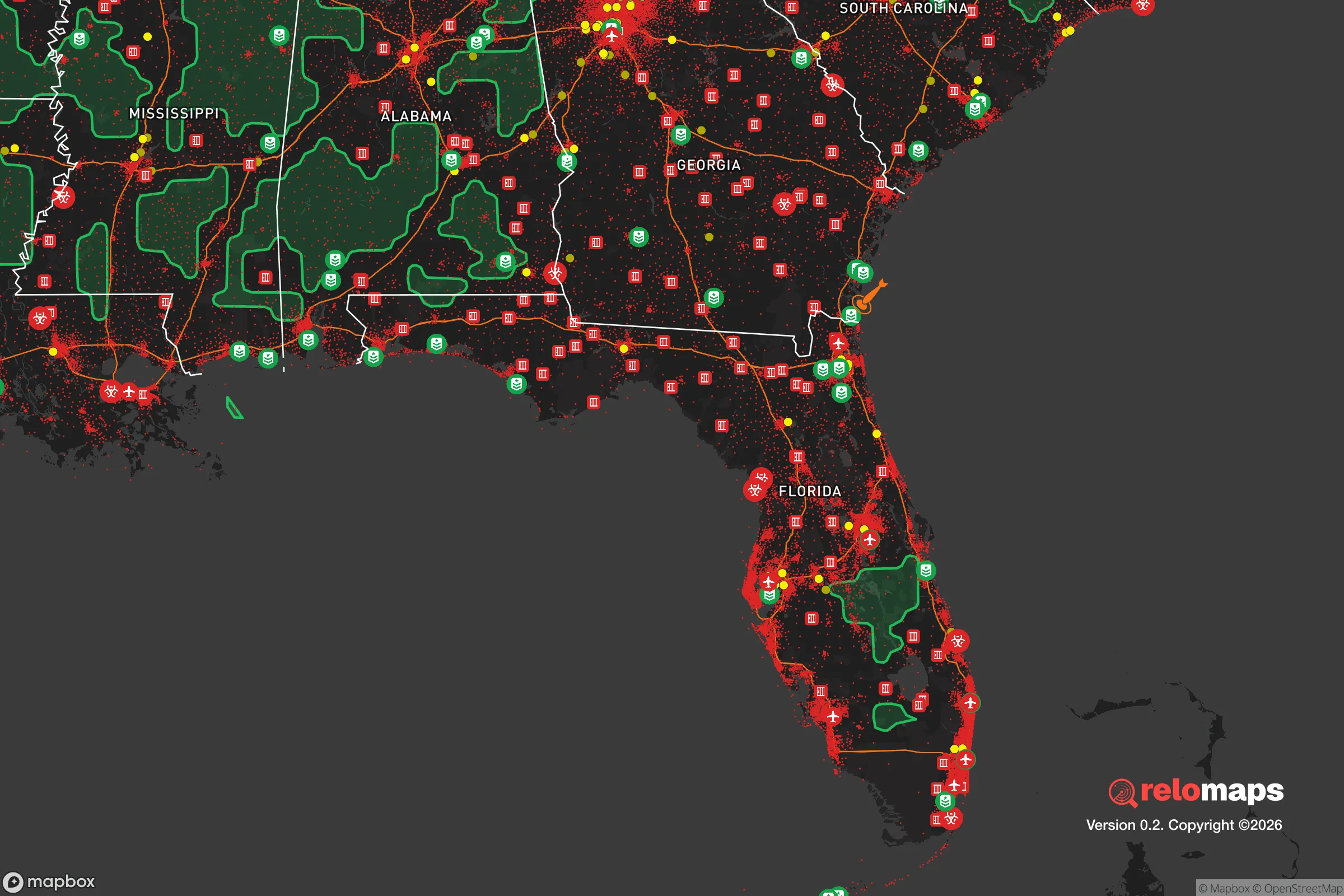


Important Note: For informational purposes only. This does not mean nothing bad ever happens in the green zones. Please use common sense. This is based on public data and modeled with AI. We tried to take a conservative approach but mistakes happen. We update this regularly as new information becomes available.
Solar Generator Recommendations
Backup power matters more here than in safer locations. We've picked three solar generators across budgets and capacity tiers — start with the budget unit if you only need a few essentials, or step up if you want to run a fridge and HVAC for days at a time.

Jackery Portable Power Station Explorer 300
Budget OptionPower on the Go: Weighing only 11 lbs, it's convenient to set up and store with book-sized foldable solar panels

BLUETTI Portable Power Station AC180
Designed for both indoor and outdoor scenarios, AC180 is highly capable as it has a robost capacity and continuous output power.

EF ECOFLOW DELTA Pro Ultra Power Station
Upgraded PickEcoFlow DELTA Pro Ultra is a whole-home energy system designed to grow with your family. Integrated with the Smart Home Panel 2, it scales to meet your evolving energy needs — keeping your home powered, intelligent, and secure through every stage of life.
We earn a commission, at no additional cost to you.
Strategic Assessment Analysis
New Smyrna Beach, Florida, presents a mixed strategic picture for the disaster-conscious relocator. While its position on the Atlantic coast offers certain natural buffers, it also places the area squarely in the path of significant weather risks and within a problematic proximity to major population and military targets. For a single individual or family prioritizing resilience and self-sufficiency, the area demands a clear-eyed assessment of trade-offs rather than a simple thumbs-up or thumbs-down.
Geographic position and natural advantages for disaster readiness
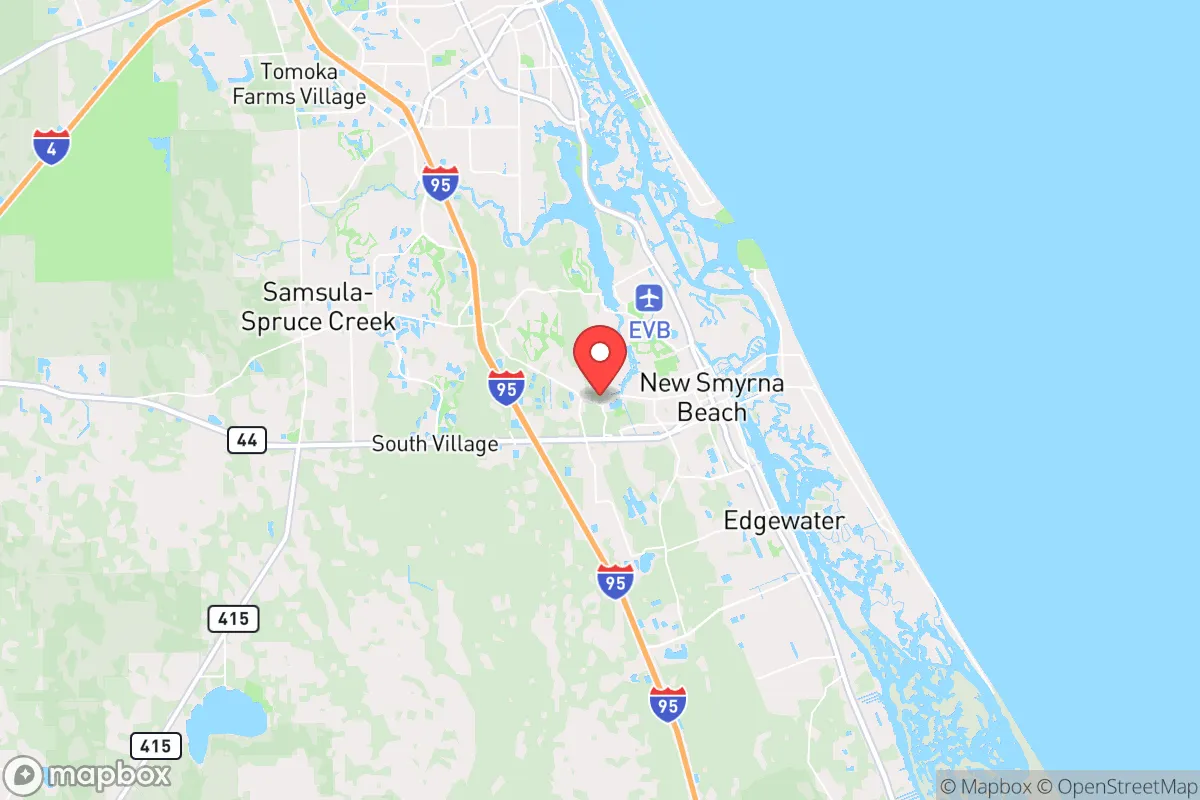
New Smyrna Beach sits on a barrier island and the adjacent mainland of Volusia County, roughly 50 miles northeast of Orlando and 20 miles south of Daytona Beach. Its coastal location provides a few genuine strategic assets. The area is surrounded by the Canaveral National Seashore to the south and the Mosquito Lagoon, creating a buffer of undeveloped land that limits urban sprawl and provides natural wildlife corridors. The Indian River Lagoon and the Atlantic Ocean offer abundant marine resources, which could be a practical food source in a prolonged disruption. The local climate, while humid and subtropical, avoids the extreme cold snaps that can cripple infrastructure in northern states. The terrain is flat, which simplifies construction and movement but offers no natural high ground for storm surge evasion. The area's relative distance from major interstate highways—I-95 runs through the western edge of the city, but the core is somewhat tucked away—means it is not a primary thoroughfare for mass evacuation or military movement, which can be a double-edged sword: less traffic but also less logistical support.
Risks, exposures, and proximity to fallout-relevant landmarks
The most immediate and recurring risk is hurricane exposure. New Smyrna Beach lies in a zone that has been directly hit by major storms, including Hurricane Ian in 2022 and Hurricane Matthew in 2016. Storm surge is a critical concern for properties on the barrier island, with the National Hurricane Center's SLOSH model showing potential inundation of 6-12 feet in a Category 3 storm. The mainland, while less exposed to surge, still faces flooding from heavy rainfall and stormwater system failures. Beyond weather, the area's proximity to several high-value targets is a significant negative for a resilience-focused analysis. Patrick Space Force Base is located just 15 miles south, and Cape Canaveral Space Force Station is roughly 25 miles south. These are active military installations involved in space launch and defense operations, making them potential targets in a conflict scenario. Additionally, Orlando's population of over 2.5 million is less than an hour's drive west, meaning that in a crisis, New Smyrna Beach could become a destination for evacuees from a major metropolitan area, straining local resources. The presence of I-95 and the nearby Port Canaveral also means the area is a logistics node that could see military or civilian traffic in a national emergency. For a relocator seeking low-profile, low-target density, these factors are clear drawbacks.
Practical resilience for a relocator: food, water, energy, and defensibility
For a family or individual looking to build a self-sufficient homestead, New Smyrna Beach offers some practical advantages but also notable challenges. Fresh water is the most critical vulnerability. The area relies on the Floridan Aquifer, which is generally abundant, but well-drilling on the barrier island is complicated by saltwater intrusion and shallow water tables. On the mainland, deeper wells are feasible but require permits and significant upfront cost. Municipal water is treated and reliable under normal conditions, but a hurricane can knock out power to pumping stations for days or weeks. Food production is viable but limited by sandy, nutrient-poor soil. Raised beds, hydroponics, and salt-tolerant crops like sea beans and certain citrus varieties can work, but traditional row gardening is tough. The Indian River Lagoon and Atlantic provide excellent fishing—redfish, trout, flounder, and blue crab are common—but overfishing and red tide events periodically reduce yields. Energy resilience is a mixed bag. Solar is excellent—Florida averages over 230 sunny days per year—but net metering policies have become less favorable in recent years, and a grid-down scenario means batteries or a generator are essential. Natural gas is available in many mainland neighborhoods, which can power a whole-house generator, but the distribution network is vulnerable to storm damage. Defensibility is poor. The flat, open terrain offers no natural chokepoints or high ground. The barrier island is accessible by only a few bridges (the most notable being the State Road 44 bridge and the South Causeway), which could be controlled, but the mainland is a sprawling suburban grid with many entry points. Neighborhoods like Coronado Beach and the historic district have a denser, more walkable layout that could be easier to secure, but the overall area is not designed for perimeter defense. Crime rates in New Smyrna Beach are moderate—property crime is the primary concern, with a rate slightly above the national average—but in a prolonged crisis, the influx of displaced populations from Orlando or Daytona could exacerbate tensions.
The overall strategic picture for New Smyrna Beach is one of moderate resilience with significant caveats. It is not a bug-out location or a remote homestead. It is a coastal town with real assets—marine resources, solar potential, and a relatively low population density compared to major metros—but also real liabilities: hurricane exposure, proximity to military and urban targets, and a flat, indefensible terrain. For a relocator who is willing to invest in robust infrastructure—a well, solar with battery backup, a generator, and a serious storm-hardened structure—and who accepts the weather risks, it can work as a base. But for someone seeking true strategic depth, low target profile, and natural defensibility, the Florida peninsula as a whole is a challenging environment, and New Smyrna Beach is no exception. The area is best suited for those who prioritize coastal living and marine resources over pure security, and who are prepared to actively manage the risks rather than assume they won't materialize.

* Values derived from national, state, county, city and local statistics and may differ in a specific area. Last updated: 2026-09-17T20:26:14.000Z
Narrative content on this page is AI-generated and may contain mistakes. Verify any details that matter before acting on them.
ReloMaps may earn a commission from affiliate links at no extra cost to you.

