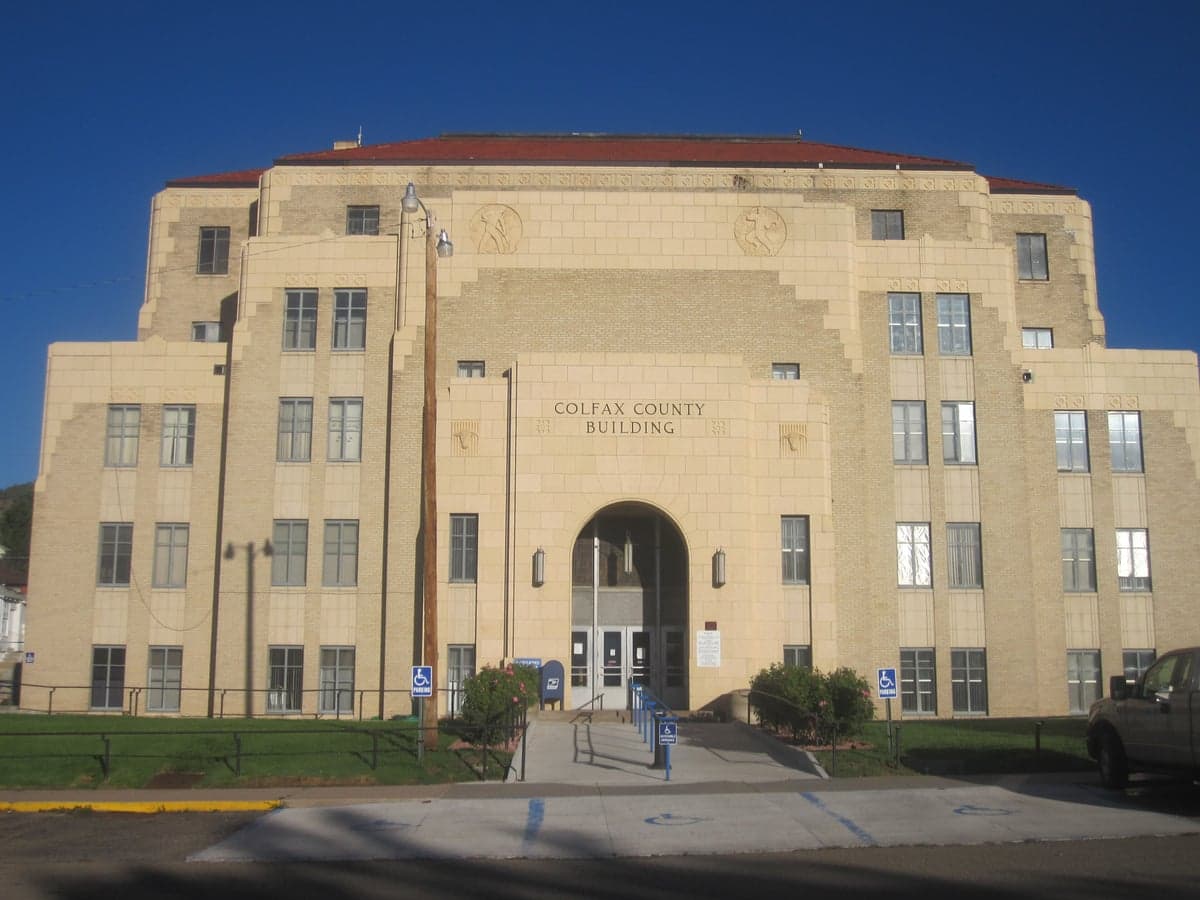
Photo: Wikipedia
Political ClimatePolitical Climate in Colfax County
Showing district-level results — no local-only data available.
Local Political AnalysisPolitical Analysis of Colfax County
Colfax County, New Mexico, is a classic swing county in a swing state, carrying a Cook PVI of D+3 that mirrors the state of New Mexico exactly. Over the past few decades, the county has shifted from a reliably Democratic stronghold to a competitive battleground, with the towns of Raton and Springer leaning blue while the rural areas and the village of Cimarron trend increasingly red. The 2020 election saw Joe Biden win the county by a slim margin, but down-ballot races often flip, reflecting a deeply independent electorate that prizes local issues over national party loyalty.
How it compares
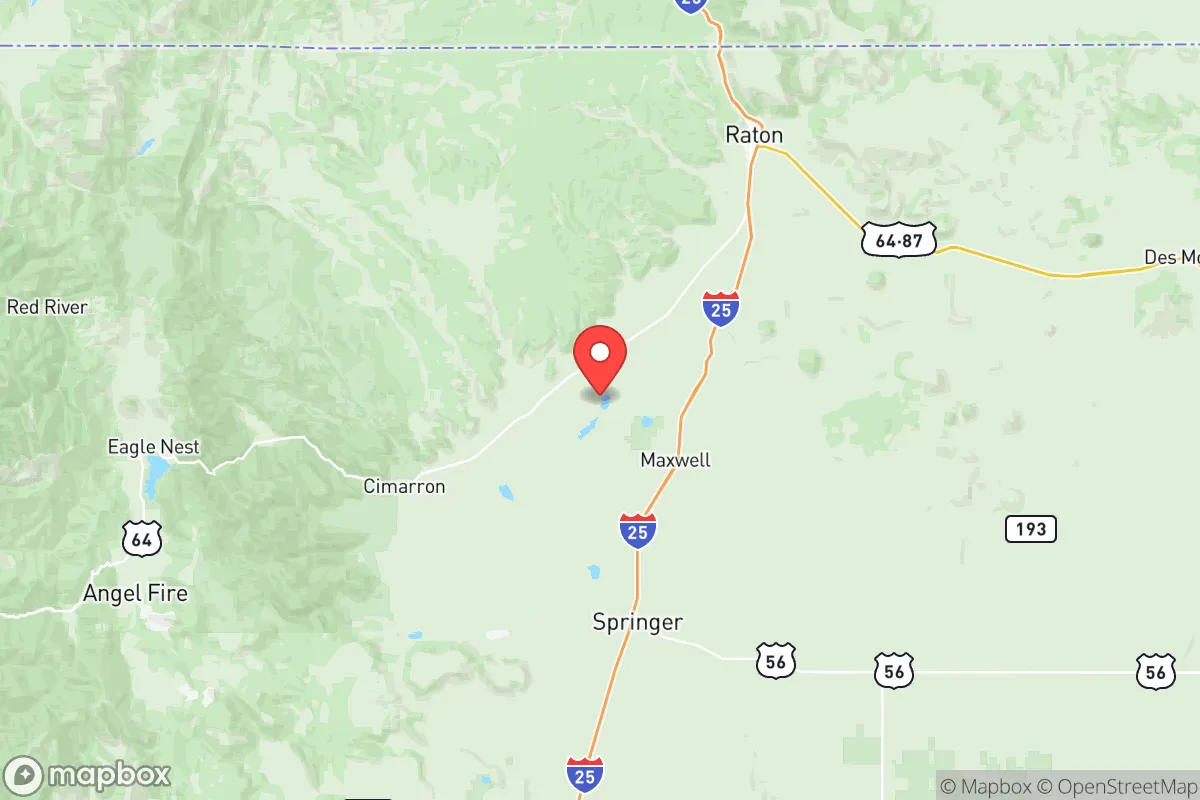
Colfax County’s D+3 PVI is identical to New Mexico’s statewide rating, but the county’s internal dynamics are more polarized than the state average. In Raton, the county seat and largest town, Democratic registration is strong, driven by union ties from the now-closed coal mines and a stable base of government employees. Springer, a smaller town to the south, also leans blue, with a history of labor activism. In contrast, Cimarron and the unincorporated areas east of the Sangre de Cristo Mountains vote reliably Republican, with many residents identifying as libertarian-leaning conservatives. The swing precincts are in the central corridor along US-64, where independent voters in places like Eagle Nest and Angel Fire often decide county-wide races. Compared to neighboring Taos County (D+16) to the west, Colfax is notably more conservative, while it is slightly more liberal than Union County (R+28) to the east. This makes Colfax a true bellwether within the state—whoever wins Colfax County often wins the 3rd Congressional District.
What this means for residents
For conservative residents, Colfax County offers a political environment where their votes matter. Local offices—such as the county commission and sheriff—are frequently won by Republicans, and the rural character of the county means gun rights and property rights are generally respected by both parties. Liberal residents, particularly in Raton and Springer, find their voices amplified in municipal elections and school board races, where progressive candidates on issues like renewable energy and public lands conservation can win. The practical reality is that neither side dominates completely, which fosters a culture of compromise on bread-and-butter issues like road maintenance, water rights, and emergency services. However, national politics can create friction, especially during election cycles when campaign signs and social media debates heat up. Most residents agree that the county’s small population—around 12,000—means personal relationships often transcend party lines, and it’s common to see neighbors with opposing yard signs working together on volunteer fire departments or community fundraisers.
One cultural distinction that sets Colfax County apart from the rest of New Mexico is its strong ranching and mining heritage, which gives local politics a pragmatic, non-ideological flavor. The county has a higher proportion of veterans and outdoor recreation enthusiasts than the state average, which influences policy debates around land use and federal land management. Unlike in more urban parts of New Mexico, where partisan divides can feel absolute, Colfax County residents tend to judge candidates by their track record on local issues rather than their party affiliation. This independent streak is likely to persist, as the county’s economy diversifies into tourism and remote work, attracting newcomers who may not fit neatly into either party’s mold. For anyone moving to the area, the takeaway is simple: your vote will count, your voice will be heard, and you’ll be expected to show up for your community regardless of who you voted for.

State Political ClimatePolitical Climate in New Mexico
State Political AnalysisPolitical Environment in the State
New Mexico is a classic swing state that has drifted leftward over the past two decades, but it remains far more politically competitive than its Cook PVI of D+3 suggests. The state’s Democratic lean is driven almost entirely by Albuquerque’s Bernalillo County and the heavily Hispanic, union-heavy counties along the Rio Grande corridor, while the rest of the state — from the oil fields of the southeast to the ranching counties of the east and the conservative mountain towns of the southwest — votes reliably Republican. Over the last 10-20 years, the state has shifted from a true purple battleground (it voted for Bush in 2004 by just 0.8%) to a solidly blue state at the presidential level, but that shift is fragile: Democrats have lost ground among Hispanic voters nationally, and New Mexico’s rural exodus and Albuquerque’s growth have made the state’s politics increasingly a tale of two very different New Mexicos.
Urban vs. rural divide
The political map of New Mexico is brutally simple: Albuquerque and Santa Fe drive the Democratic majority, while the rest of the state is a sea of red. Bernalillo County alone accounts for roughly a third of the state’s population, and its margins — typically 55-60% Democratic — are enough to offset huge Republican wins in the eastern plains and the oil-rich Permian Basin counties like Eddy and Lea, which routinely go 75-80% Republican. Santa Fe County is the bluest in the state, often hitting 70% Democratic, while Las Cruces in Doña Ana County is a swingier blue anchor that has trended left as the city has grown. The rural-urban divide is stark: in 2024, Donald Trump won 28 of New Mexico’s 33 counties, but lost the state by about 6 points because the five urban counties (Bernalillo, Santa Fe, Doña Ana, Sandoval, and Valencia) are where the people are. For a conservative relocator, that means living in a place like Roswell, Hobbs, or Farmington means living in a deeply red community, while Albuquerque’s East Mountains or Rio Rancho offer more of a mixed suburban environment where conservative voters can still find representation at the local level.
Policy environment
New Mexico’s policy environment is a mixed bag that reflects its purple roots and recent blue shift. The state has a progressive income tax (top rate of 5.9% on income over $210,000) and a gross receipts tax that functions like a sales tax but applies to many services, making the overall tax burden moderate but not low. Property taxes are among the lowest in the country, which is a genuine draw for homeowners. The regulatory posture is generally business-friendly in the oil and gas sector — New Mexico is the second-largest oil producer in the U.S. after Texas — but increasingly restrictive in areas like environmental regulation and labor law. Education policy is a perennial battleground: the state has a constitutional right to education but chronically underperforms on national rankings, and recent Democratic majorities have pushed for increased funding and universal pre-K while resisting school choice expansion. Healthcare is a Democratic strong point: the state expanded Medicaid early and has a robust insurance exchange, but rural hospital closures remain a problem. Election laws are among the most accessible in the country: same-day registration, no-excuse absentee voting, and automatic voter registration are all in place, which conservatives often view as a vulnerability but which Democrats defend as expanding access.
Recent policy direction
The last five years have seen New Mexico’s Democratic trifecta (governor and both legislative chambers) push a distinctly progressive agenda, but with notable moderation on some fronts. In 2021, the state legalized recreational cannabis, creating a regulated market that has generated significant tax revenue. On gun policy, the legislature passed a red flag law in 2020 and a ban on carrying firearms at polling places and government buildings in 2023, but the state remains relatively permissive on concealed carry compared to coastal states. On education, the 2023 repeal of the 1969 law that had allowed school boards to ban books made national headlines, but the state has not adopted the full suite of culture-war legislation seen in Texas or Florida. On parental rights, New Mexico has no explicit parental bill of rights, and the state’s abortion law is among the most protective in the region — the 2023 Reproductive and Gender Affirming Health Care Act shields providers from out-of-state lawsuits and bans local governments from restricting access. Property rights are generally strong, but the state’s oil and gas regulatory framework has tightened under the current administration, with increased bonding requirements and methane emission rules that have drawn pushback from the industry. On voting, the 2023 New Mexico Voting Rights Act expanded access further, including automatic restoration of voting rights for felons upon release from prison. For a conservative relocator, the bottom line is that the state is moving left on social and cultural issues but remains pragmatic on economic ones, especially energy.
Civil unrest & political movements
New Mexico has a history of low-boil political tension rather than the high-profile protests seen in states like Oregon or Minnesota. The most visible flashpoint in recent years has been the debate over immigration and sanctuary policy: Albuquerque and Santa Fe are sanctuary cities, and the state has limited cooperation with federal immigration enforcement, which has led to periodic standoffs with the Trump administration and ongoing friction with border-hardline conservatives. The 2020 racial justice protests in Albuquerque were significant but smaller than in many peer cities, and the state’s rural counties have seen a quieter but persistent strain of Second Amendment activism, including a 2023 push by several counties to declare themselves “Second Amendment sanctuaries” in response to the red flag law. Election integrity has been a live issue: the 2020 and 2022 elections saw no major irregularities, but conservative activists have continued to push for voter ID laws and ballot security measures, which have been consistently blocked by the Democratic majority. The state also has a small but vocal secessionist movement in the eastern plains — the “New Mexico 51st state” proposal, which would split the conservative eastern counties from the rest of the state — but it has never gained serious legislative traction. For a new resident, the political temperature is warm but not boiling; you’ll see partisan bumper stickers and occasional protests, but not the kind of street-level conflict common in Portland or Seattle.
Projection
Over the next 5-10 years, New Mexico is likely to remain a D+3 to D+5 state, but the margin could narrow if national trends among Hispanic voters continue. The state’s population growth is slow — it’s one of the few Western states that isn’t booming — and the demographic shifts that have driven the blue trend (urbanization, Hispanic voter mobilization) may be reaching their ceiling. In-migration from California and Texas has been modest compared to Colorado or Arizona, and the people moving in tend to be retirees and remote workers who lean moderate rather than hardline either way. The oil and gas industry will continue to be a political anchor for the conservative side, and any sustained downturn in energy prices could shift the state’s fiscal picture and political calculus. The most likely scenario is a slow stabilization: New Mexico will stay blue at the presidential level but remain competitive in down-ballot races, with the state legislature staying Democratic but the governorship potentially flipping in a midterm environment. For a conservative moving in now, the realistic expectation is that the state will not become red, but it also won’t become California — the rural counties will remain deeply conservative, and the urban centers will stay moderate by coastal standards.
For a new resident, the practical takeaway is that New Mexico offers a genuinely mixed political environment where your experience depends heavily on where you live. If you’re conservative, you can find a comfortable home in the eastern plains, the oil patch, or the rural southwest, where your vote will count locally even if it’s swamped statewide. If you’re liberal, the urban corridor from Santa Fe to Las Cruces offers a reliably blue bubble with progressive policies on cannabis, abortion, and voting. The state’s low property taxes and energy-driven economy are draws across the political spectrum, but the trade-off is a state government that is increasingly progressive on social issues and a public school system that remains a persistent weakness. New Mexico is not a place where politics dominates daily life — it’s too poor and too independent for that — but it is a place where the political divide is real, geographic, and unlikely to change anytime soon.
* Values derived from national, state, county, city and local statistics and may differ in a specific area. Last updated: 2026-07-21T14:43:19.000Z
Narrative content on this page is AI-generated and may contain mistakes. Verify any details that matter before acting on them.
ReloMaps may earn a commission from affiliate links at no extra cost to you.

