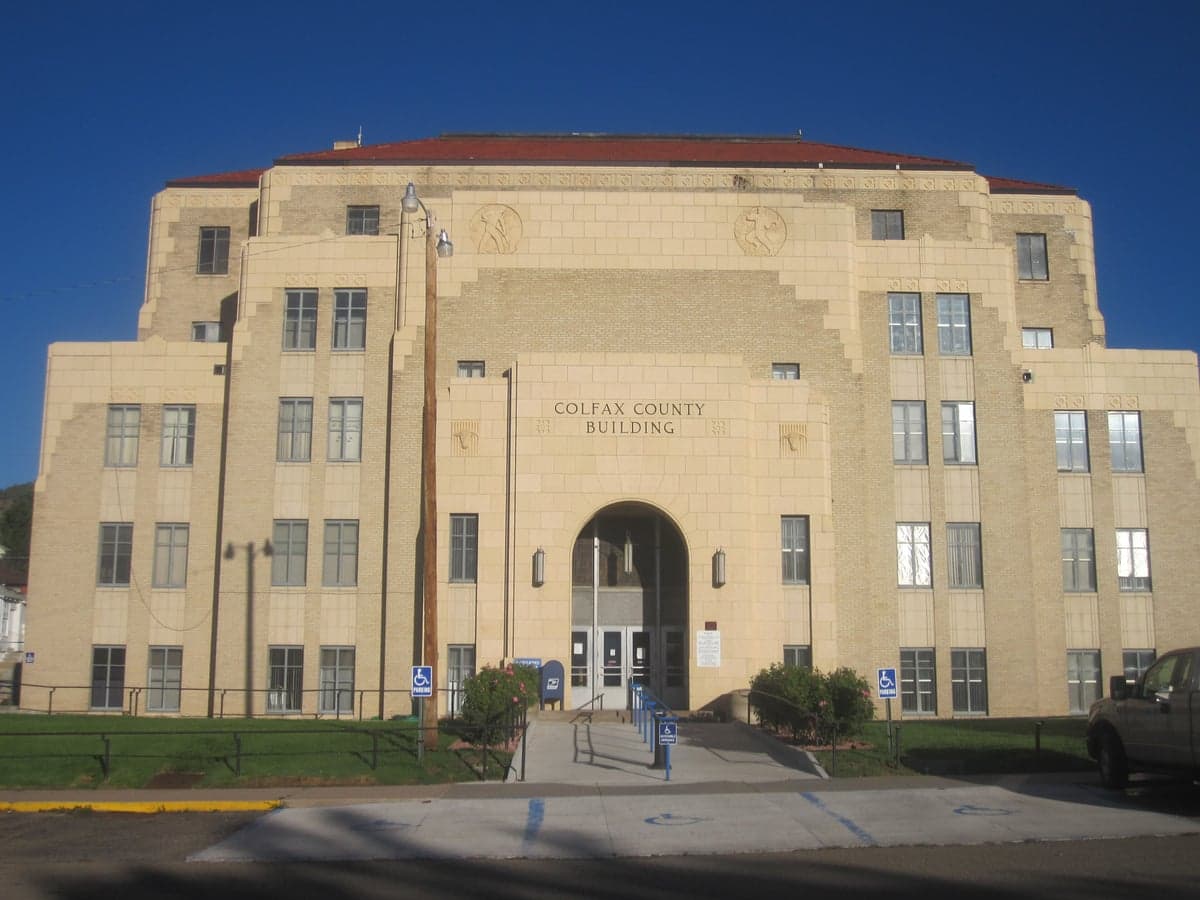
Photo: Wikipedia
Quality of Life in Colfax County
A livable area that tracks near national norms for affordability, walkability, and neighborhood health.
What does Quality of Life tell us?
Quality of Life measures an area by evaluating factors like cost of living, nearby amenities, country club access, airport proximity, socioeconomic signals and neighborhood character. For large states, this is a general average — quality of life can vary dramatically between metro areas, suburbs, and rural communities within the same state.
What does this tell us?
Quality of Life measures an area by evaluating factors like cost of living, nearby amenities, country club access, airport proximity, socioeconomic signals and neighborhood character. For large states, this is a general average — quality of life can vary dramatically between metro areas, suburbs, and rural communities within the same state.
Cost of Living
41% below national average
115%
The Real Cost of Living in Colfax County for 2026
| Tier | Individual | Family (4) |
|---|---|---|
| Survival | $11k | $21k |
| Comfortable | $31k | $46k |
| Luxury | $87k+ | $134k+ |
| Elite (Top 5%) | $102k+ | $158k+ |
Quality-of-Life Analysis
Colfax County, New Mexico, offers a spectrum of living environments that range from the historic railroad town of Raton to the remote, high-desert homesteads scattered along the Sangre de Cristo foothills. The county’s character shifts dramatically from its compact population centers to its vast, open rangelands, attracting everyone from state-government employees and healthcare workers to ranchers, outdoor recreationists, and retirees seeking a low-cost, slow-paced life. With a cost-of-living index of 59 — well below the national average of 100 — and a median home value of just $161,000, the county presents a financially accessible entry point into northern New Mexico, though the trade-off comes in the form of limited urban amenities and long distances between services.
Largest town(s) & population centers
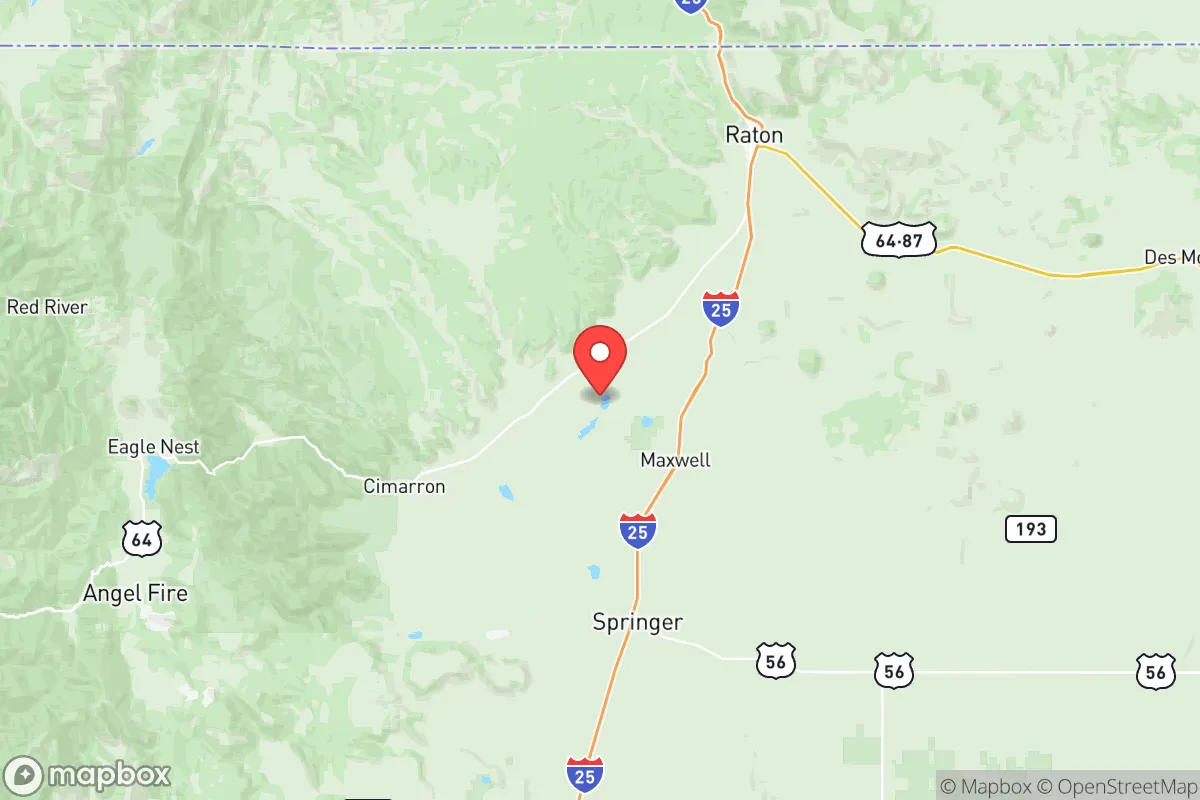
Raton, the county seat and largest municipality (population roughly 6,000), serves as the commercial and civic hub of Colfax County. Daily life here centers around local government offices, the Miners' Colfax Medical Center, and tourism tied to the nearby Sugarite Canyon State Park and the Raton Pass. The town retains a working-class, blue-collar feel with a historic downtown anchored by the Shuler Theater and the Raton Museum. Springer, the second-largest town (population about 1,000), sits 25 miles south of Raton along I-25 and functions as a quieter, more affordable alternative, with a handful of local businesses and a strong ranching heritage. Angel Fire, located in the Moreno Valley, is the county's primary resort community, drawing second-home owners and skiers to the Angel Fire Resort; its population swells seasonally, and its housing stock leans more expensive than the county average, though still below national norms. These three towns represent the county's full spectrum of population density, from Raton's modest retail and services to Angel Fire's tourism-driven economy.
Smaller towns & rural pockets
Beyond the main towns, Colfax County contains a scattering of unincorporated communities and tiny villages that define its rural character. Eagle Nest, a village of roughly 300 residents on the shores of Eagle Nest Lake, is a year-round base for fishing, hiking, and snowmobiling, with a handful of cabins and a single general store. Cimarron, population about 800, sits along the Cimarron River and is known for the historic St. James Hotel and the Philmont Scout Ranch, which draws thousands of Scouts annually but leaves the town quiet outside summer months. Ute Park and Miami are even smaller, often consisting of scattered homes and ranches with no commercial services. These rural pockets offer extreme privacy and direct access to national forest land, but residents must drive 20 to 40 minutes to Raton or Angel Fire for groceries, fuel, or medical care. The county's average commute of roughly 19 minutes reflects the fact that many rural residents work locally in ranching, guiding, or remote jobs, rather than commuting to a distant urban center.
Cost & lifestyle range
The cost of living in Colfax County varies noticeably by location, though the entire county remains affordable by national standards. At the low end, Springer and the unincorporated areas around Raton offer median home values well below the county's $161,000 average, with some older fixer-uppers available for under $100,000. Median rent across the county is just $704, making it one of the most affordable rental markets in New Mexico. At the higher end, Angel Fire commands a premium, with median home values closer to $300,000–$400,000 for ski-in/ski-out properties, though this still undercuts comparable resort towns in Colorado. Lifestyle differences are stark: Angel Fire provides a resort-oriented calendar of events, dining, and outdoor recreation, while Springer and rural Cimarron offer a quiet, self-sufficient existence with minimal nightlife or shopping. Raton strikes a middle ground, with a grocery store, hardware store, and basic healthcare, but residents still drive 90 minutes to Taos or Trinidad, Colorado for major retail or specialty medical care.
Colfax County best suits individuals and families who prioritize low housing costs, wide-open spaces, and a slower rhythm over urban convenience and career density. Retirees on fixed incomes, remote workers with stable internet (available in Raton and Angel Fire, spotty elsewhere), and outdoor enthusiasts who value hunting, fishing, and hiking will find the county's trade-offs acceptable. Those who require frequent access to big-city airports, diverse employment options, or dense social amenities will likely find the distances too great. The county's strength lies in offering a genuine, affordable slice of northern New Mexico life — but only for those prepared to embrace its isolation.

Crime in Colfax County
Higher crime rates than 68% of comparable U.S. locations.
Violent CrimeViolent Crime Analysis
Property CrimeProperty Crime Analysis
Crime Analysis
Colfax County, New Mexico, presents a mixed safety picture that demands careful consideration from potential residents. With a violent crime rate of 605.9 per 100,000 residents and a property crime rate of 2,204.9 per 100,000, the county's statistics significantly exceed both state and national averages, placing it among the more dangerous rural counties in New Mexico. The county's small population of roughly 12,000 people means that even a handful of incidents can dramatically skew annual rates, but the raw numbers still indicate a persistent public safety challenge that varies considerably between communities like Raton, Springer, and Angel Fire.
Crime in context
Colfax County's violent crime rate of 605.9 per 100,000 is roughly 65% higher than the national average of approximately 367 per 100,000 and notably above the New Mexico state average of about 780 per 100,000. Property crime in the county, at 2,204.9 per 100,000, sits close to the national average of roughly 1,950 per 100,000 but below the New Mexico state average of approximately 2,800 per 100,000. These figures place Colfax County in a middle tier among New Mexico's 33 counties — safer than high-crime urban counties like Bernalillo (Albuquerque) or Doña Ana (Las Cruces), but significantly more dangerous than low-crime rural counties like Catron or Harding. The Eighth Judicial District, which covers Colfax, Union, and Taos counties, has seen ongoing debate about sentencing practices and prosecutorial approaches that directly impact public safety outcomes across the region.
What residents experience
Daily life in Colfax County involves navigating a landscape where property crimes — particularly burglary, vehicle theft, and larceny — are the most common threats. The town of Raton, the county seat and largest municipality, experiences the highest concentration of incidents due to its population density and its position along the I-25 corridor, which facilitates transient criminal activity. Springer, a smaller community to the south, has reported periodic spikes in drug-related property crimes tied to its location along the same highway. In contrast, Angel Fire and Eagle Nest, both mountain resort communities, tend to see lower violent crime rates but face seasonal property crime surges during tourist seasons when vacation homes become targets for burglary. The village of Cimarron has historically maintained relatively low crime rates compared to Raton, though its small size means any incident registers prominently in local statistics. Residents in all communities report that the county's rural geography and limited law enforcement resources mean response times can be slow, particularly in remote areas between towns.
Neighborhood-level variation within Colfax County is substantial and closely tied to economic conditions and population density. The historic downtown areas of Raton and Springer, which have experienced economic decline, see higher rates of both violent and property crime than the newer residential subdivisions on the outskirts of these towns. The gated communities and ski-adjacent developments around Angel Fire report the lowest crime rates in the county, though they are not immune to theft and occasional domestic incidents. The Colfax County Sheriff's Office, which patrols unincorporated areas, has faced staffing challenges that affect coverage in the vast rural spaces between municipalities. Potential residents should research specific blocks and neighborhoods within their target town, as safety conditions can change dramatically within a few blocks in Raton or between subdivisions in Angel Fire. The progressive judicial philosophy that has influenced the Eighth Judicial District in recent years, prioritizing rehabilitation over incarceration for property and drug offenders, has been a point of concern for residents who feel it contributes to repeat offenses and undermines deterrence in the county's smaller communities.
* Values derived from national, state, county, city and local statistics and may differ in a specific area. Last updated: 2026-07-21T14:43:19.000Z
Narrative content on this page is AI-generated and may contain mistakes. Verify any details that matter before acting on them.
ReloMaps may earn a commission from affiliate links at no extra cost to you.

