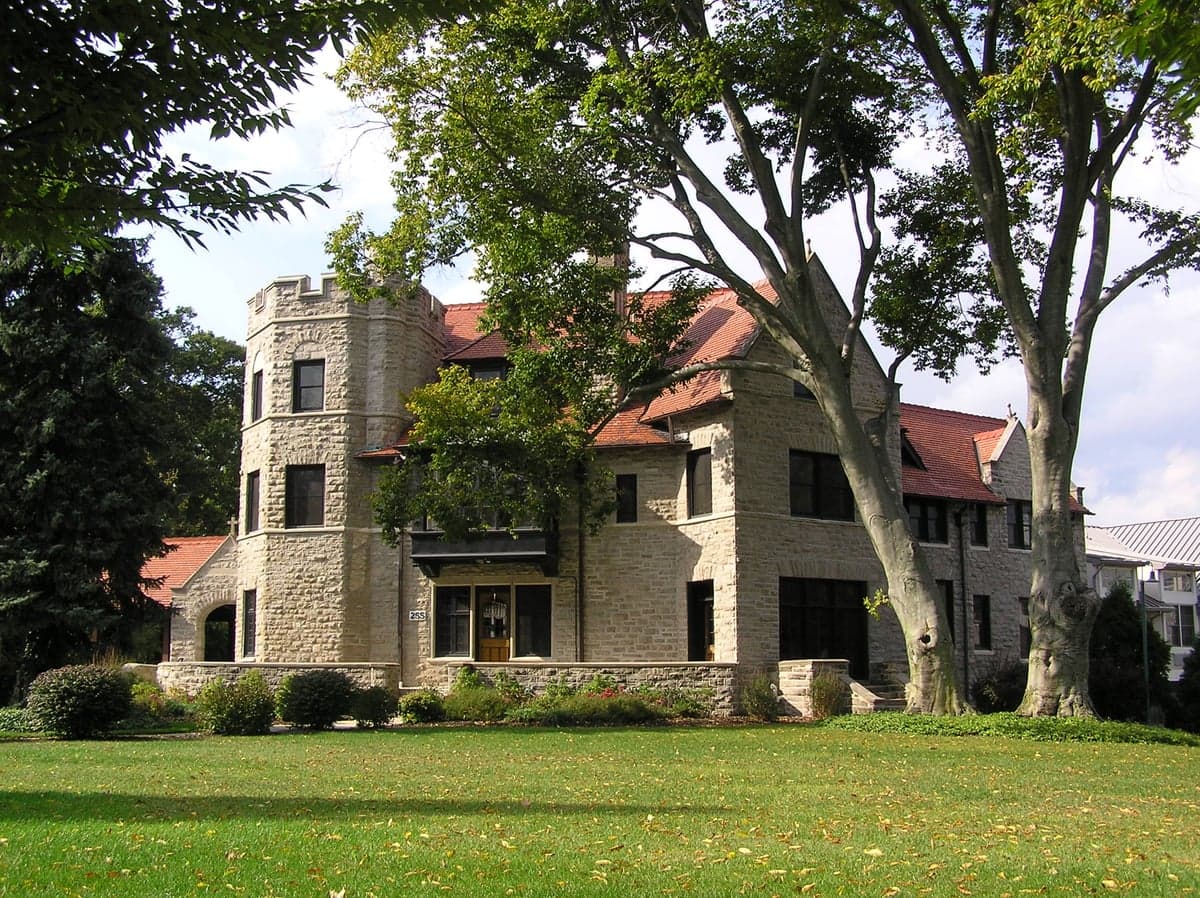
Photo: Wikipedia
Political ClimatePolitical Climate in Burlington County
Showing county-level results — no local-only data available.
Lean and PVI are calculated from this county’s 2020 and 2024 presidential results, Cook-style.
Political rankings in New Jersey
- Most Conservative Cities in New Jersey
- Most Liberal Cities in New Jersey
- Best Conservative-Leaning Towns in the Northeast
- Best Conservative-Leaning Towns in the Mid-Atlantic
- Safest Liberal-Leaning Towns on the East Coast
- Safest Conservative-Leaning Towns on the East Coast
- Most Affordable Liberal-Leaning Small Towns in the U.S.
- Safest Liberal-Leaning Cities in the U.S.
- Most Conservative Counties in New Jersey
- Most Liberal Counties in New Jersey
Local Political AnalysisPolitical Analysis of Burlington County
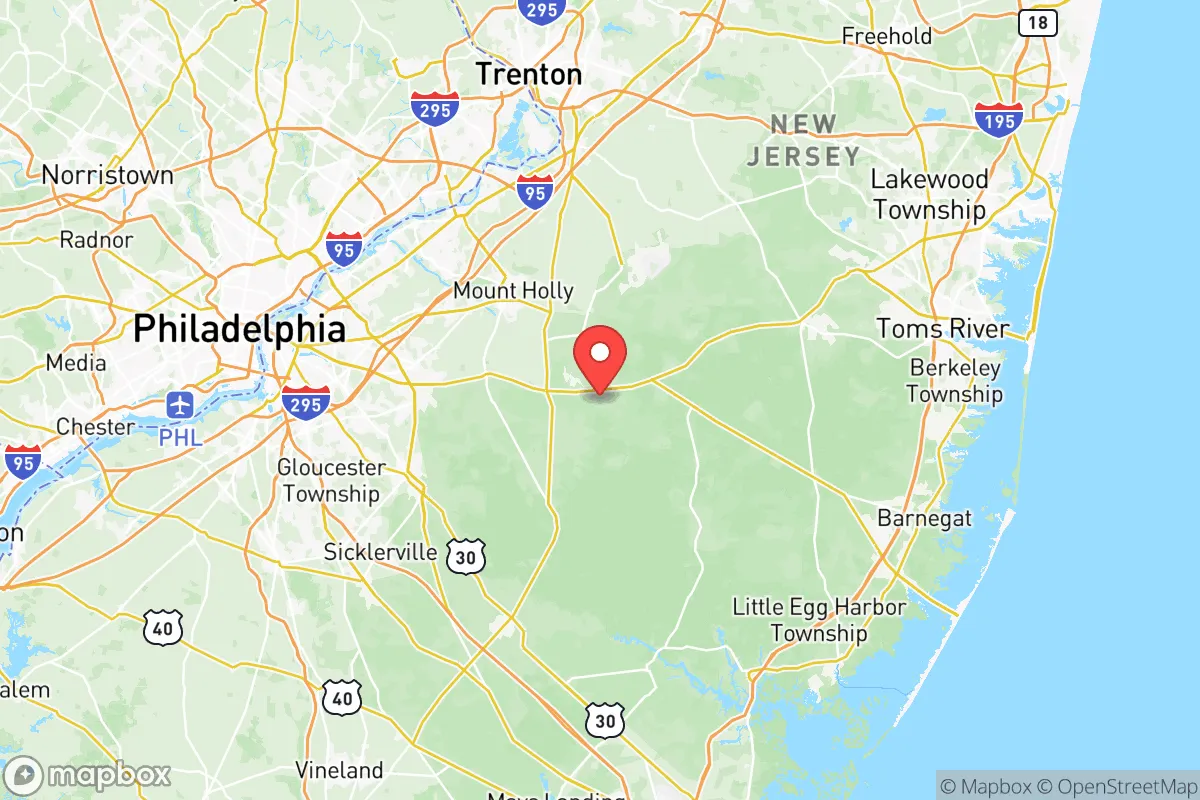
Burlington County, New Jersey, has a Cook Partisan Voting Index of D+5, exactly matching the state's overall D+5 rating, but that single number hides a lot of local nuance. The county has been trending blue over the past decade, driven largely by population growth in its eastern and central townships, but it still holds some of the most reliably Republican pockets in the entire state. If you're moving here, the political reality is less about a uniform blue wave and more about a patchwork of deep-blue suburbs, deep-red rural towns, and a handful of swing precincts that decide local races.
How it compares
At first glance, Burlington County's D+5 PVI makes it look like a perfect mirror of New Jersey as a whole, but the internal geography tells a different story. The county's Democratic strength is concentrated in the Delaware River corridor towns like Burlington City, Willingboro, and Mount Holly, where Democratic margins routinely exceed 20 points. Meanwhile, the Pinelands and western townships—places like Tabernacle, Southampton, and Bass River—vote Republican by similar margins, often 60-40 or wider. The real battlegrounds are the fast-growing suburbs of Mount Laurel, Moorestown, and Medford, where the vote has shifted left since 2016 but still swings enough to keep local races competitive. In 2024, for example, Mount Laurel's presidential vote was roughly 52-46 Democratic, while Medford Township was about 48-50 Republican—a far cry from the 60-40 splits you'd see in the county's blue or red strongholds.
What this means for residents
For a conservative resident, Burlington County offers a genuine sense of representation in local government, especially in the western and southern townships where Republican committee members and mayors are common. You won't feel politically isolated at the town council level in places like Evesham or Lumberton, where GOP candidates often win by comfortable margins. For a liberal resident, the county's Democratic lean means you'll see progressive policies on housing, transit, and environmental protection pushed at the county level—the Board of County Commissioners has been Democratic-majority since 2020—but you'll also encounter real pushback in the more rural precincts. The practical effect is that property taxes, school funding, and land-use decisions often get hashed out in genuinely contested meetings, not rubber-stamped by a single party.
Culturally, Burlington County stands apart from the rest of New Jersey in a few key ways. The Pinelands National Reserve covers roughly 40% of the county's land area, which means development is tightly restricted in those zones—a policy that enjoys bipartisan support but frustrates builders and some property owners. The county also has a noticeably lower density of chain retail and corporate office parks compared to nearby Mercer or Middlesex counties, giving it a more small-town, almost rural feel in many areas. Politically, this translates into a local culture that values open space preservation and slow growth, which both parties tend to champion, even if they disagree on how to pay for it. If you're moving here, expect local elections to revolve around school budgets, farmland preservation, and traffic management—not the national culture-war issues that dominate cable news. That's been the case for decades, and I don't see it changing anytime soon.

State Political ClimatePolitical Climate in New Jersey
State Political AnalysisPolitical Environment in the State
New Jersey has a solid Democratic lean at the state level, with a Cook PVI of D+5, but that number masks a deeply complicated political reality. The state hasn't voted for a Republican presidential candidate since George H.W. Bush in 1988, yet it has elected two Republican governors in the last 15 years (Chris Christie and the current governor, Phil Murphy, is a Democrat). Over the last 10-20 years, the trend has been a slow but steady Democratic consolidation in the suburbs and urban cores, while the rural and exurban areas have swung hard to the right. For a conservative-leaning relocator, the state offers a mixed bag: high taxes and liberal social policy in the north and central corridor, but genuine pockets of red territory and a pragmatic, deal-making political culture that can surprise you.
Urban vs. rural divide
The political map of New Jersey is a classic tale of three regions. The northeast corridor — anchored by Newark, Jersey City, and Hoboken — is deep blue, driven by dense, diverse, and transit-oriented populations. These cities reliably deliver 70-80% Democratic margins. Central Jersey, particularly Middlesex County and parts of Monmouth, is the battleground: suburbs like Edison and Freehold are competitive, often flipping between parties depending on the cycle. The south and west — places like Ocean County (Toms River, Lakewood) and Sussex County — are reliably red, with Republicans winning by 15-20 points in most races. The rural Pine Barrens and Delaware River towns like Frenchtown and Lambertville are more libertarian-leaning, but they're small. The real story is the suburban shift: once-Republican strongholds like Morris County (Morristown) and Bergen County (Paramus) have trended Democratic since 2016, driven by college-educated voters and growing Asian and Hispanic populations. A conservative moving to New Jersey will find their political home in the southern and western exurbs, but they'll be a minority voice in the state legislature.
Policy environment
New Jersey's policy environment is defined by its tax structure. The state has the highest property taxes in the nation (median around $9,500/year) and a progressive income tax that tops out at 10.75% for income over $1 million. There's also a 6.625% sales tax. For a conservative, this is the biggest sticker shock. The regulatory posture is heavy: the state has its own environmental rules (often stricter than federal), a strong public-sector union presence, and a complex land-use approval process. On education, New Jersey consistently ranks in the top 3 nationally for K-12 outcomes, but school funding is a perennial fight — the state's "School Funding Reform Act" has been a source of litigation and resentment from suburban districts that feel shortchanged. Healthcare is heavily regulated, with a robust Medicaid expansion and a state-based health insurance exchange. Election laws are relatively liberal: no-excuse mail-in voting was made permanent in 2021, and same-day voter registration is available. For a conservative, the policy environment feels like a high-cost, high-service state — you get good schools and infrastructure, but you pay for it.
Recent policy direction
Recent legislation points in a clear progressive direction, but with some notable exceptions. On gun and self-defense law, New Jersey is one of the strictest states: it passed a "sensitive places" law in 2022 that bans firearms in most public spaces, and it has a permit-to-purchase requirement and a ban on "assault weapons" and standard-capacity magazines. Parental and education rights have been a flashpoint: the state passed a law in 2022 requiring schools to adopt "inclusive" curricula on LGBTQ+ history, and it has a strong anti-bullying law that some conservatives argue infringes on free speech. Speech and privacy are protected under the state constitution, but there's no specific shield for online speech beyond federal protections. Medical and bodily autonomy is fully protected: abortion is legal up to viability, and the state passed a "shield law" in 2023 protecting providers who serve patients from states with bans. Property rights are constrained by strong zoning and environmental regulations — the "Mount Laurel Doctrine" requires towns to provide affordable housing, which has led to decades of litigation. Voting and ballot access has been expanded: automatic voter registration at DMVs, early in-person voting, and mail-in ballots are all standard. The overall direction is toward more regulation and more social liberalism, but the state's fiscal realities — a $10 billion structural deficit as of 2025 — may force a moderation on tax policy.
Civil unrest & political movements
New Jersey has a history of organized activism on both sides. The Black Lives Matter protests in 2020 were large in Newark and Trenton, but they were generally peaceful compared to other states. The anti-lockdown movement in 2020-2021 was particularly vocal in Ocean and Sussex counties, with large rallies at the State House in Trenton. Immigration politics are a live wire: New Jersey is a "sanctuary state" under a 2018 executive order (and a 2021 law) that limits local cooperation with ICE. This has led to tensions in towns like Lakewood (a fast-growing Orthodox Jewish community) and Paterson (a majority-immigrant city). Election integrity controversies flared in 2020 and 2022, with Republican activists challenging mail-in ballot procedures, but no major fraud was found. The secession or nullification rhetoric is minimal — New Jersey is too small and too integrated to have a serious movement. What a new resident will notice is the localism: most political fights are about school boards, zoning, and property taxes, not national culture wars. The state's 565 municipalities each have their own police, schools, and zoning — so the political temperature varies block by block.
Projection
Over the next 5-10 years, New Jersey is likely to become more Democratic at the state level, but with a growing internal divide. The demographic shifts are clear: the state is becoming more diverse (the non-white population is now over 50%), and the suburban counties that once voted Republican are trending blue. The in-migration patterns are a wild card: New Jersey loses domestic migrants to Florida and Texas, but gains international immigrants and people from New York City. The net effect is a slow population decline (down about 1% since 2020), which will strain the tax base. For a conservative moving in now, expect to see continued Democratic control of the legislature and governorship, with Republicans holding only a few seats in the Assembly and Senate. The fiscal pressure may force a tax increase or spending cuts, which could alienate the suburban moderates who currently vote Democratic. The wild card is the 2025 gubernatorial election: if a moderate Republican wins (like Jack Ciattarelli, who nearly beat Murphy in 2021), the state could see a pause on progressive legislation. But the long-term trend is toward a California-style one-party state, with the conservative minority concentrated in the south and west.
For a new resident, the bottom line is this: if you're conservative, you can live comfortably in New Jersey, but you'll be a political minority. You'll pay high taxes, deal with strict gun laws, and see your values reflected less in state policy. But you'll also get excellent schools, safe neighborhoods (crime rates are below the national average in most suburbs), and a functional government that doesn't shut down. The state's political culture is pragmatic — even the most liberal politicians here are more moderate than their counterparts in New York or California. If you can afford the taxes and accept the social liberalism, New Jersey offers a high quality of life. If those things are dealbreakers, you're better off looking at Pennsylvania or Delaware.
* Values derived from national, state, county, city and local statistics and may differ in a specific area. Last updated: 2026-10-24T22:55:13.000Z
Narrative content on this page is AI-generated and may contain mistakes. Verify any details that matter before acting on them.
ReloMaps may earn a commission from affiliate links at no extra cost to you.

