Photo: Wikipedia
Personal Sovereignty in Burlington County
Viable for self-reliance. Generally workable, though some barriers may limit total independence.
What does Personal Sovereignty tell us?
Personal Sovereignty measures your capacity for self-reliance and independence with minimal government friction. Higher scores mean fewer barriers between you and the way you want to live... but it assumes you have the space you need and good neighbors.
What does this tell us?
Personal Sovereignty measures your capacity for self-reliance and independence with minimal government friction. Higher scores mean fewer barriers between you and the way you want to live... but it assumes you have the space you need and good neighbors.
State Policy
Energy independence: Importer (17% of energy produced in-state)
Personal Liberty
Homesteading

Personal Liberty Analysis
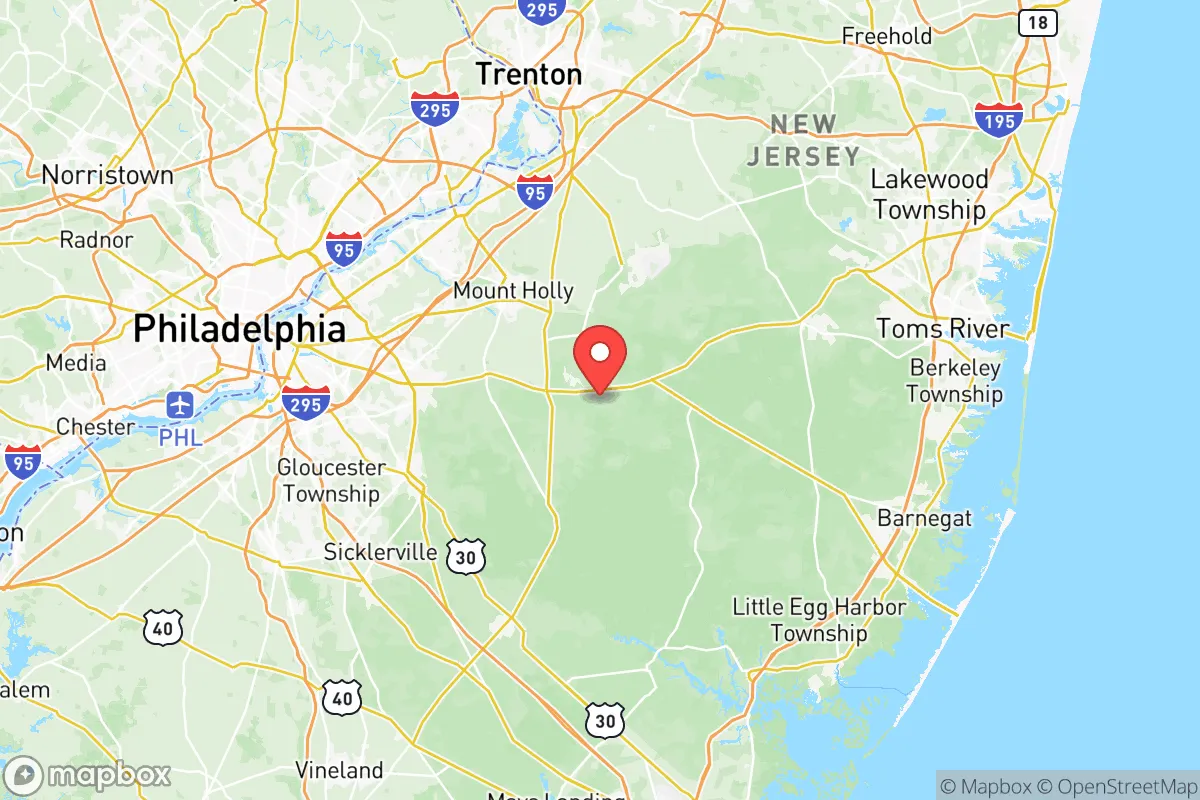
Burlington County, New Jersey, presents a complex landscape for personal sovereignty, where state-level restrictions on firearms, taxes, and land use are tempered by local variations in enforcement and community culture. While New Jersey as a whole ranks among the most heavily regulated states in the nation, Burlington County offers pockets of greater autonomy—particularly in its rural townships and agricultural zones—that can appeal to individuals and families prioritizing self-reliance. The county’s proximity to Philadelphia and New York City means higher costs and denser regulation in its eastern suburbs, but its western and northern reaches provide more breathing room for those willing to navigate state mandates.
Tax burden and regulatory posture in Burlington County
New Jersey’s tax burden is among the highest in the U.S., and Burlington County is no exception. The state’s effective property tax rate averages 2.23% of assessed home value, placing it in the top five nationally. In Burlington County, the average annual property tax bill hovers around $8,500, though this varies sharply by municipality. For example, Moorestown and Mount Laurel, with their top-tier school systems and commuter access, carry rates near the county high, while rural townships like Pemberton and Bass River see lower assessments. The state’s income tax is progressive, topping out at 10.75% for earners over $1 million, and sales tax is 6.625%. Regulatory posture is similarly heavy: New Jersey imposes strict environmental rules under the Pinelands Protection Act, which governs land use across much of Burlington County’s western half. This means property owners in areas like Tabernacle or Shamong face additional permitting hurdles for construction, septic systems, and tree removal—a factor that can frustrate homesteaders but also preserves the rural character that attracts them. For a conservative-leaning reader, the tax and regulatory environment here is a clear trade-off: high costs and bureaucracy in exchange for strong public services and environmental protections.
Self-defense and gun law specifics in Burlington County
New Jersey’s gun laws are among the most restrictive in the country, and Burlington County residents must navigate them carefully. The state requires a Firearms Purchaser Identification Card (FPID) for long guns and a separate permit for each handgun purchase, with a 30-day waiting period between handgun transactions. Concealed carry is legal only with a Permit to Carry (PTC), which, post-Bruen, is now issued on a shall-issue basis—but the application process remains costly and time-consuming, involving fingerprinting, references, and a multi-hour training course. Burlington County’s Superior Court handles appeals, and local police departments vary in their efficiency; some, like those in Medford and Evesham, are known for processing applications within state timelines, while others may lag. Open carry is effectively banned. Magazine capacity is limited to 10 rounds, and certain firearms—like AR-15s with “evil features”—are classified as assault weapons and heavily restricted. For self-defense-minded individuals, the practical takeaway is that owning a firearm for home defense is feasible but administratively burdensome, and carrying outside the home requires significant investment. Rural areas like Southampton and Woodland Township have a stronger hunting culture, where long guns are common, but the legal framework remains uniform across the county.
Self-reliance and homesteading viability: lot sizes, zoning, and off-grid feasibility
Homesteading and off-grid living are possible in Burlington County, but only in specific zones and with careful planning. The county’s western half, part of the Pinelands National Reserve, imposes strict zoning that limits building density and requires minimum lot sizes of 3.2 acres in most rural townships, with some areas requiring 10 acres or more. This creates space for gardens, small livestock, and solar panels, but off-grid water and sewer systems must meet state health department standards. In townships like Tabernacle, Shamong, and Bass River, residents commonly keep chickens, goats, and bees, and many grow substantial vegetable gardens. However, full off-grid living—no grid electricity, no municipal water—is nearly impossible due to state building codes that mandate connection to utility infrastructure for new construction. Rainwater collection is restricted for potable use, and composting toilets require approved designs. Solar panels are permitted but net metering rules are favorable, so most homesteaders stay grid-tied. In contrast, eastern suburbs like Moorestown and Cinnaminson have lot sizes under half an acre and restrictive homeowners’ associations that ban livestock and limit outbuildings. For a family seeking self-reliance, the best bets are the rural townships of Pemberton, Southampton, and Woodland, where zoning is looser and neighbors are more likely to share a similar ethos.
Personal liberties: parental rights, medical autonomy, speech, and property
New Jersey’s legal framework generally prioritizes state authority over individual autonomy in several key areas. Parental rights are strong in theory—the state does not mandate vaccines for school attendance beyond standard childhood immunizations, and parents can opt out for medical or religious reasons—but medical autonomy for adults is limited. The state has strict prescription drug monitoring, and while alternative medicine is legal, naturopaths and direct-primary-care arrangements are less common than in less regulated states. Speech protections are robust under both the U.S. and New Jersey constitutions, though the state has enacted laws against “hate speech” in public accommodations that some conservatives view as chilling. Property rights are constrained by the Pinelands Act and local zoning; in rural townships, you can build a workshop or barn, but you cannot subdivide land without extensive review. In more developed areas like Mount Laurel and Willingboro, homeowners’ associations often dictate exterior paint colors, fence heights, and even lawn maintenance schedules. For a reader prioritizing personal liberty, Burlington County offers a mixed bag: strong property rights in rural zones, but significant state oversight on health, education, and land use.
Overall, Burlington County’s personal sovereignty environment is a study in contrasts. It is not a libertarian haven—New Jersey’s tax and regulatory weight ensures that—but it provides viable niches for self-reliant individuals willing to work within the system. Rural townships like Tabernacle, Shamong, and Bass River offer space, a homesteading culture, and lower property taxes, while suburban areas like Moorestown and Mount Laurel trade autonomy for convenience and services. For a conservative-leaning family, the county’s best value lies in its agricultural and Pinelands zones, where state mandates are a known cost of doing business rather than a surprise. Compared to states like Texas or New Hampshire, Burlington County falls short on tax freedom and gun rights, but it surpasses many urban coastal areas in offering actual land and community for those who prioritize self-reliance. The key is choosing the right municipality—and understanding that state law will always set the ceiling.

* Values derived from national, state, county, city and local statistics and may differ in a specific area. Last updated: 2026-10-24T22:55:13.000Z
Narrative content on this page is AI-generated and may contain mistakes. Verify any details that matter before acting on them.
ReloMaps may earn a commission from affiliate links at no extra cost to you.

