Photo: Wikipedia
Political ClimatePolitical Climate in Rockingham County
Showing state-level results — no local-only data available.
Local Political AnalysisPolitical Analysis of Rockingham County
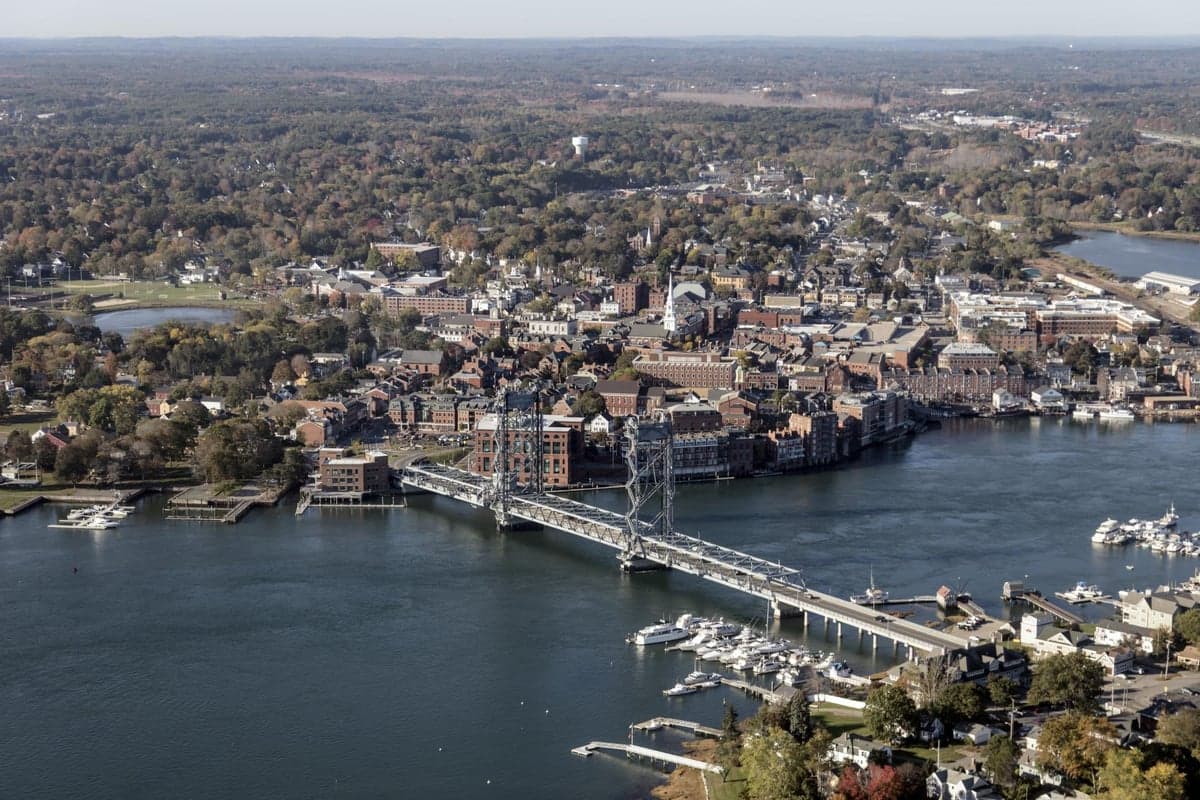
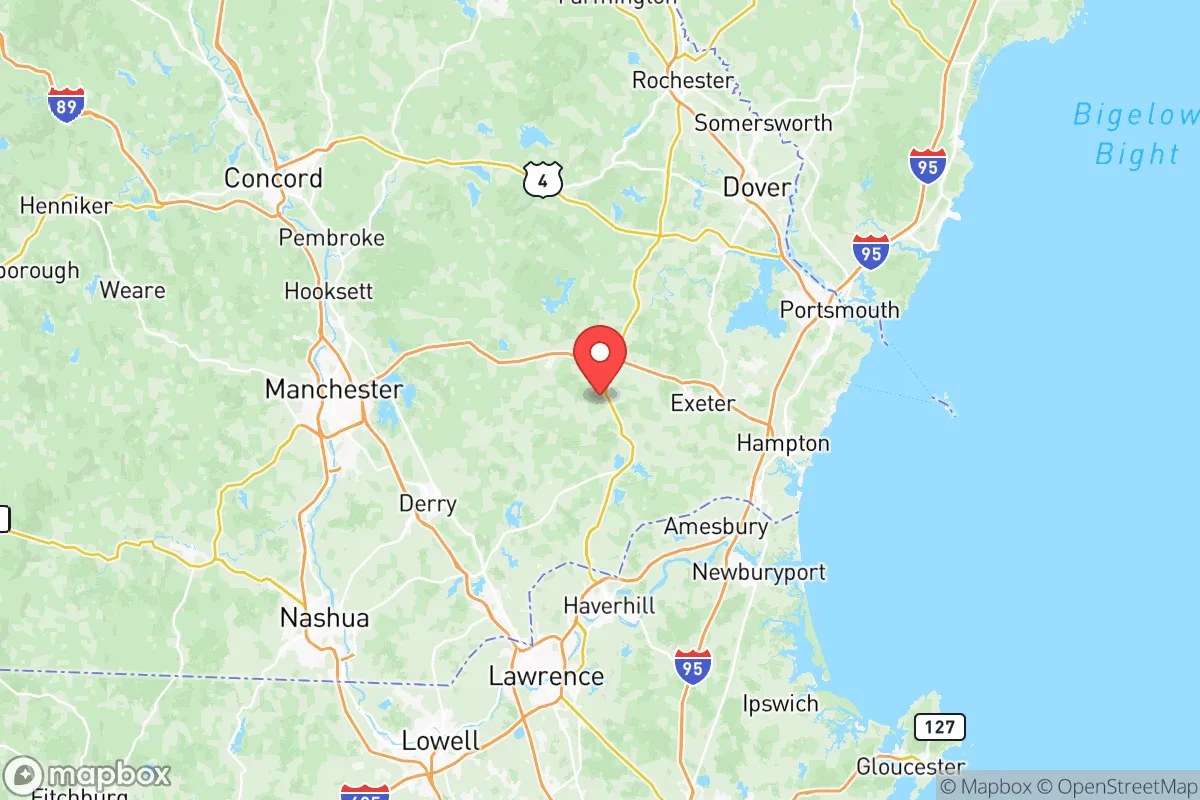
Rockingham County, New Hampshire, has long been a bellwether for the state’s political mood, but it’s currently pulling to the right of the state as a whole. While New Hampshire holds a Cook Partisan Voting Index (PVI) of D+2, meaning it leans slightly Democratic in presidential elections, Rockingham County has trended Republican over the past decade. In 2024, the county voted for Donald Trump by roughly 10 points, a stark contrast to the statewide margin where Kamala Harris narrowly lost. This shift is driven by explosive population growth in the southern tier, particularly in towns like Salem, Derry, and Londonderry, where new arrivals from Massachusetts often bring more fiscally conservative views. Meanwhile, the county’s coastal and commuter-heavy towns—Portsmouth, New Castle, and Rye—remain reliably blue, creating a sharp urban-rural split that defines local politics.
How it compares
Compared to the rest of New Hampshire, Rockingham County is the state’s most populous and economically dynamic region, but its politics are more polarized. The state’s D+2 PVI reflects a balance where the liberal strongholds of Hillsborough County (Manchester, Nashua) and the Dartmouth-Lake Sunapee region offset the conservative North Country. Rockingham, however, has no major Democratic city to anchor it—Portsmouth is the only blue dot of significant size, and its influence is diluted by the sprawling, red-leaning suburbs. For example, Windham and Atkinson vote Republican by 20+ points, while Exeter and Stratham are swing towns that often decide county-wide races. This means Rockingham County’s delegation to the state legislature is disproportionately Republican, even when Democrats win statewide offices like governor or U.S. Senate. The county’s trajectory is also distinct: it’s growing faster than the rest of the state, and that growth is overwhelmingly in red-leaning towns, suggesting the gap between Rockingham and the state’s D+2 lean will widen.
What this means for residents
For conservative residents, Rockingham County feels like a safe haven where their votes matter. Local school boards, town councils, and the county commission are reliably GOP-controlled, meaning lower property tax rhetoric and resistance to state-level gun laws or education mandates are common. For liberal residents, especially in Portsmouth and Exeter, the county can feel like an uphill battle, but their votes are crucial in statewide races—Rockingham’s blue towns often provide the margin that keeps New Hampshire competitive. In practice, this means policy fights are constant: the county’s Republican majority frequently clashes with Democratic governors over issues like parental rights in schools, housing density, and energy siting. The cultural divide is real but not hostile—most towns are small enough that neighbors disagree without it being personal. The long-term trend, though, is clear: as more families move to Seabrook, Hampton, and Plaistow for lower taxes and bigger lots, the county’s red tint will deepen, making it an even more important battleground for control of the state.
Culturally, Rockingham County is a study in contrasts. The seacoast towns have a distinct New England liberal vibe—farmers markets, bike lanes, and “Black Lives Matter” signs are common—while the inland and northern towns lean into a more traditional, gun-friendly, small-government ethos. One notable policy distinction: the county has been a flashpoint for school choice debates, with towns like Derry and Salem voting to expand charter schools and voucher programs, while Portsmouth and Exeter have fought to keep public funding local. This split mirrors the broader New Hampshire tension between “Live Free or Die” individualism and community-oriented progressivism. For anyone moving here, the advice is simple: your experience will depend heavily on which town you pick. If you want a blue bubble, stick to the coast; if you want a red one, head inland. Either way, you’ll find neighbors who care deeply about local control—and who will tell you exactly why their way is right.

State Political ClimatePolitical Climate in New Hampshire
State Political AnalysisPolitical Environment in the State
New Hampshire has long been the most politically divided state in New England, and that reputation holds true today. With a Cook PVI of D+2, the state is a true purple battleground, but the trajectory over the last 10-20 years shows a slow but steady rightward shift, especially in the southern and central exurbs. The dominant coalition is a mix of fiscally conservative, socially moderate independents and a shrinking but still powerful bloc of old-school Yankee Republicans, all balanced against a concentrated Democratic stronghold in the southeastern corner. For a conservative-leaning relocator, the key takeaway is that New Hampshire is not a red state, but it is a state where conservative policies can win — and often do — when the rest of the Northeast is moving left.
Urban vs. rural divide
The political map of New Hampshire is a story of two distinct regions. The southeastern corner — anchored by Manchester, Nashua, and the Seacoast (Portsmouth, Dover, Durham) — is the Democratic engine. These areas are dense, diverse, and heavily influenced by Massachusetts commuters and University of New Hampshire students. Manchester, the largest city, has trended blue in presidential elections since 2004, though its mayoral races remain competitive. In contrast, the rest of the state is deeply red. The Lakes Region (Meredith, Laconia), the White Mountains (North Conway, Littleton), and the Monadnock Region (Keene, Peterborough) all vote reliably Republican, with the North Country (Berlin, Lancaster) being the most conservative area per capita. The real battleground is the Merrimack Valley (Concord, Hooksett, Bow), where swing voters in suburbs like Bedford and Londonderry decide state elections. In 2024, Donald Trump won New Hampshire by a narrow margin, flipping counties like Hillsborough (home to Manchester and Nashua) back to red after years of Democratic gains, while Rockingham County (the Seacoast) remained a toss-up. The rural-urban divide here is stark: drive 20 minutes north of Manchester, and you go from a blue-leaning city to deep-red small towns where Trump signs outnumber Harris signs 5-to-1.
Policy environment
New Hampshire’s policy environment is defined by its famous motto, “Live Free or Die,” and it largely lives up to it. There is no state income tax on wages or salaries, and no state sales tax, making it one of the most tax-friendly states in the country for both individuals and families. Property taxes are high (among the top 10 in the nation), but local control means rates vary wildly — Hanover and Portsmouth are expensive, while Berlin and Claremont are cheaper. The regulatory posture is light: no mandatory car inspections, no helmet law for adults on motorcycles, and a strong right-to-work law (though it’s been a political football). Education policy is a mixed bag: school choice is limited to charter schools and open enrollment within districts, but there is no statewide voucher program. Healthcare is dominated by Dartmouth-Hitchcock in the west and Elliot Hospital in Manchester, with a competitive insurance market. Election laws are among the most open in the nation: same-day voter registration, no voter ID requirement (though a law requiring photo ID was passed in 2024 and is being challenged), and a strong tradition of town-hall democracy. For a conservative, the tax and regulatory environment is a major draw; for a liberal, the lack of social safety nets and the weak gun laws (constitutional carry, no permit needed) are dealbreakers.
Recent policy direction
Over the last five years, New Hampshire has moved in a distinctly conservative direction on several fronts, though the path has been bumpy. In 2021, the Republican-controlled legislature passed a constitutional carry law (HB 309), allowing anyone legally allowed to own a firearm to carry it concealed without a permit. In 2023, they passed a parental bill of rights (HB 10), requiring schools to notify parents about curriculum changes and medical services. On education, the state expanded Education Freedom Accounts (vouchers) in 2022, allowing public funds to follow students to private or homeschool settings — a policy that has been upheld by the state Supreme Court. On the other hand, the state has not passed a heartbeat bill or abortion ban; a 2023 law (HB 88) bans abortion after 24 weeks, with exceptions for life and health, but keeps the procedure legal before that. On property rights, the state has resisted rent control and zoning mandates, though local battles over short-term rentals (Airbnb) are common in tourist towns like North Conway and Lincoln. On voting, the 2024 photo ID law (SB 418) tightened ballot access, but same-day registration remains intact. On privacy and surveillance, New Hampshire has no statewide ban on facial recognition, but local police departments in Manchester and Nashua have been cautious about its use. The overall direction is toward more individual liberty on guns, education, and taxes, but with a pragmatic streak that keeps abortion legal and voting accessible.
Civil unrest & political movements
New Hampshire is not a state known for large-scale civil unrest, but it has its share of organized movements. The Free State Project, a libertarian migration movement, has been active since the early 2000s, with thousands of members settling in the Monadnock Region (especially Keene and Peterborough). They have successfully pushed for gun rights, tax limits, and school choice, but have also sparked backlash from locals who see them as outsiders. On the left, the New Hampshire Democratic Party has been energized by abortion rights and climate activism, with protests outside the State House in Concord during the 2023 abortion debate. Immigration politics are relatively quiet — New Hampshire has no sanctuary city policies, and the state’s foreign-born population is small (about 6%), though Manchester has seen a growing refugee community from Bhutan and Somalia. Election integrity controversies flared after 2020, with Republican activists pushing for audits in Windham (where a recount found discrepancies), but no widespread fraud was ever proven. Secession or nullification rhetoric is rare, though the Free State Project has occasionally floated the idea of “town nullification” of federal laws. A new resident would notice the political activism mostly in the form of yard signs, town hall meetings, and local newspaper op-eds — it’s a state where people care deeply about local politics, but it rarely turns violent or disruptive.
Projection
Over the next 5-10 years, New Hampshire is likely to remain purple, but with a slight rightward tilt driven by in-migration. The state is growing fastest in the southern tier (Rockingham and Hillsborough counties), where Massachusetts transplants are moving for lower taxes and more space. These newcomers tend to be fiscally conservative but socially moderate, which could push the state toward a more libertarian-leaning Republicanism rather than a hard-right version. The Democratic base in the Seacoast and Manchester will hold, but the rural areas are getting redder, and the Lakes Region is becoming a retirement destination for conservatives from Massachusetts and New York. The biggest wildcard is the Free State Project: if their numbers continue to grow, they could flip the state legislature to a more radical libertarian majority, pushing for things like a state-level gold standard or abolishing property taxes. However, the state’s aging population (median age 43) and the out-migration of young people to Boston and Portland could weaken the Democratic base. For someone moving in now, expect a state where the political debate is lively but civil, where your vote truly matters, and where the policy direction will likely continue toward lower taxes, more school choice, and stronger gun rights — but with enough Democratic resistance to keep things like abortion and voting access intact.
For a conservative-leaning relocator, New Hampshire offers a rare combination: low taxes, light regulation, and a political culture where your voice can actually swing an election. You’ll find plenty of like-minded neighbors in the suburbs of Bedford and Londonderry, or in the rural towns of the Lakes Region and North Country. But you’ll also need to coexist with liberals in Portsmouth and Durham, and with libertarians in Keene. The bottom line is that New Hampshire is a state where you can live free, but you’ll have to fight for it every election cycle — and that’s exactly how most Granite Staters like it.
* Values derived from national, state, county, city and local statistics and may differ in a specific area. Last updated: 2026-06-15T10:25:38.000Z
Narrative content on this page is AI-generated and may contain mistakes. Verify any details that matter before acting on them.
ReloMaps may earn a commission from affiliate links at no extra cost to you.

