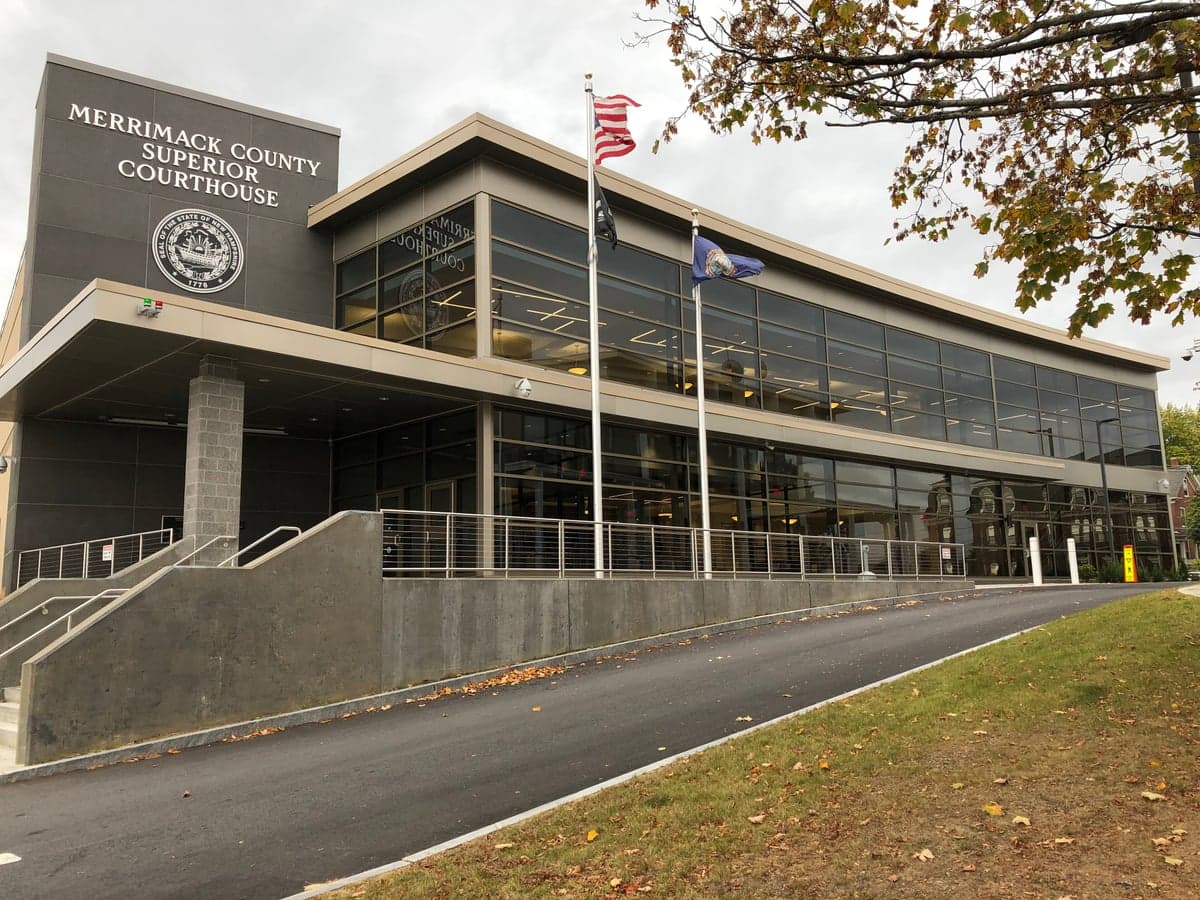
Photo: Wikipedia
Quality of Life in Merrimack County
A livable area that tracks near national norms for affordability, walkability, and neighborhood health.
What does Quality of Life tell us?
Quality of Life measures an area by evaluating factors like cost of living, nearby amenities, country club access, airport proximity, socioeconomic signals and neighborhood character. For large states, this is a general average — quality of life can vary dramatically between metro areas, suburbs, and rural communities within the same state.
What does this tell us?
Quality of Life measures an area by evaluating factors like cost of living, nearby amenities, country club access, airport proximity, socioeconomic signals and neighborhood character. For large states, this is a general average — quality of life can vary dramatically between metro areas, suburbs, and rural communities within the same state.
Cost of Living
14% above national average
99%
The Real Cost of Living in Merrimack County for 2026
| Tier | Individual | Family (4) |
|---|---|---|
| Survival | $21k | $39k |
| Comfortable | $64k | $94k |
| Luxury | $154k+ | $239k+ |
| Elite (Top 5%) | $182k+ | $281k+ |
Quality-of-Life Analysis
Merrimack County, New Hampshire, offers a broad quality-of-life spectrum that ranges from the walkable, amenity-rich capital city of Concord to deep-rural towns like Sutton and Andover, where dirt roads and working farms define the landscape. The county’s character shifts noticeably as you move from the I-93 corridor outward, attracting different residents: young professionals and state employees cluster near Concord, while remote workers, retirees, and outdoor enthusiasts gravitate toward the quieter, forested northern and western towns. With a cost-of-living index of 114 (100 = U.S. average), the county sits above the national norm but remains more affordable than the Boston metro or coastal New Hampshire, offering a middle ground between urban access and rural seclusion.
Largest town(s) & population centers
Concord, the state capital and the county’s largest city (population roughly 44,000), anchors the region with a compact downtown, the State House complex, and a full slate of services including Concord Hospital, the main public library, and the Capitol Center for the Arts. Daily life here is car-light by New Hampshire standards — many state employees and downtown workers walk or bike to work, and the Concord Area Transit (CAT) provides fixed-route bus service. The city’s median home value of $330,600 and median rent of $1,293 reflect a stable, middle-market housing stock dominated by older colonials, capes, and multifamily units near the center. Bow and Hooksett, both bordering Concord, function as suburban bedroom communities with newer subdivisions, big-box retail along Route 3 and 106, and slightly higher home prices. Hooksett’s access to I-93 and the Manchester-Boston Regional Airport (20 minutes south) makes it a practical base for commuters, while Bow’s highly rated school system draws families willing to pay a premium for larger lots. The average commute across the county is 27 minutes, a figure that rises to 35-40 minutes for residents commuting from the northern towns to Concord or Manchester.
Smaller towns & rural pockets
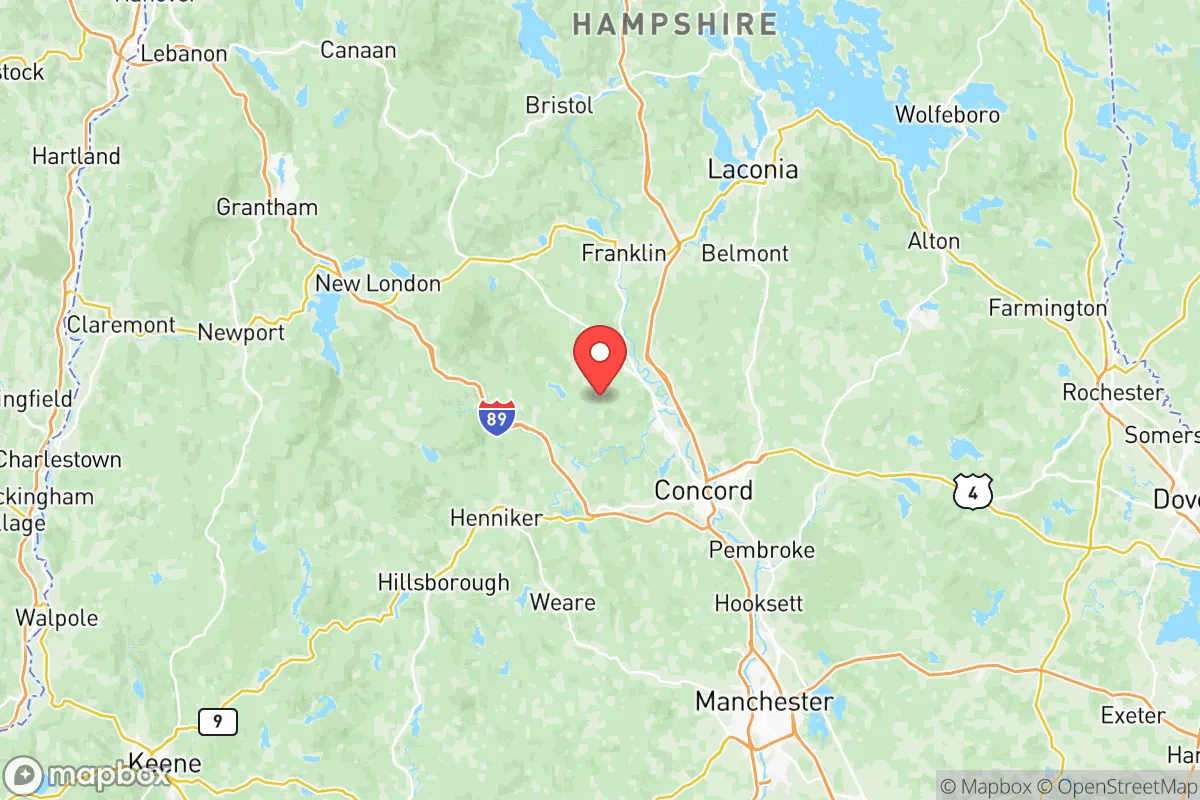
North and west of Concord, the county opens into a mosaic of small towns and unincorporated places where population density drops sharply. Andover (population ~2,300) and Danbury (~1,200) sit along the northern edge, offering lakefront properties on Highland Lake and Pleasant Lake, respectively, alongside working farms and extensive state forest land. Sutton and New London (the latter technically in Sullivan County but closely tied to Merrimack County’s western edge) anchor the Lake Sunapee region’s eastern flank, with Sutton’s Kearsarge Mountain providing year-round hiking and winter backcountry skiing. Bradford, Warner, and Hopkinton form a band of historic villages with preserved town commons, small general stores, and active grange halls — Warner’s Main Street is listed on the National Register of Historic Places. These towns lack the retail density of Concord; residents typically drive 20-30 minutes for groceries, hardware, and medical care. Unincorporated areas such as the Merrimack River floodplain north of Boscawen and the Ragged Mountain area near Andover contain no municipal services, only seasonal camps and off-grid homes, representing the county’s most isolated living option.
Cost & lifestyle range
The cost spread across Merrimack County is wide, though the overall index of 114 masks the extremes. At the high end, Bow and Hopkinton command median home values above $400,000, driven by top-ranked school districts and large-lot zoning (minimum 2-3 acres in many Bow subdivisions). At the low end, Franklin (population ~8,500) offers median home values near $220,000 and rents below $1,000, but the trade-off includes higher poverty rates, older housing stock, and fewer local jobs — most Franklin residents commute to Concord or the Lakes Region. Pittsfield and Northfield fall into a similar value tier, with modest capes and ranches on small lots. Amenity density follows the same gradient: Concord has multiple supermarkets, urgent-care clinics, and a regional hospital, while residents of Andover or Danbury rely on the Concord or Lebanon markets for major purchases. Property taxes, a key factor in New Hampshire, vary by town — Bow’s rate is roughly $18 per $1,000 of assessed value, while Franklin’s hovers near $25 per $1,000, partially offsetting the lower purchase price.
Residents who thrive in Merrimack County tend to value trade-offs over extremes. The county suits those who want a walkable capital-city lifestyle in Concord, a suburban school-focused environment in Bow or Hopkinton, or genuine rural quiet in Andover or Sutton — all within a 30- to 45-minute drive of each other. It is less suited for people seeking urban density, nightlife, or zero-commute convenience, as even Concord’s downtown is small by regional standards. For families, remote workers, and state-government employees who prioritize school quality, outdoor access, and a moderate cost of living relative to southern New Hampshire or Massachusetts, Merrimack County offers one of the Granite State’s most balanced living arrangements.

Crime in Merrimack County
Lower crime rates than 82% of comparable U.S. locations.
Violent CrimeViolent Crime Analysis
Property CrimeProperty Crime Analysis
Crime Analysis
Merrimack County, New Hampshire, presents a notably safe environment compared to national averages, with violent crime rates roughly one-third of the U.S. figure and property crime rates about half the national level. The county’s overall safety profile is shaped by its mix of small cities, suburban towns, and rural communities, though crime is not evenly distributed across the region. Residents in the county’s more populous areas face higher risks than those in its quieter towns, and local law enforcement and judicial approaches play a significant role in maintaining public safety.
Crime in context
Merrimack County’s violent crime rate stands at 118.5 incidents per 100,000 residents, well below the New Hampshire state average of approximately 140 per 100,000 and far under the national rate of about 380 per 100,000. Property crime in the county is 826.7 per 100,000, compared to the state average of roughly 1,100 and the national figure near 1,950. These numbers place Merrimack County among the safer jurisdictions in New England. However, the county seat of Concord, the state capital, accounts for a disproportionate share of reported incidents due to its higher population density and commercial activity. Smaller communities such as Bow and Hopkinton report significantly lower crime rates, often with violent crime in the single digits annually.
What residents experience
For most residents, serious crime is a rare occurrence. The county’s violent crime is primarily driven by domestic incidents and isolated assaults rather than random street violence, meaning the risk to the general public is low. Property crime, particularly theft from vehicles and burglary, is more common in areas with easy highway access, including Concord and Franklin. Franklin, a smaller city in the northern part of the county, has historically struggled with higher rates of drug-related property crime, though recent law enforcement efforts have shown improvement. The Merrimack County Attorney’s Office and local district courts generally take a firm stance on repeat offenders, which helps keep recidivism lower than in more progressive jurisdictions. Residents in towns like Pembroke and Allenstown report feeling safe walking at night, though they remain vigilant about locking cars and homes, especially near commercial corridors.
Neighborhood-level variation
Crime in Merrimack County is highly localized. The downtown area of Concord, particularly near the State House and along Loudon Road, sees higher rates of shoplifting, vehicle break-ins, and occasional aggravated assaults, especially late at night. In contrast, the suburban neighborhoods of Bow and Hopkinton consistently report near-zero violent crime and property crime rates below 300 per 100,000. Franklin’s central district and areas near the Winnipesaukee River have elevated property crime, while its outlying residential streets remain quiet. The county’s rural towns, including Webster and Sutton, experience so few incidents that annual crime reports often show no violent crime at all. Prospective residents should note that the county’s overall safety is strong, but those seeking the lowest possible risk should prioritize smaller towns and suburban communities over Concord or Franklin.
* Values derived from national, state, county, city and local statistics and may differ in a specific area. Last updated: 2026-06-15T22:37:52.000Z
Narrative content on this page is AI-generated and may contain mistakes. Verify any details that matter before acting on them.
ReloMaps may earn a commission from affiliate links at no extra cost to you.

