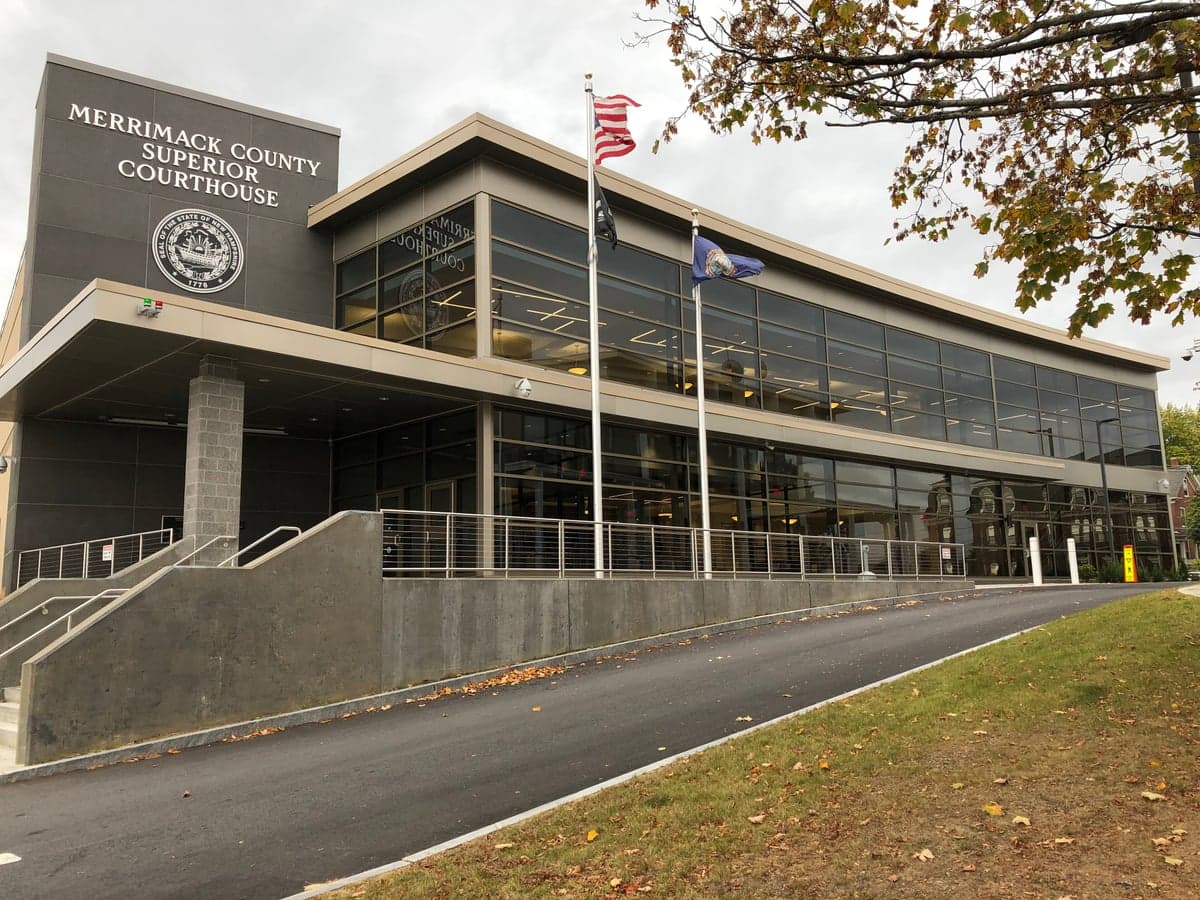
Photo: Wikipedia
Personal Sovereignty in Merrimack County
Viable for self-reliance. Generally workable, though some barriers may limit total independence.
What does Personal Sovereignty tell us?
Personal Sovereignty measures your capacity for self-reliance and independence with minimal government friction. Higher scores mean fewer barriers between you and the way you want to live... but it assumes you have the space you need and good neighbors.
What does this tell us?
Personal Sovereignty measures your capacity for self-reliance and independence with minimal government friction. Higher scores mean fewer barriers between you and the way you want to live... but it assumes you have the space you need and good neighbors.
State Policy
Energy independence: Importer (10% of energy produced in-state)
Personal Liberty
Homesteading

Personal Liberty Analysis
Merrimack County, New Hampshire, offers one of the strongest personal sovereignty environments in the Northeast, combining a light state regulatory touch with deep-rooted local traditions of self-governance. The county's autonomy profile is defined by New Hampshire's lack of a broad-based income or sales tax, a permissive legal framework for self-defense, and zoning codes that vary dramatically between its urbanized southern towns and its rural northern townships. For a relocation-minded individual or family prioritizing independence, the key variable is location within the county: the city of Concord and the commuter towns of Bow and Hooksett operate under more structured municipal codes, while the rural towns of Andover, Danbury, and Wilmot offer far greater latitude for self-reliant living.
Tax burden and regulatory posture in Merrimack County
New Hampshire's state-level tax structure is among the most favorable in the country for personal sovereignty, and Merrimack County residents benefit directly. There is no state income tax on wages or salaries, no state sales tax, and no capital gains tax. The primary revenue source for local government is the property tax, which in Merrimack County averages roughly 1.8% to 2.2% of assessed value depending on the town — moderate by New England standards but higher than many Sun Belt states. The county itself has no county-level sales or income tax, and its regulatory posture is generally permissive. The state's "Right-to-Know" law and strong public meeting statutes give residents significant oversight of local boards. However, the regulatory environment is not uniform: Concord, the state capital, has more developed zoning ordinances, building codes, and land-use regulations than the unincorporated or lightly governed townships to the north. In towns like Andover and Danbury, planning boards are often part-time and less inclined to enforce strict subdivision or building standards, which translates to lower compliance costs and fewer bureaucratic hurdles for property owners.
Self-defense and gun law specifics in Merrimack County
New Hampshire is a constitutional carry state, and Merrimack County reflects that ethos fully. No permit is required to carry a concealed firearm for any law-abiding adult 18 or older. The state preempts all local firearm ordinances, meaning towns like Concord, Bow, and Hooksett cannot enact their own restrictions beyond state law. There is no waiting period for firearm purchases, no registry requirement, and no permit-to-purchase system. The county is home to several active shooting ranges and gun clubs, including the Pembroke Fish and Game Club and the Granite State Rifle and Pistol Club in Concord. While the state does have a "duty to inform" law during traffic stops, the overall legal climate is among the most permissive in the Northeast. For a reader prioritizing self-defense rights, Merrimack County offers essentially the same legal environment as many Western states, with the added benefit of a state preemption statute that prevents local governments from creating a patchwork of restrictions.
Self-reliance and homesteading viability across the county
The viability of homesteading and off-grid living varies significantly across Merrimack County's 934 square miles. In the northern and western towns — Andover, Danbury, Wilmot, and Sutton — minimum lot sizes of 2 to 5 acres are common, and zoning codes are generally lenient regarding accessory structures, livestock, and home-based businesses. Off-grid systems such as solar panels, composting toilets, and rainwater collection are legal under state building codes, though a septic system permit is required for any dwelling with plumbing. The town of Danbury, for example, has no zoning ordinance at all, relying instead on state-level health and safety codes. In contrast, the southern towns of Bow, Hooksett, and the city of Concord enforce more restrictive subdivision regulations, minimum dwelling sizes, and setback requirements that make true self-reliant homesteading more difficult. Wilmot and Andover are particularly attractive for off-grid living due to their low population density, minimal municipal oversight, and availability of wooded parcels with limited road frontage requirements. The county's agricultural soils are thin and rocky, typical of central New Hampshire, so serious food production requires raised beds or greenhouse investment.
Personal liberties in daily life: parental rights, medical autonomy, speech, and property
New Hampshire's legal framework supports a broad range of personal liberties that directly affect daily life in Merrimack County. Parental rights are strongly protected under state law, with a statutory presumption that parents have the fundamental right to direct their children's education, healthcare, and upbringing. The state's "Education Freedom Account" program, enacted in 2021, provides public funds for private school tuition, homeschooling materials, and other educational expenses, making it one of the most expansive school choice programs in the country. Medical autonomy is similarly robust: New Hampshire has no state-level vaccine mandate for adults, and the state's "Right to Try" law allows terminally ill patients access to experimental treatments. Freedom of speech and assembly are protected by the state constitution's strong free speech clause, which the New Hampshire Supreme Court has interpreted more broadly than the First Amendment in some contexts. Property rights are reinforced by the state's "bubble rule" for pipeline construction and a strong eminent domain statute that requires just compensation and a public purpose. In towns like Hooksett and Bow, property owners face fewer restrictions on short-term rentals and home-based businesses than in many other New England communities, though local zoning still applies.
Overall, Merrimack County ranks among the top 10% of U.S. counties for personal sovereignty, particularly for a reader who values fiscal freedom, self-defense rights, and educational choice. The county's chief advantage over lower-tax states like Texas or Florida is its combination of no income tax, no sales tax, and constitutional carry with a strong tradition of local self-governance. The trade-off is a higher property tax burden and a colder climate that imposes real costs on off-grid living. For a family or individual who can tolerate New Hampshire winters and is willing to choose a town like Andover, Danbury, or Wilmot over Concord or Bow, Merrimack County offers a level of personal autonomy that is increasingly rare in the densely populated Northeast corridor.

* Values derived from national, state, county, city and local statistics and may differ in a specific area. Last updated: 2026-06-15T22:37:52.000Z
Narrative content on this page is AI-generated and may contain mistakes. Verify any details that matter before acting on them.
ReloMaps may earn a commission from affiliate links at no extra cost to you.

