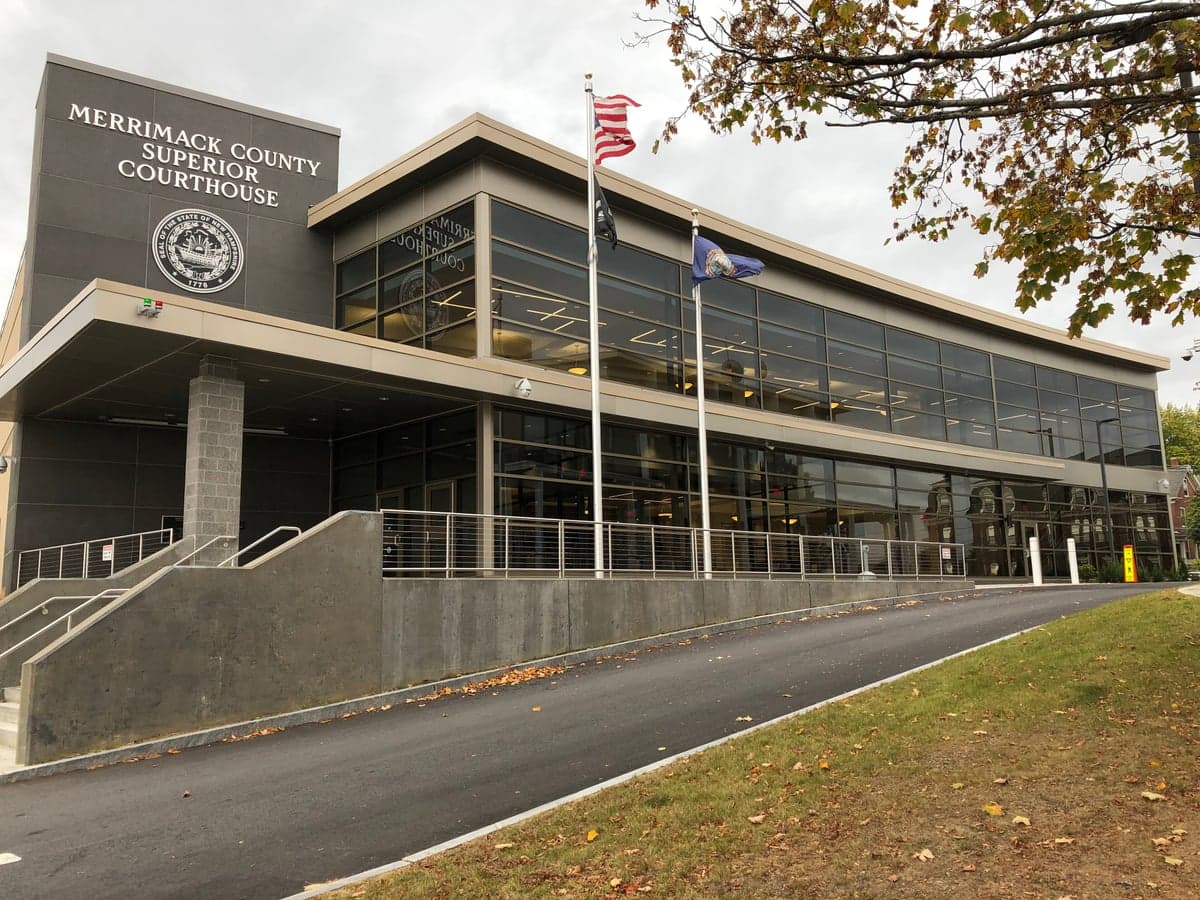
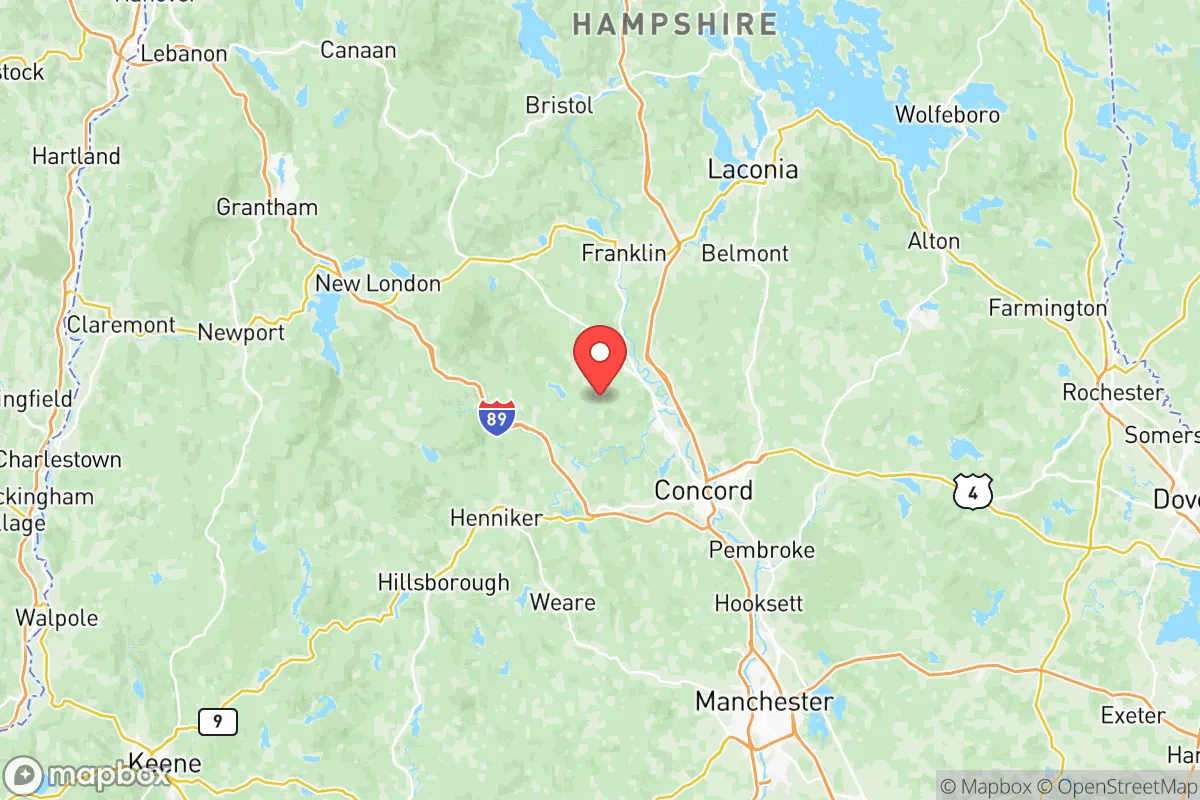
Photo: Wikipedia
Demographics of Merrimack County
Affluence Level in Merrimack County
An upper-middle-class area. Household wealth, education levels, and homeownership run ahead of national benchmarks.
People of Merrimack County
Merrimack County, New Hampshire, is home to roughly 155,000 residents, a population that remains predominantly white (90.6%) and notably less diverse than the national average, with only 1.5% foreign-born. The county’s character is shaped by its historic role as a state capital anchor—Concord—and a mix of rural towns and suburbanizing communities like Hooksett and Bow. Its people are defined by a legacy of Yankee self-reliance, waves of French-Canadian and Irish industrial labor, and a modern influx of professionals drawn to the region’s schools and proximity to Boston.
Settlement & growth (pre-1960)
Long before European settlement, the area now known as Merrimack County was the homeland of the Pennacook people, an Algonquian-speaking confederation of tribes who lived along the Merrimack River. Their villages, such as the one near present-day Concord (then called Pennacook), relied on fishing, hunting, and seasonal agriculture. Disease and conflict with English colonists decimated the Pennacook population by the late 1600s, and the survivors largely retreated north to join the Abenaki or French in Canada.
English settlement began in earnest in the 1720s and 1730s, when the Massachusetts Bay Colony granted land to veterans of King Philip’s War and other conflicts. The first permanent English settlers arrived in what is now Concord (founded as Rumford in 1727) and Bow (granted in 1727). These were primarily yeoman farmers of English and Scots-Irish stock, seeking fertile river-bottom land. The town of Hopkinton, settled in 1736, became a regional center for agriculture and early milling. By the time of the American Revolution, the county’s population was almost entirely of British descent, with a scattering of Scots-Irish families in towns like Pembroke and Loudon.
The 19th century brought transformative waves of immigration, driven by industry. The Merrimack River’s water power fueled textile mills in Concord and Franklin, and later shoe and leather factories in Penacook (a village within Concord). The first major non-English group to arrive were the Irish, who began coming in large numbers during the 1840s and 1850s, fleeing the Great Famine. They built the railroads and canals, and many settled in Concord’s “Dublin” neighborhood and in mill villages like Contoocook. By 1860, the Irish made up roughly 10% of Concord’s population.
Starting in the 1860s and accelerating through the 1880s, French-Canadians crossed the border from Quebec to work in the mills. They concentrated in Penacook, Franklin, and the West End of Concord, forming tight-knit parishes and French-language schools. By 1900, French-Canadians were the largest ethnic group in many Merrimack County mill towns, and their descendants remain a strong cultural presence—evident in surnames, Catholic parishes, and annual events like the Franco-American Festival in Concord. A smaller wave of Polish and Italian immigrants arrived between 1890 and 1910, also drawn to factory work, settling in Concord and Franklin.
Through the first half of the 20th century, the county’s population remained overwhelmingly white and Christian, with a Yankee Protestant elite in Concord and a growing French-Canadian Catholic working class in the mill villages. The Great Depression and World War II slowed immigration, but the post-war boom brought a modest influx of returning veterans and their families, many of whom moved to new suburban developments in Bow and Hooksett.
Modern era (post-1965)
The 1965 Hart-Cellar Act had a muted effect on Merrimack County compared to urban areas. The county’s foreign-born population today is just 1.5%, far below the national average of roughly 14%. The limited immigration that has occurred since the 1970s has been primarily from Asia and Latin America, but in very small numbers. East and Southeast Asian communities—including Vietnamese, Chinese, and Korean families—began arriving in the 1980s and 1990s, often as professionals or refugees resettled by sponsoring agencies. They concentrated in Concord and Hooksett, where a small but visible Asian business district has emerged along Loudon Road. The Indian-subcontinent population (0.4%) is even smaller, consisting mostly of doctors, engineers, and IT professionals working at Concord Hospital or commuting to Boston-area tech firms.
Hispanic residents (2.6%) are the fastest-growing minority group, though still a small share. Most are of Mexican or Central American origin, drawn by construction, landscaping, and service jobs. They have settled primarily in Concord and Franklin, where lower housing costs and established social networks exist. The Black population (1.5%) is largely concentrated in Concord, with a smaller presence in Franklin and Pittsfield.
Domestic migration has reshaped the county more than international immigration. Since the 1990s, professionals and families from Massachusetts—particularly the Boston suburbs—have moved north seeking lower taxes, better schools, and larger lots. This “Mass migration” has driven suburban growth in Bow, Hooksett, and Loudon, where new subdivisions and strip malls have replaced farmland. The population of Hooksett, for example, grew from about 6,000 in 1990 to over 10,000 by 2020. At the same time, remote work post-2020 has accelerated this trend, with younger families and telecommuters buying homes in Warner and Andover for their rural character and high-speed internet access.
The future
Merrimack County is slowly diversifying, but from a very low base. The Hispanic and Asian shares are projected to rise modestly over the next decade, driven by natural increase and continued domestic migration of minority families from Massachusetts. The county’s foreign-born share may reach 2-3% by 2035, still well below the national average. The white population, while still dominant, is aging—the median age in the county is 42, compared to 38 nationally—and younger families are increasingly non-white.
The biggest demographic shift will likely be continued suburbanization and exurban sprawl. Towns like Hooksett, Bow, and Pembroke will absorb most of the growth, while rural towns like Andover and Warner may see modest infill. Concord will remain the economic and cultural hub, but its downtown is likely to become more diverse and more oriented toward services and government rather than manufacturing. The county’s cultural identity—historically Yankee and Franco-American—is gradually blending into a broader New England suburban identity, with less distinct ethnic enclaves and more homogenized, car-oriented development.
For someone moving in now, Merrimack County offers a stable, safe, and well-educated environment (38.1% college educated) with strong schools and low crime. The trade-off is limited racial and ethnic diversity, a high cost of living relative to rural New Hampshire, and a slow pace of change. It is becoming a more typical American suburb, but one with deep roots in its industrial and agricultural past.

* Values derived from national, state, county, city and local statistics and may differ in a specific area. Last updated: 2026-06-15T22:37:52.000Z
Narrative content on this page is AI-generated and may contain mistakes. Verify any details that matter before acting on them.
ReloMaps may earn a commission from affiliate links at no extra cost to you.

