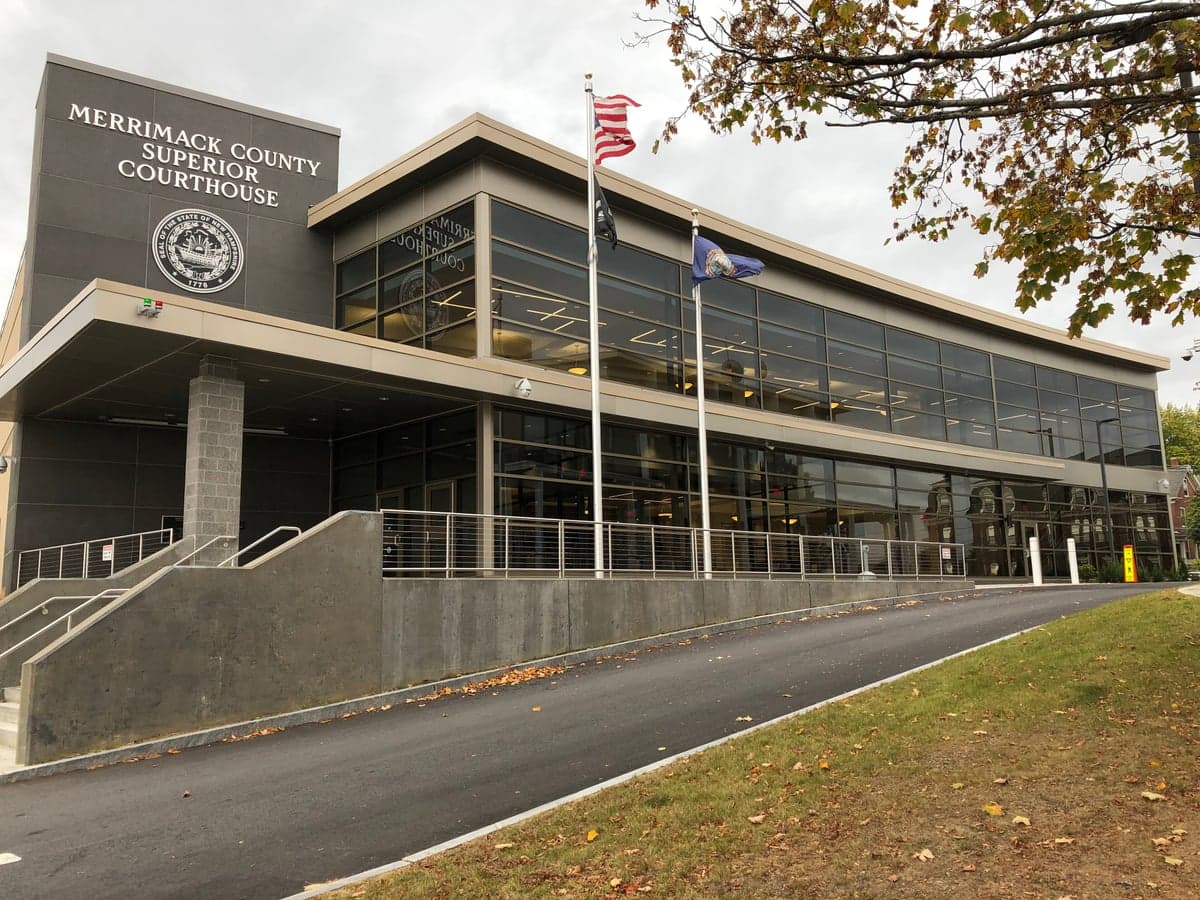
Photo: Wikipedia
Political ClimatePolitical Climate in Merrimack County
Showing district-level results — no local-only data available.
Local Political AnalysisPolitical Analysis of Merrimack County
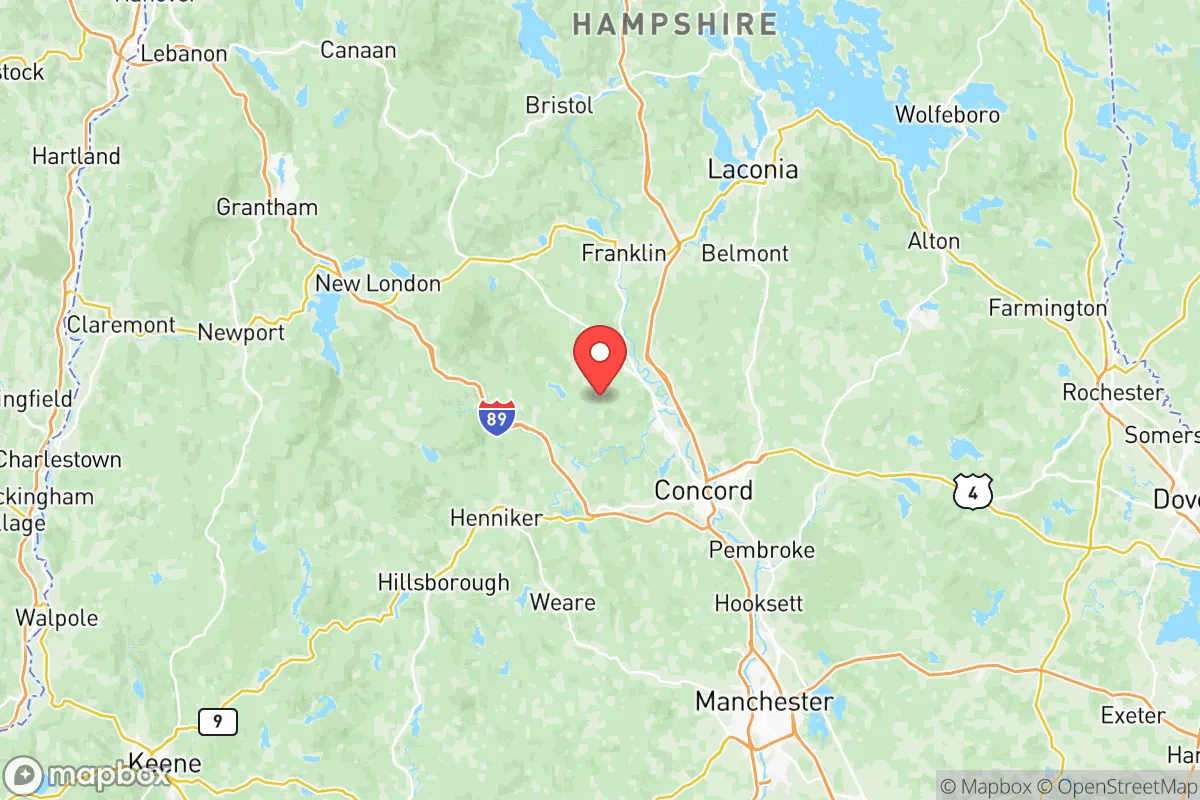
Merrimack County sits right at the political center of New Hampshire, with a Cook PVI of D+2 that mirrors the state's own D+2 rating, but that number hides a deeply divided landscape. The county has shifted leftward over the past decade, driven largely by the growth of Concord and the bedroom communities along the I-89 corridor, while the rural towns in the northern and western parts of the county have held steady or moved slightly right. If you're looking at a map of New Hampshire's purple politics, Merrimack County is the perfect microcosm—it's where the state's competing impulses toward libertarian independence and progressive activism collide in local zoning meetings and state representative races.
How it compares
On paper, Merrimack County and New Hampshire share the same D+2 PVI, but the county's internal variation is more extreme than the state as a whole. The city of Concord, the county seat and state capital, is a solid blue anchor—precincts in the downtown and South End routinely vote 65-70% Democratic in presidential elections, fueled by state workers, college faculty, and a growing young professional class. Meanwhile, towns like Bow and Hopkinton have become classic swing suburbs, flipping between parties depending on the candidate and the year. Head north to Andover, Danbury, or Wilmot, and you'll find towns that vote Republican by 15-20 points, with a strong libertarian streak that shows up in town meeting votes on gun rights and school funding. The real battlegrounds are the exurban towns along the Route 4 and Route 106 corridors—Canterbury, Loudon, and Chichester—where the margin between the parties has shrunk to under 5 points in recent elections. That's a shift from 20 years ago, when those towns were reliably red. The state's overall D+2 rating is essentially an average of these extremes, but Merrimack County's version of that average is more volatile because the swing precincts here are smaller and more responsive to local issues like school budgets and property taxes.
What this means for residents
For conservative residents, the political reality is that they can win local offices in most towns outside Concord, but they face an uphill battle in county-wide races and state legislative districts that include the city. The New Hampshire House of Representatives, with its 400 members, is where this plays out most directly—Merrimack County sends a delegation that is roughly split, but the Concord-area seats are solidly Democratic, meaning the county's overall legislative influence leans left. For liberal residents, the advantage is that Concord provides a reliable base for organizing and policy advocacy, but they have to contend with the fact that the county's rural towns are deeply skeptical of state-level spending and regulation. What unites both sides is a shared New Hampshire culture of fiscal conservatism and local control—even the most progressive Concord voters tend to oppose broad-based income or sales taxes, and even the most conservative Wilmot voters support local school funding. The practical result is that Merrimack County's politics are less about ideological purity and more about who shows up to the town meeting and the school board election.
The biggest cultural and policy distinction in Merrimack County is the outsized influence of the state government in Concord. Because the capital is here, the county has a higher concentration of state employees, lobbyists, and political operatives than anywhere else in New Hampshire, which gives local politics a professionalized edge that you don't see in, say, Carroll County. That also means the county is a testing ground for state-level policy debates—when the legislature debates education funding or housing policy, the effects are felt first in Merrimack County's schools and towns. For a new resident, the key takeaway is that your experience of the political climate will depend almost entirely on which town you choose. If you want a reliably blue environment with walkable downtown amenities, Concord is your place. If you want a red-leaning rural setting with low taxes and minimal regulation, look at the northern towns. And if you want to live in a true swing district where your vote actually matters in every election, the suburbs between Concord and the Lakes Region are where the action is.

State Political ClimatePolitical Climate in New Hampshire
State Political AnalysisPolitical Environment in the State
New Hampshire’s political identity is famously libertarian-leaning and fiercely independent, but the state’s current Cook PVI of D+2 masks a deeply competitive and geographically split electorate. Over the past 20 years, the state has shifted from a reliably Republican stronghold in presidential elections to a battleground that has voted Democratic in five of the last seven cycles, though often by razor-thin margins. The dominant coalitions are a moderate, suburban Republican faction that prioritizes fiscal restraint and local control, and a Democratic base concentrated in the southeastern corner that has grown more progressive on social issues. The 10-20 year arc shows a slow but steady leftward drift driven by in-migration from Massachusetts and other high-cost states, but the state’s unique “Live Free or Die” ethos keeps it from swinging as hard blue as its neighbors.
Urban vs. rural divide
The political map of New Hampshire is a textbook case of the urban-rural split, but with a twist: the state has no truly large city, so the divide is more about suburban density versus small-town independence. The Democratic base is anchored in the southeastern “Golden Triangle” of Manchester, Nashua, and Portsmouth, along with the college town of Durham (home to UNH). These areas drive the state’s blue lean, fueled by professionals, tech workers, and out-of-state transplants who favor progressive social policies and higher public spending. In contrast, the rest of the state—especially the North Country (Coos County) and the western border along the Connecticut River—votes reliably Republican. Towns like Berlin, Lancaster, and Colebrook in the north, and Keene and Claremont in the west, are culturally conservative and economically tied to manufacturing, logging, and tourism. The most politically distinct suburbs are Bedford and Londonderry, which are classic swing towns: fiscally conservative, socially moderate, and often the deciding factor in statewide races. The divide is stark: in 2024, Joe Biden won Manchester by 18 points but lost Coos County by 12, a 30-point gap that defines the state’s political geography.
Policy environment
New Hampshire’s policy environment is defined by its absence of a broad-based income or sales tax, which is the single most important issue for conservative relocators. The state relies on property taxes and business taxes, and the regulatory posture is generally light-touch, especially compared to neighboring Massachusetts and Vermont. Education policy is hyper-local: there is no state sales tax to fund schools, so property taxes vary wildly, and the state’s school funding system has been ruled unconstitutional multiple times, leading to ongoing litigation. Healthcare is a mixed bag: the state expanded Medicaid under the Affordable Care Act, but the legislature has repeatedly passed restrictions on abortion, including a 24-week ban and parental notification requirements for minors. Election laws are among the most accessible in the country: same-day voter registration, no-excuse absentee voting, and no voter ID requirement for most elections, though a 2012 voter ID law requires a photo ID at the polls. For conservatives, the tax structure is a major draw; for liberals, the lack of a state income tax means public services are lean and often underfunded.
Recent policy direction
The last five years have seen New Hampshire lurch in a distinctly conservative direction on several fronts, even as the state’s presidential vote has trended blue. In 2021, the Republican-controlled legislature passed a series of laws that signal a clear policy shift: a constitutional carry law (permitless carry for handguns), a parental bill of rights that requires schools to notify parents about curriculum changes and medical services, and a ban on teaching critical race theory in public schools. On education, the state expanded its school voucher program (Education Freedom Accounts) to all families, regardless of income, making it one of the most expansive in the nation. On medical and bodily autonomy, the state passed a 24-week abortion ban in 2022, with exceptions for rape, incest, and fetal abnormalities, but it also protects access to contraception and IVF. On property rights, the state has strong eminent domain protections and no statewide zoning mandates, though local control means some towns have adopted restrictive land-use policies. On voting and ballot access, the legislature passed a law requiring proof of citizenship to register to vote, which was struck down by the state supreme court in 2024, but the fight continues. On privacy and surveillance, the state has no general data privacy law, but it does ban the use of facial recognition by law enforcement without a warrant. The overall direction is toward more individual liberty on guns and education, but with tighter restrictions on abortion and a more aggressive stance on cultural issues in schools.
Civil unrest & political movements
New Hampshire is not a state known for large-scale civil unrest, but it has a long history of organized political movements that punch above their weight. The Free State Project, a libertarian migration movement that aimed to move 20,000 activists to the state, has been active since the early 2000s and has had a measurable impact on local politics, particularly in the state legislature, where a small but vocal libertarian caucus often blocks tax increases and spending bills. On the left, the NH Rebellion and other anti-corruption groups have pushed for campaign finance reform and ranked-choice voting, though neither has passed. Immigration politics are relatively low-key compared to border states, but there have been flashpoints over sanctuary policies: in 2019, the city of Manchester declared itself a “welcoming city” for immigrants, which drew backlash from state Republicans who passed a law banning sanctuary cities in 2020. Election integrity controversies have been minimal, but the 2020 election saw a brief controversy over ballot drop boxes, which were banned by the legislature in 2021. The most visible flashpoint for a new resident would be the annual Porcupine Freedom Festival in Lancaster, a week-long gathering of libertarians that draws thousands and often makes national news for its unregulated, “free market” ethos. The state’s political culture is one of high engagement but low violence; protests are common but almost always peaceful.
Projection
Over the next 5-10 years, New Hampshire is likely to become more politically polarized, but not necessarily more Democratic. The key demographic shift is in-migration from Massachusetts, New York, and California, which tends to be wealthier and more liberal, but also more fiscally conservative than the national Democratic average. These newcomers are drawn by the low taxes and high quality of life, but they often bring progressive social values that clash with the state’s traditional libertarian-conservative culture. The result is a state that will probably remain a swing state, but with a slight leftward tilt on social issues and a continued rightward tilt on fiscal issues. The Republican Party is likely to remain competitive by focusing on education freedom, gun rights, and tax aversion, while Democrats will hold the southeastern suburbs and college towns. The wild card is the Free State Project: if its activists continue to move in and run for office, they could push the state further toward libertarian policies on drugs, guns, and property rights, which would appeal to both conservative and liberal individualists. A new resident moving in now should expect a state that is politically volatile but fundamentally stable, with a government that is small, responsive, and often gridlocked by competing factions.
For a conservative relocator, the bottom line is that New Hampshire offers a tax-friendly, gun-friendly, and school-choice-friendly environment that is increasingly rare in the Northeast. For a liberal relocator, the state offers a high quality of life, strong civil liberties, and a political system where your vote actually matters. The practical takeaway is that New Hampshire is not a red state or a blue state—it’s a state where your individual choices about taxes, schools, and lifestyle are more important than the party in power. If you value local control and personal freedom above all else, you’ll fit in regardless of your party registration.
* Values derived from national, state, county, city and local statistics and may differ in a specific area. Last updated: 2026-06-15T22:37:52.000Z
Narrative content on this page is AI-generated and may contain mistakes. Verify any details that matter before acting on them.
ReloMaps may earn a commission from affiliate links at no extra cost to you.

