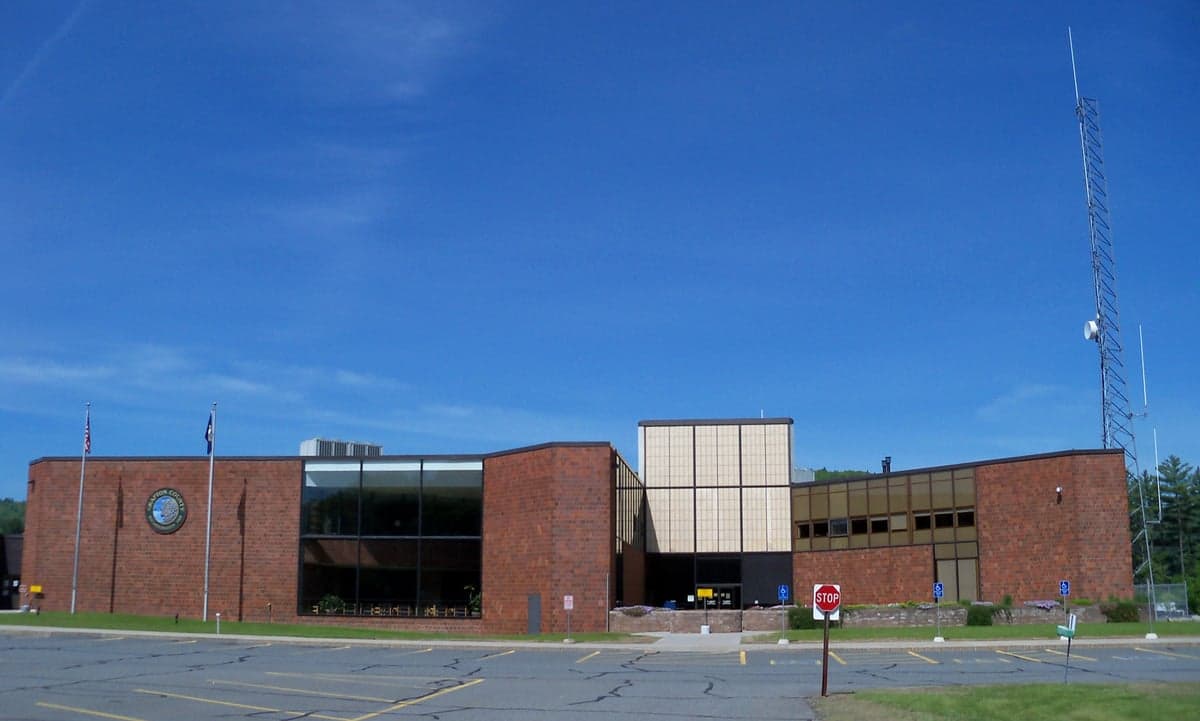
Photo: Wikipedia
Quality of Life in Grafton County
A livable area that tracks near national norms for affordability, walkability, and neighborhood health.
What does Quality of Life tell us?
Quality of Life measures an area by evaluating factors like cost of living, nearby amenities, country club access, airport proximity, socioeconomic signals and neighborhood character. For large states, this is a general average — quality of life can vary dramatically between metro areas, suburbs, and rural communities within the same state.
What does this tell us?
Quality of Life measures an area by evaluating factors like cost of living, nearby amenities, country club access, airport proximity, socioeconomic signals and neighborhood character. For large states, this is a general average — quality of life can vary dramatically between metro areas, suburbs, and rural communities within the same state.
Cost of Living
9% above national average
99%
The Real Cost of Living in Grafton County for 2026
| Tier | Individual | Family (4) |
|---|---|---|
| Survival | $21k | $39k |
| Comfortable | $58k | $85k |
| Luxury | $152k+ | $235k+ |
| Elite (Top 5%) | $202k+ | $314k+ |
Quality-of-Life Analysis
Grafton County, New Hampshire, offers one of the most diverse quality-of-life spectrums in northern New England, ranging from the college-town energy of Hanover and Lebanon to the deep-rural quiet of towns like Orford and Benton. The county’s character shifts dramatically over its roughly 1,700 square miles, drawing young professionals and academics to its Connecticut River Valley corridor, while attracting retirees, outdoor enthusiasts, and remote workers seeking land and solitude to its northern and eastern townships. With a cost-of-living index of 109 (slightly above the national average), a median home value of $298,500, and a median rent of $1,292, the county presents a clear trade-off between convenience and affordability depending on where you settle.
Largest town(s) & population centers
The county’s primary population anchors are Lebanon (pop. ~14,000) and Hanover (pop. ~11,500), which together form the economic and cultural heart of the Upper Valley region. Daily life here revolves around Dartmouth College, Dartmouth-Hitchcock Medical Center (the county’s largest employer), and a dense cluster of tech and biotech firms along the I-89 corridor. Lebanon offers a more practical, family-oriented lifestyle with big-box retail, the Lebanon Municipal Airport, and a walkable downtown with restaurants and a farmers market. Hanover, by contrast, is dominated by the college campus, with higher-end boutiques, the Hopkins Center for the Arts, and a pedestrian-friendly Main Street that feels like a New England postcard. Both towns have excellent public schools (Hanover High School consistently ranks among the top in the state) and commute times averaging 22.8 minutes countywide, though traffic on I-89 can back up during ski season and Dartmouth events. Housing here is the county’s most expensive: a median home in Hanover often exceeds $500,000, while Lebanon offers slightly more attainable options near the $350,000–$400,000 range.
Smaller towns & rural pockets
Outside the I-89 corridor, Grafton County opens into a patchwork of historic villages and unincorporated places. Plymouth (pop. ~6,700) serves as a secondary hub, home to Plymouth State University and a compact downtown with breweries and the Flying Monkey movie theater. Further north, Littleton (pop. ~6,000) has undergone a downtown revival centered on Schilling Beer Co. and the Littleton Grist Mill, attracting tourists and second-home buyers. For those seeking true seclusion, towns like Orford (pop. ~1,200) and Benton (pop. ~360) offer vast stretches of forest and farmland, with homes often sitting on 5–20 acres. Orford’s Ridge Road is a National Scenic Byway, while Benton is so rural it has no stoplight and only a single general store. Warren (pop. ~900) and Piermont (pop. ~700) similarly lack commercial strips but provide direct access to the White Mountain National Forest and the Baker River for fishing and kayaking. These smaller communities have limited employment bases—most residents commute to Lebanon, Plymouth, or even Littleton—but offer land prices that can dip below $200,000 for fixer-uppers.
Cost & lifestyle range
The cost-of-living spread across Grafton County is stark. At the high end, Hanover and Lebanon command premium prices due to the Dartmouth-DHMC employment base and top-tier schools; a two-bedroom apartment in Hanover rents for $1,800–$2,200, well above the county median of $1,292. At the low end, towns like Benton, Warren, and Dorchester (pop. ~350) offer median home values closer to $200,000–$250,000, though inventory is scarce and properties often require significant work. The lifestyle trade-off is clear: residents in Hanover and Lebanon enjoy walkable downtowns, cultural events, and short commutes, while those in the rural north and east trade amenities for privacy, lower taxes (New Hampshire has no state income or sales tax), and direct access to hiking, skiing, and snowmobiling. Property taxes vary by town but average around 1.8% of assessed value countywide, with Hanover’s rate slightly higher due to its services and school funding. For renters, the $1,292 median is achievable in Plymouth and Littleton, but competition is growing as remote workers from Boston and New York discover the area.
Grafton County best suits people who value a clear choice between vibrant community life and deep rural solitude. Young families and professionals thrive in the Lebanon-Hanover corridor, where jobs, schools, and amenities are concentrated. Retirees, artists, and outdoor enthusiasts often prefer the quieter towns like Orford, Warren, or Benton, where land is affordable and the pace of life is dictated by the seasons. The county’s diversity of options—from a college-town coffee shop to a 50-acre woodlot—means that almost anyone willing to commute 20–30 minutes can find a niche that matches their budget and lifestyle preferences.

Crime in Grafton County
Lower crime rates than 82% of comparable U.S. locations.
Violent CrimeViolent Crime Analysis
Property CrimeProperty Crime Analysis
Crime Analysis
Grafton County, New Hampshire, presents a notably safe environment compared to national averages, with its violent crime rate of 118.5 per 100,000 residents and property crime rate of 826.7 per 100,000 reflecting the region's rural character and small-town policing dynamics. These figures, drawn from the most recent FBI Uniform Crime Reporting data, place the county well below the national violent crime rate of roughly 380 per 100,000 and property crime rate of approximately 1,950 per 100,000. However, the county's safety profile is not uniform, with the more populous and politically progressive towns—particularly those with larger student populations and liberal judicial influences—showing elevated risks that merit careful consideration for potential residents.
Crime in context
Grafton County's violent crime rate of 118.5 per 100,000 is less than one-third the national average, a statistic that aligns with New Hampshire's status as one of the safest states in the U.S. Property crime at 826.7 per 100,000 is also significantly lower than the national figure, though it represents a higher proportion of total crime in the county. When compared to other New Hampshire counties, Grafton sits in the middle tier: safer than Coös County to the north but slightly more crime-prone than Rockingham County in the southeast. The presence of Hanover and Lebanon—home to Dartmouth College and Dartmouth-Hitchcock Medical Center—introduces a unique dynamic, as these towns report higher rates of theft and bicycle-related property crime than the surrounding rural areas. The Grafton County Attorney's Office, which prosecutes felony cases, operates under a state-level judicial system that has seen increasing progressive influence in recent years, particularly in diversion programs and sentencing guidelines that critics argue prioritize offender rehabilitation over public safety.
What residents experience
For most residents, daily life in Grafton County feels exceptionally safe, with violent incidents rare and typically confined to domestic disputes or isolated altercations. The property crime rate, while low overall, is concentrated in the county's commercial and college hubs. Lebanon and Hanover together account for a disproportionate share of larceny and motor vehicle theft reports, driven by transient populations and a higher density of retail targets. In contrast, smaller towns like Plymouth and Littleton report violent crime rates near zero in many years, with property crime limited to opportunistic thefts from unlocked vehicles. The Berlin area, while technically in Coös County, borders Grafton and shares its economic struggles, but within Grafton proper, the most consistent safety concern is drug-related activity—particularly opioid and methamphetamine offenses—which fuels much of the property crime. The progressive judicial philosophy in the Grafton County Superior Court has led to increased use of pretrial release and alternative sentencing, a trend that law enforcement officials in Haverhill and Bristol have publicly criticized as contributing to repeat property offenses by individuals who cycle through the system without meaningful consequences.
Neighborhood-level variation is pronounced, with the safest areas being the sparsely populated northern and western townships—Bath, Landaff, and Franconia—where crime statistics often show zero incidents for years at a time. The most caution is warranted in the immediate vicinity of Dartmouth College in Hanover, where bicycle theft and alcohol-related incidents are common, and in the downtown areas of Lebanon near the hospital complex. Residents considering relocation should prioritize towns with strong local police presence and conservative-leaning local governance, as communities with progressive district attorneys and lenient sentencing practices—such as those seen in the more liberal enclaves of the Upper Valley—tend to experience higher recidivism rates for property crimes. Overall, Grafton County offers a safe living environment, but the choice of specific town within the county significantly shapes the day-to-day safety experience.
* Values derived from national, state, county, city and local statistics and may differ in a specific area. Last updated: 2026-06-17T00:25:52.000Z
Narrative content on this page is AI-generated and may contain mistakes. Verify any details that matter before acting on them.
ReloMaps may earn a commission from affiliate links at no extra cost to you.

