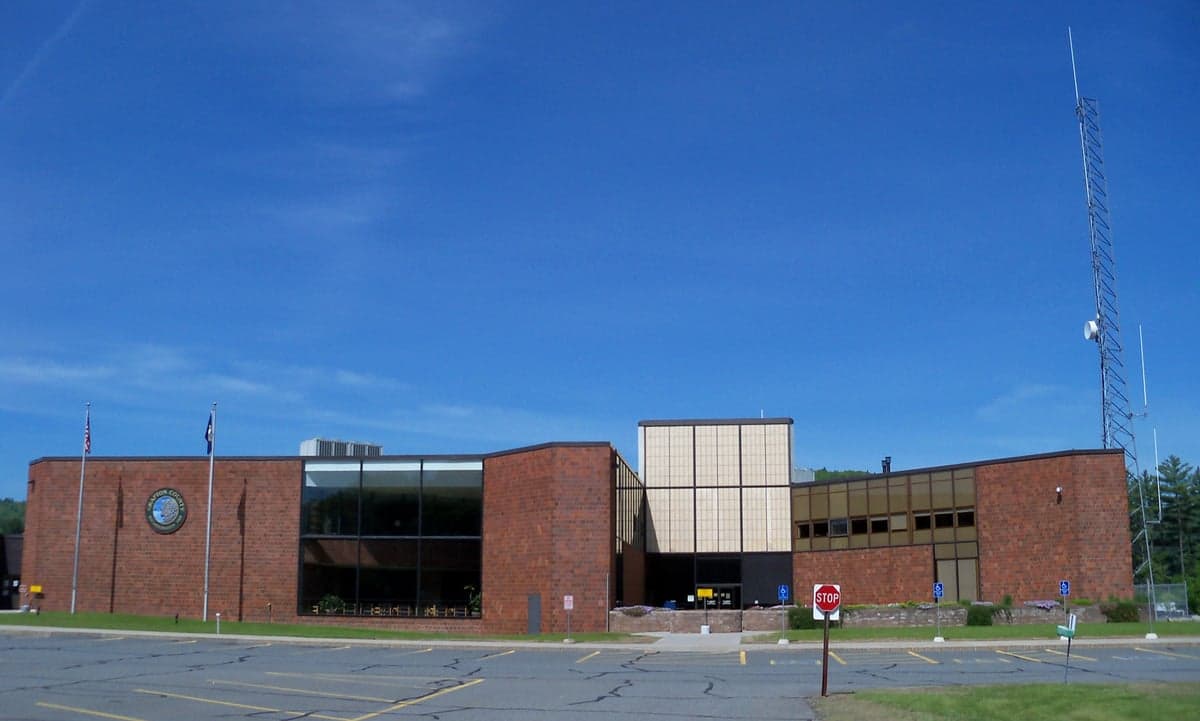
Photo: Wikipedia
Personal Sovereignty in Grafton County
Viable for self-reliance. Generally workable, though some barriers may limit total independence.
What does Personal Sovereignty tell us?
Personal Sovereignty measures your capacity for self-reliance and independence with minimal government friction. Higher scores mean fewer barriers between you and the way you want to live... but it assumes you have the space you need and good neighbors.
What does this tell us?
Personal Sovereignty measures your capacity for self-reliance and independence with minimal government friction. Higher scores mean fewer barriers between you and the way you want to live... but it assumes you have the space you need and good neighbors.
State Policy
Energy independence: Importer (10% of energy produced in-state)
Personal Liberty
Homesteading

Personal Liberty Analysis
Grafton County, New Hampshire offers one of the strongest personal sovereignty environments in the Northeast, combining a state-level constitutional commitment to individual liberty with a rural, self-reliant culture that predates the modern regulatory state. The county’s autonomy profile is shaped by New Hampshire’s lack of a broad-based income or sales tax, its “Live Free or Die” ethos codified in statute, and a decentralized governance structure that leaves most land-use and lifestyle decisions to individual towns. For a relocation-minded reader prioritizing personal freedom, Grafton County presents a landscape where the default posture is permission rather than prohibition — but the practical experience of that freedom varies meaningfully between the county’s college towns, mountain hamlets, and working forest communities.
Tax burden and regulatory posture in Grafton County
New Hampshire’s tax structure is the foundation of its sovereignty appeal. The state levies no general income tax and no statewide sales tax, relying instead on property taxes, a rooms-and-meals tax, and a narrow interest-and-dividends tax that is being phased out by 2027. Grafton County’s effective property tax rate averages roughly 1.8% of assessed value, which is moderate by New England standards but higher than many Sun Belt states. The regulatory posture at the state level is notably light: there is no state-mandated building code for single-family homes in unincorporated areas, no state income tax withholding, and no franchise tax on small businesses. Within the county, towns like Plymouth and Lebanon have more formal zoning and planning boards, while smaller communities such as Benton and Dorchester operate with minimal land-use regulation — often no zoning at all, relying only on septic and well permitting through the state Department of Environmental Services. For a reader comparing Grafton to neighboring Vermont or Massachusetts, the regulatory burden is substantially lower, particularly for business formation, vehicle inspections, and occupational licensing.
Self-defense and gun law specifics in Grafton County
New Hampshire is a constitutional carry state, meaning no permit is required to carry a concealed firearm for anyone legally allowed to possess one. Grafton County’s sheriff’s office issues pistol and revolver licenses for reciprocity purposes, but there is no state-level firearm registry, no waiting period, and no permit requirement for purchase. The county is home to several active shooting ranges, including the Pemi Valley Fish and Game Club in Campton and the Grafton County Fish and Game Association in Lebanon, both of which host public and member events. Local gun culture is strong but not aggressive — firearms are common for hunting, sport, and personal defense, and open carry is legal and unremarkable in most towns. The town of Hanover, home to Dartmouth College, is the notable exception: the town council has passed symbolic resolutions supporting federal gun restrictions, though state preemption law prevents any local ordinances that would restrict possession or carry. For a reader concerned about self-defense rights, Grafton County offers one of the most permissive legal environments in the United States, with no red-flag law as of 2026 and a state constitution that explicitly affirms the right to keep and bear arms.
Self-reliance and homesteading viability across Grafton County
Homesteading and off-grid living are practically viable in much of Grafton County, particularly in its northern and western townships. Lot sizes in unzoned towns like Warren and Piermont can be as small as one acre for a single-family dwelling, though most homesteaders seek five acres or more for privacy and self-sufficiency. The state has no general prohibition on rainwater collection, composting toilets, or alternative energy systems, though any permanent dwelling must meet minimal septic and well standards enforced by the state. Solar panels and small wind turbines are common, and several towns, including Lyme and Orford, have adopted solar-friendly ordinances that expedite permitting. Off-grid living without grid electricity is legal, but building a dwelling without a septic permit is not — this is the primary regulatory hurdle. The county’s agricultural soils are thin and rocky, so market gardening requires raised beds or hoop houses, but the growing season (roughly 120 frost-free days) supports cold-hardy crops and livestock. For a reader seeking to minimize reliance on municipal services, towns like Bath and Landaff offer the lowest property tax rates in the county (under 1.5%) and the least restrictive land-use codes, making them the most homestead-friendly locations in the region.
Personal liberties in Grafton County: parental rights, medical autonomy, speech, and property
New Hampshire law provides strong protections for parental rights, including a statutory right to direct a child’s education and medical care. Homeschooling is regulated but straightforward: parents file a simple notice with the local school district and provide an annual evaluation, with no curriculum approval or standardized testing requirement. The state has no vaccine mandate for school attendance, and Grafton County’s school boards in towns like Haverhill and Lisbon have been generally deferential to parental choice on medical decisions. Medical autonomy is further supported by the state’s broad scope-of-practice laws for naturopaths and direct-primary-care arrangements, though the county’s rural geography means access to alternative providers is limited outside the Lebanon-Hanover corridor. Free speech protections are robust, with no state-level hate speech law and a strong tradition of public comment at town meetings. Property rights are protected by the state’s eminent domain statute, which requires a public purpose and just compensation, and by the absence of statewide rent control or landlord licensing. The one area where personal liberty is more constrained is land use: towns with zoning, such as Lebanon and Hanover, impose setback requirements, lot coverage limits, and design review for new construction, which can frustrate property owners accustomed to minimal regulation.
Overall, Grafton County ranks among the most sovereignty-friendly areas in the Northeast, offering a combination of low taxation, permissive gun laws, viable off-grid living, and strong protections for parental and medical autonomy that is rare in the region. The county’s freedom profile is not uniform — the regulatory posture in Lebanon and Hanover is noticeably heavier than in Benton or Warren — but the state-level legal framework consistently favors individual choice over government mandate. For a conservative-leaning reader evaluating relocation options, Grafton County presents a credible alternative to the Mountain West or Upper Midwest, with the added advantage of New England’s town-meeting democracy and a cultural expectation that neighbors mind their own business.

* Values derived from national, state, county, city and local statistics and may differ in a specific area. Last updated: 2026-06-17T00:25:52.000Z
Narrative content on this page is AI-generated and may contain mistakes. Verify any details that matter before acting on them.
ReloMaps may earn a commission from affiliate links at no extra cost to you.

