Photo: Wikipedia
Demographics of Grafton County
Affluence Level in Grafton County
A middle-class area roughly in line with national averages across income, home values, education, and employment.
People of Grafton County
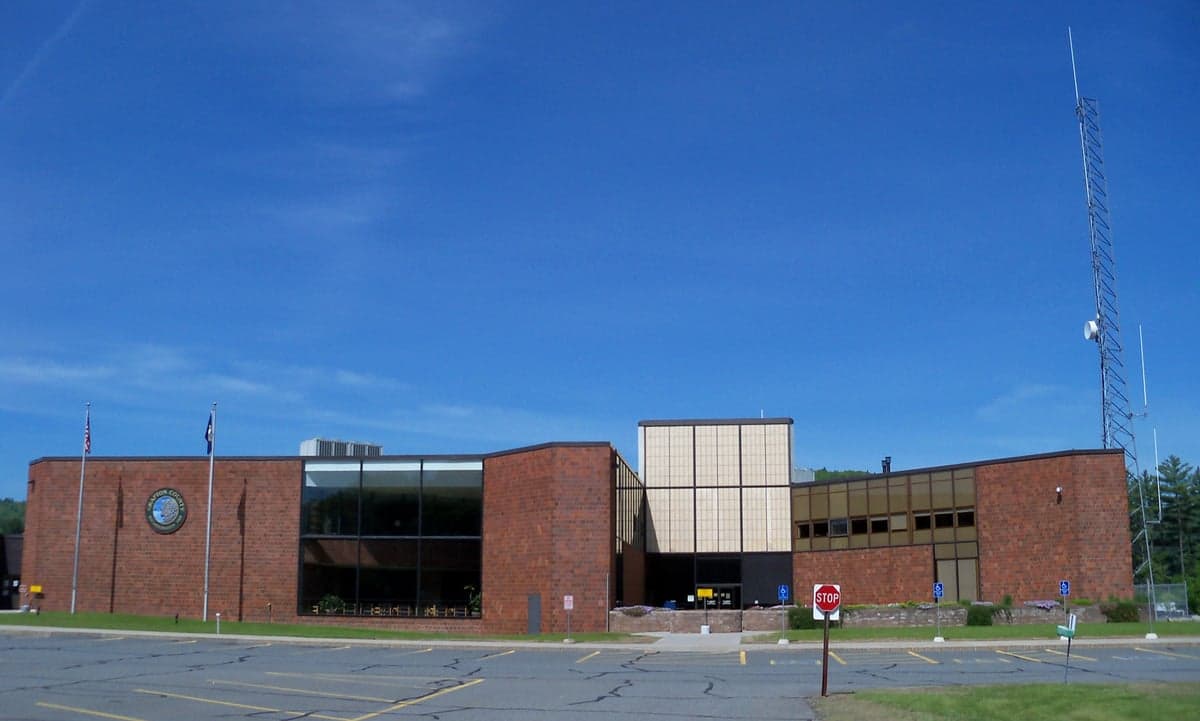
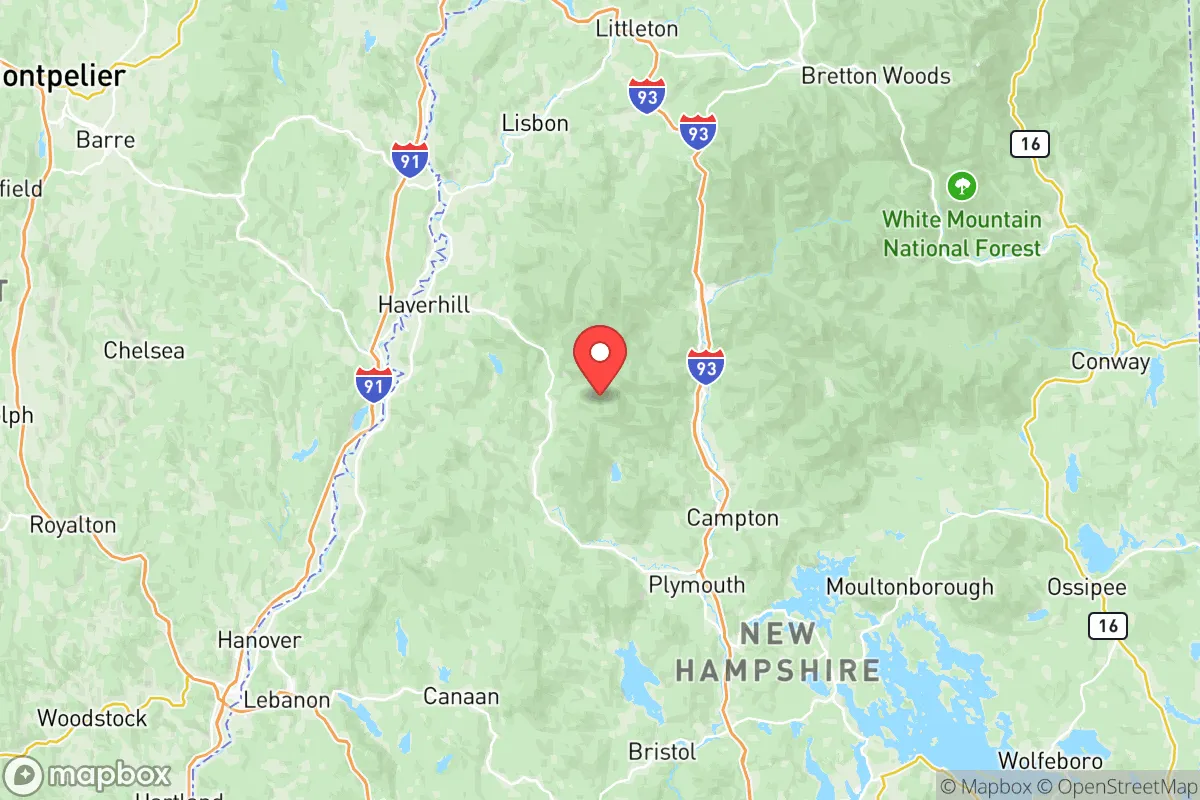
Grafton County, New Hampshire, is home to roughly 91,759 residents, a population that remains overwhelmingly white (88.1%) with a notably low foreign-born share of just 3.1%. The county’s identity is shaped by its rural character, its historic role as a hub for higher education centered on Dartmouth College in Hanover, and a modest but growing diversity driven by the college and healthcare sectors. Politically, the county leans more Democratic than the state average, a shift driven by the Hanover-Lebanon corridor, while the northern and western towns retain a more conservative, independent streak.
Settlement & growth (pre-1960)
Long before European settlement, the region now known as Grafton County was the homeland of the Abenaki people, particularly the Pennacook and Sokoki bands, who lived in seasonal villages along the Connecticut, Pemigewasset, and Merrimack rivers. They hunted, fished, and cultivated corn and beans, leaving behind place names like Ammonoosuc and Mascoma. European contact brought devastating epidemics, and by the 1700s, the Abenaki population had been decimated, with survivors pushed north into Canada or absorbed into remaining bands.
English colonists began arriving in earnest after the French and Indian War ended in 1763. The New Hampshire Grants, a series of land grants issued by Governor Benning Wentworth, opened the region to settlement. The first permanent English settlements were established in the 1760s and 1770s, with towns like Hanover (1761), Lebanon (1761), Plymouth (1763), and Haverhill (1763) chartered. These early settlers were primarily of English and Scots-Irish stock, drawn by the promise of cheap land and the opportunity to farm the fertile river valleys. They were largely Congregationalist or Presbyterian, and their communities were tight-knit, self-governing, and oriented around subsistence agriculture and small-scale milling.
The 19th century brought a wave of Irish immigrants, who arrived in the 1840s and 1850s fleeing the Great Famine. They found work building the railroads that crisscrossed the county, particularly the Boston, Concord & Montreal line, and later in the region’s burgeoning lumber and paper mills. Irish communities concentrated in the mill towns of Littleton, Lisbon, and Woodsville (part of Haverhill), where they formed the backbone of the Catholic Church in the region. A smaller wave of French-Canadian immigrants crossed the border from Quebec in the late 19th and early 20th centuries, drawn by mill work in Berlin (then part of Grafton County before Coös County split off) and Lebanon. They brought their language, Catholic faith, and a strong work ethic, and their descendants remain a visible cultural presence in the northern towns.
By the early 20th century, the county’s population was almost entirely native-born white, with small pockets of Irish and French-Canadian Catholics. The establishment of Dartmouth College in 1769 had already made Hanover an outlier — a small, elite academic enclave in a rural, agricultural landscape. The college drew faculty and students from across the Northeast, but it did not fundamentally alter the county’s ethnic composition until much later. The Great Depression and World War II saw little new immigration, and the county’s population remained stable, with many young people leaving for factory jobs in southern New England.
Modern era (post-1965)
The 1965 Hart-Cellar Act, which abolished national-origin quotas, had a limited direct impact on Grafton County. The foreign-born share remains low at 3.1%, far below the national average. However, the act’s indirect effects — combined with the growth of Dartmouth College and the Dartmouth-Hitchcock Medical Center — have slowly reshaped the county’s demographics. Since the 1970s, the county has attracted a small but steady stream of highly educated professionals, many of them foreign-born, who work in the college, the medical center, or the region’s growing tech and biotech sectors.
The largest non-white group today is East/Southeast Asian residents, who make up 2.5% of the population. This community is heavily concentrated in Hanover and Lebanon, where many are faculty, researchers, or medical professionals at Dartmouth or Dartmouth-Hitchcock. Chinese, Korean, and Vietnamese families have formed small but stable enclaves, with cultural organizations and restaurants serving as gathering points. The Indian-subcontinent population, at 1.0%, follows a similar pattern, with many working in tech, engineering, or medicine. They are most visible in Hanover and Lebanon, with a smaller presence in Plymouth near Plymouth State University.
Hispanic residents, at 2.8%, are more dispersed, with small communities in Littleton, Lebanon, and Plymouth. Many work in hospitality, construction, or agriculture, including the region’s apple orchards and dairy farms. The Black population, at 1.2%, is also small and concentrated in the Hanover-Lebanon corridor, again tied to the college and medical center. Domestic migration has been modest: the county has seen some influx of retirees and remote workers from Massachusetts and Connecticut since the 2010s, drawn by lower taxes and a slower pace of life, but this has not dramatically altered the racial or ethnic makeup.
Suburbanization has been limited. Unlike southern New Hampshire, which has seen explosive growth as a Boston exurb, Grafton County’s towns remain small and rural. Lebanon has grown into a regional commercial hub, with strip malls and big-box stores, while Hanover has carefully preserved its walkable, college-town character. The county’s population has grown slowly — about 5% since 2010 — and the growth is concentrated in the southern tier, near the Interstate 89 corridor.
The future
Grafton County is likely to become slightly more diverse in the next 10-20 years, but the change will be gradual. The foreign-born share may rise to 4-5%, driven by continued recruitment of international faculty and medical professionals. The East/Southeast Asian and Indian communities will likely grow in Hanover and Lebanon, but they will remain small in absolute numbers. Hispanic and Black populations may increase modestly, particularly in Lebanon and Littleton, as service-sector jobs draw workers from other parts of the state and country.
The county’s cultural identity will remain predominantly white and rural, with the Hanover-Lebanon corridor serving as a liberal, cosmopolitan outlier. The northern and western towns — Haverhill, Lisbon, Bath — will likely stay more conservative and homogenous. The biggest demographic shift may come from domestic migration: if remote work continues, more families from expensive coastal areas may move to towns like Plymouth or Campton, bringing younger, more diverse populations. However, the county’s limited housing stock and high property taxes (relative to income) may constrain this trend.
For someone moving in now, Grafton County offers a stable, safe, and largely homogenous community with a strong sense of place. The diversity that exists is concentrated in the college towns and is professional and highly educated. The county is not becoming a melting pot, but it is slowly opening to a wider range of backgrounds, particularly in the knowledge-economy corridor. The pace of change is slow enough that it will not feel disruptive to most residents, but noticeable enough that a newcomer from a more diverse area will find pockets of familiarity in Hanover and Lebanon.

* Values derived from national, state, county, city and local statistics and may differ in a specific area. Last updated: 2026-06-17T00:25:52.000Z
Narrative content on this page is AI-generated and may contain mistakes. Verify any details that matter before acting on them.
ReloMaps may earn a commission from affiliate links at no extra cost to you.

