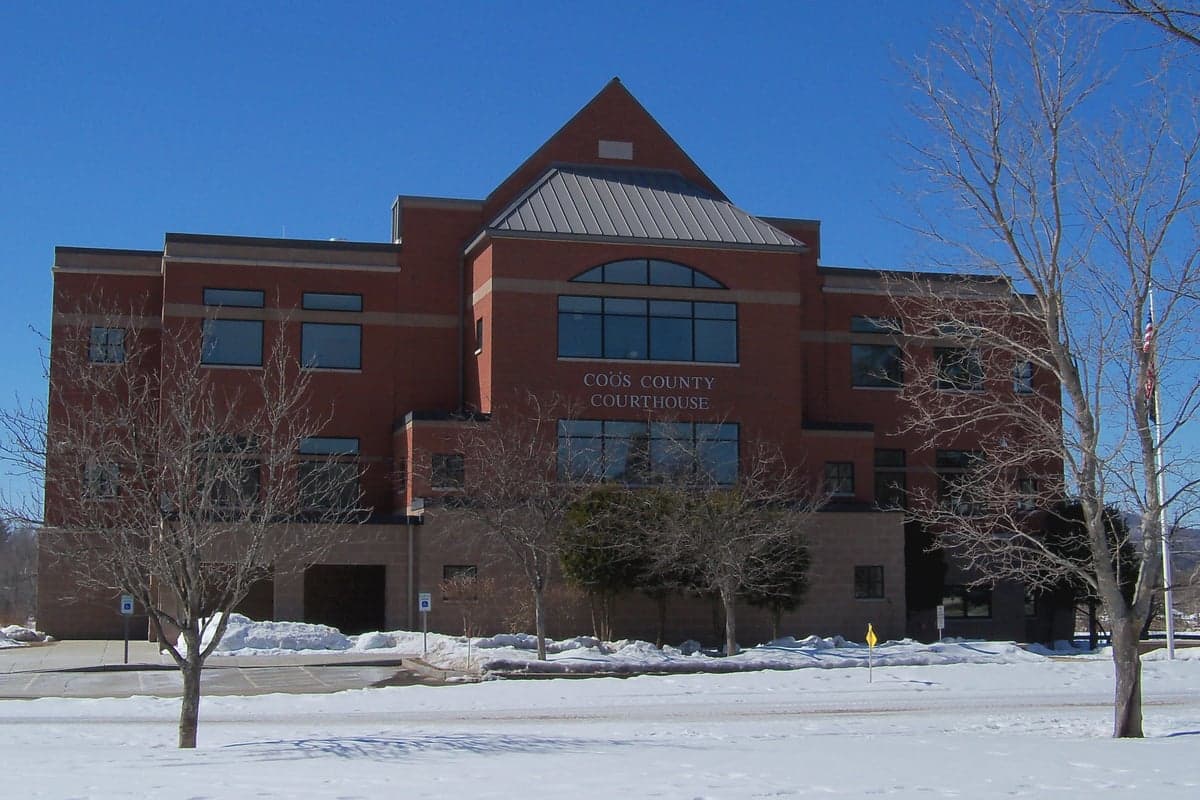
Photo: Wikipedia
Quality of Life in Coos County
A livable area that tracks near national norms for affordability, walkability, and neighborhood health.
What does Quality of Life tell us?
Quality of Life measures an area by evaluating factors like cost of living, nearby amenities, country club access, airport proximity, socioeconomic signals and neighborhood character. For large states, this is a general average — quality of life can vary dramatically between metro areas, suburbs, and rural communities within the same state.
What does this tell us?
Quality of Life measures an area by evaluating factors like cost of living, nearby amenities, country club access, airport proximity, socioeconomic signals and neighborhood character. For large states, this is a general average — quality of life can vary dramatically between metro areas, suburbs, and rural communities within the same state.
Cost of Living
32% below national average
121%
The Real Cost of Living in Coos County for 2026
| Tier | Individual | Family (4) |
|---|---|---|
| Survival | $13k | $25k |
| Comfortable | $33k | $48k |
| Luxury | $106k+ | $164k+ |
| Elite (Top 5%) | $136k+ | $211k+ |
Quality-of-Life Analysis
Coos County, New Hampshire, offers a quality-of-life spectrum that ranges from the small-city amenities of Berlin to the deep-rural isolation of Pittsburg and the unincorporated North Country. The county’s character shifts dramatically as you move north and east, drawing outdoor recreationists, remote workers seeking affordability, and families who prioritize space over convenience. With a cost-of-living index of 68—well below the national average of 100—Coos County provides one of the most affordable living environments in New England, but the trade-offs in services and commute times vary significantly by location.
Largest town(s) & population centers
Berlin is the county’s largest city, with roughly 10,000 residents, and functions as the commercial and civic hub of the North Country. Daily life here centers around a walkable downtown along the Androscoggin River, with grocery stores, a hospital (Androscoggin Valley Hospital), and a regional airport. The median home value in Coos County is $169,600, and Berlin’s housing stock—historic millworker homes and newer single-family houses—tends to cluster near that median. Lancaster, the county seat, is smaller (about 1,700 residents) but offers a compact historic downtown with county government offices, a library, and the Weeks State Park. Gorham, with roughly 2,800 residents, sits at the junction of the Androscoggin and Peabody rivers and serves as a gateway to the White Mountain National Forest, with a modest Main Street of restaurants and outdoor gear shops. Commute times in these population centers average 22.8 minutes, reflecting the short distances between towns and the lack of major traffic congestion.
Smaller towns & rural pockets
Beyond the population centers, Coos County contains dozens of smaller towns and unincorporated places where life is markedly quieter. Pittsburg, the northernmost organized town in New Hampshire, is a 300-square-mile expanse of lakes, forests, and ATV trails, with a year-round population under 1,000. Daily life here revolves around outdoor recreation—fishing on the Connecticut Lakes, snowmobiling on the 1,000-mile trail network, and hunting. Colebrook, with about 2,000 residents, is the commercial center for the far north, offering a grocery store, hardware store, and the Upper Connecticut Valley Hospital. Errol, an unincorporated township of roughly 100 people, sits at the intersection of the Androscoggin and Magalloway rivers and is accessible only by two-lane roads; it has no stoplights and no chain stores. Dummer, Milan, and Stark are similarly sparse, with populations under 1,000 and limited services—residents often drive 20–30 minutes to Berlin or Lancaster for groceries or medical care. The unincorporated townships of Dixville, Millsfield, and Odell have no permanent residents or municipal services, existing as vast tracts of state-owned forest and private timberland.
Cost & lifestyle range
The cost-of-living spread across Coos County is narrow in absolute terms but meaningful in lifestyle. At the low end, Berlin and Gorham offer the most affordable housing in the county, with median rents of $843 and home prices often below the county median—some two-bedroom mill apartments in Berlin rent for under $700. Utilities are higher than the national average due to heating oil dependence, but the overall COL index of 68 means a family earning $40,000 can afford a modest home. At the upper end, Pittsburg and Colebrook see higher home prices—lakefront properties on the Connecticut Lakes can exceed $400,000—and higher transportation costs due to longer drives to services. The lifestyle range is stark: in Berlin, a resident can walk to a grocery store and a movie theater; in Errol, the nearest supermarket is 25 miles away. Property taxes in Coos County average about 1.8% of assessed value, slightly below the New Hampshire state average, but services like plowing and trash pickup are minimal or absent in the unincorporated townships.
Who thrives in Coos County? Remote workers who can tolerate limited internet options (Starlink is common in the north), outdoor enthusiasts who value immediate access to the White Mountains and Connecticut Lakes, and retirees seeking a low-cost, low-stress environment. Families with school-age children should note that the county’s school districts—especially in Berlin, Lancaster, and Colebrook—are small and underfunded, with some high schools graduating fewer than 50 students per year. The trade-off is a quality of life defined by space, quiet, and the absence of urban pressures, but it demands self-reliance and a tolerance for long drives to basic amenities.

Crime in Coos County
Lower crime rates than 82% of comparable U.S. locations.
Violent CrimeViolent Crime Analysis
Property CrimeProperty Crime Analysis
Crime Analysis
Coos County, New Hampshire, is one of the safest rural areas in the state, with a violent crime rate of 118.7 per 100,000 residents—well below the national average of roughly 380 per 100,000. Property crime, at 827.4 per 100,000, also sits significantly lower than the U.S. average of about 1,950 per 100,000. However, safety varies notably across the county’s small towns and unincorporated places, with some communities experiencing higher rates of theft and drug-related incidents than others.
Crime in context
Coos County’s violent crime rate is roughly 69% lower than the national average, while its property crime rate is about 58% lower. These figures place Coos among the safest counties in New Hampshire, alongside Carroll and Grafton counties. The county’s low population density—roughly 18 people per square mile—and its remote, forested geography contribute to fewer opportunities for street-level crime. However, the region is not immune to property offenses: thefts from vehicles and outbuildings are the most common property crimes, particularly in areas near the Androscoggin River corridor. The county’s small police departments, such as those in Berlin and Lancaster, handle the majority of calls, while the Coos County Sheriff’s Office covers unincorporated townships like Dixville and Millsfield. The New Hampshire State Police also patrol major routes like US-3 and NH-16, which see occasional drug trafficking from Canada.
What residents experience
For most residents, daily life in Coos County feels very safe. The violent crime rate of 118.7 per 100,000 translates to roughly 3–4 incidents per year across the entire county, with the vast majority being simple assaults rather than robberies or homicides. Property crime, while more common at 827.4 per 100,000, still means fewer than 25 reported incidents annually in most towns. Berlin, the county’s largest city (population ~10,000), accounts for a disproportionate share of both violent and property crime, driven by its higher population density and economic challenges. In contrast, smaller towns like Colebrook and Pittsburg report near-zero violent crime and only occasional thefts. The county’s judicial system, overseen by the Coos County Superior Court in Lancaster, has historically taken a moderate approach to sentencing, but residents express concern about progressive policies in the state’s larger urban centers—such as Manchester and Nashua—where district attorneys have adopted bail reform and diversion programs that critics argue embolden repeat offenders. While Coos County itself has not adopted such policies, the influence of state-level progressive justice reforms is a growing worry for locals who fear that lenient sentencing in southern New Hampshire could lead to more property crime migrating north.
Neighborhood-level variation is most pronounced in Berlin, where the downtown area and the Terrace neighborhood see higher rates of theft and disorderly conduct, while the outskirts near the Mahoosuc Range remain very quiet. In Lancaster, the area around the county courthouse and Main Street is well-policed, but rural roads like North Road and Crystal Road occasionally report vehicle break-ins. Gorham, a small town near the Maine border, has a low crime rate but sees seasonal spikes in property crime during the summer tourist season. For those seeking the safest areas, the unincorporated townships of Dixville and Millsfield—with populations under 100—report virtually no crime, though residents must travel 20–30 minutes for basic services. Overall, Coos County offers a safe environment for families and retirees, but awareness of local conditions—especially in Berlin and along the US-3 corridor—is advisable.
* Values derived from national, state, county, city and local statistics and may differ in a specific area. Last updated: 2026-07-17T10:12:47.000Z
Narrative content on this page is AI-generated and may contain mistakes. Verify any details that matter before acting on them.
ReloMaps may earn a commission from affiliate links at no extra cost to you.

