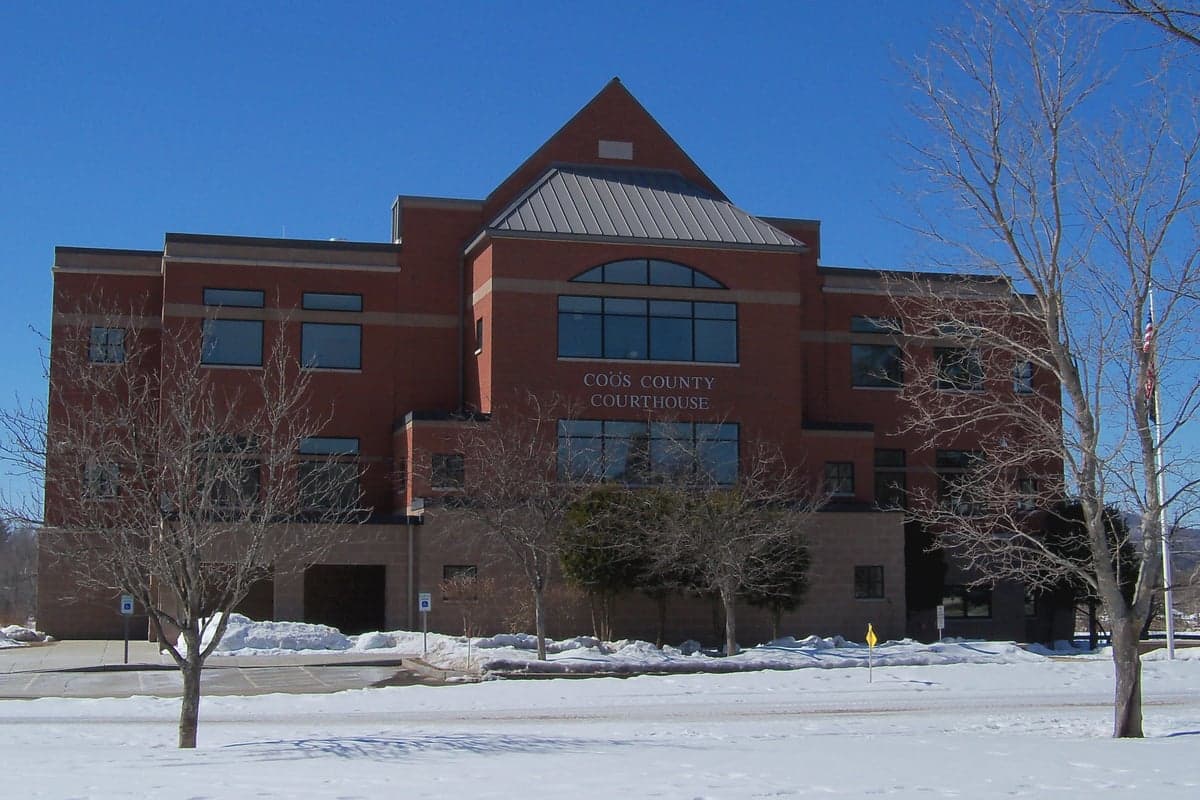
Photo: Wikipedia
Personal Sovereignty in Coos County
Viable for self-reliance. Generally workable, though some barriers may limit total independence.
What does Personal Sovereignty tell us?
Personal Sovereignty measures your capacity for self-reliance and independence with minimal government friction. Higher scores mean fewer barriers between you and the way you want to live... but it assumes you have the space you need and good neighbors.
What does this tell us?
Personal Sovereignty measures your capacity for self-reliance and independence with minimal government friction. Higher scores mean fewer barriers between you and the way you want to live... but it assumes you have the space you need and good neighbors.
State Policy
Energy independence: Importer (10% of energy produced in-state)
Personal Liberty
Homesteading

Personal Liberty Analysis
Coos County, New Hampshire, offers one of the strongest personal sovereignty environments in the Northeast, combining a state-level constitutional carry law, no state income or sales tax, and some of the most permissive land-use regulations in northern New England. For individuals and families prioritizing autonomy, the county’s regulatory posture is notably light-touch compared to southern New Hampshire or neighboring Vermont and Maine, though local variations exist between towns like Berlin, Lancaster, and the unincorporated townships north of the Notch. The overall atmosphere is one of self-reliance, where local government interference in daily life is minimal, and the state’s “Live Free or Die” ethos is not just a slogan but a practical framework for property rights, self-defense, and personal decision-making.
Tax burden and regulatory posture in Coos County
New Hampshire’s tax structure is a major draw for sovereignty-minded relocators: no state income tax, no state sales tax, and no capital gains tax. Coos County’s property tax rates are among the highest in the state, averaging around 2.2% to 2.5% of assessed value depending on the town, but this is offset by the absence of other state-level levies. Towns like Berlin and Lancaster have slightly higher mill rates due to municipal services, while unincorporated areas like Dixville Notch and Pittsburg have minimal local government overhead. The regulatory environment is business-friendly: no zoning in many unincorporated townships, no state-level building codes for single-family homes in most rural areas, and no mandatory vehicle inspections. Occupational licensing is less burdensome than in Massachusetts or Vermont, and the state has a right-to-work law. However, note that Berlin and Gorham have more formal zoning ordinances than the rest of the county, so if you want maximum regulatory freedom, look at the northern townships or Stratford and Columbia.
Self-defense and gun law specifics in Coos County
New Hampshire is a constitutional carry state, meaning no permit is required to carry a concealed firearm for anyone legally allowed to possess one. Coos County is particularly gun-friendly, with no local restrictions beyond state law and a strong culture of hunting and sport shooting. The state preempts local firearm ordinances, so towns like Berlin or Lancaster cannot impose their own bans or restrictions. Stand-your-ground laws apply, and there is no duty to retreat in any place where a person is lawfully present. Background checks are only required for commercial sales, not private transfers. The county has several shooting ranges, including the Coos County Fish and Game Association near West Stewartstown, and public land in the Connecticut Lakes region is open for hunting and target practice. For self-defense, the legal environment is as permissive as any in the Northeast, comparable to Maine or Vermont but with stronger preemption protections.
Self-reliance and homesteading viability in Coos County
Coos County is one of the best places in New England for off-grid living and homesteading, thanks to large lot sizes, minimal zoning, and abundant water resources. Minimum lot sizes vary by town: Pittsburg requires 5 acres for a single-family home, Stratford and Columbia have 2-acre minimums, and unincorporated townships like Dixville and Millsfield have no minimum lot size at all. Off-grid systems are legal and common: no state law prohibits rainwater collection, composting toilets, or solar panels, and many properties use private wells and septic. Berlin and Lancaster have municipal water and sewer, but outside those towns, you are largely on your own. Zoning is minimal in most of the county—no building permits are required in unincorporated areas for structures under 200 square feet, and agricultural uses like livestock, greenhouses, and small-scale farming are explicitly allowed by right. The growing season is short (Zone 4a-4b), but cold-hardy crops and livestock thrive. Pittsburg and Errol are particularly popular for homesteaders due to cheap land (often under $2,000 per acre) and lax regulation.
Personal liberties in Coos County: parental rights, medical autonomy, and property
New Hampshire law strongly protects parental rights in education and healthcare. Parents have the right to opt their children out of any public school curriculum or activity without penalty, and homeschooling is lightly regulated—no prior approval, no standardized testing, and no portfolio review required. Medical autonomy is also robust: the state has no vaccine mandate for adults, no mask mandate since 2021, and a broad religious exemption for childhood immunizations. Coos County has a lower vaccination rate than the state average, reflecting local attitudes. Property rights are protected by a strong eminent domain statute that limits takings to public use with just compensation, and there is no statewide rent control or landlord licensing. Speech is protected under the state constitution, which has its own free speech clause interpreted more broadly than the First Amendment in some cases. The county’s small population (around 31,000) means that local government is accessible—town meetings in places like Lancaster and Gorham allow direct citizen input on budgets and ordinances.
Overall, Coos County ranks among the most sovereignty-friendly areas in the Northeast, comparable to rural counties in Idaho or Montana but with the advantage of being within a day’s drive of Boston and Montreal. The combination of no income or sales tax, constitutional carry, minimal zoning, and strong parental rights creates an environment where personal autonomy is the default, not the exception. The trade-offs are real: harsh winters, limited healthcare access (the county has one hospital, in Berlin), and a struggling local economy. But for those who value freedom over convenience, Coos County offers a level of personal sovereignty that is increasingly rare in the United States.

* Values derived from national, state, county, city and local statistics and may differ in a specific area. Last updated: 2026-07-17T10:12:47.000Z
Narrative content on this page is AI-generated and may contain mistakes. Verify any details that matter before acting on them.
ReloMaps may earn a commission from affiliate links at no extra cost to you.

