
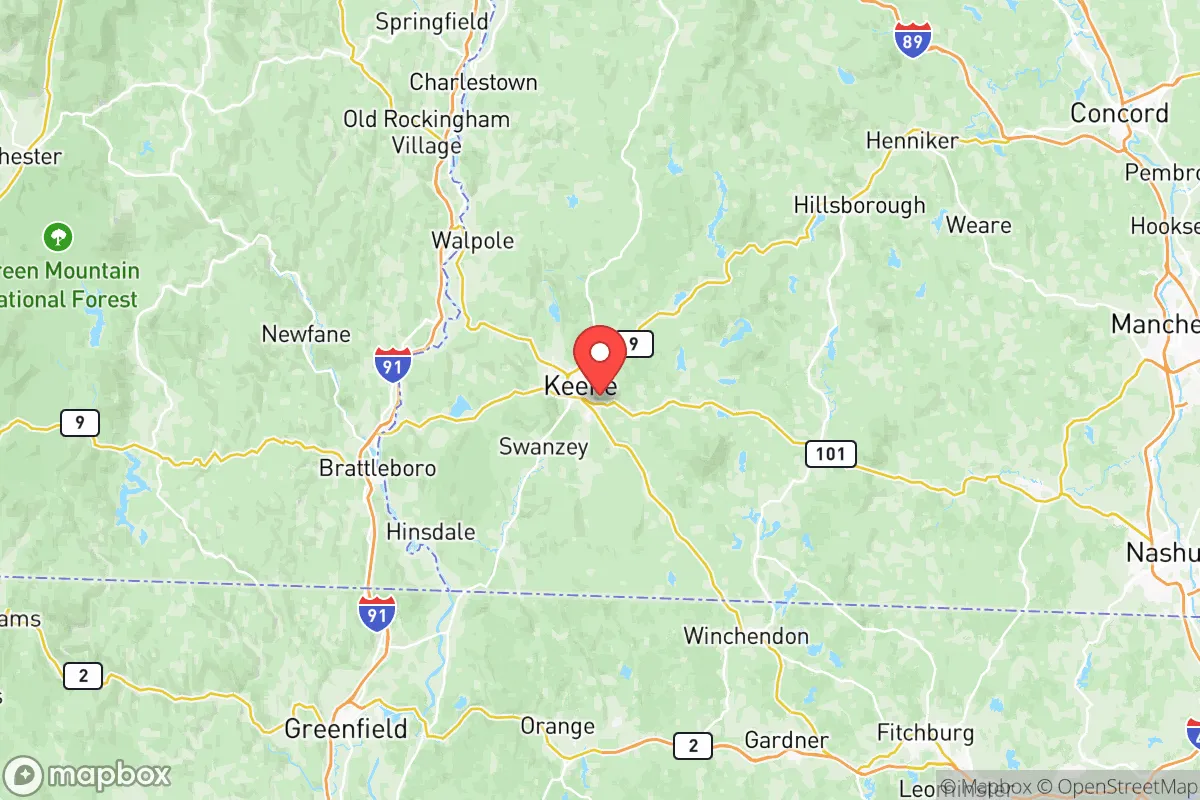
Photo: Wikipedia
Quality of Life in Cheshire County
A livable area that tracks near national norms for affordability, walkability, and neighborhood health.
What does Quality of Life tell us?
Quality of Life measures an area by evaluating factors like cost of living, nearby amenities, country club access, airport proximity, socioeconomic signals and neighborhood character. For large states, this is a general average — quality of life can vary dramatically between metro areas, suburbs, and rural communities within the same state.
What does this tell us?
Quality of Life measures an area by evaluating factors like cost of living, nearby amenities, country club access, airport proximity, socioeconomic signals and neighborhood character. For large states, this is a general average — quality of life can vary dramatically between metro areas, suburbs, and rural communities within the same state.
Cost of Living
1% below national average
110%
The Real Cost of Living in Cheshire County for 2026
| Tier | Individual | Family (4) |
|---|---|---|
| Survival | $19k | $37k |
| Comfortable | $50k | $73k |
| Luxury | $127k+ | $197k+ |
| Elite (Top 5%) | $150k+ | $232k+ |
Quality-of-Life Analysis
Cheshire County, New Hampshire, offers a broad quality-of-life spectrum that ranges from the walkable, amenity-rich college town of Keene to deeply rural villages and forested townships where privacy and land ownership take priority. This diversity attracts a correspondingly wide mix of residents: young professionals and academics drawn to Keene’s cultural scene, families seeking affordable housing in commuter-friendly towns like Swanzey and Hinsdale, and retirees or remote workers looking for solitude in places like Alstead, Stoddard, or the unincorporated township of Dixville. The county’s character is defined by this contrast — a single county where one can live within walking distance of a microbrewery and a performing arts center or on a gravel road abutting national forest land.
Largest town(s) & population centers
Keene, the county seat and only city, is the undisputed hub with roughly 23,000 residents. Daily life here revolves around the compact downtown anchored by Keene State College, which brings a steady flow of events, restaurants, and a younger demographic. The city offers the region’s widest range of services — a hospital (Cheshire Medical Center), a regional airport, and the Monadnock Food Co-op for groceries. Housing is denser and older here, with many multi-family homes and historic Victorians. Swanzey (pop. ~7,200) and Hinsdale (pop. ~4,000) function as bedroom communities for Keene and for commuters crossing into Brattleboro, Vermont, just across the Connecticut River. These towns offer more land per dollar than Keene proper, with strip-plaza retail and quick access to Route 12. The average commute across the county is a manageable 23.7 minutes, reflecting the region’s compact geography and limited traffic congestion.
Smaller towns & rural pockets
Southwest Cheshire County contains some of the state’s most sparsely populated areas. Alstead (pop. ~1,900) and Stoddard (pop. ~1,300) are classic New Hampshire hill towns — no stoplights, general stores that double as social hubs, and large tracts of second-growth forest. Dixville is an unincorporated township with fewer than 20 year-round residents, accessible only by gravel roads; it offers extreme privacy but zero municipal services. Marlow and Nelson sit along the county’s northern edge, where homes are often set far back from paved roads and residents rely on well water and septic systems. Winchester, the county’s southernmost town, has a more working-class character and some of the lowest property values in the region, though it also faces higher poverty rates and limited local employment. These smaller communities share a common thread: residents must be self-sufficient, comfortable with long drives for groceries or medical care, and prepared for winter road conditions that can make travel difficult.
Cost & lifestyle range
The county’s overall cost-of-living index sits at 99 (exactly at the U.S. average), but that number masks wide internal variation. At the higher end, Keene’s desirable downtown neighborhoods and newer subdivisions in West Swanzey push home values above the county median of $257,200, with some properties exceeding $400,000. At the lower end, Winchester and parts of Hinsdale offer homes under $200,000, though these often require significant renovation. Median rent countywide is $1,220, with Keene commanding the highest rents and rural towns offering few rental options at all — most housing stock is owner-occupied single-family homes. Lifestyle trade-offs are stark: Keene residents pay a premium for walkability and cultural amenities (the Colonial Theatre, the Putnam Museum, farmers’ markets), while rural residents gain acreage and quiet but sacrifice convenience. Property taxes in New Hampshire are among the highest in the nation, and Cheshire County is no exception — a factor that weighs more heavily on lower-income homeowners in towns like Winchester than on higher-income residents in Keene’s pricier enclaves.
The resident who thrives in Cheshire County is someone who values the outdoors — hiking Mount Monadnock, kayaking the Ashuelot River, skiing at Granite Gorge — and accepts that the region’s economy is modest, with limited high-wage employment outside of education, healthcare, and manufacturing. It suits self-starters who can work remotely or commute to Keene, Brattleboro, or even Nashua (a 60-minute drive east). Those seeking urban density, nightlife, or rapid career advancement will find the county too quiet; those seeking a lower-cost, nature-focused lifestyle with genuine community character will find it one of the more balanced options in northern New England.

Crime in Cheshire County
Lower crime rates than 82% of comparable U.S. locations.
Violent CrimeViolent Crime Analysis
Property CrimeProperty Crime Analysis
Crime Analysis
Cheshire County, New Hampshire, presents a notably safe environment compared to both state and national benchmarks, with violent crime rates significantly below the U.S. average. The county's overall safety profile is shaped by its mix of small cities, college towns, and rural communities, though property crime rates warrant attention from prospective residents. The county's location along the Vermont border and its proximity to larger metro areas like Keene and Brattleboro influence local crime patterns, with the most serious incidents concentrated in specific areas.
Crime in context
With a violent crime rate of 118.5 per 100,000 residents, Cheshire County is substantially safer than the national average of roughly 380 per 100,000. This rate is also well below the New Hampshire state average of approximately 140 per 100,000, placing the county among the safer regions in an already low-crime state. Property crime, however, stands at 826.7 per 100,000, which is slightly above the New Hampshire average of around 800 per 100,000 but still far below the national figure of approximately 1,950 per 100,000. The county's largest municipality, Keene, accounts for a disproportionate share of reported incidents, particularly property crimes like theft and burglary, due to its higher population density and commercial activity. Smaller towns such as Swanzey and Winchester report lower overall crime volumes but occasionally see spikes in drug-related offenses tied to regional trafficking routes along Route 12.
What residents experience
For most residents, daily life in Cheshire County feels very safe, with violent crime being rare and typically confined to domestic disputes or isolated incidents rather than random attacks. The county's judicial system, overseen by the Cheshire County Attorney's Office, operates under New Hampshire's relatively conservative criminal justice framework compared to neighboring states like Massachusetts or Vermont. However, Keene, home to Keene State College, has seen a rise in low-level property crimes and public intoxication incidents linked to the student population, which can strain local law enforcement resources. Residents in Hinsdale and Chesterfield often report a stronger sense of security, with neighborhood watch programs and active police presence contributing to low incident rates. The county's rural character means that emergency response times can be longer in outlying areas, but proactive community policing in towns like Marlborough helps maintain trust between residents and law enforcement.
Neighborhood-level variation
Crime in Cheshire County is not evenly distributed. Keene experiences the highest concentration of both violent and property crime, particularly in the downtown core and near the college campus, where thefts from vehicles and bicycles are common. In contrast, the affluent lakeside community of Stoddard and the quiet village of Dublin report near-zero violent crime and minimal property crime, making them attractive for families seeking a low-risk environment. The county's southern towns, including Richmond and Fitzwilliam, benefit from their distance from Keene's urban pressures but face occasional issues with trespassing and vandalism on seasonal properties. Prospective residents should note that while Cheshire County's overall crime statistics are favorable, the progressive leanings of Keene's municipal government and the presence of a college population can create localized pockets of disorder that contrast sharply with the county's otherwise tranquil reputation. For those prioritizing safety, choosing a town outside Keene's immediate orbit—such as Rindge or Jaffrey—offers the best balance of rural peace and low crime risk.
* Values derived from national, state, county, city and local statistics and may differ in a specific area. Last updated: 2026-07-12T04:42:18.000Z
Narrative content on this page is AI-generated and may contain mistakes. Verify any details that matter before acting on them.
ReloMaps may earn a commission from affiliate links at no extra cost to you.

