
Photo: Wikipedia
Personal Sovereignty in Cheshire County
Viable for self-reliance. Generally workable, though some barriers may limit total independence.
What does Personal Sovereignty tell us?
Personal Sovereignty measures your capacity for self-reliance and independence with minimal government friction. Higher scores mean fewer barriers between you and the way you want to live... but it assumes you have the space you need and good neighbors.
What does this tell us?
Personal Sovereignty measures your capacity for self-reliance and independence with minimal government friction. Higher scores mean fewer barriers between you and the way you want to live... but it assumes you have the space you need and good neighbors.
State Policy
Energy independence: Importer (10% of energy produced in-state)
Personal Liberty
Homesteading

Personal Liberty Analysis
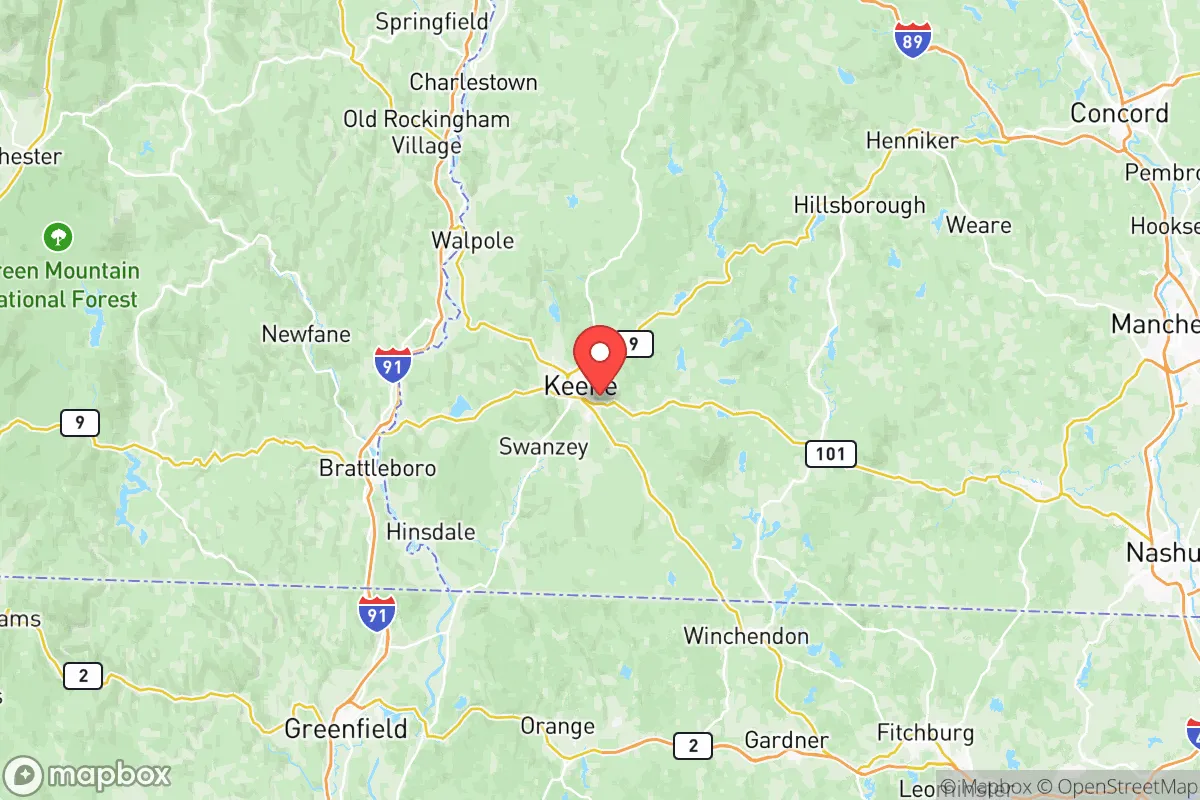
Cheshire County, New Hampshire, offers a notably high degree of personal sovereignty compared to much of the Northeast, grounded in the state's "Live Free or Die" ethos and a legal framework that prioritizes individual autonomy. The county's mix of small cities like Keene, rural towns like Winchester and Hinsdale, and more remote communities like Stoddard and Dublin creates a spectrum of regulatory environments, but the baseline is consistently more permissive than in neighboring Massachusetts or Vermont. For a relocation-minded individual or family who values self-reliance, low taxes, and minimal government interference, Cheshire County presents a compelling option where personal responsibility is the expected norm.
Tax burden and regulatory posture: How New Hampshire's structure affects Cheshire County
New Hampshire's tax structure is a primary driver of personal sovereignty in Cheshire County. There is no state income tax on wages or salaries and no state sales tax, meaning residents keep more of what they earn. The state also does not impose a capital gains tax, which benefits those with investment income. The trade-off is reliance on local property taxes, which fund schools and municipal services. In Cheshire County, property tax rates vary significantly: Keene, the county seat, has higher rates due to its urban services, while towns like Swanzey and Richmond often have lower mill rates. The regulatory posture is generally light-touch at the state level, with no statewide building code for single-family homes in most towns, though local zoning ordinances apply. For a conservative-leaning individual, this means fewer layers of bureaucracy when starting a business, building a home, or managing personal finances compared to states with complex tax codes and extensive permitting requirements.
Self-defense and gun law specifics: What the Second Amendment looks like in Cheshire County
New Hampshire is one of the most gun-friendly states in the nation, and Cheshire County reflects that culture fully. The state has constitutional carry without a permit for both open and concealed carry, no firearm registration, no magazine capacity restrictions, and no "red flag" law as of 2026. The only federal background check requirement applies to purchases from licensed dealers; private sales between individuals require no paperwork. In practice, this means a resident moving to Keene, Jaffrey, or Marlborough can legally carry a firearm for self-defense immediately upon establishing residency, with no waiting period or training mandate. The county has a strong hunting and sport shooting tradition, with multiple gun clubs and ranges, including the Cheshire County Fish and Game Club in Keene. Local law enforcement generally respects these rights, and there is no county-level push for additional restrictions. For a family prioritizing self-defense autonomy, Cheshire County offers one of the most permissive legal environments in the region.
Self-reliance and homesteading viability: Lot sizes, zoning, and off-grid feasibility
Cheshire County's rural character makes it highly viable for homesteading and off-grid living, though local zoning varies. In towns like Stoddard, Richmond, and Roxbury, minimum lot sizes of 2 to 5 acres are common, and many properties have no public water or sewer, requiring private wells and septic systems. Off-grid solar is legal and common, with no state-level prohibition on disconnecting from the grid, though local building codes may require permits for electrical work. In contrast, Keene and its immediate suburbs have more restrictive zoning, smaller lots, and stricter building codes. For a family seeking self-reliance, the county offers abundant land at relatively affordable prices—raw land can be found for under $5,000 per acre in some townships. Raising livestock, keeping chickens, and gardening are generally permitted without special permits in unincorporated areas and most rural towns. The county's agricultural extension service and strong local farming community provide practical support for those new to homesteading.
Personal liberties: Parental rights, medical autonomy, speech, and property
New Hampshire law strongly protects parental rights in education and healthcare decisions. The state has a parental bill of rights that requires school districts to notify parents of curriculum changes and medical services offered at school, with an opt-out provision. Homeschooling is straightforward, requiring only a simple notification to the local school district, with no standardized testing mandate or curriculum approval. Medical autonomy is respected: there is no state vaccine mandate for adults, and COVID-era restrictions were lifted early and permanently. Free speech protections are robust, with no hate speech laws that restrict expression, and property rights are protected by strong eminent domain limitations. In Cheshire County, these liberties are exercised openly, with active local groups advocating for school choice and medical freedom. The county's political culture leans libertarian-leaning conservative, particularly in the rural towns, while Keene has a more progressive minority that generally coexists without heavy-handed enforcement of ideological conformity.
Overall, Cheshire County ranks among the most sovereignty-friendly areas in New England for a conservative-leaning individual or family. The combination of no income tax, constitutional carry, minimal zoning in rural towns, strong parental rights, and a culture of self-reliance creates an environment where personal autonomy is the default rather than the exception. Compared to areas like the Boston suburbs or even southern New Hampshire's more developed counties, Cheshire offers a slower pace, lower cost of entry for land, and fewer regulatory hurdles. For someone prioritizing independence over convenience, it is a strong candidate for relocation.

* Values derived from national, state, county, city and local statistics and may differ in a specific area. Last updated: 2026-07-12T04:42:18.000Z
Narrative content on this page is AI-generated and may contain mistakes. Verify any details that matter before acting on them.
ReloMaps may earn a commission from affiliate links at no extra cost to you.

