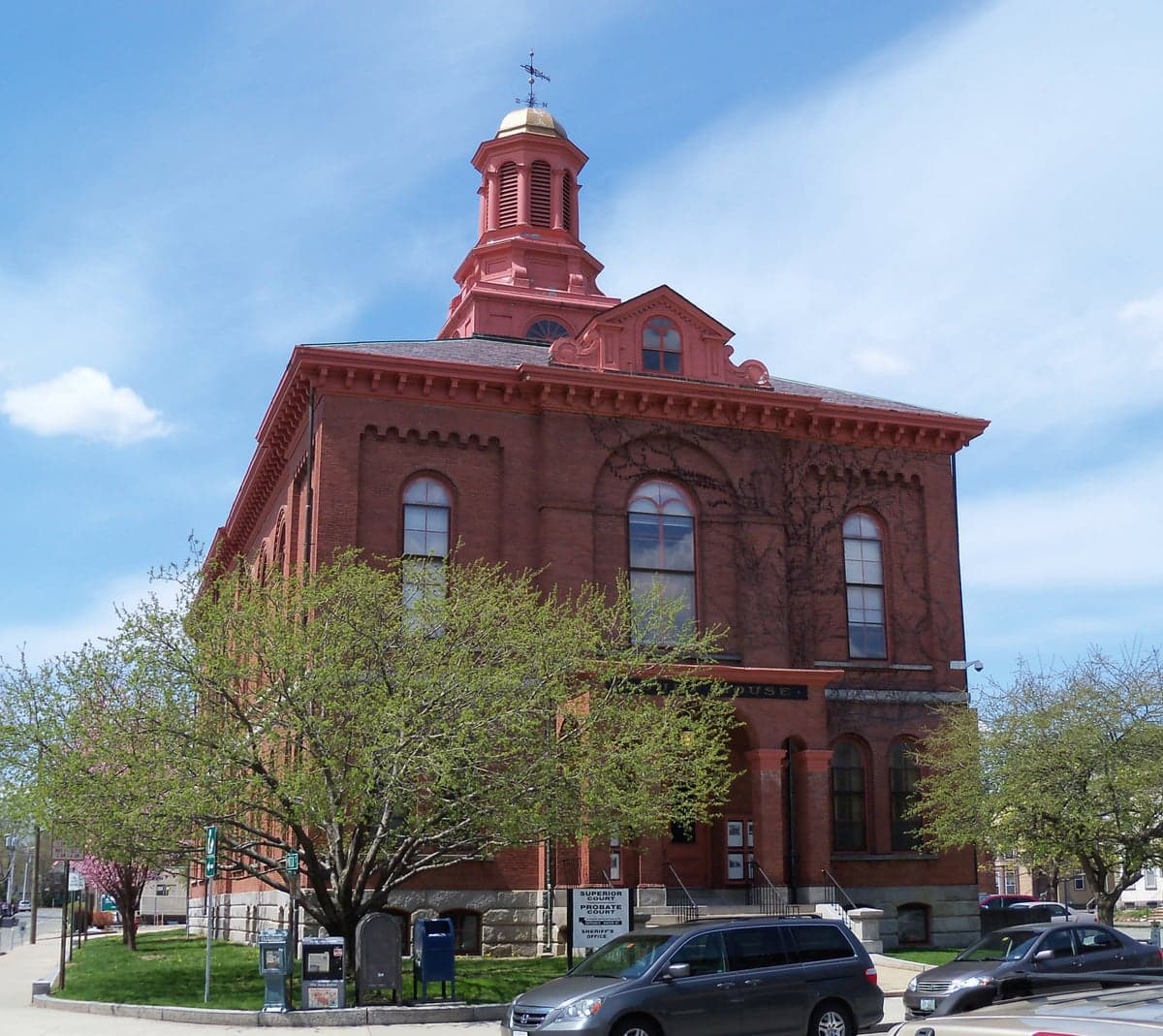
Photo: Wikipedia
Demographics of Cheshire County
Affluence Level in Cheshire County
A middle-class area roughly in line with national averages across income, home values, education, and employment.
People of Cheshire County
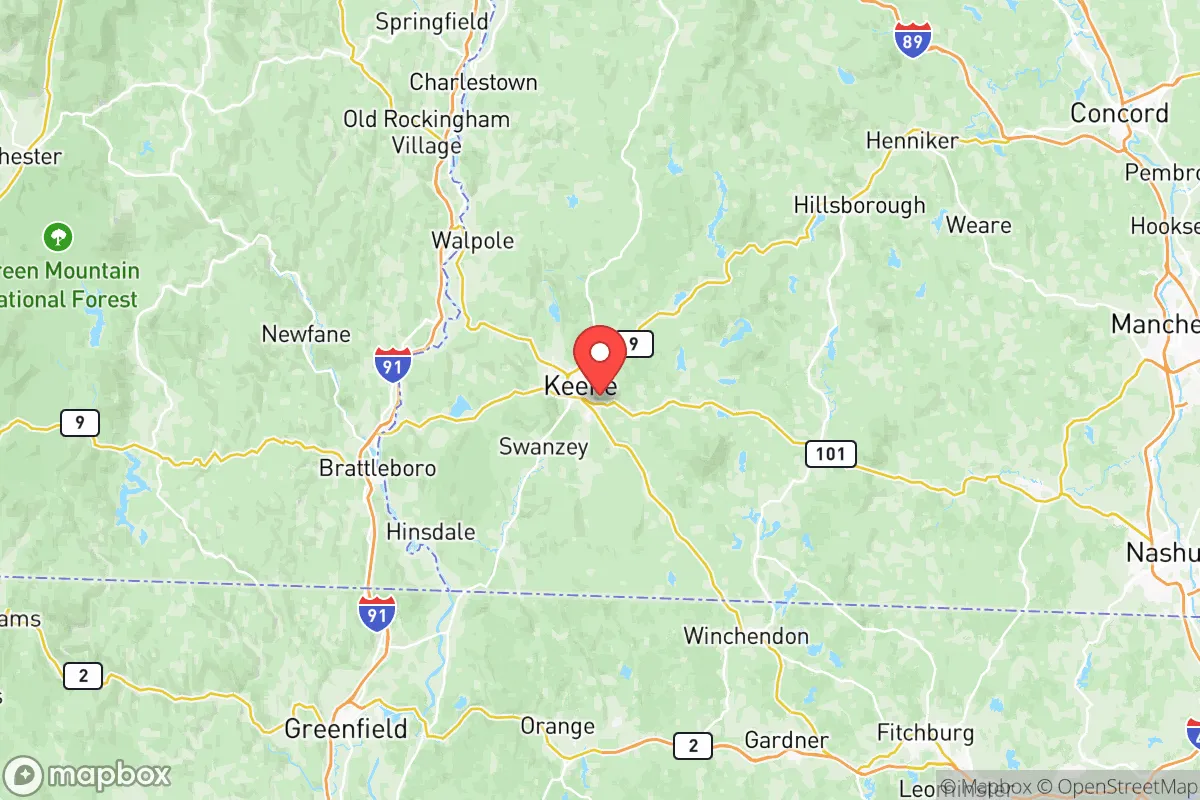
The people of Cheshire County, New Hampshire, today number 76,945, forming a predominantly white (91.9%) and largely rural population with a distinctive Yankee and mill-town heritage. With only 1.2% foreign-born residents, the county is one of the least ethnically diverse in New England, yet it carries a strong independent streak shaped by its border location and historic industries. The population is notably well-educated, with 35.3% holding a college degree, and is concentrated in the county seat of Keene, along with smaller towns like Swanzey, Hinsdale, and Winchester. This is a region where deep-rooted family histories, a quiet landscape, and a conservative-leaning ethos of self-reliance define daily life.
Settlement & growth (pre-1960)
Long before European settlers arrived, the area now known as Cheshire County was home to the Abenaki people, particularly the Sokoki band, who used the Ashuelot and Connecticut River valleys for seasonal fishing, hunting, and agriculture. The first European incursion came in the mid-1700s, when British colonists from Massachusetts and Connecticut pushed northward, establishing fortified settlements during the French and Indian War. The town of Keene was chartered in 1753, followed by Swanzey (1753), Hinsdale (1753), and Winchester (1753), all initially settled by English Protestants—primarily Congregationalists—who sought fertile river-bottom land and timber.
After the American Revolution, Cheshire County experienced its first major population wave. Between 1790 and 1830, the population surged as Yankee farmers from southern New England moved in, drawn by cheap land and the promise of self-sufficiency. These settlers were overwhelmingly of English and Scots-Irish descent, and they established a pattern of dispersed family farms and small village centers. The construction of the Cheshire Railroad in the 1840s, connecting Keene to Boston, transformed the local economy. By the 1850s, Keene had become a manufacturing hub, producing glass, furniture, and textiles, which attracted a modest influx of Irish immigrants fleeing the Great Famine. These Irish laborers built the railroad and worked in the mills, settling in working-class neighborhoods in Keene and Hinsdale.
The late 19th and early 20th centuries brought a second, smaller wave of immigration. French-Canadians from Quebec crossed the border to work in the shoe factories and paper mills of Keene, Winchester, and Fitzwilliam, forming tight-knit Catholic communities that retained their language and customs well into the 1900s. A handful of Italian and Polish families also arrived during this period, but Cheshire County never saw the large-scale immigration that reshaped southern New Hampshire. Instead, the county’s population remained overwhelmingly native-born and Protestant, with a strong Yankee cultural identity. The Great Depression and World War II slowed growth, and by 1950, the county’s population stood at roughly 38,000—half its current size.
Modern era (post-1965)
The 1965 Hart-Cellar Act had minimal direct impact on Cheshire County, given its already low foreign-born share. Instead, the county’s modern demographic story is one of domestic migration and suburbanization. Beginning in the 1970s, the construction of Interstate 91 and the expansion of Route 101 made Keene and its surrounding towns more accessible to commuters working in southern New Hampshire and Massachusetts. This spurred a steady influx of families from the Boston and Nashua areas, seeking lower housing costs, better schools, and a slower pace of life. The population grew from 52,000 in 1970 to 76,000 by 2020, with most new residents settling in Keene, Swanzey, and Chesterfield.
This domestic migration has been overwhelmingly white and native-born, reinforcing the county’s existing demographics. The Hispanic population, at 2.5%, is the largest minority group, concentrated in Keene and Hinsdale, where a small number of Mexican and Central American families have arrived since the 1990s to work in agriculture and light manufacturing. The Black population (0.7%) and East/Southeast Asian population (0.6%) are tiny, with most individuals connected to Keene State College or the regional hospital. The Indian-subcontinent population (0.1%) is negligible. Unlike many parts of New England, Cheshire County has not seen significant refugee resettlement or new immigrant enclaves. The county’s foreign-born share of 1.2% is less than one-third the national average, making it one of the most homogenous counties in the United States.
Suburbanization has reshaped the landscape, particularly along the Route 12 corridor between Keene and Winchester. New subdivisions and strip malls have replaced farmland, but the county retains a rural character, with large tracts of forest and open space. The population is aging, with a median age of 44.3, as younger residents often leave for job opportunities in Manchester, Boston, or beyond.
The future
Looking ahead, Cheshire County is likely to remain one of New Hampshire’s least diverse regions. The white population share is projected to decline slightly, from 91.9% to roughly 88-90% by 2040, driven by an aging Yankee cohort and modest growth in the Hispanic and Asian populations. The Hispanic share may rise to 4-5% as families in Keene and Hinsdale grow, but this will be a slow, organic increase rather than a wave. The East/Southeast Asian population could see small gains if Keene State College expands its international recruitment, but numbers will remain low. The foreign-born share is unlikely to exceed 3% without a major shift in local economic conditions.
The biggest demographic trend is domestic out-migration of young adults. Cheshire County loses roughly 15% of its 18- to 29-year-olds to other states each year, a pattern common in rural New England. This is partially offset by in-migration of retirees and remote workers from Massachusetts, drawn by lower property taxes and a quieter lifestyle. Towns like Marlborough, Troy, and Richmond are seeing new construction of single-family homes, catering to this demographic. The county’s cultural identity is evolving from a traditional Yankee mill-town society to a more amenity-oriented, exurban community, but the core values of independence, fiscal conservatism, and community involvement remain strong.
For someone moving to Cheshire County today, the region offers a stable, safe, and deeply rooted community where change comes slowly. The population is overwhelmingly white, native-born, and politically conservative, with a strong sense of local history and a practical, no-nonsense character. New residents will find a place where neighbors know each other, schools are solid, and the pace of life is deliberate. It is not a destination for those seeking diversity or urban energy, but for families and individuals who value space, tradition, and a direct connection to New England’s rural past, Cheshire County remains a compelling choice.

* Values derived from national, state, county, city and local statistics and may differ in a specific area. Last updated: 2026-07-12T04:42:18.000Z
Narrative content on this page is AI-generated and may contain mistakes. Verify any details that matter before acting on them.
ReloMaps may earn a commission from affiliate links at no extra cost to you.

