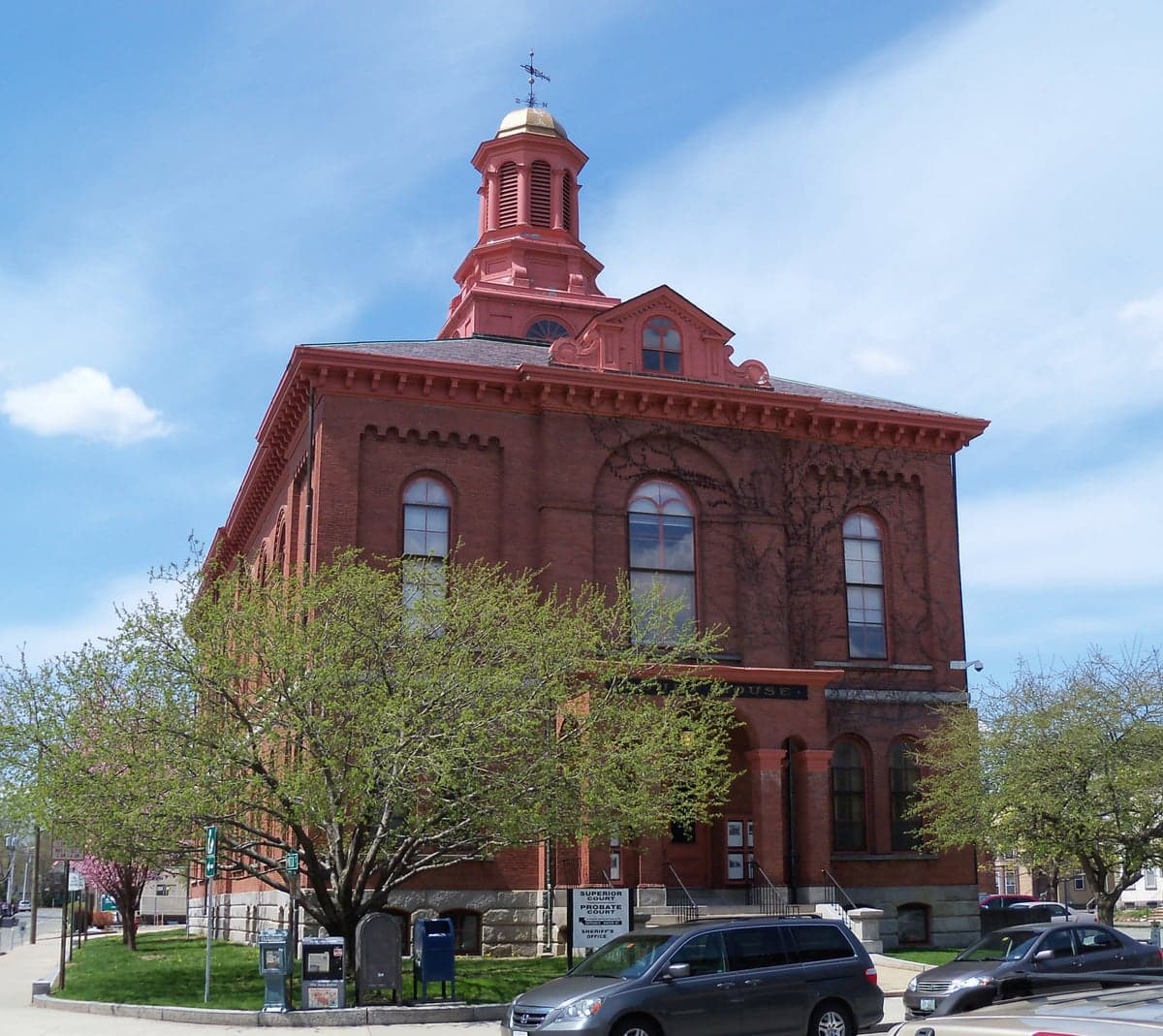
Photo: Wikipedia
Political ClimatePolitical Climate in Cheshire County
Showing district-level results — no local-only data available.
Local Political AnalysisPolitical Analysis of Cheshire County
Cheshire County leans slightly Democratic with a Cook PVI of D+2, making it a genuine battleground where neither party can take victory for granted. That D+2 rating matches the state of New Hampshire exactly, but the county's politics feel different from the rest of the state — more rural-progressive in its core towns, more libertarian-leaning in its outer reaches. Over the past decade, the county has shifted leftward at the presidential level, but local races remain fiercely competitive, with town-by-town splits that tell a more complicated story than the countywide number suggests.
How it compares
At first glance, Cheshire County and New Hampshire share the same D+2 PVI, but the county's internal geography creates a sharper urban-rural divide than the state average. Keene, the county seat and home to Keene State College, votes reliably blue — often by 20 points or more in presidential elections — while Winchester and Hinsdale along the Massachusetts border lean red, sometimes by double digits. Swanzey and Richmond are the swing precincts to watch: Swanzey went for Biden in 2020 but by a margin under 5 points, while Richmond flipped to Trump after backing Obama in 2012. That pattern mirrors the statewide trend of college towns and exurban bedroom communities pulling apart, but Cheshire's small population — roughly 76,000 — means every town's vote carries more weight. The county also has a stronger independent streak than the state as a whole; undeclared voters make up about 40% of the electorate here, slightly above the New Hampshire average, and they tend to break late in election cycles.
What this means for residents
For conservative residents, Cheshire County isn't hostile territory — it's competitive enough that Republican candidates invest real time here. State representative races in Keene's three wards are genuinely contested every cycle, and the county has sent Republicans to the state legislature consistently, even as Keene itself elects Democrats. The practical effect is that conservative voices get heard in local zoning debates, school board meetings, and budget votes, especially in the southern and western towns. For liberal residents, the county offers a comfortable base in Keene and the college corridor, but the surrounding towns keep politics from becoming a monolith. Tax policy is the issue that unites most of the county: Cheshire residents, like most New Hampshirites, fiercely oppose a broad-based income or sales tax, and both parties' local candidates run on keeping the state's tax structure intact. That shared position creates odd coalitions — libertarian-leaning Republicans and fiscally conservative Democrats often vote together on local budget questions.
Culturally, Cheshire County stands apart from the more suburbanized southern tier of New Hampshire. Keene's downtown has a distinctly activist, small-city progressive vibe — the annual Pumpkin Festival drew national attention for both its charm and its 2014 riot — while towns like Marlborough and Troy feel more like working-class New England mill villages, with older housing stock and a quieter pace. The county's politics reflect that split: land-use debates over solar farms, short-term rentals, and conservation easements often pit Keene's environmental activists against rural property-rights advocates. On social issues, the county is more moderate than its D+2 rating might suggest — gun ownership is widespread across party lines, and the Second Amendment Sanctuary movement found support in several Cheshire towns. Looking ahead, the county's trajectory depends on whether Keene's growth as a regional hub pulls the surrounding towns leftward or whether the rural precincts continue to drift right, widening the internal gap that already defines Cheshire politics.

State Political ClimatePolitical Climate in New Hampshire
State Political AnalysisPolitical Environment in the State
New Hampshire has long been the most politically independent state in New England, and that reputation holds true today. The state carries a Cook PVI of D+2, meaning it leans slightly Democratic at the presidential level, but that number masks a deeply competitive and often contradictory political culture. Over the last 10-20 years, the Granite State has shifted from a reliably purple swing state to one that still swings, but with a more pronounced urban-rural split and a growing libertarian streak that complicates simple red-versus-blue narratives. For a conservative-leaning relocator, New Hampshire offers a tax-friendly, gun-friendly, and culturally independent environment, but it also comes with a Democratic-leaning southern tier and a state government that has seesawed between parties every few election cycles.
Urban vs. rural divide
The political map of New Hampshire is a study in contrasts. The southeastern corner, anchored by Manchester, Nashua, and Portsmouth, drives the state's Democratic lean. These cities are home to a mix of out-of-state transplants, younger professionals, and union households that reliably vote blue. The Seacoast region, including Portsmouth and Dover, is particularly liberal, with a strong environmental and social justice bent. In contrast, the rest of the state is overwhelmingly Republican. The North Country, including Berlin and Lancaster, votes red by wide margins, as do the rural towns of the Lakes Region and the Monadnock Region. Salem, on the Massachusetts border, is a bellwether town that often mirrors the state's overall swing. The divide is stark: in 2024, Hillsborough County (home to Manchester) went for Biden, while Belknap County (Laconia area) went for Trump by double digits. This geographic split means that a conservative moving to Bedford or Londonderry will find a very different political environment than one settling in downtown Portsmouth.
Policy environment
New Hampshire's policy environment is defined by its fierce independence and low-tax ethos. The state has no broad-based income tax and no sales tax, relying instead on property taxes, business taxes, and rooms-and-meals taxes. This tax structure is a major draw for conservatives. The regulatory posture is generally light, especially compared to neighboring Massachusetts and Vermont. Education policy is hyper-local: there is no state sales tax to fund schools, so property taxes carry the load, leading to wide disparities in school funding between wealthy and poor towns. School choice is robust, with charter schools and open enrollment available. Healthcare policy is mixed; the state expanded Medicaid under the Affordable Care Act, a decision that has been controversial among conservatives but remains popular. Election laws are among the most open in the country: same-day voter registration is allowed, and there is no voter ID law, which is a frequent point of contention for conservatives who favor stricter ballot security. The state's motto, "Live Free or Die," is not just a slogan—it permeates policy debates on everything from taxes to personal liberty.
Recent policy direction
New Hampshire's recent legislative trajectory has been a tug-of-war between Republican and Democratic control of the governor's office and the legislature. Under Republican Governor Chris Sununu (2017-2025), the state saw a series of conservative wins: right-to-work legislation was passed in 2021, though it was later repealed by a Democratic legislature in 2023. Gun laws remain among the most permissive in the Northeast; the state has no permit requirement for concealed carry, no magazine capacity limits, and no "red flag" law, despite repeated Democratic attempts to pass one. In 2024, the legislature passed a law prohibiting vaccine mandates for employment, a nod to the libertarian and conservative base. On education, the state expanded Education Freedom Accounts (vouchers) in 2022, allowing public funds to follow students to private and religious schools. On the other side, Democrats have pushed for paid family leave, a higher minimum wage, and abortion protections—the latter codified into state law in 2023 after the Dobbs decision. The result is a state that feels like a patchwork: conservative on taxes, guns, and school choice, but moderate to liberal on healthcare access and social services.
Civil unrest & political movements
New Hampshire is not known for large-scale civil unrest, but it has a vibrant activist scene on both sides. The Free State Project, a movement that encourages libertarians to relocate to the state, has been a notable force since the early 2000s. Its members have successfully pushed for gun rights expansions, tax limitation measures, and opposition to vaccine mandates. They are particularly active in the northern and western parts of the state, including Keene and Littleton. On the left, groups like 350 New Hampshire and the NH Youth Movement have organized around climate change and housing affordability, with protests in Concord and Portsmouth. Immigration politics are relatively muted compared to border states, but there has been tension over the state's sanctuary jurisdiction policies; several cities, including Manchester and Nashua, have been labeled "sanctuary cities" by conservative critics, though the actual policies are limited. Election integrity has been a flashpoint since 2020, with Republican legislators pushing for voter ID laws and ballot security measures, while Democrats defend the state's same-day registration system. The overall atmosphere is one of spirited but generally civil debate, with occasional flare-ups at town hall meetings and legislative hearings.
Projection
Looking ahead 5-10 years, New Hampshire's political trajectory is likely to remain competitive, but with a slight rightward tilt driven by in-migration. The state is attracting a steady stream of relocators from Massachusetts and other high-tax states, many of whom are conservative or libertarian-leaning. This influx is boosting the populations of towns like Bedford, Windham, and Derry, which are already Republican strongholds. At the same time, the urban centers of Manchester, Nashua, and Portsmouth are growing younger and more diverse, which tends to favor Democrats. The wild card is the Free State Project: if its members continue to move in and run for local office, they could push the state further toward libertarian policies on taxes, guns, and personal freedom. However, the state's aging population and the out-migration of young people from rural areas could weaken the Republican base in the North Country. The most likely scenario is a continued split government, with the governorship and legislature frequently divided, leading to incremental policy changes rather than dramatic shifts. A new resident should expect a state that remains tax-friendly and gun-friendly, but with periodic battles over social issues and education funding.
For a conservative-leaning relocator, New Hampshire offers a rare combination of low taxes, strong gun rights, and a culture of personal liberty that is increasingly hard to find in the Northeast. The trade-off is living in a state where statewide elections are genuinely competitive, meaning your vote matters but the outcome is never guaranteed. If you settle in a conservative town like Bedford or Salem, you will find neighbors who share your values and a local government that reflects them. If you move to a blue city like Portsmouth, you will encounter a more liberal environment but still benefit from the state's overall policy framework. The bottom line: New Hampshire is a place where a conservative can live comfortably, raise a family, and participate in a political culture that still values independence and debate—just be prepared for the occasional legislative fight over things like voter ID or school funding.
* Values derived from national, state, county, city and local statistics and may differ in a specific area. Last updated: 2026-07-12T04:42:18.000Z
Narrative content on this page is AI-generated and may contain mistakes. Verify any details that matter before acting on them.
ReloMaps may earn a commission from affiliate links at no extra cost to you.

