Photo: Wikipedia
Demographics of Belknap County
Affluence Level in Belknap County
An upper-middle-class area. Household wealth, education levels, and homeownership run ahead of national benchmarks.
People of Belknap County
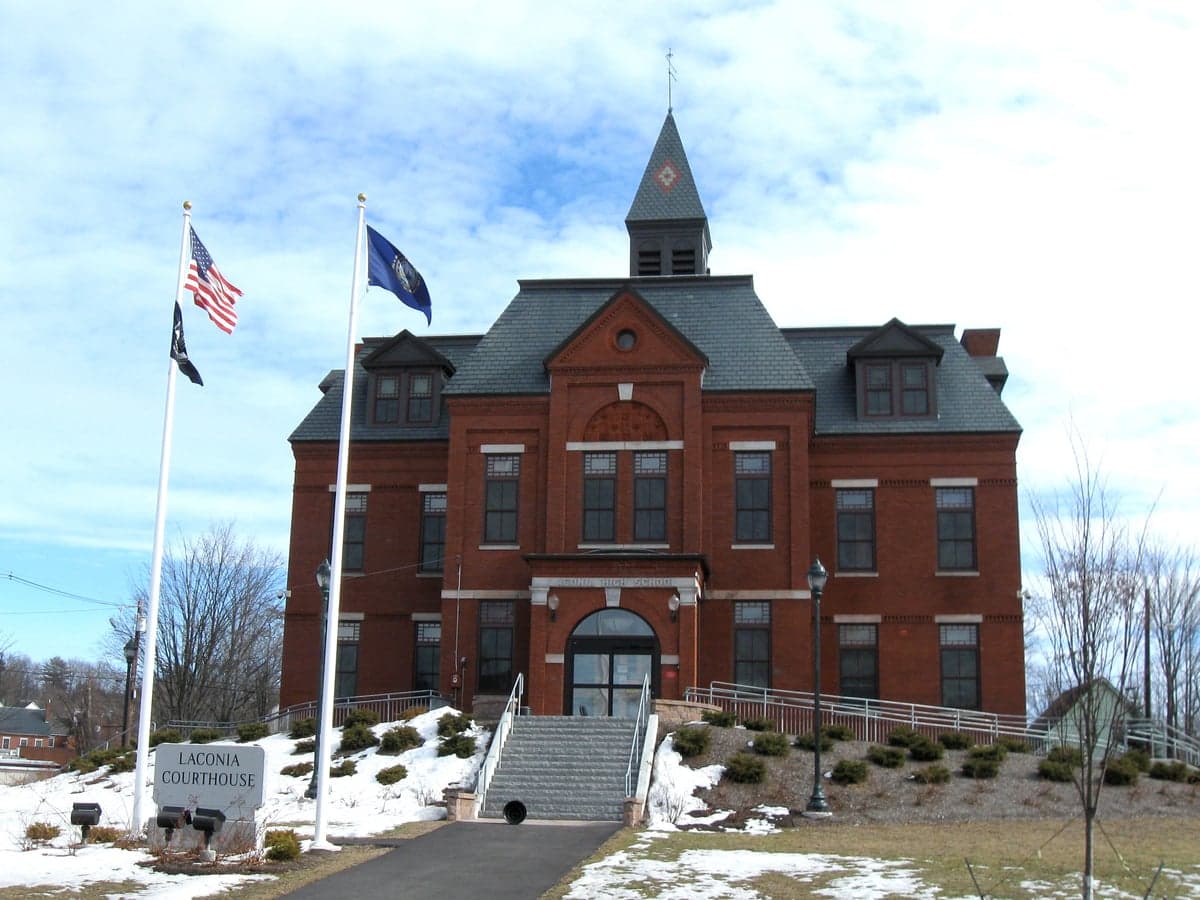
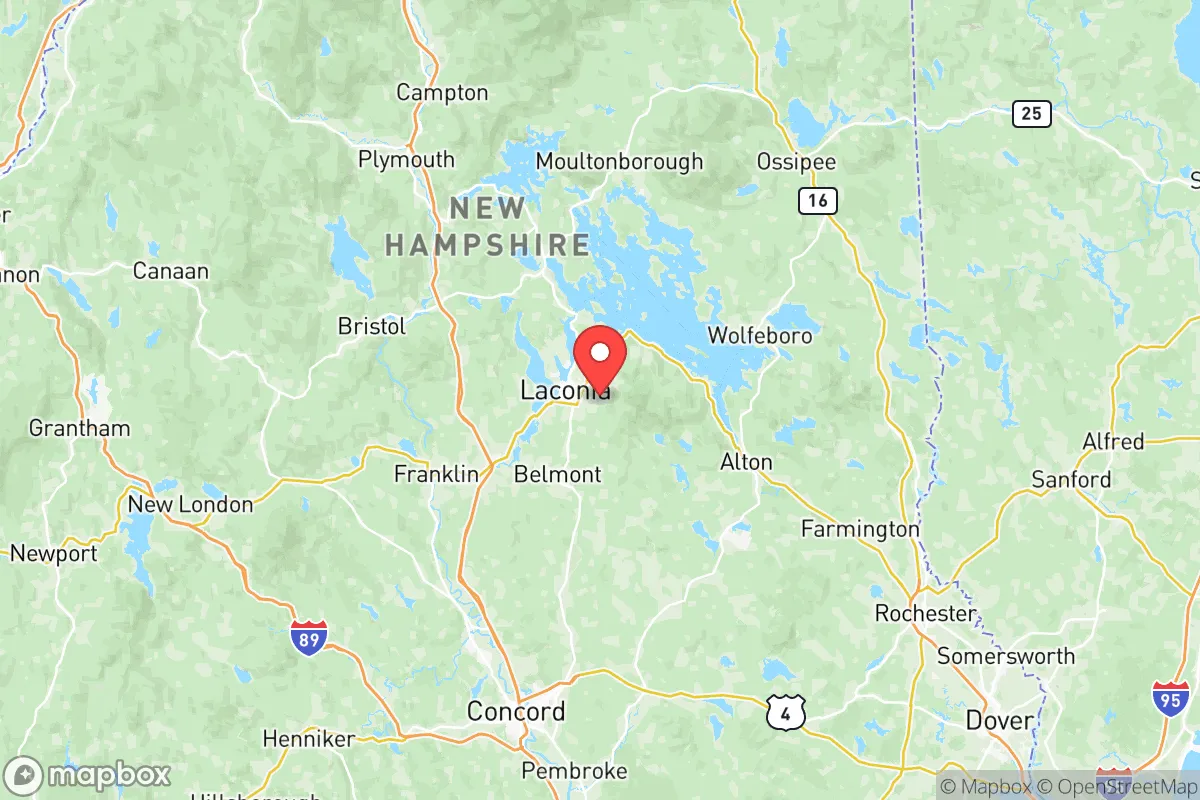
Today, Belknap County, New Hampshire, is home to roughly 64,300 residents, a population that remains one of the most ethnically homogeneous in New England. With a population that is 93.2% white and a foreign-born share of just 1.0%, the county’s identity is deeply rooted in its rural, small-town character and its historical role as a summer destination for wealthy industrialists. The population is concentrated around the county seat of Laconia and the resort towns of Gilford, Meredith, and Alton, with a distinctive cultural marker being the annual Laconia Motorcycle Week, which draws hundreds of thousands of visitors to a region that otherwise values its quiet, lakefront lifestyle.
Settlement & growth (pre-1960)
Before European settlement, the area now known as Belknap County was the ancestral homeland of the Abenaki people, particularly the Pennacook and Sokoki bands. They lived in seasonal villages along the lakes and rivers, fishing for salmon and trout in Lake Winnipesaukee and the Winnipesaukee River, and cultivating corn, beans, and squash in the fertile intervals. The Abenaki presence was largely displaced by the mid-1700s following King George's War and the French and Indian War, as English colonists pushed north from the Massachusetts Bay Colony into what was then a frontier wilderness.
The first permanent English settlers arrived in the 1760s and 1770s, primarily farmers of English and Scots-Irish descent who were granted land by the Masonian Proprietors. These early settlers established the towns of Gilmanton (incorporated 1727, but settled later), Alton (1770), and Meredith (1748, but not fully settled until after the Revolution). The town of Laconia was not incorporated until 1855, growing as a mill town at the falls of the Winnipesaukee River, where water power drove textile and knitting mills. The arrival of the Boston, Concord & Montreal Railroad in the 1840s transformed Laconia into a manufacturing hub, attracting a wave of French-Canadian immigrants from Quebec between 1850 and 1900. These French-Canadian families settled in Laconia's "French Hill" neighborhood and in the mill villages of Lakeport and Weirs Beach, working in the hosiery and knitting mills that made Laconia the "Hosiery Capital of the World."
Simultaneously, the county's lakes became a summer destination for wealthy families from Boston and New York. The arrival of the railroad opened up Meredith, Center Harbor, and Wolfeboro (in neighboring Carroll County, but closely tied to Belknap's economy) as resort towns. Grand hotels like the Weirs Hotel and the Lake Shore Farm Inn in Meredith catered to the Gilded Age elite. This tourism economy created a second demographic layer: seasonal residents who built summer cottages and estates, particularly along the shores of Lake Winnipesaukee and Lake Winnisquam. Many of these families were of old-stock Yankee Protestant descent, creating a social divide between the year-round French-Canadian mill workers and the wealthy summer "rusticators."
Irish immigrants also arrived in the 1850s and 1860s, primarily as laborers building the railroads and working in the mills. They settled in Laconia's "Shackford" neighborhood and in Belmont, where they worked in the town's shoe factories. A smaller number of German and Polish families arrived in the late 19th century, but they never formed the large ethnic enclaves seen in Manchester or Nashua. By 1900, Belknap County's population was overwhelmingly native-born white, with French-Canadians as the largest ethnic minority, and the county remained predominantly rural and agricultural outside of Laconia.
Modern era (post-1965)
The 1965 Hart-Cellar Act had minimal impact on Belknap County. Unlike southern New Hampshire, which saw significant immigration from Southeast Asian refugees after the Vietnam War, Belknap County's foreign-born population remained below 2% through the 2020s. The county's modern demographic story is not one of immigration but of domestic migration and suburbanization. Beginning in the 1970s, the completion of Interstate 93 made Belknap County accessible to commuters working in Manchester and Concord. Towns like Gilford and Sanbornton saw new subdivisions built for professionals seeking lake access and lower property taxes. This wave was predominantly white, college-educated, and politically moderate, drawn by the region's natural beauty and quality of life.
The 1980s and 1990s brought a second wave of domestic migration: retirees and second-home buyers from Massachusetts, Connecticut, and New York. They concentrated in lakefront communities like Meredith and Alton Bay, driving up property values and transforming the seasonal economy into a year-round one. This influx also brought a modest increase in diversity. The county's Hispanic population, now 2.2%, grew from near zero in 1990, largely through families moving from Massachusetts and Rhode Island for work in construction, hospitality, and healthcare. The Asian population (East and Southeast Asian) stands at 0.8%, with small communities of Vietnamese and Chinese families in Laconia, many working in the region's hospitals and restaurants. The Indian subcontinent population is 0.4%, concentrated among professionals at Lakes Region General Hospital and the area's growing number of tech-adjacent businesses. The Black population remains very small at 0.5%, with most Black residents living in Laconia and working in education or healthcare.
Suburbanization has reshaped the county's settlement pattern. While Laconia's population has remained stable at around 16,000, the unincorporated areas of Gilford, Meredith, and Alton have grown significantly. These towns now function as bedroom communities for commuters to Concord and Manchester, as well as retirement destinations. The county's college-educated population has risen to 32.6%, reflecting the influx of professionals and retirees, though this remains below the state average of 37.4%. The seasonal population still swells dramatically in summer, with Lake Winnipesaukee's shoreline hosting an estimated 50,000 additional residents during peak months.
The future
Belknap County is likely to remain one of New Hampshire's least diverse counties over the next two decades. The foreign-born population is projected to remain below 2%, as the county lacks the urban job base and ethnic networks that drive immigration to Manchester, Nashua, or Portsmouth. The Hispanic population may grow slowly, reaching 3-4% by 2040, driven by families moving from Massachusetts for lower housing costs and work in construction and hospitality. The Asian and Indian populations will likely grow modestly, concentrated among healthcare professionals at Lakes Region General Hospital and the expanding Dartmouth-Hitchcock system in nearby Lebanon.
The bigger demographic story is aging. Belknap County has a median age of 46.2, significantly higher than the national median of 38.8. The county's population growth has slowed to under 1% annually, with most growth occurring in the 55+ age bracket. Younger families are being priced out of lakefront communities, pushing new development inland to Barnstead and Strafford (in Strafford County, but part of the same commuting zone). The county's cultural identity is evolving from a working-class mill-and-resort economy to a retirement and recreation destination, with the seasonal population becoming more dominant in local politics and land use decisions.
For someone moving in now, Belknap County offers a stable, safe, and overwhelmingly white community with strong ties to its lakes and mountains. The population is aging, but the influx of retirees and remote workers from southern New England is keeping the economy afloat. The county is not becoming more diverse in any meaningful sense, but it is becoming more affluent and more oriented toward tourism and recreation. The trade-off is clear: lower crime and excellent natural amenities, but limited ethnic diversity and a social fabric that can feel insular to newcomers who are not of northern European descent.

* Values derived from national, state, county, city and local statistics and may differ in a specific area. Last updated: 2026-07-08T15:10:53.000Z
Narrative content on this page is AI-generated and may contain mistakes. Verify any details that matter before acting on them.
ReloMaps may earn a commission from affiliate links at no extra cost to you.

