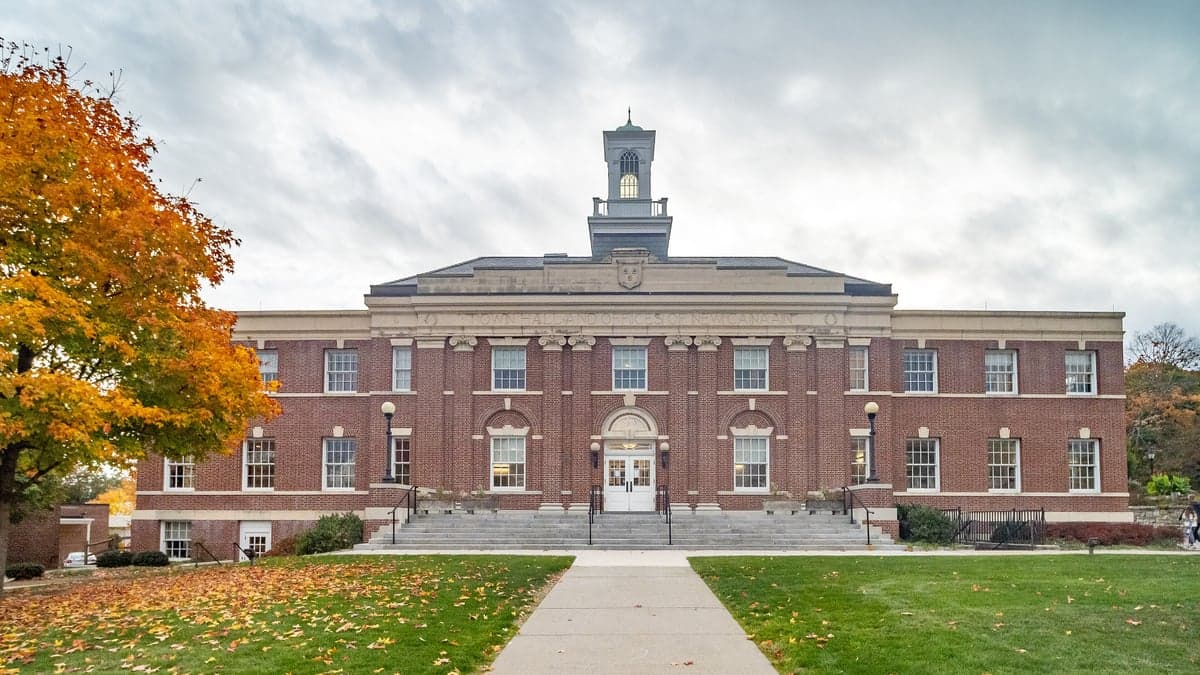

Photo: Wikipedia
Political ClimatePolitical Climate in New Canaan, CT
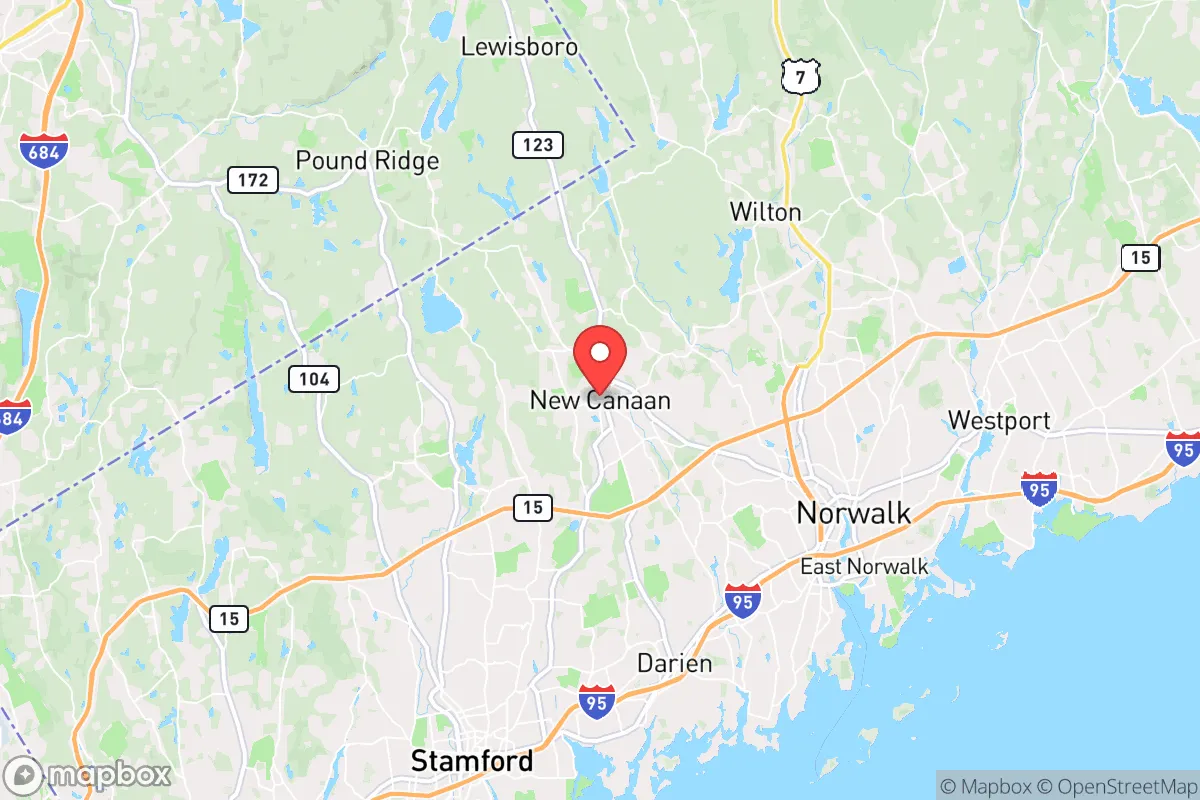
District shown is the primary district for this city’s centroid. Cities may span multiple districts.
Local Political AnalysisPolitical Analysis of New Canaan, CT
New Canaan has always been a place where people came to get away from the noise and the nonsense, but the political winds have shifted here more than most folks want to admit. The Cook PVI now clocks Fairfield County’s 4th district at D+13, which tells you the whole story in one number: this town, once a rock-ribbed Republican stronghold where you could leave your doors unlocked and your opinions unapologetic, is now leaning hard into the progressive column. The trajectory is clear—each election cycle brings a little more blue paint to the white steeples, and if you’ve been here since the 90s like I have, you’ve watched the change happen in slow motion, one zoning meeting and school board vote at a time.
How it compares
Drive ten minutes east into Darien or fifteen minutes west into Wilton, and you’ll feel the difference in the air. Darien still holds a Republican edge in local races, and Wilton’s a bit of a toss-up, but New Canaan has become the progressive outlier of the Gold Coast trio. Stamford, just south, has been deep blue for decades, so that’s no surprise, but the real contrast is with Ridgefield up north, which still manages to keep a more balanced board of selectmen. New Canaan’s town council and Board of Education have tilted left in a way that would have been unthinkable in the 1980s, when the local GOP could count on winning every seat without breaking a sweat. The state legislature seats covering New Canaan are now held by Democrats, and the town’s votes in presidential elections have swung hard for the national ticket—a far cry from the days when George H.W. Bush could count on this town to deliver a 60% share.
What this means for residents
For those of us who value local control and minimal government meddling, the shift is a real concern. The school board has pushed through curriculum changes that feel more like social engineering than education, and the town’s recent embrace of state-mandated housing density targets—the so-called “8-30g” developments—has started to change the character of our neighborhoods. You’re seeing more multifamily units where there used to be single-family lots, and with that comes a heavier hand from Hartford on everything from property tax caps to building codes. The local police department still does a great job, but the rhetoric from some town officials about “defunding” or “reimagining” public safety has crept into budget meetings, even if it hasn’t passed yet. If you’re the kind of person who believes your home is your castle and your wallet is your own business, the creeping overreach is something to watch closely.
What the future looks like
Looking ahead, I don’t see this trend reversing anytime soon. The demographics are shifting—young families moving in from New York City bring their voting habits with them, and the old guard of small-business owners and independent professionals is retiring or moving out to places like Litchfield County or even Florida. The town’s tax base is still strong, but the policy direction is unmistakable: more regulations on property use, more progressive taxation at the state level, and a cultural tone that increasingly frowns on traditional values. If you’re considering a move here, know that the schools are still excellent and the train to Grand Central is a dream, but the political climate is no longer the quiet, conservative refuge it once was. It’s a place where you’ll need to stay engaged, vote in every local election, and maybe join the town council yourself if you want to keep the balance from tipping any further.

State Political ClimatePolitical Climate in Connecticut
State Political AnalysisPolitical Environment in the State
Connecticut has shifted from a classic swing state to a reliably Democratic stronghold over the past two decades, with Democrats now holding every statewide office, both U.S. Senate seats, and a supermajority in the state legislature. In the 2024 presidential election, the state voted for the Democratic candidate by a margin of roughly 56% to 42%, a gap that has widened from the 54-44 split in 2016. The shift is driven primarily by the consolidation of the wealthy, educated suburbs around New York City and the emptying-out of the state’s once-Democratic industrial cities, while the rural northeast and northwest corners have become more Republican but lack the population to offset the losses.
Urban vs. rural divide
The political map of Connecticut is a tale of three distinct regions. The southwestern corner, anchored by Stamford, Greenwich, and New Canaan, is the state’s Democratic engine—these are high-income, highly educated suburbs where voters lean heavily left on social issues and are comfortable with high taxes. The state’s largest city, Bridgeport, and the capital, Hartford, are deep blue, but their populations have been shrinking for decades, reducing their electoral weight. Meanwhile, the rural Litchfield County towns like Litchfield, Kent, and Cornwall have become reliably Republican, as have the eastern Connecticut towns like Pomfret and Woodstock. The most competitive areas are the so-called “suburban ring” around Hartford—towns like Glastonbury, Southington, and Farmington—which have trended Democratic in recent cycles but still elect moderate Republicans at the local level. The 2022 gubernatorial race saw the Republican candidate, Bob Stefanowski, win the rural northeast by 20 points but lose Fairfield County by 30 points, illustrating the geographic chasm.
Policy environment
Connecticut’s policy environment is defined by its aggressive tax-and-spend posture. The state has the highest property tax burden in the nation, with effective rates averaging over 2.1% of home value, and the second-highest state income tax, topping out at 6.99%. In 2023, the legislature passed a major expansion of paid family and medical leave, funded by a new payroll tax on workers, and in 2024 it enacted a law requiring all new cars sold in the state to be zero-emission by 2035. On education, Connecticut has some of the nation’s most restrictive charter school laws and a powerful teachers’ union that has successfully blocked school choice expansion. The state’s election laws are among the most permissive in the country: no-excuse absentee voting, early voting (passed in 2023), and automatic voter registration at the DMV. A 2021 law made it a crime to carry a firearm without a permit in most public places, and in 2023 the legislature banned the open carry of long guns and raised the minimum age to purchase a rifle to 21.
Trajectory & freedom
Connecticut is becoming less free by nearly every measure, particularly in the realms of gun rights, medical autonomy, and taxation. The 2023 gun law (Public Act 23-53) effectively banned the open carry of any firearm and created a new “sensitive places” list that includes parks, libraries, and any business that doesn’t explicitly post a sign allowing guns. In 2022, the state passed a law requiring insurance companies to cover abortion and contraception with no copay, and in 2023 it enacted a “shield law” protecting providers who perform abortions on out-of-state patients. On parental rights, the state has been a battleground: in 2024, the legislature rejected a bill that would have required schools to notify parents if a child changes their gender identity, and the state Department of Education has issued guidance encouraging schools to keep such information confidential from parents. Property rights have been eroded by a 2023 law that allows municipalities to impose rent control on certain apartments, and by a 2022 law that made it easier for tenants to sue landlords over habitability issues. The only area where freedom has expanded is marijuana: recreational use was legalized in 2021, and retail sales began in 2023.
Civil unrest & political movements
Connecticut has seen relatively little large-scale civil unrest compared to other states, but there are persistent flashpoints. The 2020 Black Lives Matter protests in New Haven and Hartford were large but mostly peaceful, though they did lead to the removal of a Christopher Columbus statue in New Haven. The state’s sanctuary policy, codified in a 2013 law (Trust Act) and expanded in 2021, prohibits local law enforcement from cooperating with federal immigration authorities except in limited circumstances—a policy that has caused tension in towns like Danbury and Norwalk, where immigration enforcement is a hot-button issue. On the right, the Connecticut Citizens Defense League (CCDL) has been a vocal force, organizing annual rallies at the state capitol and successfully suing the state over the 2013 gun law. Election integrity has been a minor issue: in 2020, the state’s decision to mail absentee ballot applications to all registered voters drew lawsuits from Republicans, but the courts upheld the practice. The most visible political movement in recent years has been the fight over “critical race theory” in schools, which has led to heated school board meetings in suburbs like West Hartford and Greenwich, though no major legislation has passed.
Projection
Over the next 5-10 years, Connecticut is likely to become even more Democratic and more progressive. The state’s population is aging and shrinking—it lost a congressional seat after the 2020 census—and the people leaving are disproportionately moderate and conservative-leaning families moving to Florida, Texas, and the Carolinas. The people moving in are largely from New York City and are already accustomed to high taxes and progressive governance. The Democratic supermajority in the legislature is unlikely to be broken, as the state’s gerrymandered districts protect incumbents. Expect further gun control measures, including a possible ban on semi-automatic rifles, and continued expansion of the welfare state, including a push for universal healthcare. The one wild card is the state’s fiscal crisis: Connecticut has one of the highest debt-to-GDP ratios in the country, and a future recession could force painful cuts or tax increases that might finally trigger a political realignment. But for now, the trajectory is clear: more regulation, higher taxes, and less personal freedom.
For a conservative-leaning individual or family considering a move to Connecticut, the bottom line is this: you will be paying some of the highest taxes in the country, living under some of the strictest gun laws, and raising your children in a school system that may not respect your parental rights. The state’s natural beauty, excellent schools in certain districts, and proximity to New York City are real draws, but they come at a steep price in terms of personal liberty and financial freedom. If you value low taxes, gun rights, and local control, Connecticut is likely not the right fit—and the trend lines suggest it will only become less so in the years ahead.
* Values derived from national, state, county, city and local statistics and may differ in a specific area. Last updated: 2026-04-27T14:56:33.000Z
Narrative content on this page is AI-generated and may contain mistakes. Verify any details that matter before acting on them.
ReloMaps may earn a commission from affiliate links at no extra cost to you.

