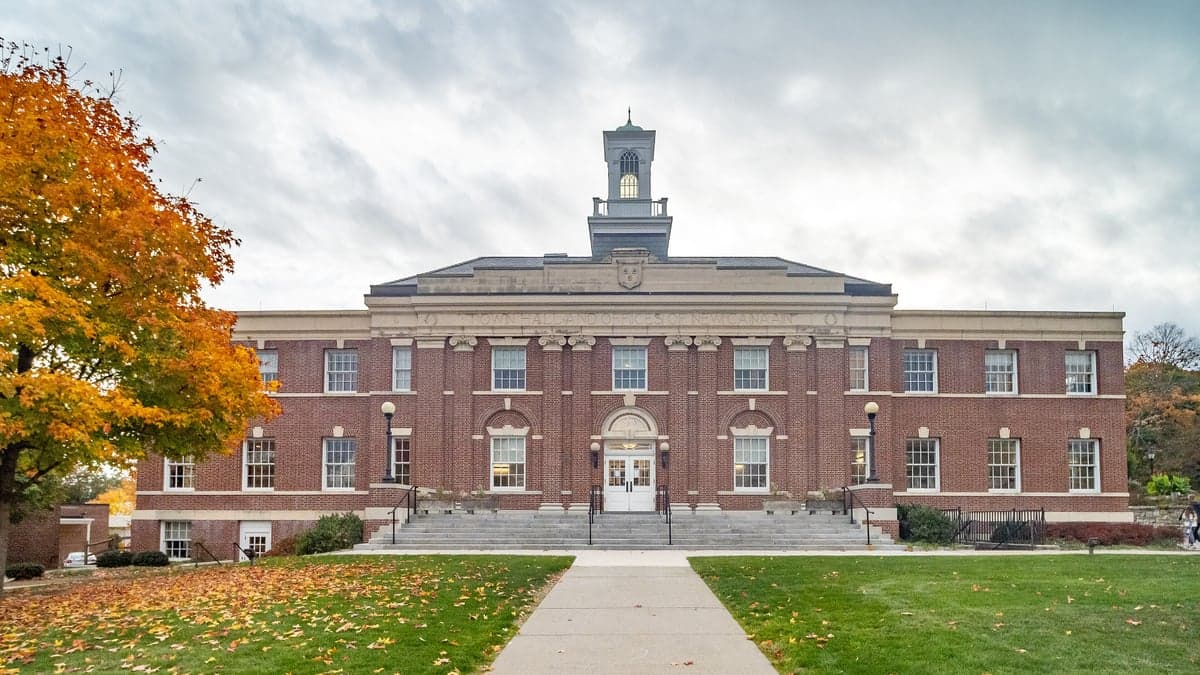
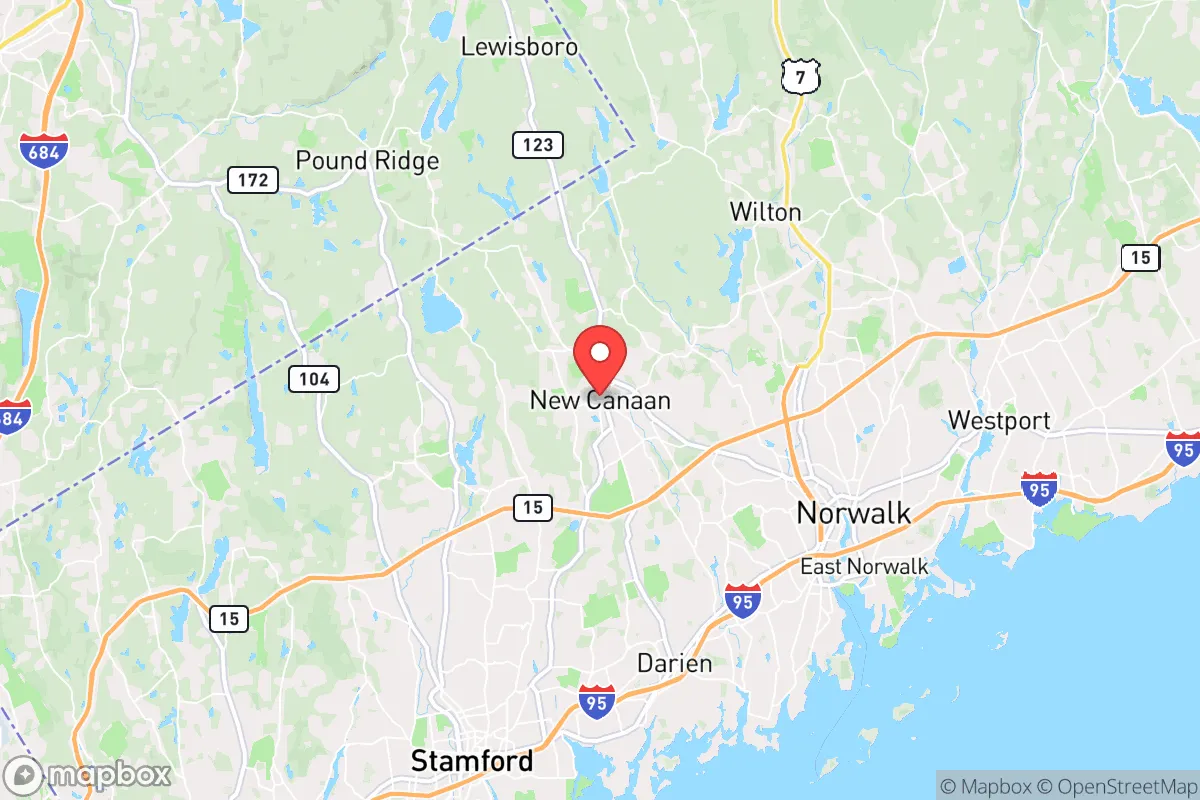
Photo: Wikipedia
Demographics of New Canaan, CT
Historical data isn't available for New Canaan, CT. Trends shown are for Connecticut.
Affluence Level in New Canaan, CT
A wealthy area with high-earning, well-educated households. Incomes, home values, and educational attainment meaningfully outpace national averages.
People of New Canaan, CT
New Canaan, Connecticut, is a town of 7,032 residents that remains overwhelmingly white (84.3%) and highly educated (76.6% hold a college degree), with a small but growing presence of East/Southeast Asian (4.0%) and Indian-subcontinent (3.6%) professionals. The foreign-born share stands at just 5.8%, well below the national average, reflecting a community shaped by generational wealth and commuter access to New York City. The town’s identity is defined by its historic village center, large-lot zoning, and a population that is both deeply rooted and increasingly diverse in its professional makeup.
How the city was settled and grew
New Canaan’s original population were English Puritan farmers who arrived in the 1730s, drawn by land grants from the Connecticut Colony. The town was incorporated in 1801, and for the next century its economy revolved around agriculture, small mills, and the production of hats and shoes. The arrival of the railroad in 1868 transformed New Canaan into a summer retreat for wealthy New York families, who built estates in what is now the South Avenue and Oenoke Ridge area. By the early 1900s, the town’s character shifted from farming to a commuter suburb, with Irish and Italian laborers arriving to build the grand homes and infrastructure. These workers settled in the Ponus Ridge and Talmadge Hill neighborhoods, where their descendants remain a modest but distinct presence. The post-World War II boom brought a wave of white-collar professionals—mostly of Northern European descent—who filled the new subdivisions of Smith Ridge and Canoe Hill, cementing New Canaan’s reputation as an affluent, largely homogeneous commuter town.
Modern era (post-1965)
The 1965 Hart-Cellar Act had a limited immediate effect on New Canaan, as the town’s high property values and restrictive zoning kept it less accessible to new immigrant groups than nearby Stamford or Norwalk. However, from the 1990s onward, corporate transfers and the growth of hedge funds and finance in New York City brought a wave of East/Southeast Asian and Indian-subcontinent professionals. These families concentrated in the Silvermine and West Road neighborhoods, drawn by the town’s top-ranked public schools and proximity to the Merritt Parkway. The Hispanic population (3.0%) and Black population (1.6%) remain small, with most Hispanic residents employed in landscaping, construction, and domestic services, living in rental units near the Main Street corridor. The Indian-subcontinent community, now 3.6% of the population, has grown steadily since 2000, with many families purchasing homes in the Waveny Park and Farm Road areas. The East/Southeast Asian share (4.0%) includes a mix of Chinese, Japanese, and Korean families, often in dual-income professional households. Despite these shifts, the white population remains dominant at 84.3%, and the town’s social and political life is still largely shaped by its long-established families.
The future
New Canaan’s population is slowly diversifying, but the pace is constrained by housing costs—the median home price exceeds $1.5 million—and a zoning code that favors single-family homes on large lots. The East/Southeast Asian and Indian-subcontinent communities are growing, but they are assimilating into the town’s existing social fabric rather than forming distinct ethnic enclaves. The Hispanic population is likely to remain stable or grow modestly, driven by service-sector employment, while the Black population is expected to stay flat. The town is not tribalizing into separate enclaves; rather, it is homogenizing around a shared professional-class identity, with newcomers of all backgrounds adopting the same norms of high educational attainment, civic involvement, and commuter lifestyle. The next 10–20 years will likely see a continued gradual increase in Asian and Indian-subcontinent residents, but New Canaan will remain a predominantly white, wealthy community with a small foreign-born share.
For someone moving in now, New Canaan offers a stable, low-crime environment with exceptional schools and a strong sense of community, but it is not a place of rapid demographic change or ethnic diversity. The town is becoming slightly more cosmopolitan in its professional ranks while retaining its core character as a historic, affluent New England suburb. New residents—whether from the U.S. or abroad—will find a place that values tradition, privacy, and long-term investment in property and family life.

* Values derived from national, state, county, city and local statistics and may differ in a specific area. Last updated: 2026-04-27T14:56:33.000Z
Narrative content on this page is AI-generated and may contain mistakes. Verify any details that matter before acting on them.
ReloMaps may earn a commission from affiliate links at no extra cost to you.

