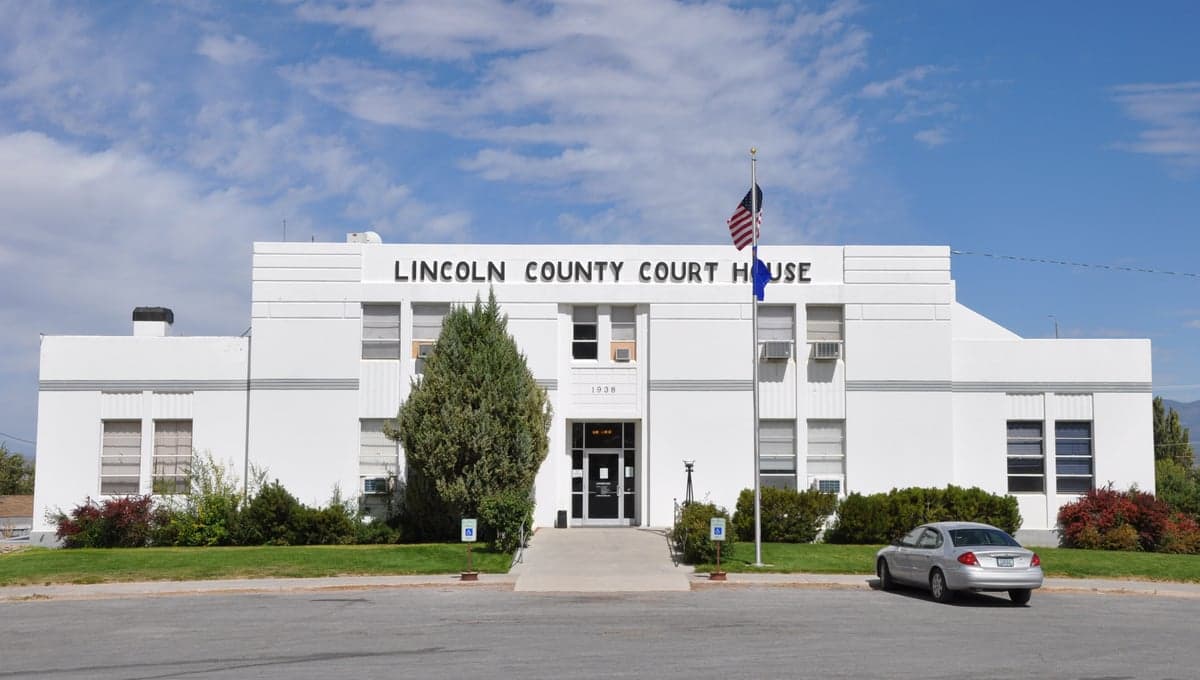
Photo: Wikipedia
Political ClimatePolitical Climate in Lincoln County
Showing district-level results — no local-only data available.
Local Political AnalysisPolitical Analysis of Lincoln County
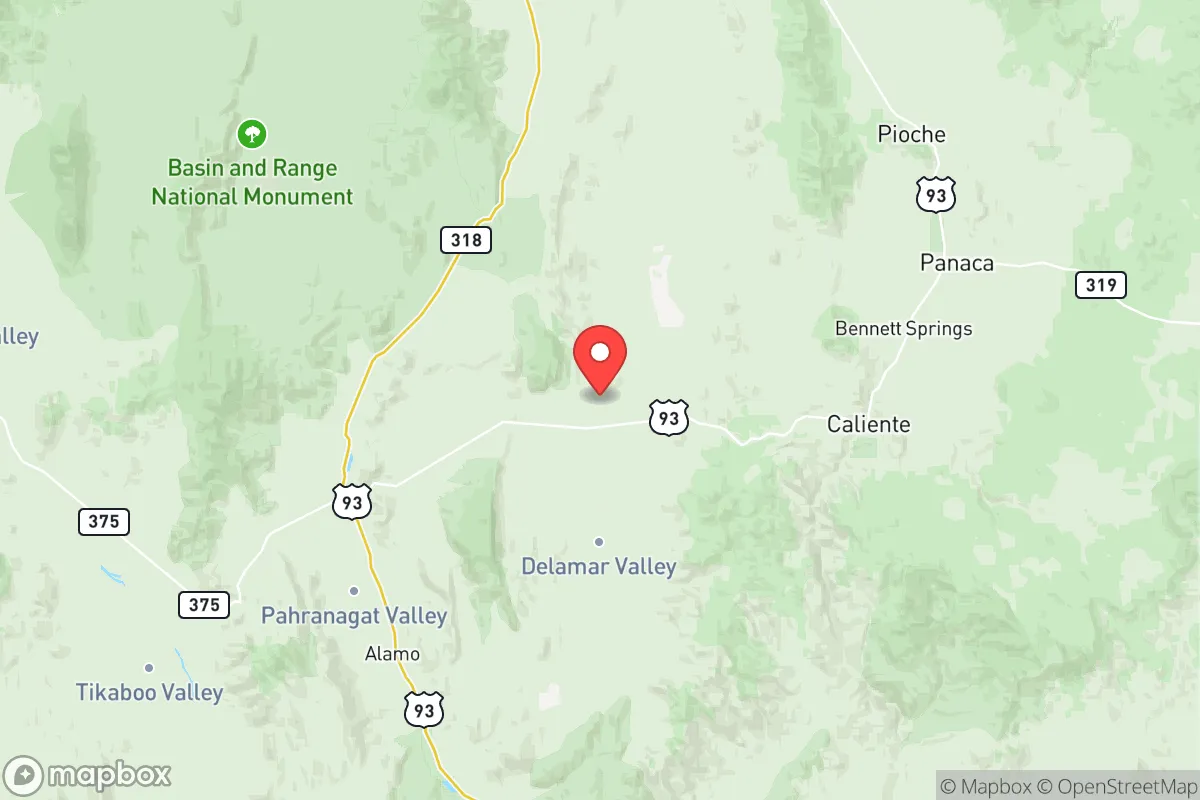
Lincoln County, Nevada, is a fascinating political outlier in a state that’s often painted as a swing battleground. While the county as a whole carries a Cook PVI of D+2, that number masks a deeply divided landscape where the Democratic lean is almost entirely driven by the small, tight-knit communities of Caliente and Panaca, while the vast, rural stretches of the county—places like Alamo, Pioche, and the unincorporated areas around Rachel—vote reliably red. The trajectory here is subtle but real: the county’s Democratic edge is slowly eroding as younger, more conservative families move in for the quiet, low-tax lifestyle, and as the older, union-tied mining families in Caliente age out. It’s not a flip, but it’s a shift—think of it as a D+2 county that’s inching toward a toss-up, not a blue stronghold.
How it compares
Compared to the state of Nevada as a whole, which has a Cook PVI of R+1, Lincoln County is actually more Democratic on paper, but that’s a statistical illusion. The state’s R+1 rating is driven by the massive, moderate-leaning suburbs of Clark County (Las Vegas) and Washoe County (Reno), where independents swing elections. Lincoln County, by contrast, is a microcosm of rural Nevada’s political reality: its D+2 rating is a product of a few hundred Democratic votes in Caliente and Panaca, not a broad liberal consensus. In practice, a Republican candidate can win Lincoln County by 10 points in a presidential race, while the state as a whole goes blue. The swing precincts aren’t in the towns—they’re in the unincorporated areas like Ursine and the mining camps near Delamar, where turnout is low but votes are almost always red. The county’s political map is a checkerboard: Caliente’s precincts lean blue by about 8 points, while Pioche and Alamo are red by 15-20 points. That’s a sharper divide than you see in most of Nevada’s rural counties, which tend to be uniformly red.
What this means for residents
For conservative residents, Lincoln County is a comfortable place to live politically. The county commission is reliably Republican, and local policies—like minimal zoning, low property taxes, and a strong Second Amendment culture—reflect that. You’ll find no shortage of “Trump 2024” signs on the drive from Caliente to Pioche. For liberal residents, especially in Caliente and Panaca, the experience is more nuanced. They’re a vocal minority, and they’ve successfully pushed for things like a county-funded library expansion and a community health center in Caliente, but they know they’re swimming against the current. The practical reality is that state-level policies—like Nevada’s mail-in voting law and its abortion protections—are set in Carson City, not Lincoln County, so even in a red-leaning county, residents live under a purple state’s laws. That creates a tension: local government is conservative, but state mandates are often more progressive, which can frustrate both sides.
Culturally, Lincoln County stands apart from the rest of Nevada. There’s no casino culture, no neon, and no 24/7 hustle. The county’s identity is rooted in ranching, mining, and Mormon heritage (Panaca is one of the oldest Mormon settlements in the state). That means Sundays are quiet, and community events—like the Lincoln County Fair in Caliente—are the social glue. Politically, this translates into a preference for small government and local control, but with a pragmatic streak: residents here will vote for a Democrat who supports public lands access and water rights, even if they’d never vote for one on a national ticket. The long-term trend? If the county’s population grows—and it’s been flat for decades—it’ll likely tilt redder, as newcomers are drawn by the low taxes and isolation, not by the Democratic lean of Caliente. For now, it’s a place where your vote matters locally, but your voice is one of many in a state that’s decided by the Strip and the Sierra.

State Political ClimatePolitical Climate in Nevada
State Political AnalysisPolitical Environment in the State
Nevada’s political climate is a genuine purple battleground, but with a slight rightward tilt — the Cook PVI sits at R+1, meaning the state is about one point more Republican than the nation as a whole. Over the last 20 years, the state has swung from reliably blue (voting Democratic in every presidential election from 1992 through 2016) to a true toss-up, with Republicans carrying it in 2024 by about 3 points. The dominant coalition is a mix of working-class and rural conservatives in the north and central regions, pitted against a powerful, growing Democratic stronghold in Clark County (Las Vegas) and the increasingly competitive Washoe County (Reno). This dynamic makes every election a knife fight, and the state’s policy environment reflects that constant tension.
Urban vs. rural divide
Nevada’s political map is a story of three distinct regions. Clark County (Las Vegas, Henderson, North Las Vegas) is the Democratic engine, accounting for about 70% of the state’s population. Las Vegas itself, due largely to its unionized hospitality workforce, diverse population, and recent transplants from California, leans left — typically delivering 10-15 point margins for Democrats. But even within Clark County, there are pockets of red: Henderson, especially newer master-planned communities like Green Valley and Summerlin, is a suburban swing area where Republicans run competitively. Washoe County (Reno, Sparks, Lake Tahoe) used to be a Republican stronghold but has trended left over the past decade as California transplants and tech workers moved in; in 2024, it voted for the Democratic presidential candidate by about 5 points. The rest of the state — the rural “Cow Counties” like Elko, Humboldt, Lander, Nye, and White Pine — is deeply red, often voting 70-80% Republican. Elko, in particular, is a conservative anchor thanks to its mining and ranching economy, and it consistently produces some of the most Republican margins in the West.
Policy environment
Nevada’s policy landscape is a mixed bag that reflects its purple status. On the tax front, it’s a clear win for conservatives: no state income tax, a relatively low corporate tax rate (6.75% for most businesses), and no estate or inheritance taxes. Property taxes are capped at 3% annual growth for owner-occupied homes, making it a popular destination for retirees and Californians escaping high taxes. However, the state makes up for it with one of the nation’s highest combined sales tax rates (up to 8.75% in Clark County), and permissive gambling and hospitality taxes. Education policy is a perennial fight; school choice options are limited compared to neighbors like Arizona, and the state has a decentralized system with weak performance outcomes. Healthcare is relatively affordable thanks to a competitive insurance market, but rural access remains a serious issue. Election laws are among the most accessible in the nation — automatic voter registration, same-day registration, universal mail-in ballots (passed in 2021 as AB 321), and early voting are all standard. For a conservative considering relocation, this is a double-edged sword: low taxes and property rights protections are appealing, but election integrity concerns and the heavy influence of Las Vegas politics may give pause.
Recent policy direction
The last five years have seen Nevada lurch left on social issues while holding the line fiscally. In 2021, the Democratic-controlled legislature passed AB 321, which made mail-in voting permanent and automatic — a move Republicans have tried to repeal or reform, but have so far failed. On guns, Nevada is a shall-issue state for concealed carry with no permit required for open carry, but it does require background checks on all firearm sales, including private transactions (a 2016 ballot measure that passed by a narrow margin). The state has no red flag law as of 2025, though it has been proposed. On education, AB 400 (2023) expanded school funding but rejected a school choice voucher program, keeping Nevada near the middle of the pack for parental options. On bodily autonomy, Nevada is a strong abortion-rights state — a 1990 referendum codified abortion access, and in 2024, voters passed a ballot question to enshrine it in the state constitution. Property rights are generally strong; there’s no statewide rent control (though Las Vegas considered it until 2023), and mining and water rights for rural landowners are aggressively defended. Privacy and surveillance law is still relatively lax; the state has no comprehensive data privacy law like California or Virginia, though it’s been debated. For a conservative relocator, the bottom line is that Nevada offers fiscal freedom and strong property protections, but socially liberal policies on voting and abortion are entrenched.
Civil unrest & political movements
Nevada has seen its share of political flashpoints, though nothing on the scale of some coastal states. The 2014 Bundy Ranch standoff near Bunkerville, in Clark County’s rural northeast, became a national symbol of federal overreach, with armed activists blocking a BLM cattle roundup. That spirit lives on in the state’s strong “Sagebrush Rebellion” tradition — local county commissions, especially in Nye and Lander counties, have passed resolutions asserting local control over federal lands. In 2020, Las Vegas saw substantial Black Lives Matter protests, and there were scattered clashes outside the Clark County Election Department during the 2020 recount. Immigration politics are a live wire: Nevada has no sanctuary state law, but Clark County (which contains Las Vegas) largely refuses to cooperate with ICE holds. The 2022 and 2024 election cycles were marked by widespread Republican allegations of voter irregularities, especially in Clark County’s mail-ballot processing, though no court cases found systemic fraud. A new resident in a rural county like Elko will see a very different political culture — more “We the People” gatherings, land-use battles, and local militia presence — than someone settling in suburban Henderson, where the tone is more conventional and civic.
Projection
Looking out to 2030-2035, Nevada’s political trajectory is a tug-of-war between demography and geography. The single biggest driver is in-migration: about 50,000-80,000 new residents per year, mostly from California and the West Coast. Those people tend to settle in Clark and Washoe counties, and they bring left-leaning political habits. If that trend continues, the state will likely become more Democratic — or at least more competitive — within a decade. However, there’s a counter-trend: Reno’s growth has also brought libertarian-leaning tech workers and remote employees who value low taxes and light regulation, and rural counties are actively recruiting conservative newcomers. The most plausible scenario is that Nevada stays purple but shifts slightly left, settling into a lean similar to today’s Arizona or Georgia — a battleground where control toggles between parties depending on turnout. For a conservative moving in now, expect to live in a divided state where your vote matters but your policy preferences will be contested every election cycle.
For a new resident choosing Nevada, the practical takeaway is clear: you get the economic freedom of no income tax and low property taxes, but you’ll also live under a government that makes voting easy, protects abortion access, and keeps gambling as its economic lifeblood. If you’re moving to Elko, you’re in a deep-red oasis; if Las Vegas, you’re in a blue city with red suburbs. The state rewards self-reliance — low taxes mean fewer services, so budget for your own health insurance, school choices, and retirement planning. But if you value living in a place where the outcome of state elections genuinely hangs in the balance, Nevada is one of the last true swing states in America.
* Values derived from national, state, county, city and local statistics and may differ in a specific area. Last updated: 2026-07-03T04:50:51.000Z
Narrative content on this page is AI-generated and may contain mistakes. Verify any details that matter before acting on them.
ReloMaps may earn a commission from affiliate links at no extra cost to you.

