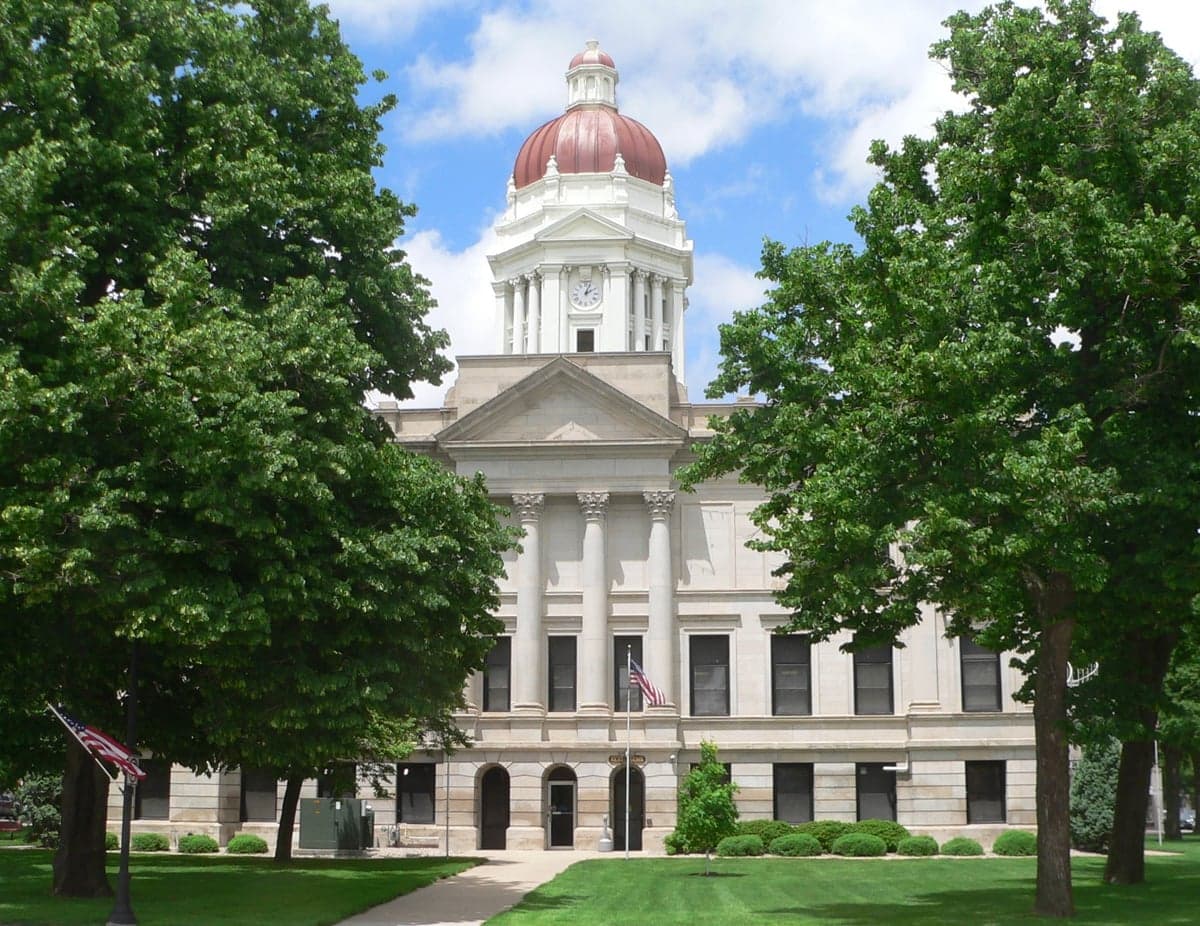
Photo: Wikipedia
Strategic Assessment of Seward County
Workable tactical position. Some exposure to population density or targets, but generally defensible in a crisis.
What does the Strategic Assessment tell us?
Our Strategic Assessment grades tactical survivability of an area. Major population centers, military targets, fallout zones, natural disasters, and border exposure all drive risk — lower exposure means a more defensible position in a crisis.
This is heavily inspired by Joel Skousen's Strategic Relocation book. Highly recommended you checkout the book ($)What does this tell us?
Our Strategic Assessment grades tactical survivability of an area. Major population centers, military targets, fallout zones, natural disasters, and border exposure all drive risk — lower exposure means a more defensible position in a crisis.
This is heavily inspired by Joel Skousen's Strategic Relocation book. Highly recommended you checkout the book ($)Strategic Pillars

Key Distances
Strategic Assessment Analysis
Seward County, Nebraska, sits in a sweet spot for the relocator who values stability, space, and a buffer from major metropolitan chaos without going full wilderness. Less than 30 minutes west of Lincoln and a comfortable hour from Omaha, it offers access to big-city medical and supply networks while maintaining the low-density, agricultural character that makes disaster preparedness far more realistic than in suburban sprawl. The county’s resilience rests on its position—flat, fertile plains along the Platte River corridor, crossed by Interstate 80—that has historically insulated it from both natural extremes and man-made threats, making it a quiet contender for a strategic home base.
Geographic position and natural advantages for long-term stability
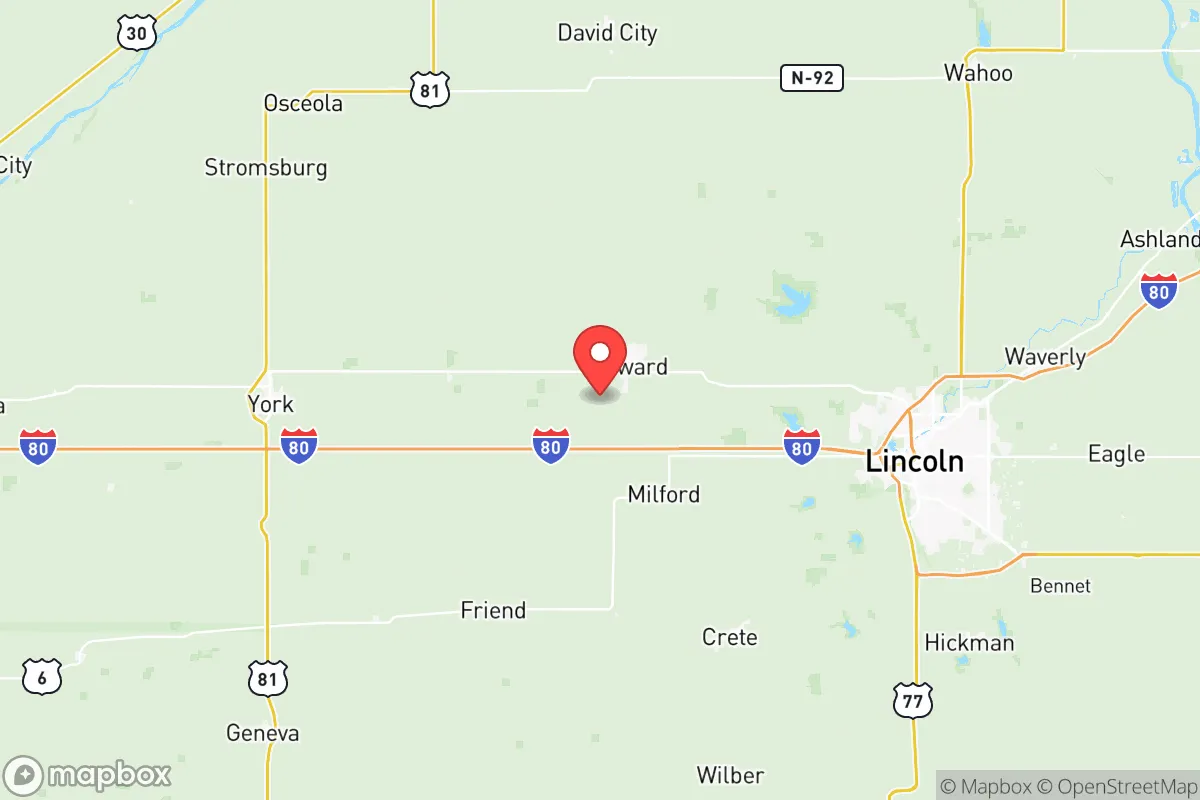
Seward County occupies a band of the Great Plains where the soil is deep, the water table is accessible, and the land is mostly treeless, row-crop country. The Platte River forms the northern boundary, providing a reliable surface water source and a riparian corridor that supports wildlife and potential irrigation. The county’s largest town, Seward (pop. about 7,000), is the county seat and a compact community with a strong civic core, while Milford (pop. 2,100), Garland, Utica, and Beaver Crossing are smaller nodes of population that together keep the county’s density under 35 people per square mile. That low density is a resilience multiplier: fewer neighbors means less competition for local resources, and vast fields offer space for private gardens, solar arrays, or livestock without hard zoning restrictions. The area’s position along the Union Pacific mainline and I-80 gives it easy east-west logistics, but the interstates here are not clogged like those near Chicago or Denver; in a crisis, that corridor would be a lifeline rather than a parking lot. The absence of any major military base or heavy industry within the county (the nearest strategic target is Offutt Air Force Base near Omaha, roughly 50 miles northeast) reduces the likelihood of being caught in a first-strike scenario, though secondary effects from a strike on Offutt would depend on wind patterns and detonation yield.
Exposure to natural hazards and proximity to fallout-relevant landmarks
The most immediate risks in Seward County are the same ones that define the Plains: severe thunderstorms, tornadoes, and occasional drought. Tornado alley runs through central Nebraska, and the county averages a handful of warnings each year. The flat landscape offers no terrain shielding, so above-ground safe rooms or basements are a practical addition for any relocator. Flash flooding along the Platte and Big Blue River corridors is possible but typically slow-moving and predictable. On the man-made side, the key fallout-relevant landmarks are Lincoln (population 290,000, 25 miles east), with its university and state government functions, and Offutt AFB (headquarters of U.S. Strategic Command), roughly 50 miles northeast. Both are plausible targets in a major conflict; the prevailing westerly winds mean that fallout from a Lincoln strike would drift eastward, sparing Seward County in most scenarios, while a ground burst at Offutt could deposit fallout east-northeast along the Missouri River corridor. The county’s distance—50+ miles from the nearest high-value target—puts it in a moderate-risk zone: not the silent safety of rural South Dakota, but also not the blast-zone vulnerability of Colorado Springs or the refinery corridor around Houston. The nearby Platte River hydroelectric plants (small-scale, no nuclear) add no special risk. Overall, the area’s exposure is more natural than strategic, which for a self-reliant relocator is manageable with basic preparation.
Practical resilience: food, water, energy, and defensibility for a relocator
Where Seward County really shines is in the fundamentals of day-to-day resilience. Food is abundant: the county is part of Nebraska’s corn-soybean belt, and local farmer’s markets, co-ops, and direct-from-farm purchasing are common in Seward and Milford. For a family wanting to raise chickens, goats, or a large vegetable garden, the rural land parcels are affordable (think $3,000–$5,000 per acre for undeveloped ground) and unburdened by restrictive HOA covenants. Water is plentiful for the region—the Ogallala Aquifer extends into the southern part of the county, and shallow wells are typical for both irrigation and domestic use. Municipal water in Seward comes from groundwater and is reliably treated; a private well with a hand pump offers a robust backup. Energy is grid-dependent, but the flat open land makes small-scale wind turbines and rooftop solar viable for many home sites. Defensibility is mixed: the open plains provide long sightlines (a stranger is visible from a mile away on a dirt road), but they also offer little cover for a retreat. The county is largely agricultural, so every other vehicle is a pickup truck, and residents are accustomed to shooting and property rights. Law enforcement response times in the towns are reasonable; in the unincorporated areas, you are on your own for the first 15–20 minutes. For someone serious about self-sufficiency, a property on the edge of a town like Garland or Staplehurst—with a good well, a garden patch, and a few neighbors who look out for each other—offers a strong base without the paranoia of a bunker mentality.
The overall strategic picture for Seward County is one of balanced preparedness: it offers enough isolation to avoid the worst of urban crises, enough farmland to sustain a family through supply chain disruptions, and enough proximity to Lincoln and Omaha to access healthcare, hardware stores, and specialty goods when normalcy holds. It is not a “bug-out” destination—you would live here full-time, build community, and prepare incrementally. For the conservative-leaning relocator who values low taxes, minimal regulation, and a culture of neighborly self-reliance, Seward County represents a sober, defensible choice in the middle of an otherwise complicated country.

* Values derived from national, state, county, city and local statistics and may differ in a specific area. Last updated: 2026-06-24T06:48:50.000Z
Narrative content on this page is AI-generated and may contain mistakes. Verify any details that matter before acting on them.
ReloMaps may earn a commission from affiliate links at no extra cost to you.

