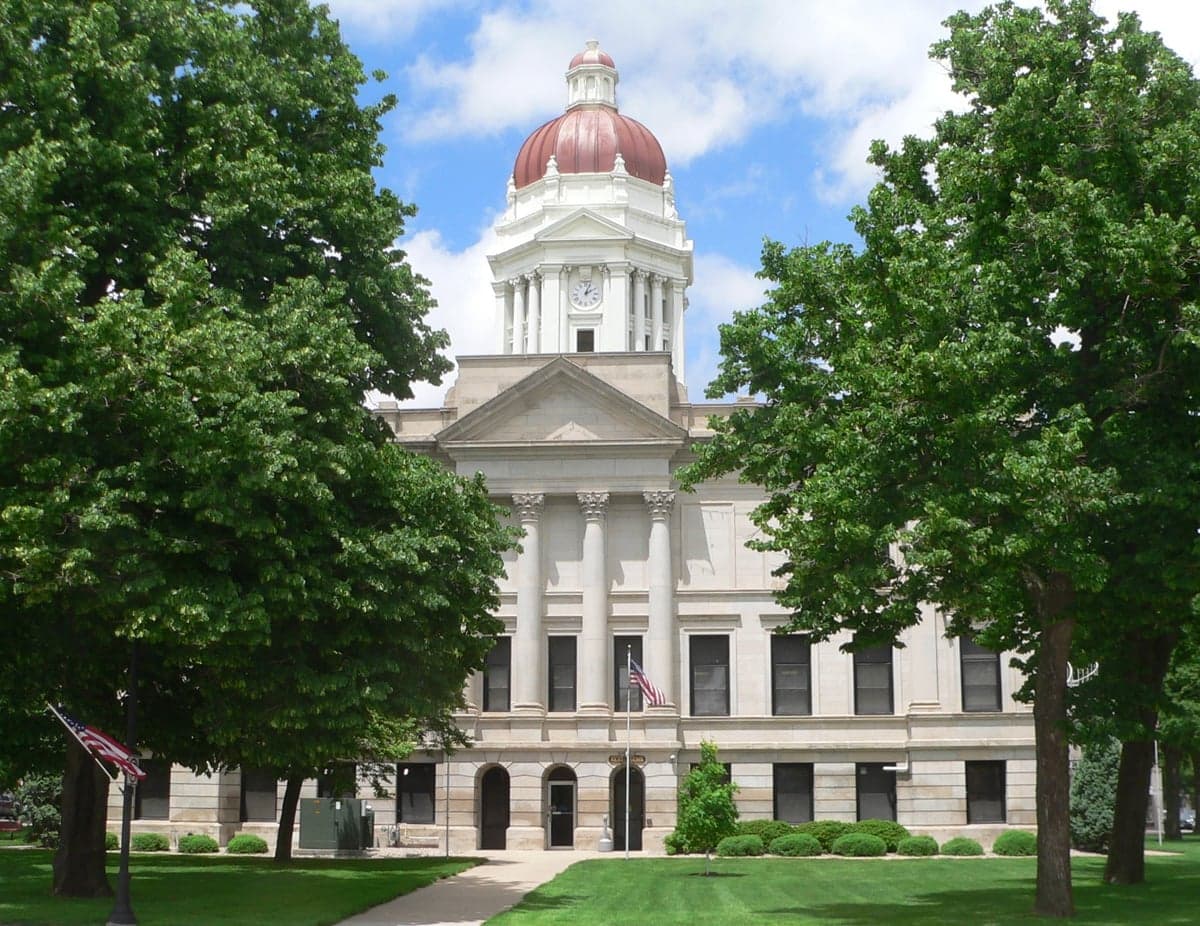
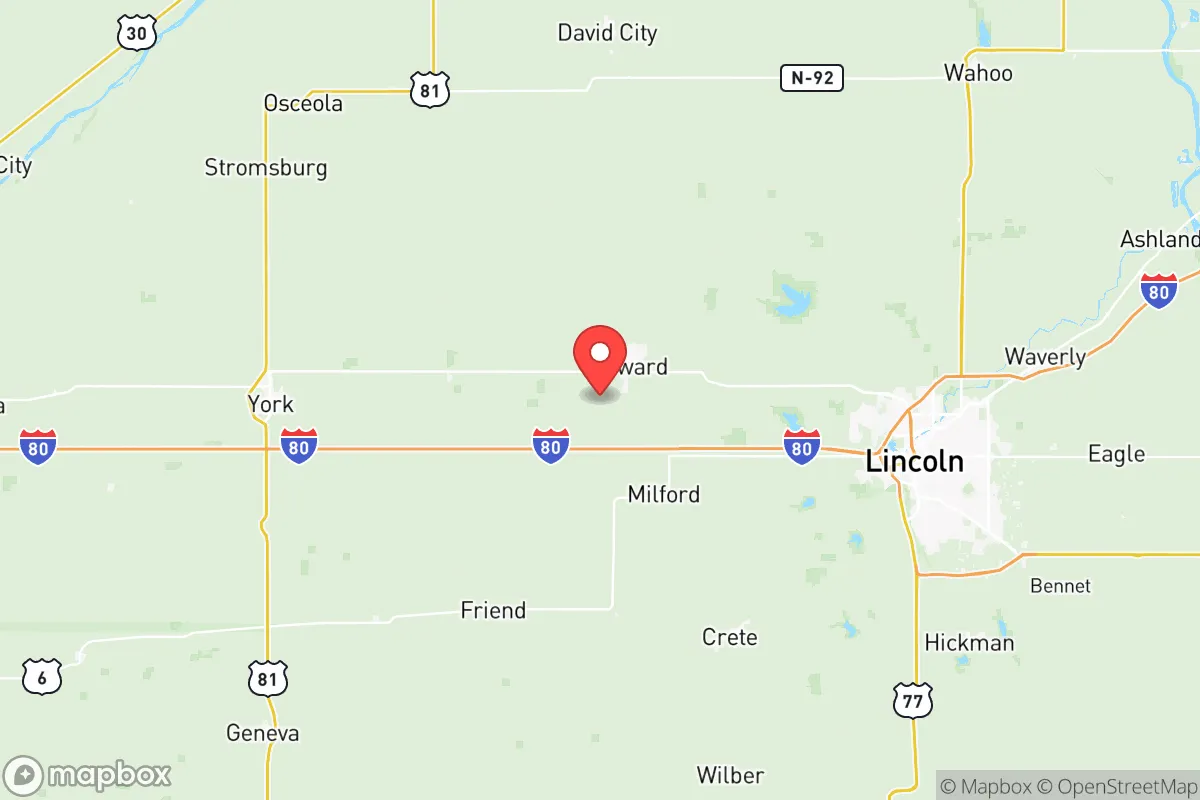
Photo: Wikipedia
Demographics of Seward County
Affluence Level in Seward County
A middle-class area roughly in line with national averages across income, home values, education, and employment.
People of Seward County
Seward County, Nebraska, is home to 17,636 residents who form one of the most ethnically homogeneous communities in the Great Plains. The population is 94.0% white, 2.8% Hispanic, and 0.7% Black, with foreign-born residents accounting for just 0.3% of the total. This is a deeply rooted, family-oriented county where Lutheran and Catholic traditions run strong, community ties are tight, and the pace of life remains firmly rural despite close proximity to Lincoln. The county’s identity is shaped by its agricultural backbone, low crime rates, and a conservative social fabric that attracts families seeking stability and traditional values.
Settlement & growth (pre-1960)
Long before European settlement, the land that is now Seward County was part of the hunting and trading territory of the Pawnee and Omaha nations. The Pawnee, in particular, maintained semi-permanent villages along the Platte River valley, which forms the county’s northern boundary. European-American contact intensified after the 1854 Kansas-Nebraska Act opened the region to organized settlement, and by the early 1860s the federal government had forcibly removed most Native communities to reservations. The county was formally organized in 1867 and named after William H. Seward, then U.S. Secretary of State.
The first permanent settlers arrived in the mid-1860s, drawn by the Homestead Act of 1862, which offered 160 acres of surveyed land to anyone willing to farm it for five years. Most early homesteaders were native-born Americans from the Midwest—especially Ohio, Indiana, and Illinois—but a significant number were German and Czech immigrants fleeing political unrest and economic hardship in Europe. The Germans settled heavily in and around the county seat of Seward and the village of Utica, where the St. Paul’s Lutheran Church still stands as a landmark. Czech immigrants (often called Bohemians at the time) concentrated in Milford and Pleasant Dale, establishing fraternal organizations and Czech-language newspapers that lasted well into the 20th century.
The railroad’s arrival between 1869 and 1880 accelerated growth. The Union Pacific and Burlington lines cut through the county, creating stations at Garland, Staplehurst, Bee, and Goehner. Each of these towns became grain-shipping centers and service points for the surrounding farm families. By 1900, the county’s population peaked at nearly 18,000, a number it would not surpass again until the 2010s. The economy was almost entirely agricultural—corn, wheat, oats, and livestock—supplemented by small-town retail and repair shops. No significant industry or mining emerged to attract large immigrant or migrant labor forces during the first half of the 20th century. The Dust Bowl and Great Depression of the 1930s hit hard, but the county’s population base remained stable as families clung to the land. World War II and the postwar boom saw a gradual shift toward mechanized farming, which reduced the need for farm labor and prompted a slow, decades-long exodus of young people to Omaha, Lincoln, and other cities.
Modern era (post-1965)
The 1965 Hart-Cellar Immigration Act, which dramatically reshaped the ethnic mix of most American communities, had almost no effect on Seward County. The county’s foreign-born population sits at 0.3%—one of the lowest percentages in Nebraska—and that figure has not meaningfully changed in fifty years. There are no immigrant enclaves or ethnic neighborhoods; the handful of foreign-born residents are typically spouses of American citizens or professionals employed by Concordia University, a Lutheran institution in Seward founded in 1894. The university brings in a small number of East/Southeast Asian and European international students, but nearly all return home or move to larger cities after graduation.
Domestic migration has also been modest. While some Lincoln commuters have settled in southern Seward County—particularly in Milford and along the Highway 34 corridor—the county has not experienced the suburban sprawl seen in nearby Lancaster County. The population hovered around 15,000 to 16,000 from 1970 to 2010, then inched upward to 17,636 in the 2020 census. This modest growth came largely from natural increase and a small net inflow of retirees and families looking for affordable rural living within an hour’s drive of Nebraska’s capital. The Hispanic population, at 2.8%, is primarily composed of second- and third-generation Mexican-American families who work in agriculture or in the construction and service trades in Seward and Utica. The Black population remains tiny at 0.7%, a reflection of the county’s lack of the industrial job base that attracted Black migrants to Lincoln and Omaha during the Great Migration and later periods. Virtually no residents trace ancestry to the Indian subcontinent or the Arab world.
Politically and culturally, Seward County remains one of Nebraska’s most reliably conservative jurisdictions. In the 2024 presidential election, the county voted Republican by a margin of more than 40 percentage points. Social life revolves around church congregations—Lutheran, Catholic, and Evangelical—as well as school events, county fairs, and the annual Seward County Fair in Seward. Gun ownership is common, property taxes are a frequent local concern, and the overall ethos is self-reliant and family-centered.
The future
Demographic projections for Seward County suggest continued slow growth—likely reaching 18,000 to 19,000 by 2040—driven by natural increase and modest in-migration of retirees and commuters. The county’s racial and ethnic makeup will shift only minimally: the Hispanic share may rise from 2.8% to around 4–5% over the next two decades, but the population will remain overwhelmingly white. The East/Southeast Asian and Black shares are expected to stay below 1% each, as there are no economic pull factors—no major employers, no large industrial parks, no ethnic enclaves—to attract significant numbers of new arrivals from these groups.
Cultural identity will likely remain rooted in the county’s German-Czech and Plains heritage. The most dynamic new growth is concentrated in the southern tier, particularly around Milford and the Pleasant Dale area, where subdivisions are filling in for Lincoln-bound workers who want land and lower taxes. The older town centers of Seward, Utica, and Garland will continue to serve as anchors but are unlikely to see large-scale development. Concordia University will remain the county’s single largest employer and a cultural focal point, attracting a scattering of students and faculty from outside the region. For someone moving in now, Seward County offers a familiar, safe, and predictably stable environment—a place where neighborly trust runs deep, the schools are well regarded, and change comes slowly.

* Values derived from national, state, county, city and local statistics and may differ in a specific area. Last updated: 2026-06-24T06:48:50.000Z
Narrative content on this page is AI-generated and may contain mistakes. Verify any details that matter before acting on them.
ReloMaps may earn a commission from affiliate links at no extra cost to you.

