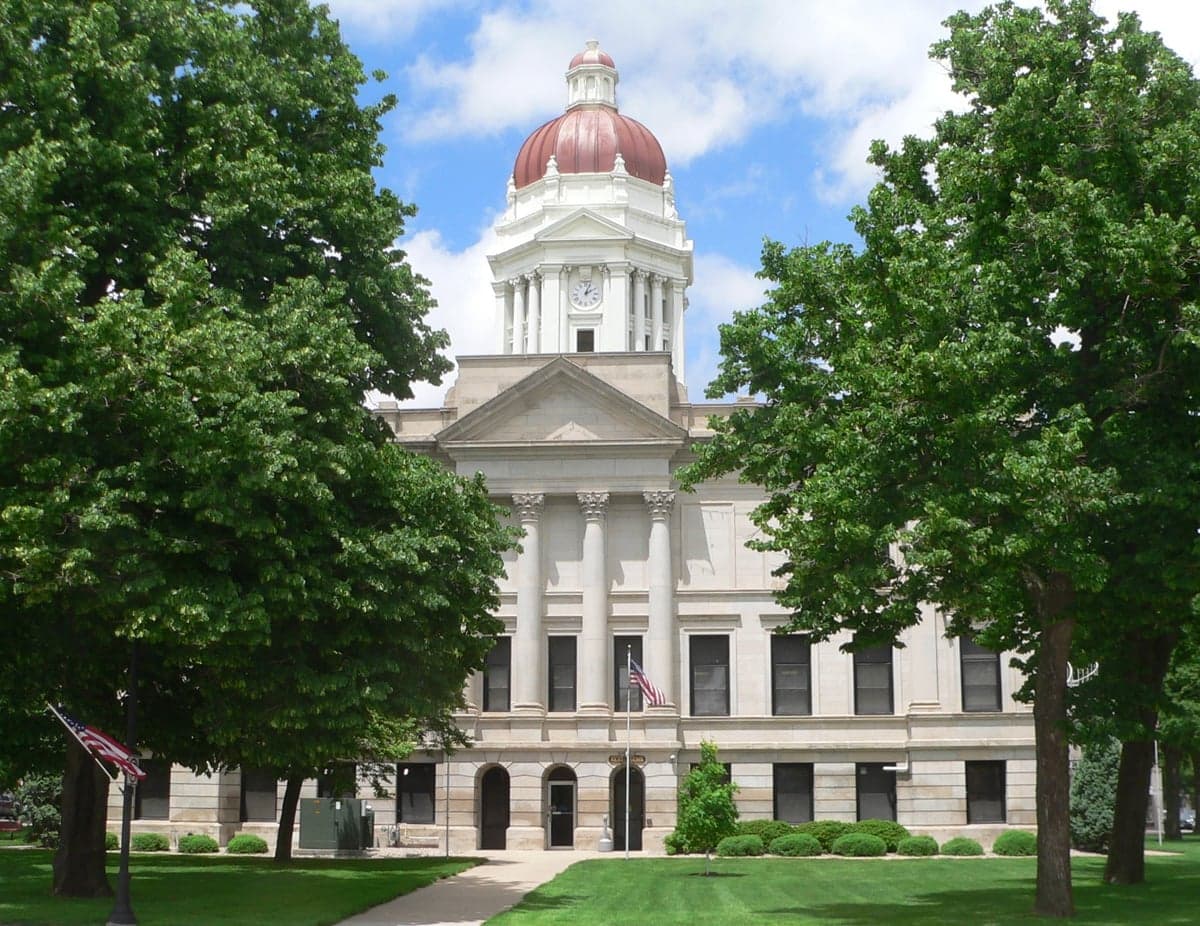
Photo: Wikipedia
Personal Sovereignty in Seward County
Viable for self-reliance. Generally workable, though some barriers may limit total independence.
What does Personal Sovereignty tell us?
Personal Sovereignty measures your capacity for self-reliance and independence with minimal government friction. Higher scores mean fewer barriers between you and the way you want to live... but it assumes you have the space you need and good neighbors.
What does this tell us?
Personal Sovereignty measures your capacity for self-reliance and independence with minimal government friction. Higher scores mean fewer barriers between you and the way you want to live... but it assumes you have the space you need and good neighbors.
State Policy
Energy independence: Importer (35% of energy produced in-state)
Personal Liberty
Homesteading

Personal Liberty Analysis
Seward County, Nebraska, offers a strong personal sovereignty environment defined by low regulatory friction, permissive gun laws, and wide-open homesteading potential, making it a practical choice for families and individuals who value self-direction. While property taxes are a meaningful consideration, the county's small towns and rural townships generally avoid heavy-handed local ordinances, and state-level protections for gun rights, parental authority, and property use are robust. For those weighing relocation based on autonomy, Seward County sits in a comfortable middle ground—far freer than urban Nebraska but without the extremes of the state's far western counties.
Tax burden and regulatory posture in Seward County
Nebraska's state income tax is moderately progressive, with a top marginal rate of 6.64% (as of 2026), and sales tax is capped at 5.5% unless local options are added. Seward County itself levies a county sales tax of 0.5%, bringing the combined rate in towns like Seward and Milford to 6%. Property taxes are the heavier lift: Nebraska has one of the nation's highest effective property tax rates for agricultural land, and Seward County's average levy sits around 1.5% of assessed value. However, the regulatory posture at the county level is light. Unincorporated areas—around villages like Bee, Garland, and Utica—have minimal zoning and no building codes beyond basic state health requirements. The City of Seward enforces standard subdivision and occupancy rules, but even there the administrative overhead for home-based businesses or small-scale renovations is noticeably lower than in Lincoln or Omaha. County commissioners generally favor pro-business permitting and avoid nuisance regulations on things like vehicle storage, fence height, or livestock within township limits.
Self-defense and gun law specifics for Seward County residents
Nebraska is a constitutional carry state for residents 21 and older who can legally possess firearms—no permit required for concealed carry. Seward County's sheriff's office is known for issuing permits without undue delay for those who still want reciprocity with non-permitless states, and the county has not enacted any local restrictions or waiting periods, thanks to state preemption that bars cities from passing gun ordinances stricter than state law. Shooting ranges and gun stores are concentrated near Seward along Highway 34, and the area's hunting culture (deer, turkey, upland birds) means firearm handling is normalized across all towns. Stand-your-ground and castle doctrine protections are fully codified in Nebraska statutes, so residents in places like Milford or Staplehurst have clear legal backing for self-defense inside the home or on their property. The county's few gun-related disputes are rare and typically involve recreational discharge boundary issues rather than policy conflicts.
Self-reliance and homesteading viability: lot sizes, zoning, off-grid options
For homesteading-minded relocators, Seward County's rural townships are where the real autonomy lives. Unincorporated areas require no building permits for one- or two-family dwellings, and minimum lot sizes in agricultural zoning are typically 1 to 5 acres, though many parcels of 10–40 acres are available outside of Garland, Bee, and Utica. The City of Seward enforces a 0.5-acre minimum for single-family homes, but nearby spots like Pleasant Dale and Staplehurst offer larger tracts with no subdivision oversight. Off-grid living is entirely feasible: Nebraska permits rainwater catchment without restriction, solar panels are unregulated by county code (though utility interconnection rules apply for grid-tie), and composting toilets are allowed under the state's alternate on-site wastewater system guidelines, which require only a simple permit from the county health department. Wells are common and regulated by the Nebraska Department of Health and Human Services, but the process is straightforward for rural lots larger than 1 acre. Seward County's farm-to-market roads and low traffic make daily self-sufficiency—gardening, small livestock, home canning—practical and socially accepted.
Personal liberties: parental rights, medical autonomy, speech protections
Nebraska has a strong legal framework protecting parental rights. LB 147 (2023) bars gender-affirming procedures for minors and requires parental consent for any medical care involving gender transition, and the state's religious and conscientious exemption laws cover vaccination decisions for school attendance (though a waiver form is needed). Medical freedom generally: COVID-era mandates were weak here, with Seward County's school board and county commission refusing to enforce any vaccination or masking requirements. Free speech is well-protected—public protests or flag displays on private property are uncontroversial, and the county's social fabric leans toward live-and-let-live tolerance of political signs on lawns. Property rights enjoy strong right-to-farm protections that shield agricultural operations from nuisance lawsuits, even as exurban development creeps outward from Lincoln. The county's small towns tend to be neighborly but not nosy; homeowner associations are rare outside of a few subdivisions near Seward city limits.
In the broader Nebraska landscape, Seward County ranks as a high-autonomy area for the eastern part of the state. It lacks the extreme libertarian lean of far-western counties like Sioux or Banner, but its combination of state-level gun protections, minimal local bureaucracy, and genuine homesteading access produces a sovereignty profile that beats most of the Lincoln–Omaha corridor. For families or individuals who want to live largely unbothered—while still having decent schools and a 25-minute drive to Lincoln for services—Seward County checks the independence box without forcing isolation.

* Values derived from national, state, county, city and local statistics and may differ in a specific area. Last updated: 2026-06-24T06:48:50.000Z
Narrative content on this page is AI-generated and may contain mistakes. Verify any details that matter before acting on them.
ReloMaps may earn a commission from affiliate links at no extra cost to you.

