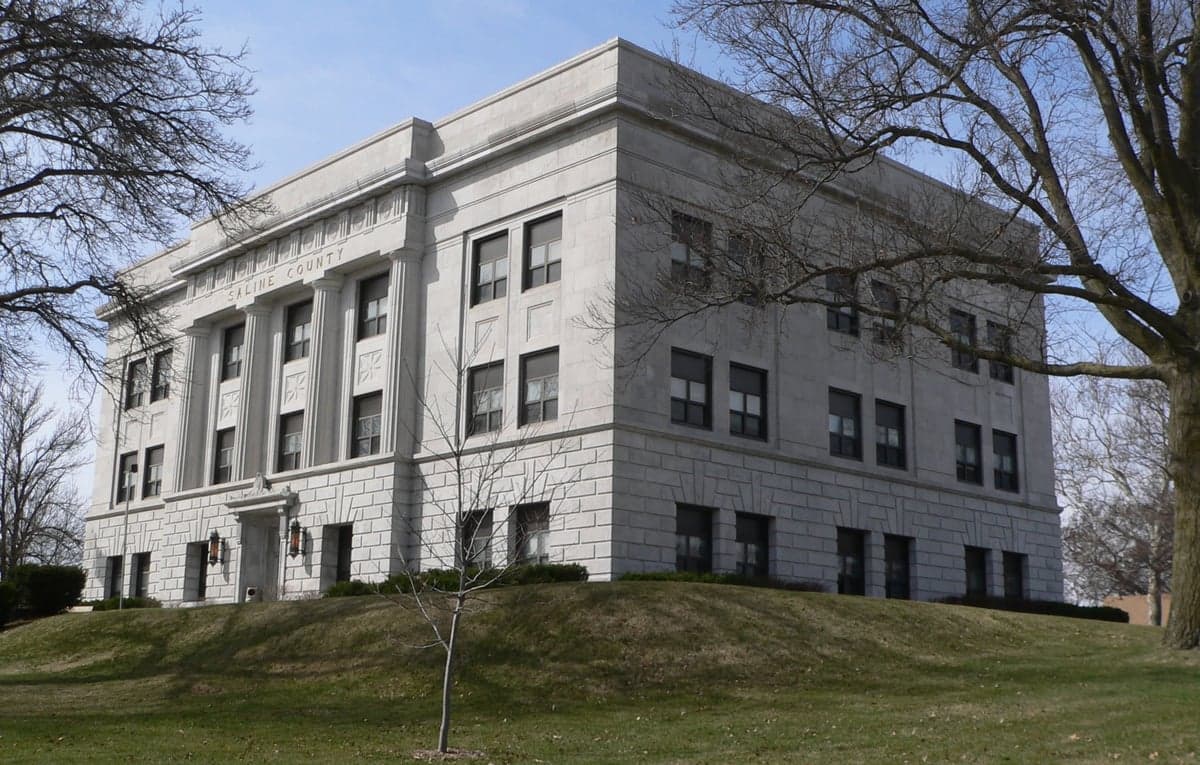
Photo: Wikipedia
Demographics of Saline County
Affluence Level in Saline County
A middle-class area roughly in line with national averages across income, home values, education, and employment.
People of Saline County
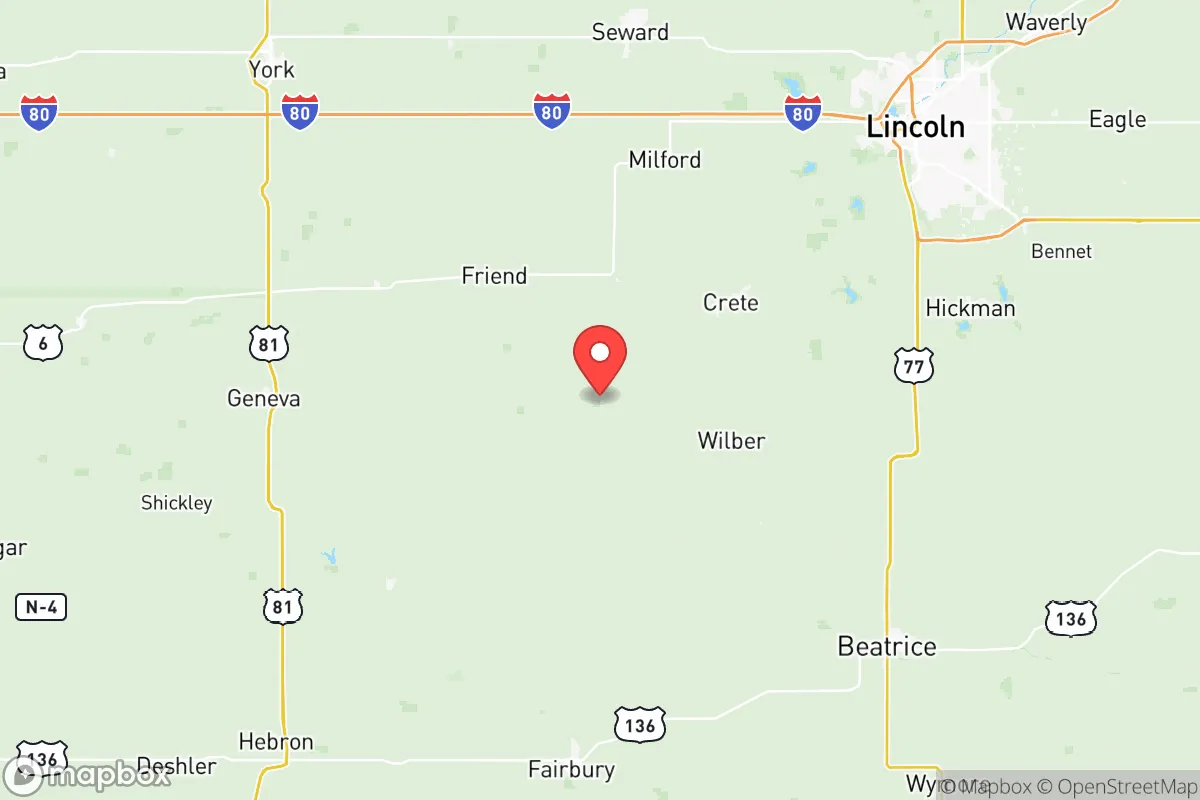
Saline County, Nebraska, is home to 14,642 residents who form a distinctive blend of deep German-Czech roots and a rapidly growing Hispanic community, concentrated in the county seat of Wilber and the larger town of Crete. The county’s population is 65.7% white and 28.7% Hispanic, with a foreign-born share of 11.1% that is nearly double the Nebraska state average, driven largely by meatpacking and manufacturing jobs. This is a working-class, small-town county where Czech heritage is celebrated annually at Wilber’s Czech Festival, yet where Spanish is increasingly heard in schools and businesses. The population is younger than the state median, with a median age of 36.6, and the county’s character is defined by its agricultural economy, tight-knit communities, and the cultural tension between preserving old-world traditions and absorbing new arrivals.
Settlement & growth (pre-1960)
Before American settlement, the land that is now Saline County was part of the traditional territory of the Pawnee and Otoe-Missouria nations, who hunted bison and farmed along the Big Blue River and its tributaries. The area was formally acquired by the United States through the 1803 Louisiana Purchase, but sustained Euro-American settlement did not begin until after the 1854 Kansas-Nebraska Act opened the territory for homesteading. The first white settlers arrived in the late 1850s, primarily Yankees from New England and the Upper Midwest, who established the earliest towns along the river valleys. The county was officially organized in 1867, and the arrival of the Burlington and Missouri River Railroad in the 1870s triggered the county’s first major population wave.
The defining immigrant wave for Saline County came between 1870 and 1900, when thousands of Czech (Bohemian) and German-speaking immigrants from the Austro-Hungarian Empire and the German states poured into the region, drawn by the promise of cheap, fertile farmland under the Homestead Act and the railroad’s land-grant sales. These groups settled heavily in Wilber, which became the self-proclaimed “Czech Capital of the USA,” and in Crete, Friend, Western, and De Witt. The Czechs brought a distinct cultural imprint—polka music, kolache pastries, Catholic and freethinking religious traditions—that remains the county’s most celebrated heritage. A smaller number of Swedish and Danish immigrants also settled in the northern part of the county, particularly around Swanton and Tobias, but the Czech and German stock became the dominant ethnic foundation. By 1900, the county’s population had peaked at roughly 18,000, and it remained overwhelmingly white, native-born, and agricultural through the first half of the 20th century.
The Dust Bowl and Great Depression of the 1930s hit the county hard, causing a population decline that continued through the post-war decades as farm consolidation reduced the number of family operations. Unlike many Great Plains counties, Saline County did not experience a major out-migration of young people to the West Coast during the 1940s and 1950s, but the population slowly eroded from its 1900 peak to about 12,000 by 1960. The county remained almost entirely white and native-born through this period, with the Czech and German communities maintaining their cultural institutions—Czech-language newspapers, Sokol gymnastic societies, and Catholic parishes—well into the 1960s.
Modern era (post-1965)
The 1965 Hart-Cellar Act did not immediately transform Saline County, but a parallel economic shift did: the expansion of meatpacking and food-processing plants in the region. The single most transformative event was the opening and subsequent expansion of the Nebraska Beef processing plant in Crete (now part of the Greater Omaha Packing network) in the 1970s and 1980s. This plant, along with other agribusiness employers in the county, began recruiting immigrant labor—first from Mexico, then from Central America and Southeast Asia—to fill jobs that local workers increasingly avoided due to the physically demanding nature of the work and relatively low wages.
The result has been a dramatic demographic shift. Between 1990 and 2020, the Hispanic share of Saline County’s population rose from roughly 3% to nearly 29%, with the most concentrated growth in Crete, where the Hispanic population now approaches 40% of the town’s residents. The foreign-born population, at 11.1%, is heavily Mexican and Central American, with a smaller but notable community of East and Southeast Asian residents (2.9% of the county total), primarily Vietnamese and Burmese refugees who were resettled through church-sponsored programs and found work in the plants. These new residents have established Spanish-language churches, tiendas, and soccer leagues in Crete and, to a lesser extent, in Wilber and Friend. The county’s Black population remains negligible at 0.5%, and there is no measurable Indian subcontinent population.
Domestic migration has been minimal in the modern era. The county has not attracted significant numbers of retirees, remote workers, or coastal transplants, largely because it lacks major highways, airports, or urban amenities. The population has remained relatively stable since 1990, hovering between 14,000 and 15,000, as the influx of Hispanic families has offset the continued out-migration of young white residents to Lincoln (25 miles north) and Omaha (60 miles northeast) for college and professional jobs. The college-educated share of the population is just 20.1%, well below the national average, reflecting the county’s blue-collar, agricultural economic base.
The future
Saline County is likely to become more diverse, not less, over the next 10 to 20 years. The Hispanic population is younger and has higher birth rates than the white population, and continued recruitment of immigrant labor for meatpacking and food processing will sustain this trend. The white population, by contrast, is aging and shrinking, with many young adults leaving for urban job markets. The county’s overall population is projected to remain flat or grow slightly, as natural increase among Hispanic families offsets white out-migration. The East/Southeast Asian community, while small, is stable and concentrated in Crete, where a Burmese Christian church and a Vietnamese Catholic mission have formed.
Culturally, the county is evolving from a homogeneous Czech-German enclave into a bilingual, bicultural community. The annual Czech Festival in Wilber remains a major tourist draw, but Spanish-language signage and services are increasingly common in Crete and Wilber. The public schools in Crete now have a majority-Hispanic student body, and the district has adapted with dual-language programs and English-learner support. The county’s political leanings, historically conservative, are shifting slightly as the Hispanic population grows, though voter turnout among Hispanic residents remains lower than among white residents. The next decade will likely see continued integration, with the children of immigrant families moving into local government, small business ownership, and the agricultural workforce.
For someone moving into Saline County now, this is a place where the past and future coexist uneasily. The Czech heritage is preserved in museums and festivals, but the daily reality is increasingly shaped by the rhythms of a meatpacking town—shift work, bilingual classrooms, and a working-class economy that offers stability but limited upward mobility. The county is affordable, safe by national standards, and close enough to Lincoln for shopping and healthcare, but it is not a place of rapid growth or cosmopolitan amenities. It is a community in transition, where the question of who “the people of Saline County” are is being answered anew with each generation.

* Values derived from national, state, county, city and local statistics and may differ in a specific area. Last updated: 2026-07-02T05:41:16.000Z
Narrative content on this page is AI-generated and may contain mistakes. Verify any details that matter before acting on them.
ReloMaps may earn a commission from affiliate links at no extra cost to you.

