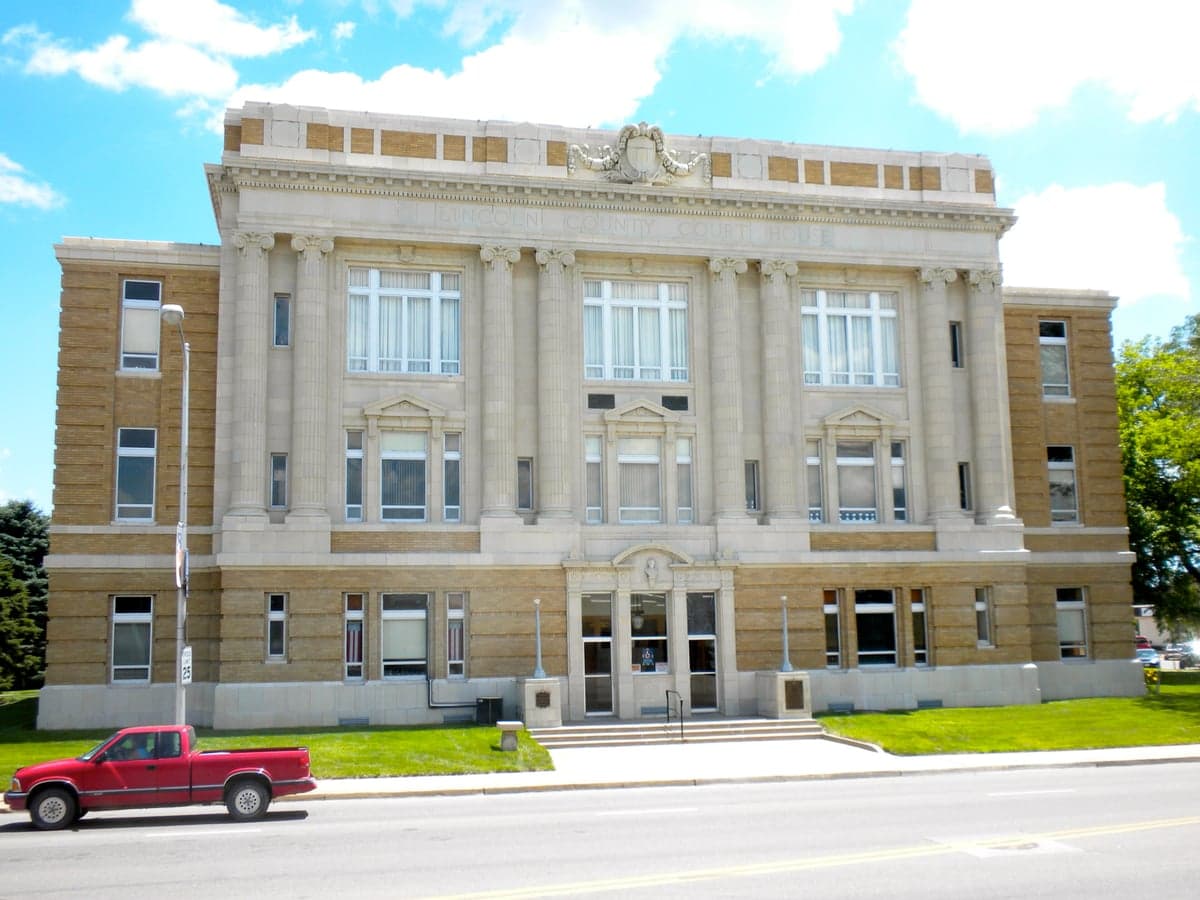
Photo: Wikipedia
Political ClimatePolitical Climate in Lincoln County
Showing district-level results — no local-only data available.
Local Political AnalysisPolitical Analysis of Lincoln County
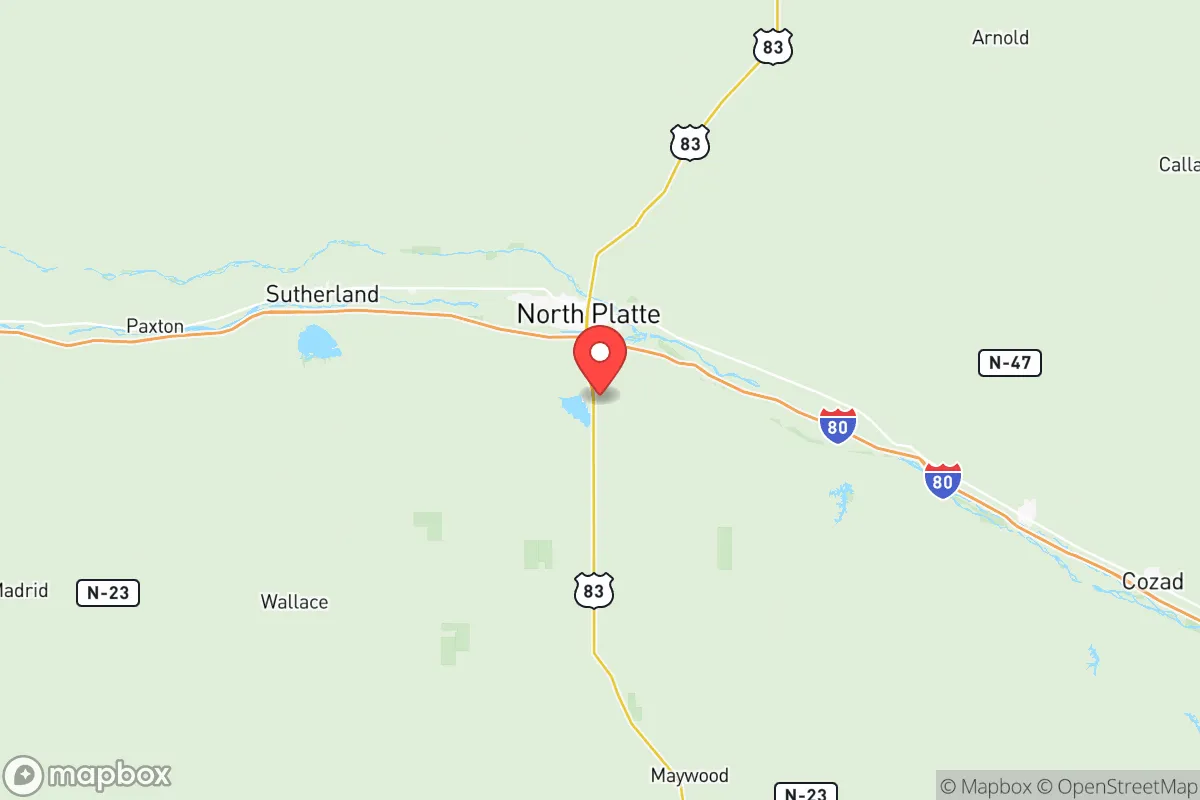
Lincoln County, Nebraska, is a deeply conservative area, anchored by the city of North Platte, with a Cook Partisan Voting Index (PVI) of R+27, making it one of the most reliably Republican counties in the state. This isn't a recent shift; the county has been a GOP stronghold for generations, but the margin has widened considerably since the 1990s. While the surrounding state of Nebraska carries a PVI of R+10, Lincoln County is nearly three times more Republican-leaning, reflecting a rural, agricultural, and small-town political culture that has moved rightward faster than the state as a whole. The real story, though, is the internal variation: the city of North Platte itself, while still solidly red, contains precincts that are more moderate, while the outlying towns like Hershey, Sutherland, and Wallace are among the most conservative in the county.
How it compares
The gap between Lincoln County's R+27 and Nebraska's R+10 is significant. It means that while the state can occasionally elect a Democrat to a statewide office (like former Senator Ben Nelson), that is virtually impossible in Lincoln County. The county's Republican primary is the de facto general election for most local offices. The political landscape is not monolithic, however. North Platte's precincts near the University of Nebraska-Lincoln's West Central Research and Extension Center and the downtown core show slightly more Democratic votes, occasionally reaching 35-40% in presidential elections. In contrast, the rural precincts around Hershey and Sutherland routinely deliver 80%+ margins for Republican candidates. The swing precincts, if you can call them that, are in the newer subdivisions on the north and east sides of North Platte, where a mix of younger families and retirees from out of state can make a local race slightly more competitive, though still reliably red.
What this means for residents
For conservative residents, Lincoln County is a comfortable place where their values are reflected in local policy, from low taxes to Second Amendment protections. The county commission and school boards are consistently conservative, and there is little political friction in daily life. For liberal residents, the reality is different. While they are not actively marginalized, they often feel politically isolated, and their views have little influence on local governance. Progressive candidates rarely run, and when they do, they face an uphill battle for funding and visibility. The practical effect is that political discussions in places like the North Platte Coffee House or at community events tend to assume a conservative baseline, and those with differing views often keep them private to avoid social friction. This is not a place of political hostility, but of political homogeneity.
Culturally, Lincoln County is defined by its agricultural economy, strong military presence (the North Platte Army Ammunition Plant and the Nebraska National Guard), and a deep sense of self-reliance. Policy debates here focus on property taxes, water rights (especially the Platte River), and the cost of living. There is a notable distrust of federal land management policies, given the county's proximity to the Nebraska National Forest and the Crescent Lake National Wildlife Refuge. The county's political trajectory is likely to remain deeply red, with the only question being whether the growing population of North Platte's suburbs will moderate the county slightly or reinforce its conservative character. For now, Lincoln County remains a place where the GOP primary is the only election that truly matters, and that is unlikely to change in the near future.

State Political ClimatePolitical Climate in Nebraska
State Political AnalysisPolitical Environment in the State
Nebraska is a solidly Republican state with a Cook PVI of R+10, but its politics are far more nuanced than that number suggests. The state has been reliably red in presidential elections since 1968, but a unique coalition of Omaha-area Democrats, Lincoln liberals, and rural independents keeps the state from being a lock for the GOP in every race. Over the past 20 years, the trend has been a slow but steady rightward shift in the rural and suburban areas, while Omaha and Lincoln have become more Democratic, creating a widening urban-rural chasm that defines every election cycle.
Urban vs. rural divide
The political map of Nebraska is a tale of three distinct regions. Omaha (Douglas County) is the state's Democratic stronghold, consistently voting blue in presidential and statewide races. In 2020, Douglas County went for Joe Biden by about 10 points, and it's the engine of any Democratic hope in the state. Lincoln (Lancaster County) is more of a purple battleground—it voted for Biden in 2020 but by a much narrower margin, and it regularly elects moderate Republicans to local office. The rest of the state—the vast rural expanse from the Platte River valley to the Sandhills and the Panhandle—is deeply Republican. Counties like Scotts Bluff County (home to Gering and Scottsbluff) and Hall County (Grand Island) vote R+20 to R+30, while the truly rural counties like Hooker County (population ~700) can go R+60 or more. The one wild card is Nebraska's 2nd Congressional District (Omaha metro), which has become a national bellwether—it split its electoral vote in 2020, giving Biden one of Nebraska's five electoral votes. That district is the only competitive federal race in the state, and it's where most political energy is spent.
Policy environment
Nebraska's policy environment is broadly conservative but with some notable exceptions. The state has a unicameral, nonpartisan legislature—the only one in the country—which means bills are advanced by coalitions rather than party-line votes, and committee chairs are elected by the body, not appointed by leadership. This creates a more deliberative, less partisan process than in most states, though the body has become more polarized in recent years. On taxes, Nebraska has a flat income tax rate of 5.84% (as of 2026, down from 6.84% in 2020) and a state sales tax of 5.5%, with local options adding up to 2%. Property taxes are high relative to the region—the state ranks 15th nationally—and are a perennial political issue. The state has no inheritance tax and no tax on Social Security benefits. On education, Nebraska has a robust system of public schools and a strong tradition of local control, but there is no statewide school choice program beyond a limited tax credit for private school scholarships. The state's concealed carry law is permitless (as of 2023), and it has a "stand your ground" law. Election laws are moderately restrictive: voters must show ID at the polls (a law passed in 2023), and early voting is available but not universal mail-in. Nebraska also has a unique death penalty history—it was abolished in 2015, then reinstated by a veto override in 2016, and executions remain rare.
Recent policy direction
The last five years have seen Nebraska move decisively to the right on several fronts. In 2023, the legislature passed LB 574, which banned abortion after 12 weeks (with exceptions for rape, incest, and medical emergencies), overriding a filibuster by a single vote. The same year, LB 77 allowed permitless concealed carry, making Nebraska one of 25 states with such a law. On education, LB 753 (2023) created a dollar-for-dollar tax credit for donations to private school scholarship funds, a modest step toward school choice that faced fierce opposition from rural districts. On transgender issues, LB 574 also banned gender-affirming care for minors, and LB 1084 (2024) restricted transgender athletes in K-12 sports. On property rights, the state has not passed a broad "takings" law, but it has a strong tradition of mineral rights protection for landowners. On voting, LB 514 (2023) required photo ID at the polls, a change that was approved by voters as a constitutional amendment in 2022. On the libertarian side, Nebraska has no red flag law, no broad surveillance authority, and a relatively low-key law enforcement presence in most of the state. The overall direction is toward a more culturally conservative, lower-tax, less-regulated state, but the pace is slower than in Texas or Florida due to the nonpartisan legislature's deliberative nature.
Civil unrest & political movements
Nebraska is not a hotbed of civil unrest, but there have been notable flashpoints. In 2020, Omaha and Lincoln saw protests following the murder of George Floyd, with some property damage and a heavy police response, but nothing on the scale of Portland or Seattle. The state has a small but active antifascist and anarchist scene centered around the University of Nebraska-Lincoln, but it's mostly contained to campus. On the right, the Nebraska Republican Party has seen a factional split between establishment conservatives and a more populist, Trump-aligned wing, with the latter gaining ground in rural counties. The Three Percenters and Oath Keepers have a presence in the Panhandle and Sandhills, but they are not as visible as in states like Idaho or Montana. Immigration politics are relatively quiet—Nebraska has a growing Latino population (especially in Lexington, Schuyler, and Grand Island), but the state has not passed any sanctuary city laws or aggressive enforcement measures. The most visible political movement in recent years has been the pro-choice and trans rights activism in Omaha and Lincoln, which has organized large rallies and lobbied heavily against LB 574 and related bills. Election integrity controversies have been minimal—Nebraska's voting system is widely trusted, and the 2020 and 2022 elections saw no major disputes.
Projection
Over the next 5-10 years, Nebraska will likely continue its slow rightward drift, but with important caveats. The Omaha metro is growing—Douglas County added about 50,000 people between 2010 and 2020, and that trend is accelerating—which will make the 2nd Congressional District more competitive and could eventually flip the state legislature's nonpartisan balance. However, the rural counties are losing population, which amplifies their per-capita political power in the legislature (each county gets one senator, regardless of population). The in-migration pattern is mostly from other Midwestern states (Iowa, Kansas, South Dakota) and from Colorado, and these newcomers tend to be slightly more conservative than the existing population. The state's tax reform trajectory will likely continue—the flat income tax could drop to 4.99% by 2030, and property tax relief will remain a top issue. On social issues, the legislature will probably pass further restrictions on abortion (a 6-week ban is possible) and expand school choice, but the nonpartisan structure will prevent the kind of rapid, sweeping changes seen in states like Texas. The wild card is the unicameral's nonpartisan tradition—if it breaks down into full party-line voting, the state could become more polarized and less predictable.
For a new resident, the bottom line is this: Nebraska is a safe, stable, and increasingly conservative state where your day-to-day life is unlikely to be disrupted by political turmoil. If you're a conservative, you'll find a welcoming policy environment that is moving in your direction, especially on guns, taxes, and cultural issues. If you're a liberal, you'll find strong communities in Omaha and Lincoln where your values are shared, but you'll be outvoted at the state level on most issues. The state's nonpartisan legislature means that policy changes are slower and more deliberative than in many other red states, which can be a blessing or a frustration depending on your perspective. Either way, Nebraska offers a low-drama, high-stability political environment that is increasingly rare in America.
* Values derived from national, state, county, city and local statistics and may differ in a specific area. Last updated: 2026-06-23T19:58:20.000Z
Narrative content on this page is AI-generated and may contain mistakes. Verify any details that matter before acting on them.
ReloMaps may earn a commission from affiliate links at no extra cost to you.

