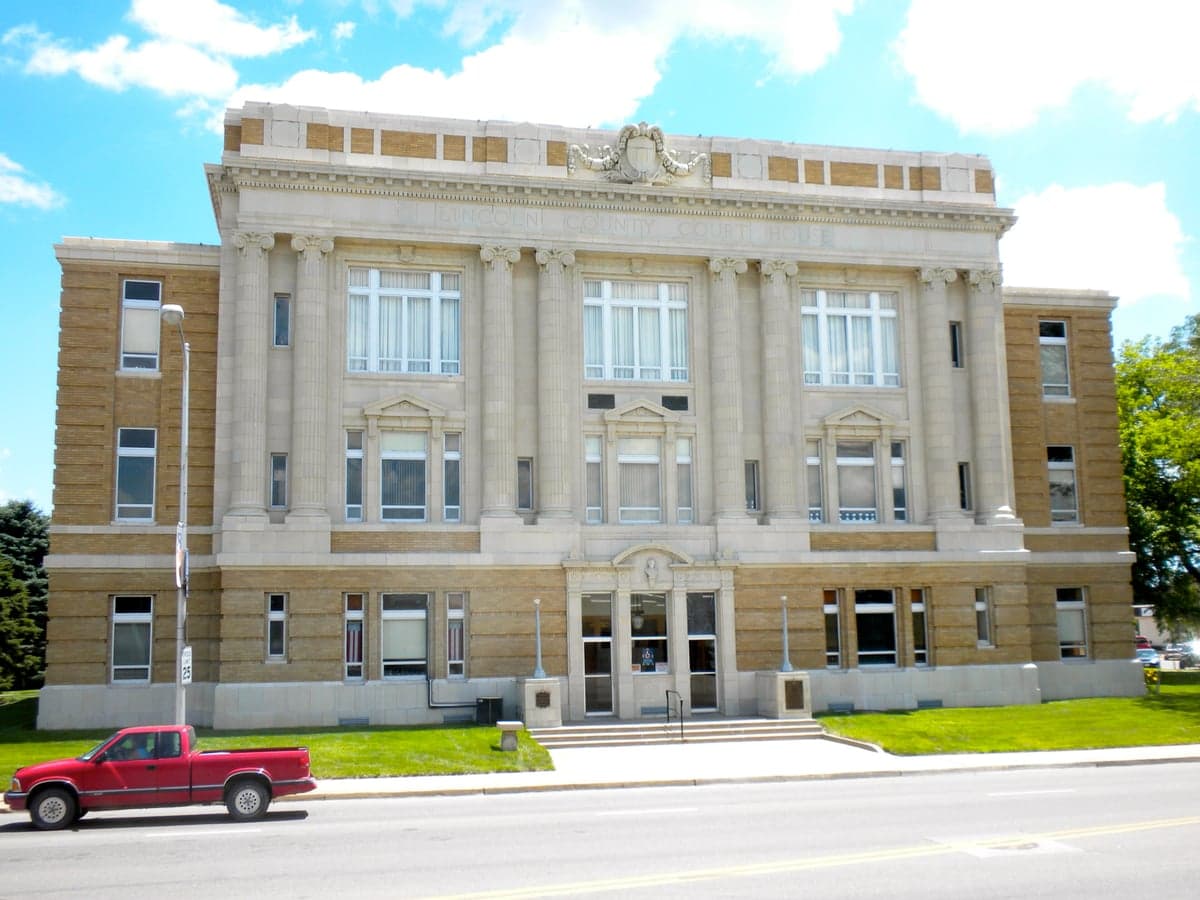
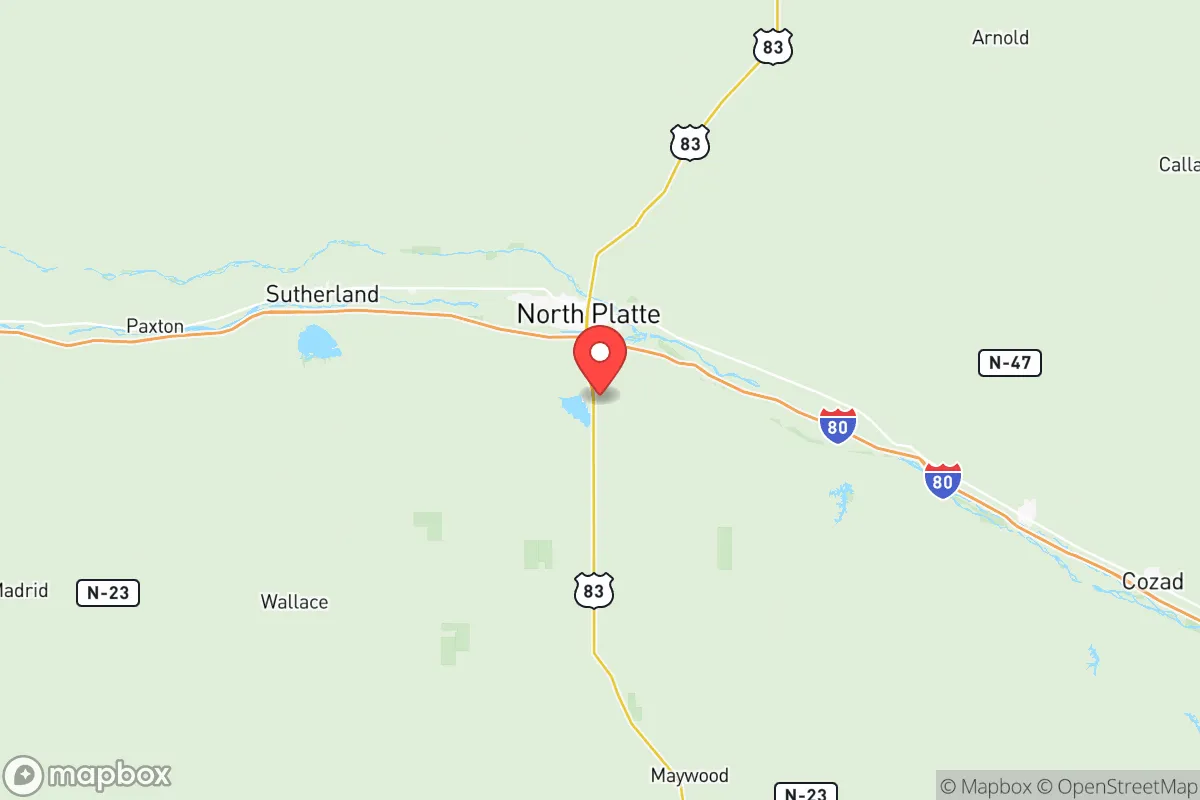
Photo: Wikipedia
Demographics of Lincoln County
Affluence Level in Lincoln County
A middle-class area roughly in line with national averages across income, home values, education, and employment.
People of Lincoln County
The people of Lincoln County, Nebraska, today form a predominantly white, native-born population of 34,122, characterized by a strong agricultural heritage and a small-town, family-oriented culture. With 86.7% of residents identifying as white and only 1.2% foreign-born, the county is notably less diverse than the national average, though a growing Hispanic community now accounts for 9.1% of the population. The county's identity is rooted in its history as a farming and ranching hub, with the city of North Platte serving as the economic and social center, while smaller communities like Hershey, Sutherland, and Wallace maintain distinct, tight-knit identities. This is a place where generational ties to the land remain strong, and the population is slowly aging, with a college attainment rate of 20.4% reflecting a workforce oriented toward trades, agriculture, and local services rather than white-collar industries.
Settlement & growth (pre-1960)
Before American settlement, the area now known as Lincoln County was part of the vast territory of the Pawnee, Sioux, and Cheyenne nations, who followed the bison herds across the Great Plains. The region saw its first non-Native presence in the early 1800s, as fur traders and explorers like the Lewis and Clark expedition passed through, but permanent settlement did not begin until the 1860s. The construction of the transcontinental railroad, specifically the Union Pacific line, was the primary catalyst for population growth, with the town of North Platte founded in 1866 as a railroad division point and supply center. The railroad brought a wave of Irish and German laborers, who laid track and built the infrastructure that would open the region to homesteaders.
The Homestead Act of 1862 drew a second major wave of settlers, primarily of German, Swedish, and Danish descent, who arrived in the 1870s and 1880s to claim 160-acre plots for dryland farming. These families established the small farming communities that dot the county today, including Hershey (founded 1886), Sutherland (1887), and Wallace (1888). The town of Brady, platted in 1884, grew as a grain-shipping point along the railroad, while Maxwell, established in 1887, served as a stop for cattle ranchers moving herds to market. By 1900, the county's population had reached roughly 15,000, with the economy almost entirely dependent on wheat, corn, and cattle ranching.
The Dust Bowl of the 1930s hit Lincoln County hard, causing a population decline as many farm families abandoned their land and moved west to California or into towns like North Platte for work. The post-World War II era brought modest recovery, as agricultural mechanization reduced the need for farm labor but allowed larger, more efficient operations to thrive. The completion of Interstate 80 through the county in the 1960s reinforced North Platte's role as a transportation and service hub, but the population remained stable rather than booming, hovering around 30,000 through the 1950s and 1960s.
Modern era (post-1965)
The 1965 Hart-Cellar Act, which reshaped U.S. immigration policy, had a minimal direct impact on Lincoln County. The foreign-born population today stands at just 1.2%, far below the national average, and the county did not experience the waves of Asian, Latin American, or African immigration that transformed many urban and suburban areas. Instead, the most significant demographic shift since 1965 has been the growth of the Hispanic population, which rose from a negligible share in 1970 to 9.1% today. This growth is driven primarily by domestic migration of Hispanic families from Texas and the Southwest, drawn by work in meatpacking plants, agricultural processing, and construction in and around North Platte.
Domestic migration patterns have also shaped the county's modern character. While the broader Great Plains region has experienced rural depopulation, Lincoln County has held steady due to North Platte's role as a regional service center for a 50-mile radius. The city has attracted some retirees and remote workers seeking a lower cost of living, but the county has not seen the coastal flight or Sun Belt-style growth that has reshaped other parts of Nebraska like the Omaha-Lincoln corridor. The East/Southeast Asian population (0.7%) and Indian subcontinent population (0.1%) remain very small, concentrated almost entirely in North Platte, often associated with the medical and educational sectors. The Black population (0.8%) is also tiny, with most Black residents living in North Platte and working in service or transportation roles.
Suburbanization within Lincoln County has been limited. Unlike counties surrounding major cities, Lincoln County has not seen the development of large subdivisions or commuter towns. Instead, the rural character of places like Hershey, Sutherland, and Wallace has persisted, with most new housing construction occurring on the outskirts of North Platte in the form of acreages and small-lot subdivisions. The county's population density remains low at roughly 8 people per square mile, and the cultural identity remains firmly tied to agriculture, hunting, and outdoor recreation along the Platte River and Lake McConaughy.
The future
Lincoln County's population is projected to remain relatively stable over the next 10-20 years, with slow growth or slight decline depending on agricultural commodity prices and the broader rural economy. The county is becoming slightly more diverse, with the Hispanic share expected to rise to 12-15% by 2040, driven by natural increase and continued migration for agricultural and meatpacking work. However, the white population is aging, and the county's median age of 40.5 is above the national average, suggesting that natural decrease (more deaths than births) may begin to offset any gains from migration.
The East/Southeast Asian and Indian subcontinent populations are likely to remain very small, as the county lacks the high-skilled job base or university presence that attracts these groups to other parts of Nebraska. The county's cultural identity will likely remain predominantly white and rural, though the growing Hispanic community is becoming more visible in North Platte's schools, churches, and small businesses. New residents are most likely to come from other parts of Nebraska or the rural Midwest, drawn by affordable land, a slower pace of life, and the strong social networks that characterize small-town life. The communities of Hershey, Sutherland, and Wallace will likely continue to shrink slowly, while North Platte consolidates its role as the county's economic and population anchor.
For someone moving in now, Lincoln County offers a stable, predictable demographic environment where change comes slowly. The population is overwhelmingly native-born, English-speaking, and culturally conservative, with a strong emphasis on self-reliance, community involvement, and outdoor recreation. The county is not becoming more diverse in the way that urban or suburban Nebraska is, but the Hispanic community is growing and integrating into the broader social fabric. The bottom line is that Lincoln County is a place where the past and present are closely linked, and where the future will likely look much like the present — a quiet, agricultural corner of the Great Plains where family and land remain the central pillars of life.

* Values derived from national, state, county, city and local statistics and may differ in a specific area. Last updated: 2026-06-23T19:58:20.000Z
Narrative content on this page is AI-generated and may contain mistakes. Verify any details that matter before acting on them.
ReloMaps may earn a commission from affiliate links at no extra cost to you.

