
Photo: Wikipedia
Strategic Assessment of Douglas County
Multiple tactical vulnerabilities. Population density, target proximity, or disaster risk are likely compounding. A retreat property and exit planning is required.
What does the Strategic Assessment tell us?
Our Strategic Assessment grades tactical survivability of an area. Major population centers, military targets, fallout zones, natural disasters, and border exposure all drive risk — lower exposure means a more defensible position in a crisis.
This is heavily inspired by Joel Skousen's Strategic Relocation book. Highly recommended you checkout the book ($)What does this tell us?
Our Strategic Assessment grades tactical survivability of an area. Major population centers, military targets, fallout zones, natural disasters, and border exposure all drive risk — lower exposure means a more defensible position in a crisis.
This is heavily inspired by Joel Skousen's Strategic Relocation book. Highly recommended you checkout the book ($)Strategic Pillars

Key Distances
Strategic Assessment Analysis
Douglas County, Nebraska, anchored by Omaha, presents a mixed strategic picture for the relocation-minded reader focused on resilience and self-sufficiency. Its position along the Missouri River places it at a geographic crossroads, offering both significant logistical advantages and notable exposure to risks that a disaster-conscious individual or family must weigh carefully. While the county benefits from robust infrastructure and a strong agricultural hinterland, its proximity to major population centers, critical infrastructure, and potential fallout-relevant landmarks introduces vulnerabilities that cannot be ignored.
Geographic position and natural advantages for long-term stability
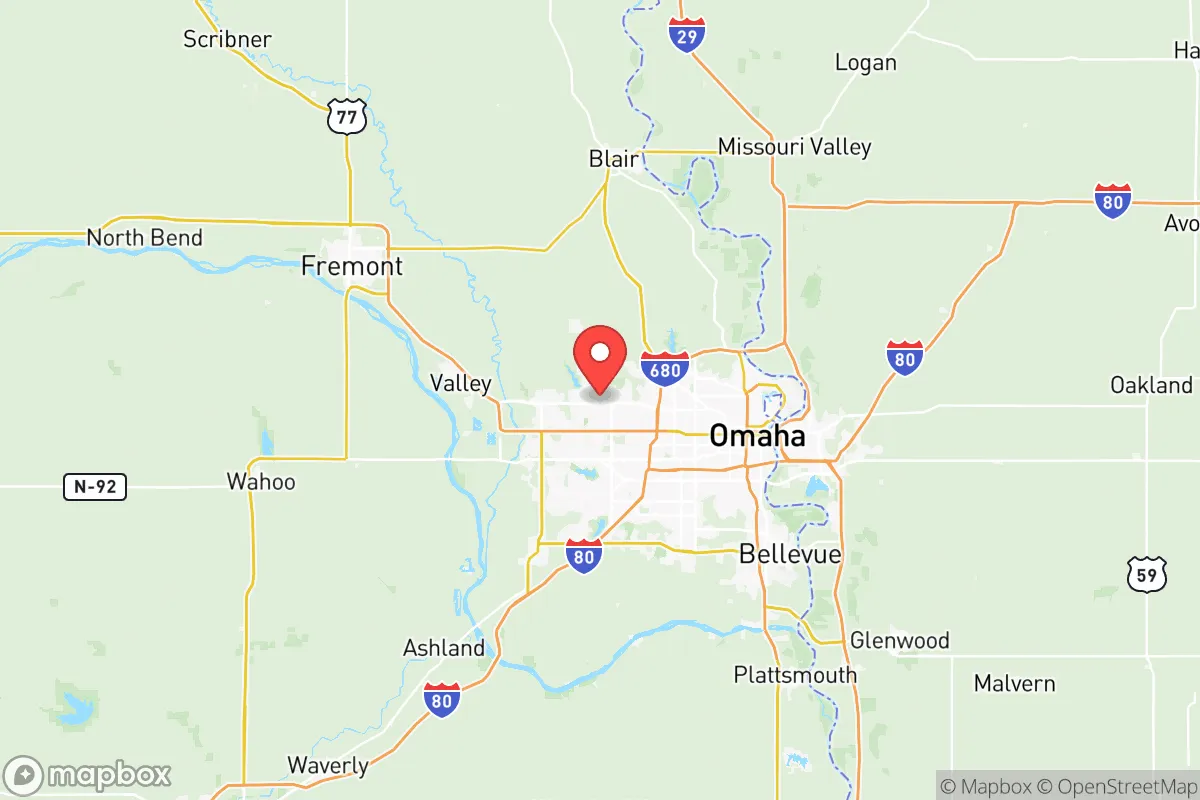
Douglas County sits in the eastern part of Nebraska, with the Missouri River forming its eastern border and separating it from Iowa. This river corridor has historically been a transportation and trade artery, and today it underpins the region's access to water, rail, and interstate highways. The county's terrain is predominantly rolling plains and river valleys, with fertile soil that supports a strong local agricultural base. For a relocator concerned with food security, this is a tangible asset: the surrounding region is part of the Corn Belt, and small-scale farming, community gardens, and local food networks are viable within and just beyond the county line. The climate is continental, with cold winters and hot summers, but it lacks the extreme weather volatility of coastal or tornado-alley hotspots—though severe thunderstorms and occasional tornadoes do occur. The area's elevation and inland position mean it is far removed from hurricane storm surge, sea-level rise, or seismic activity, offering a baseline of natural disaster stability that many other parts of the country cannot claim.
Risks, exposures, and proximity to fallout-relevant landmarks
The most significant strategic drawback of Douglas County is its concentration of high-value infrastructure and population within a relatively small area. Omaha itself is home to Offutt Air Force Base, a major command center for the U.S. Strategic Command (STRATCOM). This facility is a primary target in any large-scale conflict scenario, and its presence elevates the county's risk profile considerably. Additionally, the county contains several industrial and transportation nodes that could become secondary targets or sources of hazardous material release: the Union Pacific Railroad's Harriman Dispatching Center in Omaha, the Omaha Public Power District's Fort Calhoun Station (a decommissioned nuclear plant just north in Washington County, but within the broader risk radius), and the Kiewit Corporation headquarters, a major engineering and construction firm with government contracts. The Missouri River itself, while a water asset, also poses a flood risk; the 2019 flooding caused extensive damage to Offutt and surrounding areas, a reminder that natural and man-made risks can compound. For a relocator, the key takeaway is that while the county is not in a hurricane or earthquake zone, its role as a national security hub and industrial center introduces a distinct set of man-made and strategic risks that require serious consideration.
Practical resilience for a relocator: food, water, energy, and defensibility
On the practical side of daily resilience, Douglas County offers several advantages and some clear limitations. Water access is a strong point: the Missouri River provides a massive, reliable surface water source, and the county's groundwater aquifers are generally productive. Municipal water treatment is robust, but a self-sufficient household would need to plan for private well drilling or rainwater catchment, as reliance on city infrastructure is a vulnerability during grid-down or contamination events. Energy is similarly mixed. The region is served by the Omaha Public Power District, which draws from a mix of coal, natural gas, nuclear (Fort Calhoun, now decommissioned), and renewables. However, the grid is interconnected and subject to the same vulnerabilities as the rest of the Midwest. For off-grid capability, solar is viable but winter months reduce output significantly; wind is abundant but requires more space and investment. Food production is where the county shines relative to many urban areas. The surrounding farmland is among the most productive in the world, and local farmers' markets, CSAs, and bulk food suppliers are plentiful. A relocator with land in the outer parts of the county—say, near Elkhorn or Waterloo—could realistically achieve a high degree of food self-sufficiency with gardening, small livestock, and grain storage. Defensibility is more challenging. The county is mostly flat, with limited natural chokepoints or terrain features that aid in perimeter security. The suburban and exurban areas offer some buffer from the urban core, but the overall population density (over 570,000 residents) means that any large-scale disruption would quickly strain local resources and create competition for supplies. A relocator's best bet for defensibility is to choose a property on the rural fringe, ideally with good sightlines, a reliable water source, and a community of like-minded neighbors.
Overall, Douglas County presents a nuanced strategic picture for the disaster-conscious relocator. Its strengths lie in its inland location, abundant water, and agricultural productivity—factors that support long-term stability and self-sufficiency. Its weaknesses are centered on its role as a national security hub, with Offutt Air Force Base and associated infrastructure creating a higher-than-average risk of being in a target zone during a major conflict. For a family or individual willing to invest in off-grid capabilities and choose a location on the county's rural periphery, the area offers a viable balance of opportunity and risk. However, those seeking a truly low-profile, low-target environment may find the Omaha metro area's strategic significance too great a liability. As with any relocation decision, the key is to match the location's risk profile with one's own tolerance and preparedness level.

* Values derived from national, state, county, city and local statistics and may differ in a specific area. Last updated: 2026-07-07T22:56:50.000Z
Narrative content on this page is AI-generated and may contain mistakes. Verify any details that matter before acting on them.
ReloMaps may earn a commission from affiliate links at no extra cost to you.

