Photo: Wikipedia
Demographics of Douglas County
Affluence Level in Douglas County
A middle-class area roughly in line with national averages across income, home values, education, and employment.
People of Douglas County
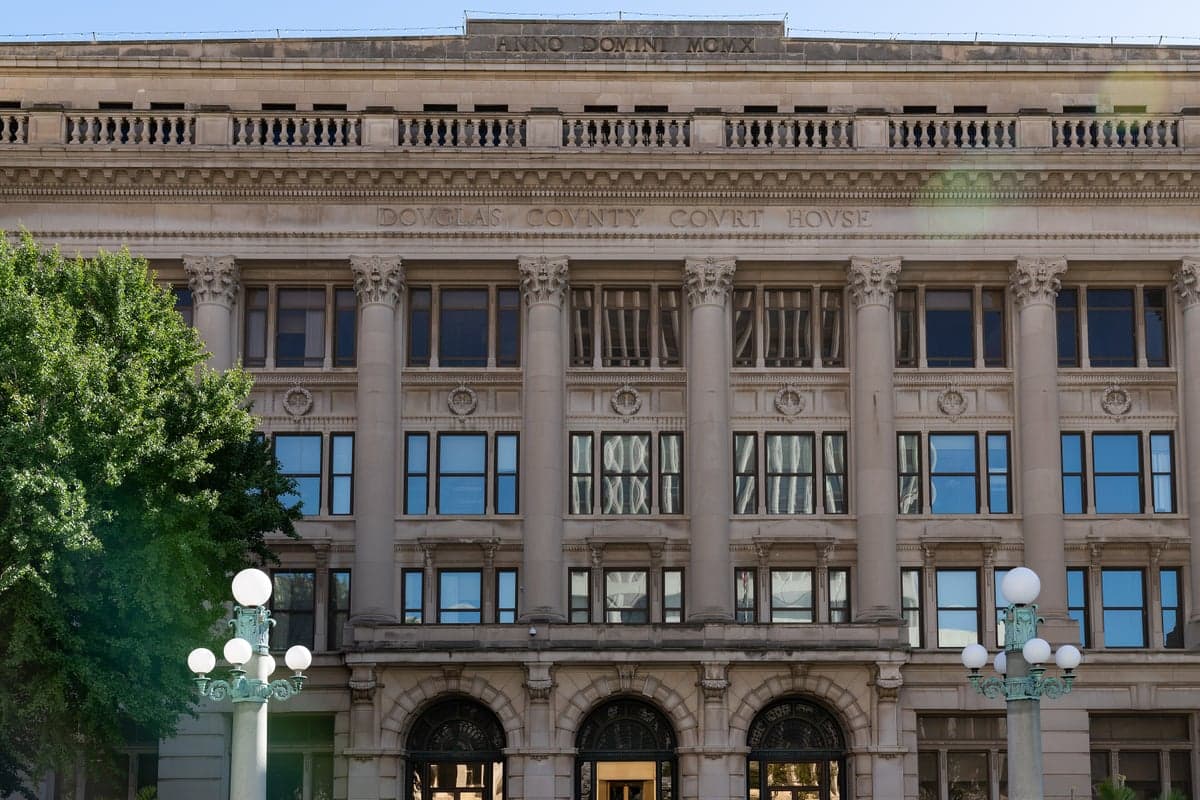
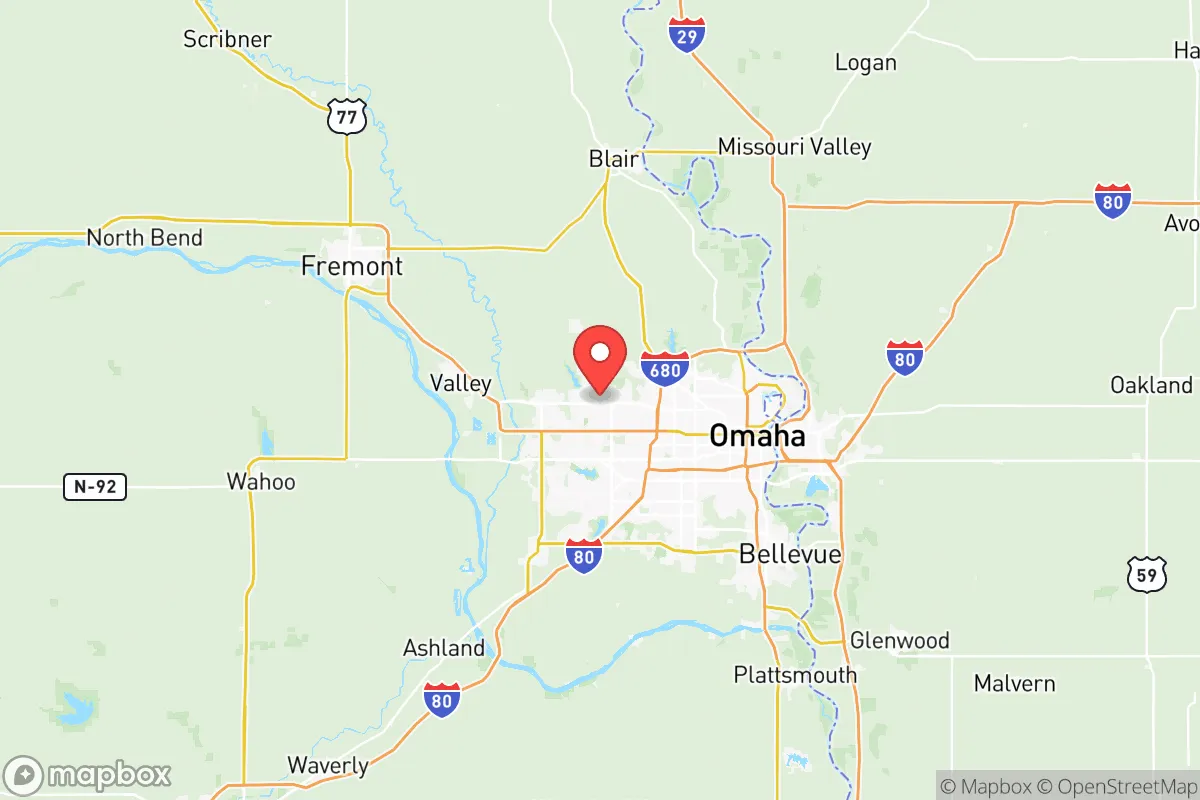
Douglas County, Nebraska, is home to 585,461 residents, making it the most populous county in the state and the urban core of the Omaha metropolitan area. The county is characterized by a predominantly White population (66.6%) with significant and growing Hispanic (14.1%) and Black (10.3%) communities, alongside smaller but established East/Southeast Asian (2.5%) and Indian-subcontinent (1.6%) populations. With 42.2% of adults holding a college degree and a foreign-born share of 6.4%, Douglas County blends Midwestern stability with the demographic dynamism of a regional economic hub, anchored by the city of Omaha and its surrounding suburbs.
Settlement & growth (pre-1960)
The land that became Douglas County was originally inhabited by the Omaha, Ponca, and Otoe tribes, who utilized the Missouri River valley for hunting and seasonal agriculture. French fur traders and trappers passed through the region as early as the 1700s, but permanent Euro-American settlement did not begin until the 1840s and 1850s, following the Platte River Road migration routes. The formal establishment of Omaha City in 1854, spurred by the Kansas-Nebraska Act and the promise of transcontinental railroad connections, drew the first major wave of settlers: Yankee and Mid-Atlantic migrants from New England, New York, and Pennsylvania, who saw the city as a speculative real estate and transportation opportunity.
By the 1860s and 1870s, Irish and German immigrants arrived in large numbers, drawn by railroad construction jobs and the availability of farmland in the surrounding areas. The Irish concentrated in Omaha's near-north side and along the Missouri River bottoms, working on the Union Pacific Railroad and in the city's meatpacking plants. German immigrants settled more broadly, establishing farming communities in what are now the western reaches of the county, including Elkhorn and Waterloo, where German-language churches and schools persisted into the early 20th century. A smaller but notable wave of Czech and Polish immigrants arrived in the 1880s and 1890s, adding to the county's Catholic and working-class character, particularly in South Omaha and Millard.
The early 20th century brought Southern Black migrants during the Great Migration, who moved to Omaha for industrial jobs in meatpacking and railroads. By 1910, Omaha's Black population had grown to roughly 5,000, concentrated in the Near North Side neighborhood, which became the cultural and commercial heart of the city's African American community. The Dust Bowl and Great Depression of the 1930s pushed rural white migrants from Nebraska and the Great Plains into Douglas County, seeking work in Omaha's expanding manufacturing and government sectors. Post-World War II, the county experienced a suburban boom, with returning veterans and their families moving to new developments in Ralston, La Vista, and western Omaha, fueled by the 1956 Interstate Highway System and the growth of Offutt Air Force Base just south of the county line.
Modern era (post-1965)
The 1965 Hart-Cellar Act reshaped Douglas County's demographics by opening immigration from Asia and Latin America. The most significant post-1965 change has been the growth of the Hispanic population, which now stands at 14.1% of the county. This wave began in the 1970s and 1980s, with Mexican immigrants drawn to jobs in meatpacking, construction, and food processing. South Omaha, particularly along 24th Street, became the primary enclave, with a dense concentration of Mexican-owned businesses, bakeries, and churches. In the 1990s and 2000s, the Hispanic community expanded into Bellevue and Papillion (the latter just across the county line in Sarpy County), as second-generation families moved to suburban school districts and newer housing.
The Black population of Douglas County has grown to 10.3%, driven by both continued domestic migration from the South and Midwest and a smaller but steady stream of African immigrants, particularly from Sudan, Somalia, and Liberia. The historic Near North Side remains a cultural anchor, but Black residents have dispersed into north-central Omaha and western suburbs like Elkhorn, reflecting broader patterns of suburbanization among middle-class African American families. The East/Southeast Asian community (2.5%) is primarily Vietnamese and Chinese, with roots in post-1975 refugee resettlement and later family reunification. Vietnamese residents are concentrated in South Omaha and Millard, where a small but visible commercial corridor of Vietnamese restaurants and markets has developed. The Indian-subcontinent community (1.6%) is newer, growing rapidly since the 2000s, driven by professionals in healthcare, information technology, and engineering. Indian families are concentrated in west Omaha and Elkhorn, near the corporate campuses of Mutual of Omaha, First National Bank, and the University of Nebraska Medical Center.
Domestic migration has also reshaped the county. Since the 1980s, Douglas County has attracted Rust Belt transplants from Illinois, Michigan, and Ohio, drawn by Omaha's relatively strong job market and lower cost of living. The county has also seen a steady inflow of rural Nebraskans from the western part of the state, seeking urban amenities and employment. Suburbanization has been the dominant geographic trend: the city of Omaha's population has grown modestly, while suburbs like Elkhorn (annexed by Omaha in 2005 but retaining a distinct identity), Ralston, and La Vista have absorbed much of the county's new housing and population growth.
The future
Douglas County is projected to become more diverse over the next 10-20 years, driven by continued Hispanic and Indian-subcontinent immigration and higher birth rates among Hispanic families. The Hispanic share of the county's population is expected to approach 20% by 2040, with the community dispersing further into western suburbs like Elkhorn and Waterloo, while maintaining its South Omaha core. The Indian-subcontinent population will likely continue its rapid growth, concentrated in professional and tech sectors, and may establish more visible cultural institutions in west Omaha. The East/Southeast Asian and Black populations are expected to grow more slowly, with Black growth driven primarily by domestic migration from the South and Midwest rather than international immigration.
The county's White population, while still the majority at 66.6%, is aging and declining in relative share, a trend common across the Midwest. Suburbanization will continue, with new housing developments pushing into the county's western and northern fringes, particularly around Bennington and Valley. The cultural identity of Douglas County is evolving from a historically white, Catholic, and working-class Midwestern city toward a more multiethnic, college-educated, and suburban region, where Omaha's urban core remains a draw for young professionals and the suburbs attract families seeking good schools and newer housing.
For someone moving in now, Douglas County offers a stable, growing economy with increasing diversity, good public schools in the western suburbs, and a cost of living that remains below the national average. The county is becoming more cosmopolitan and less insular, but retains a distinctly Midwestern character of civic engagement, volunteerism, and relatively low social friction between groups. The main trade-off is between the urban energy of Omaha's core and the family-oriented, car-dependent lifestyle of its expanding suburbs.

* Values derived from national, state, county, city and local statistics and may differ in a specific area. Last updated: 2026-07-07T22:56:50.000Z
Narrative content on this page is AI-generated and may contain mistakes. Verify any details that matter before acting on them.
ReloMaps may earn a commission from affiliate links at no extra cost to you.

