Photo: Wikipedia
Quality of Life in Mt. Juliet, TN
A high quality of life with strong walkability, manageable living costs, healthy neighborhood signals, and solid amenity access.
What does Quality of Life tell us?
Quality of Life blends cost of living, nearby amenities, socioeconomic signals, and neighborhood character. City-level scores represent the whole municipality; individual neighborhoods can differ.
What does this tell us?
Quality of Life blends cost of living, nearby amenities, socioeconomic signals, and neighborhood character. City-level scores represent the whole municipality; individual neighborhoods can differ.
Cost of Living
57% above national average
The Real Cost of Living in Mt. Juliet, TN for 2026
| Tier | Individual | Family (4) |
|---|---|---|
| Survival | $30k | $56k |
| Comfortable | $82k | $121k |
| Luxury | $195k+ | $302k+ |
| Elite (Top 5%) | $235k+ | $364k+ |
89%
The Area Signal
A metric tracking the socioeconomic signals of the area.
Hobbies
Explore the areaGroceries
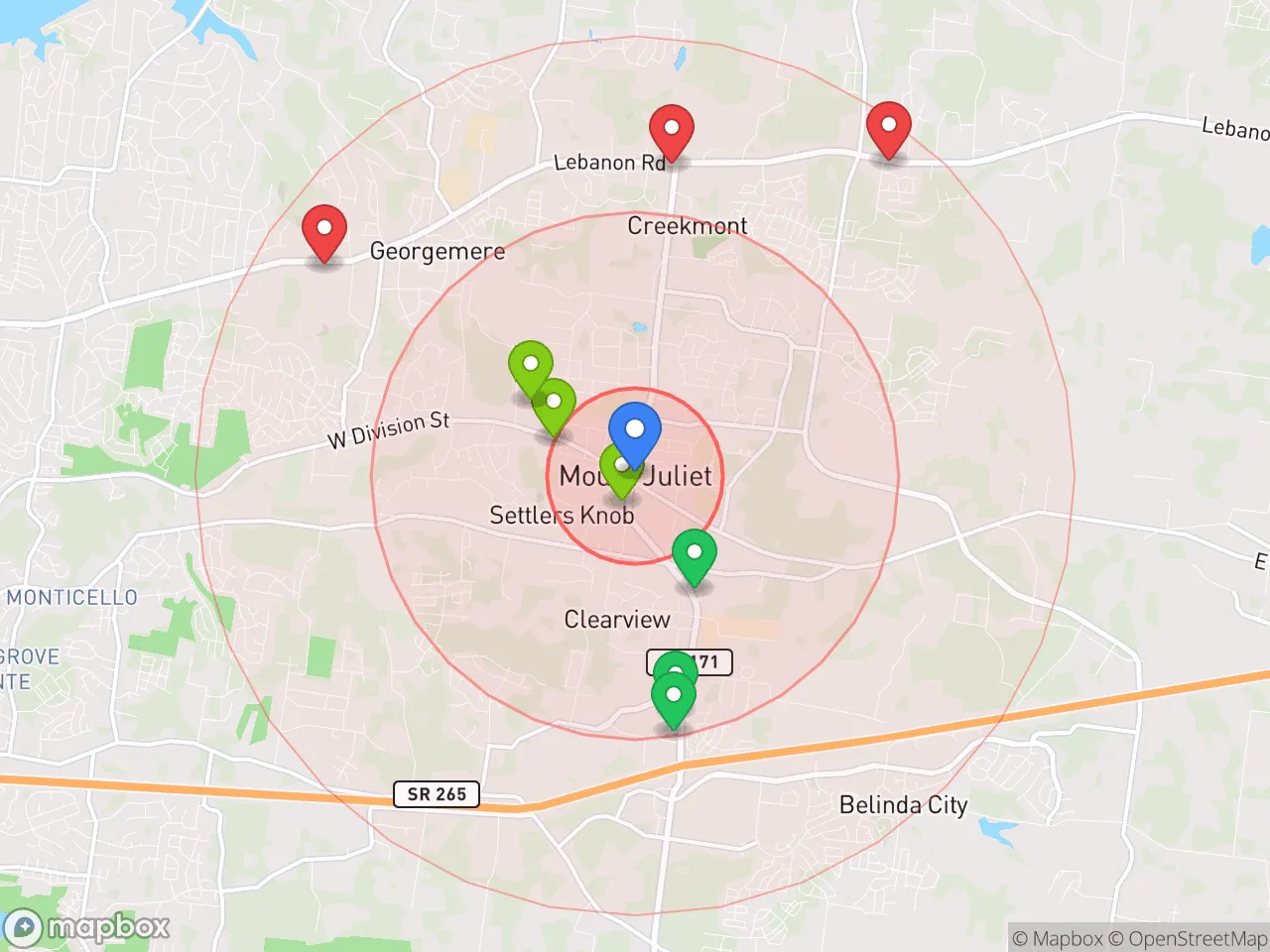
0 within 10 miles
Gas
0 within 10 miles
Hospital
0 within 20 miles
Airport
BNA — Nashville International
Post Office
Critical Amenities
Quality-of-Life Analysis
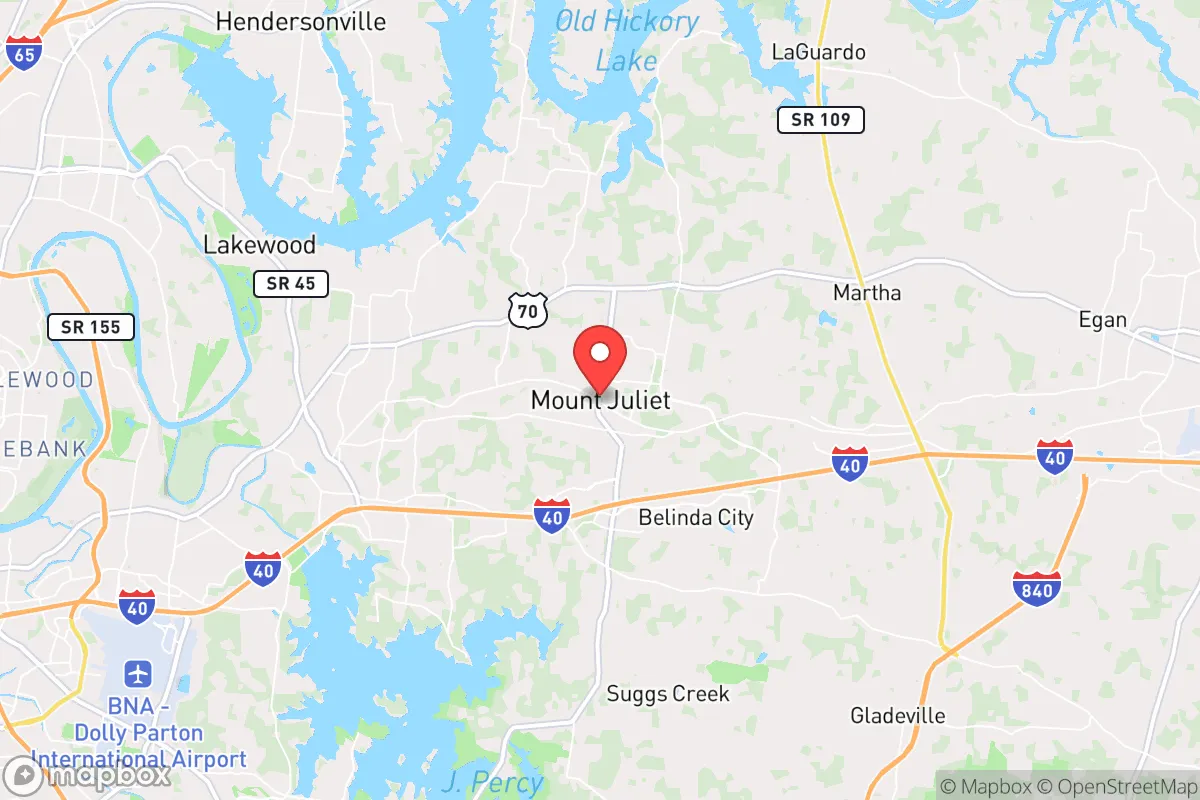
Mt. Juliet, Tennessee, has evolved from a quiet bedroom community into one of the Nashville metro area’s most sought-after suburbs, attracting families and professionals with its blend of affluence and small-town feel. The city’s population skews toward upper-middle-class households, with a median household income well above the national average and a demographic profile dominated by married couples with children. This prosperity is reflected in the cost of living index of 157 (100 = U.S. average), signaling that while Mt. Juliet is more expensive than the typical American town, it remains a relative value compared to Nashville’s pricier core and other Williamson County suburbs.
Cost of living, housing affordability, and how Mt. Juliet compares to nearby areas
Housing is the primary driver of Mt. Juliet’s elevated cost of living. The median home value sits at $423,000, and the median rent is $1,875 per month—both significantly higher than the national median but notably lower than in Brentwood or Franklin, where median home values often exceed $700,000. For buyers, this means a three-bedroom home in a well-regarded subdivision like those off Beckwith Road or near Providence Marketplace is attainable for a dual-income household earning around $120,000 annually. Renters face a tighter market, with vacancy rates below 3% and average lease terms of 12-18 months. Compared to Nashville proper, where the cost of living index hovers near 140, Mt. Juliet’s index of 157 reflects its premium for newer housing stock and lower crime rates. The average commute of 31 minutes—mostly via Interstate 40—is a trade-off for this affordability gap, as residents trade time for space and quieter streets.
Schools, amenities, and what daily life feels like for families
Daily life in Mt. Juliet revolves around its highly rated Wilson County Schools system, particularly Mt. Juliet High School and West Wilson Middle School, both of which consistently earn A ratings from Niche. The city’s amenity anchor is Providence Marketplace, a sprawling outdoor shopping center with national retailers, a movie theater, and dozens of chain restaurants that serve as the de facto town square. For outdoor recreation, the 1,200-acre Cedars of Lebanon State Park is a 15-minute drive east, offering hiking, camping, and a natural bridge formation. The rhythm of life is car-dependent but predictable: morning coffee runs to the local Starbucks or Dunkin’, school drop-offs along Mt. Juliet Road, and weekend youth soccer games at Charlie Daniels Park. The city lacks a true downtown core, but the planned Mt. Juliet Town Center development aims to add mixed-use walkability near the train station. Commuters appreciate the Music City Star rail line, which offers a 45-minute ride to downtown Nashville, though most still drive.
Families and professionals who prioritize strong schools, low crime rates, and newer housing over urban nightlife or walkability will find Mt. Juliet a compelling fit. Empty-nesters downsizing from larger homes in Nashville’s older suburbs also gravitate here for the lower property taxes and quieter pace. However, singles and young renters may feel the lack of a vibrant social scene and the long commute to Nashville’s job centers. For those seeking a safe, family-oriented suburb with solid amenities and a reasonable (if not cheap) price tag relative to its neighbors, Mt. Juliet delivers consistently.

Crime in Mt. Juliet, TN
Higher crime rates than 58% of comparable U.S. locations.
Violent CrimeViolent Crime Analysis
Property CrimeProperty Crime Analysis
Crime Analysis
Mt. Juliet, Tennessee, is statistically one of the safer large suburbs in the Nashville metropolitan area, though its crime rates are not uniformly low across all categories. The city’s violent crime rate stands at 496.8 incidents per 100,000 residents, while property crime is reported at 1,640.7 per 100,000, figures that place the community in a middle tier when compared to both Wilson County and the broader state of Tennessee.
Crime in context
To understand Mt. Juliet’s safety profile, it helps to compare its numbers against state and national baselines. The violent crime rate of 496.8 per 100,000 is roughly 27% higher than the national average of approximately 380 per 100,000, but it sits below the Tennessee state average of about 670 per 100,000. Property crime in Mt. Juliet, at 1,640.7 per 100,000, is near the national average of 1,954 per 100,000 and significantly lower than the Tennessee state figure of roughly 2,500 per 100,000. These numbers indicate that while Mt. Juliet is safer than many Tennessee communities, it is not an exceptionally low-crime enclave; residents should not assume the city is immune to the property theft and vehicle break-ins common across the Nashville exurbs.
What residents experience
In practical terms, the crime residents of Mt. Juliet are most likely to encounter is property-related. Auto theft, package theft from porches, and burglaries of unlocked vehicles are the most frequently reported incidents, particularly in the residential developments around Providence Marketplace and the Rutland Drive corridor. Violent crime, while less common, is not absent; aggravated assaults and occasional robberies are reported, often connected to domestic disputes or incidents at late-night retail establishments along North Mt. Juliet Road. The Wilson County Sheriff’s Office and the Mt. Juliet Police Department maintain a visible presence, and response times in the city are generally faster than in rural parts of the county, which helps mitigate but does not eliminate risk.
One factor that should give prospective residents pause is the broader judicial environment in the Nashville metro area. Wilson County and its surrounding jurisdictions have seen a trend toward progressive prosecution policies, including diversion programs and reduced bail for nonviolent offenders. While these policies are designed to reduce incarceration, they also result in a higher number of repeat property offenders returning to the streets quickly. For a suburb like Mt. Juliet, which relies on its proximity to Nashville for employment and entertainment, this means residents are exposed to criminal elements that originate in the urban core and travel outward along Interstate 40. The practical effect is that residents should take proactive security measures—security cameras, neighborhood watch participation, and locking vehicles—rather than assuming the suburb’s reputation guarantees safety.
Neighborhood-level variation
Crime in Mt. Juliet is not evenly distributed. The Providence area, with its dense retail and apartment complexes, sees a disproportionate share of property crime reports. In contrast, the gated communities and larger-lot subdivisions near Lakeview Drive and Beckwith Road report significantly lower incident rates. The city’s northern sections, closer to Old Hickory Lake, are generally quieter, while the commercial strips along Lebanon Road experience more frequent shoplifting and vehicle break-ins. Prospective buyers should research specific subdivisions and consult the Wilson County Sheriff’s Office crime mapping tool before committing to a home, as block-level variation can be substantial even within a city that markets itself as a safe family suburb.
* Values derived from national, state, county, city and local statistics and may differ in a specific area. Last updated: 2026-10-09T04:27:40.000Z
Narrative content on this page is AI-generated and may contain mistakes. Verify any details that matter before acting on them.
ReloMaps may earn a commission from affiliate links at no extra cost to you.

