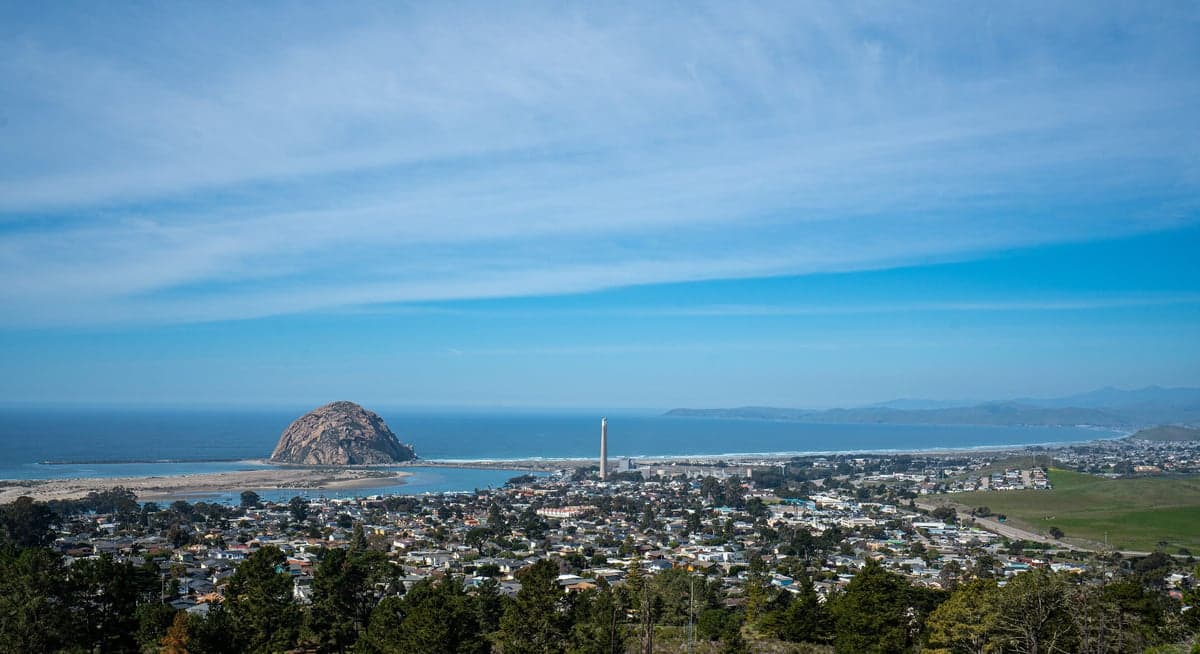
Photo: Wikipedia
Political ClimatePolitical Climate in Morro Bay, CA
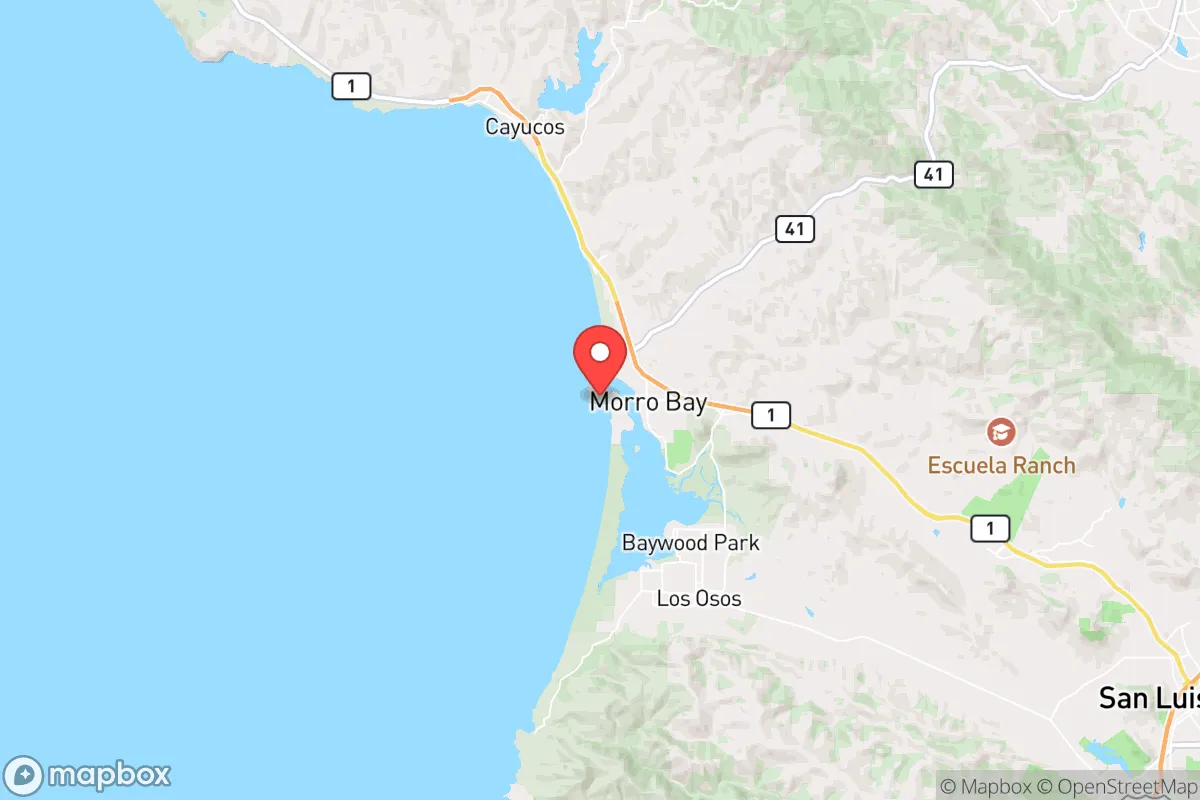
District shown is the primary district for this city’s centroid. Cities may span multiple districts.
Local Political AnalysisPolitical Analysis of Morro Bay, CA
Morro Bay leans solidly Democratic, with a Cook Partisan Voting Index of D+13, meaning it votes about 13 points more Democratic than the national average. That puts it well to the left of the state of California as a whole, which has a D+13 PVI itself—so Morro Bay is essentially a mirror of the state's overall partisan tilt, but with a distinctly local flavor. Over the past decade, the city has shifted leftward alongside much of coastal California, driven by an influx of remote workers and retirees from the Bay Area and Los Angeles, though it still retains a noticeable moderate-to-conservative streak among its long-time fishing and tourism families.
How it compares
Compared to the broader state of California, Morro Bay is politically aligned but more intensely Democratic than many inland or Central Valley areas. For context, nearby San Luis Obispo County as a whole leans Democratic but is more competitive—Biden won it by about 17 points in 2020, while Morro Bay itself likely voted closer to 25 points blue. Drive 20 minutes east to Atascadero or Paso Robles, and you'll find a much more conservative electorate, with those towns often voting Republican by 10-15 points in local races. Even closer, the city of San Luis Obispo is similarly liberal but younger and more activist-driven, while Morro Bay's Democratic lean is older, quieter, and more rooted in environmentalism and quality-of-life concerns. The contrast with nearby Cayucos, a small unincorporated beach town just north, is stark: Cayucos leans Republican, with a strong libertarian streak, and its voters often split tickets on local measures.
What this means for residents
For liberal residents, Morro Bay's D+13 lean means local elections are rarely competitive for Democrats—city council and school board seats are almost always held by progressives or moderate Democrats, and policy priorities like coastal protection, affordable housing mandates, and renewable energy projects tend to advance smoothly. Conservative residents aren't shut out, but they often feel like a minority voice; they can still find representation in county-level races (the San Luis Obispo County Board of Supervisors has a conservative majority) and in state Assembly District 30, which covers a mix of coastal and inland areas. Practically, this means a conservative homeowner might grumble about new density zoning or plastic bag bans, but they'll also see their property values rise steadily and enjoy the same clean beaches and low crime rates as their liberal neighbors. The real friction point is housing: both sides agree the area is unaffordable, but liberals push for more multi-family units and rent control, while conservatives favor market-rate solutions and oppose new development that changes the town's character.
Culturally, Morro Bay stands apart from much of California by being both politically engaged and genuinely small-town. You won't find the activist energy of Berkeley or the corporate liberalism of Silicon Valley; instead, the political climate here is shaped by the harbor, the estuary, and the constant tension between tourism and local life. The city council has banned new oil and gas drilling in the estuary, passed a plastic bag ban years before the state did, and consistently votes to limit short-term rentals—all moves that reflect the local Democratic majority's priorities. But the same council also keeps taxes relatively low for a coastal town and maintains a pro-business stance on the fishing industry and small retail. For a newcomer, the takeaway is simple: if you're liberal, you'll feel at home; if you're conservative, you'll find your people in the county or just up the road in Paso Robles, but you won't be unwelcome here. The trajectory is toward bluer politics, but at a pace that still feels recognizably Morro Bay.

State Political ClimatePolitical Climate in California
State Political AnalysisPolitical Environment in the State
California is a deeply blue state, with Democrats holding every statewide office and supermajorities in both legislative chambers, but that monolithic label hides a far more complex reality. The state’s overall partisan lean is roughly D+20 in presidential elections, a shift that has solidified over the past 20 years as the Republican Party has virtually collapsed in coastal metros while retaining strongholds in the Central Valley and inland deserts. For a conservative-leaning relocator, the practical takeaway is that you’ll be living in a state where progressive policies dominate state government, but where local politics can vary wildly from one county to the next.
Urban vs. rural divide
The political map of California is a story of two Californias. The coastal metros—Los Angeles, San Francisco, Oakland, San Jose, and San Diego—drive the state’s Democratic supermajority. These areas are dense, diverse, and heavily unionized, with strong progressive activism on housing, climate, and immigration. In contrast, the Central Valley (Fresno, Bakersfield, Modesto) and inland Southern California (Riverside, San Bernardino, Temecula) lean conservative, often voting for Republicans by double digits. The divide is stark: in 2024, Los Angeles County went for the Democratic presidential candidate by 40 points, while neighboring Kern County (Bakersfield) went Republican by 20 points. A notable shift has been the slow but steady rightward drift of the Inland Empire, particularly in suburbs like Murrieta and Menifee, where families priced out of coastal cities have brought a more moderate-to-conservative voting pattern. Meanwhile, Orange County—once a Republican bastion—has flipped blue over the past decade, driven by Asian American and Latino voters in cities like Irvine and Santa Ana.
Policy environment
California’s policy environment is defined by high taxes, heavy regulation, and a robust social safety net. The state has a progressive income tax with a top marginal rate of 13.3%, the highest in the nation, and a state sales tax that can exceed 10% in some cities. Property taxes are capped at 1% of assessed value under Proposition 13, but reassessments upon sale can hit new homeowners hard. The regulatory posture is aggressive: California has its own environmental standards (CARB), its own labor laws (including a $16 minimum wage that rises with inflation), and its own healthcare mandates. Education policy is dominated by the California Teachers Association, with per-pupil spending above the national average but mixed outcomes. Election laws are among the most liberal: universal mail-in voting, same-day registration, and no-excuse absentee ballots are standard. For a conservative, the policy environment can feel like a constant headwind—especially on taxes and business regulation—but the state’s infrastructure and public services are correspondingly robust.
Recent policy direction
Over the past five years, California has moved decisively left on a range of issues. On gun and self-defense law, the state passed a series of restrictions including a ban on “ghost guns,” a 10-day waiting period for all firearm purchases, and a requirement for microstamping on handguns. In 2023, a new law allowed private citizens to sue gun manufacturers under a public nuisance theory. On parental and education rights, the state has been a flashpoint: in 2024, a law was passed requiring school districts to notify parents if a child changes their gender identity, but it was quickly challenged and blocked by courts. Meanwhile, the state has expanded transgender student protections, including access to bathrooms and sports teams. On speech, California has passed laws targeting hate speech online and requiring social media platforms to disclose content moderation policies. Privacy and surveillance are a mixed bag: the California Consumer Privacy Act (CCPA) gives residents strong data rights, but the state also has a massive surveillance apparatus, including license plate readers and drone programs. Medical and bodily autonomy are broadly protected: abortion is a constitutional right under state law, and the state has a “shield law” protecting providers who treat out-of-state patients. Property rights are constrained by rent control laws (AB 1482) and strict zoning regulations that limit new development. Voting and ballot access are among the easiest in the country, with automatic voter registration and ballot drop boxes widely available. The net effect is a state that prioritizes individual rights on social issues while heavily regulating economic and property rights.
Civil unrest & political movements
California has been a center of political activism for decades, and recent years have seen both left- and right-wing movements flare up. The 2020 George Floyd protests were particularly intense in Los Angeles, Oakland, and San Francisco, with widespread property damage and a lasting shift in policing policy—many cities cut police budgets and shifted to alternative response models. On the right, the “Recall Newsom” movement in 2021 gathered over 1.6 million signatures, driven by frustration with COVID-19 lockdowns, business closures, and homelessness. The recall failed, but it showed a motivated conservative base, especially in rural counties. Immigration politics are a constant flashpoint: California is a “sanctuary state” under SB 54, which limits local law enforcement cooperation with federal immigration authorities. This has led to tensions between state and federal officials, particularly during the Trump administration. Secession rhetoric, while fringe, persists in the form of the “Calexit” movement, which has failed to gain ballot traction. Election integrity controversies have been relatively muted compared to other states, but some rural counties have passed resolutions questioning the security of mail-in voting. A new resident would notice the visible homelessness crisis in cities like San Francisco and Los Angeles, which has become a political battleground between advocates for housing-first policies and those demanding more aggressive enforcement.
Projection
Over the next 5-10 years, California’s political trajectory is likely to remain blue, but with increasing internal friction. Demographic trends are mixed: the state’s population has declined slightly since 2020, driven by out-migration to Texas, Arizona, and Nevada, but international immigration—particularly from Asia and Latin America—continues to replenish numbers. The biggest wildcard is housing: if the state fails to build enough units, the cost of living will continue to push middle-class families—including many conservative-leaning ones—out of the state. This could accelerate the political sorting, leaving California even more dominated by coastal progressives and inland conservatives. However, there are signs of a moderate backlash: in 2024, voters rejected a progressive ballot measure to raise property taxes on commercial properties, and several cities have elected more centrist mayors. A relocator moving in now should expect to find a state where the Democratic supermajority remains intact, but where local elections and ballot measures offer real opportunities for conservative and moderate voices to shape policy at the city and county level.
For a conservative-leaning individual or family, moving to California means accepting a state government that will be at odds with many of your values on taxes, regulation, and social policy. But it also means living in a place with unmatched economic opportunity, natural beauty, and cultural diversity. The practical takeaway is to choose your location carefully: a city like Temecula or Murrieta in Riverside County offers a conservative-friendly community with good schools and lower crime, while still being within driving distance of coastal amenities. You’ll pay more in taxes and deal with more bureaucracy, but you’ll also have access to world-class healthcare, universities, and infrastructure. The key is to go in with eyes open—California is not a place where you can change the political direction overnight, but it is a place where you can find your tribe and live well if you pick the right spot.
* Values derived from national, state, county, city and local statistics and may differ in a specific area. Last updated: 2026-09-20T22:01:51.000Z
Narrative content on this page is AI-generated and may contain mistakes. Verify any details that matter before acting on them.
ReloMaps may earn a commission from affiliate links at no extra cost to you.

