
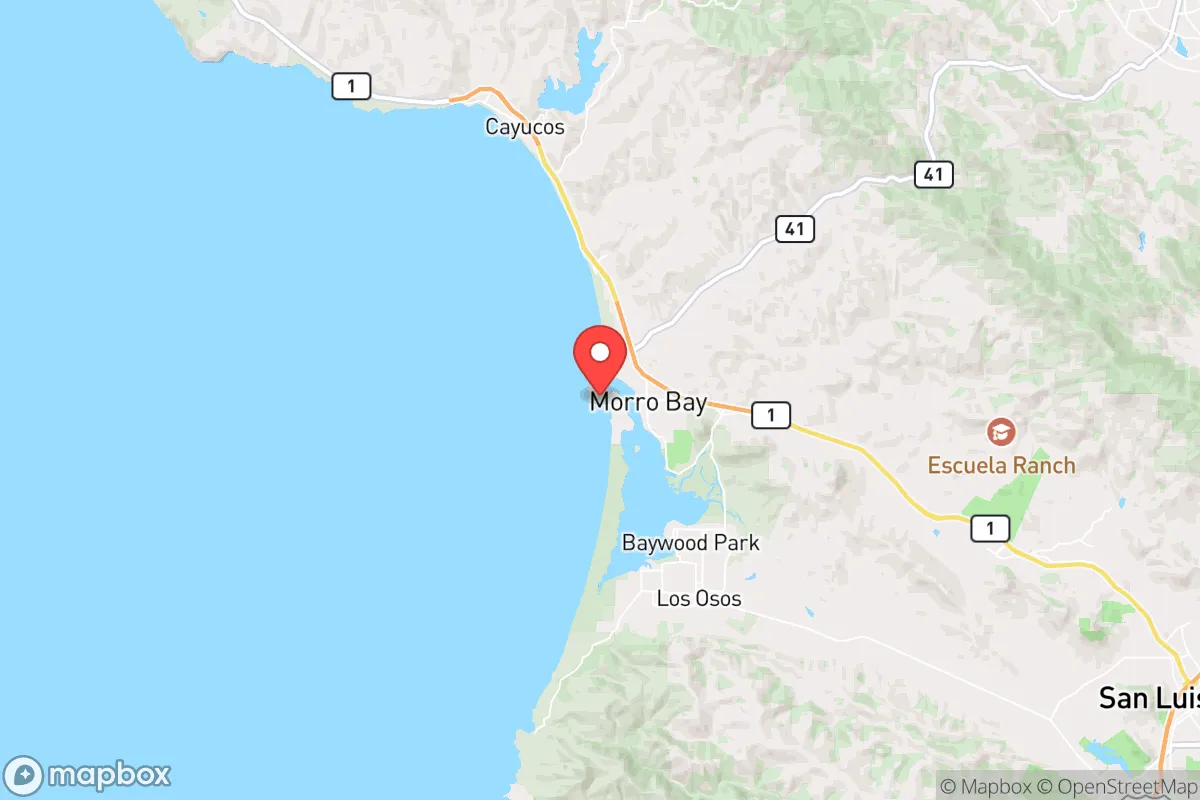
Photo: Wikipedia
Personal Sovereignty in Morro Bay, CA
Viable for self-reliance. Generally workable, though some barriers may limit total independence.
What does Personal Sovereignty tell us?
Personal Sovereignty measures your capacity for self-reliance and independence with minimal government friction. Higher scores mean fewer barriers between you and the way you want to live... but it assumes you have the space you need and good neighbors.
What does this tell us?
Personal Sovereignty measures your capacity for self-reliance and independence with minimal government friction. Higher scores mean fewer barriers between you and the way you want to live... but it assumes you have the space you need and good neighbors.
State Policy
Energy independence: Importer (33% of energy produced in-state)
Personal Liberty
Homesteading

Personal Liberty Analysis
Morro Bay, California, presents a complex personal sovereignty environment that is heavily shaped by state-level mandates, creating a regulatory landscape where individual autonomy is often constrained by progressive policy frameworks. While the city itself offers a small-town coastal atmosphere with a strong sense of community, residents must navigate California's high tax burden, restrictive self-defense laws, and limited off-grid feasibility. For a relocation research audience prioritizing personal freedom, Morro Bay represents a trade-off: scenic beauty and a relatively low-key local government are offset by a heavy state-level hand in taxation, property rights, and personal liberties. The overall sovereignty environment here is best described as managed autonomy, where personal choices are frequently subject to state approval and regulatory compliance.
Tax burden and regulatory posture in San Luis Obispo County
California's tax and regulatory posture is among the most interventionist in the nation, and Morro Bay residents feel this acutely. The state's top marginal income tax rate of 13.3% applies to high earners, while the state sales tax rate of 7.25% is supplemented by local add-ons, bringing the total in Morro Bay to approximately 8.25%. Property taxes are capped at 1% of assessed value under Proposition 13, but annual increases are limited to 2%, meaning long-term homeowners benefit while new buyers face higher effective rates due to rising home prices. The regulatory environment is dense: California's California Environmental Quality Act (CEQA) can delay or block development projects, and the Coastal Commission exerts significant authority over land use in Morro Bay, including home renovations, new construction, and even certain landscaping changes. For a self-reliant individual, this means any property improvement—from adding a deck to installing solar panels—requires permits and often lengthy review processes. The state's energy regulations also mandate that new homes include solar panels, and California's strict building codes (Title 24) drive up construction costs by an estimated 15-20% compared to less regulated states. Small business owners face a corporate tax rate of 8.84% and a minimum franchise tax of $800 per year, plus complex employment laws like AB 5 that restrict independent contractor arrangements. The overall regulatory posture is heavy-touch, with the state asserting broad authority over housing, energy, and business operations.
Self-defense and gun law specifics in California
California's gun laws are among the most restrictive in the United States, and Morro Bay residents must comply with a web of state-level regulations that significantly limit self-defense options. The state requires a 10-day waiting period for all firearm purchases, a background check through the California Department of Justice, and a Firearm Safety Certificate (FSC) obtained by passing a written test. Assault weapons are banned by name and feature, and magazines are limited to 10 rounds. The state's "may-issue" concealed carry permit system was effectively replaced by a "shall-issue" framework after the Supreme Court's Bruen decision (2022), but San Luis Obispo County still requires applicants to demonstrate "good cause" beyond simple self-defense, and the process involves a background check, firearms training, and an interview with the sheriff's office. As of 2026, the county's approval rate for CCW permits is moderate, but the process remains time-consuming and costly (typically $200-400 in fees). California also prohibits open carry of handguns and restricts carry in many public places, including schools, government buildings, and parks. For home defense, residents can possess handguns, shotguns, and rifles (subject to the assault weapons ban), but ammunition purchases require a background check and are tracked by the state. Stand-your-ground laws do not exist; California follows a "duty to retreat" standard in public spaces, though the Castle Doctrine applies within one's home. For a self-reliant individual, these laws create a significant barrier to armed self-defense, requiring advance planning, financial investment, and ongoing compliance with a complex regulatory system.
Self-reliance and homesteading viability in Morro Bay
Homesteading and off-grid living are severely constrained in Morro Bay due to zoning, water rights, and building codes. The city's residential lots are typically small—most single-family homes sit on 5,000 to 7,000 square foot lots—and the city's zoning code prohibits agricultural uses in residential zones, including keeping livestock like chickens or goats beyond a limited number (typically 4-6 hens, no roosters). Water is a critical issue: Morro Bay relies on a combination of groundwater and imported water from the State Water Project, and new connections are subject to strict water availability assessments. Rainwater harvesting is legal but limited to 5,000 gallons of storage without a permit, and greywater systems must comply with California's Title 22 standards, which require subsurface irrigation only. Off-grid solar is feasible but requires interconnection with the grid under net metering rules; completely disconnecting from the utility grid is effectively prohibited by building codes that mandate a grid connection for new construction. Composting toilets are allowed only in areas without sewer access, which is rare in Morro Bay. The city's Community Development Department enforces a minimum lot size of 5,000 square feet for single-family homes, and accessory dwelling units (ADUs) are permitted but subject to state-mandated streamlining. For a self-reliant individual seeking true independence, Morro Bay's regulatory environment is prohibitive; the area is better suited for those who want a low-key coastal lifestyle with some gardening and small-scale food production, rather than full homesteading or off-grid living.
Personal liberties in Morro Bay: parental rights, medical autonomy, and speech
Personal liberties in Morro Bay are shaped by California's progressive state policies, which often prioritize collective outcomes over individual choice. Parental rights are limited in several key areas: California mandates that public schools teach comprehensive sex education (the California Healthy Youth Act) and prohibits parents from opting their children out of LGBTQ+-inclusive curriculum. School vaccine requirements are strict, with no personal belief exemptions for required immunizations (though medical exemptions are available). Medical autonomy is similarly constrained: California has some of the most restrictive abortion laws in the nation (protecting access, not restricting it), but also mandates that health insurance plans cover contraception and abortion services. Vaccine mandates for healthcare workers and school staff have been in place since 2021, and while not currently enforced for the general public, the state retains the authority to reimpose them. Free speech is protected under the First Amendment, but California's "hate speech" laws and workplace harassment standards create a legal environment where certain expressions can lead to civil liability or employment consequences. Property rights are heavily regulated: the Coastal Commission has authority over development within the coastal zone, which includes most of Morro Bay, and the California Environmental Quality Act (CEQA) allows third parties to sue over development projects, effectively giving neighbors veto power over property improvements. For a conservative-leaning individual, these policies create a sense that personal choices—from medical decisions to property use—are subject to state oversight and community input.
Overall, Morro Bay's personal sovereignty environment is a study in contrasts. The city itself offers a relatively low-key, community-oriented atmosphere with a slower pace of life than larger California cities. However, the state-level regulatory framework imposes significant constraints on tax burden, self-defense, homesteading, and personal liberties. Compared to states like Texas, Florida, or Arizona, Morro Bay ranks low on personal sovereignty metrics, particularly in gun rights and property autonomy. For a relocation research audience prioritizing freedom and independence, Morro Bay is best suited for those who value coastal living and are willing to accept a managed autonomy environment where personal choices are frequently mediated by state regulation. It is not a destination for those seeking maximum personal sovereignty, but it can work for individuals who prioritize community, climate, and natural beauty over regulatory freedom.

* Values derived from national, state, county, city and local statistics and may differ in a specific area. Last updated: 2026-09-20T22:01:51.000Z
Narrative content on this page is AI-generated and may contain mistakes. Verify any details that matter before acting on them.
ReloMaps may earn a commission from affiliate links at no extra cost to you.

