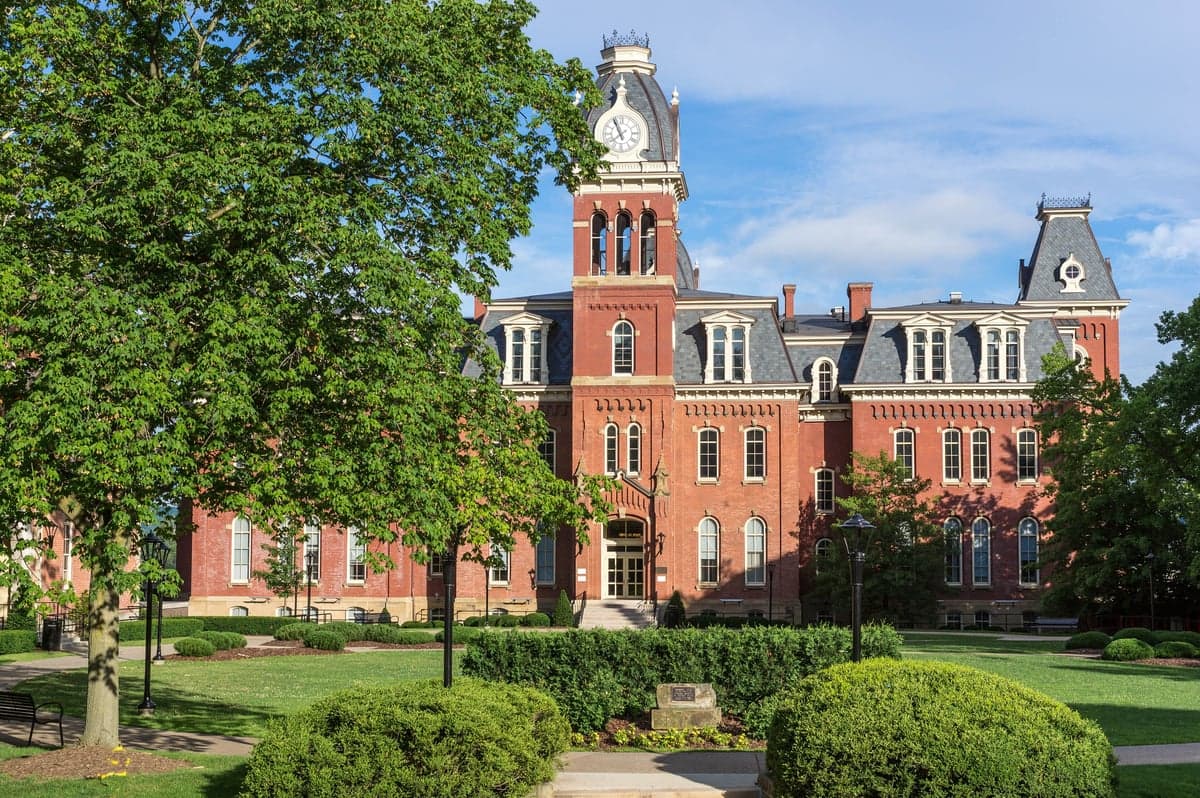
Photo: Wikipedia
Strategic Assessment of Morgantown, WV
Meaningful friction. Expect exposure to either population pressure, blast zones, or natural disaster risk. Consider buying a retreat property.
What does the Strategic Assessment tell us?
Our Strategic Assessment grades tactical survivability of an area. Major population centers, military targets, fallout zones, natural disasters, and border exposure all drive risk — lower exposure means a more defensible position in a crisis.
This is heavily inspired by Joel Skousen's Strategic Relocation book. Highly recommended you checkout the book ($)What does this tell us?
Our Strategic Assessment grades tactical survivability of an area. Major population centers, military targets, fallout zones, natural disasters, and border exposure all drive risk — lower exposure means a more defensible position in a crisis.
This is heavily inspired by Joel Skousen's Strategic Relocation book. Highly recommended you checkout the book ($)Strategic Pillars

Key Distances
Regional Safe Places
Below is our recommended "safe zones" in West Virginia and the surrounding area based on our strategic heuristics. For most people, it's unrealistic to live in a “safe zone” full-time due to work, family or other personal reasons. They tend to be more rural. However, many of these areas are perfect for second homes and retreat properties that double as a vacation home or even a short-term rental.
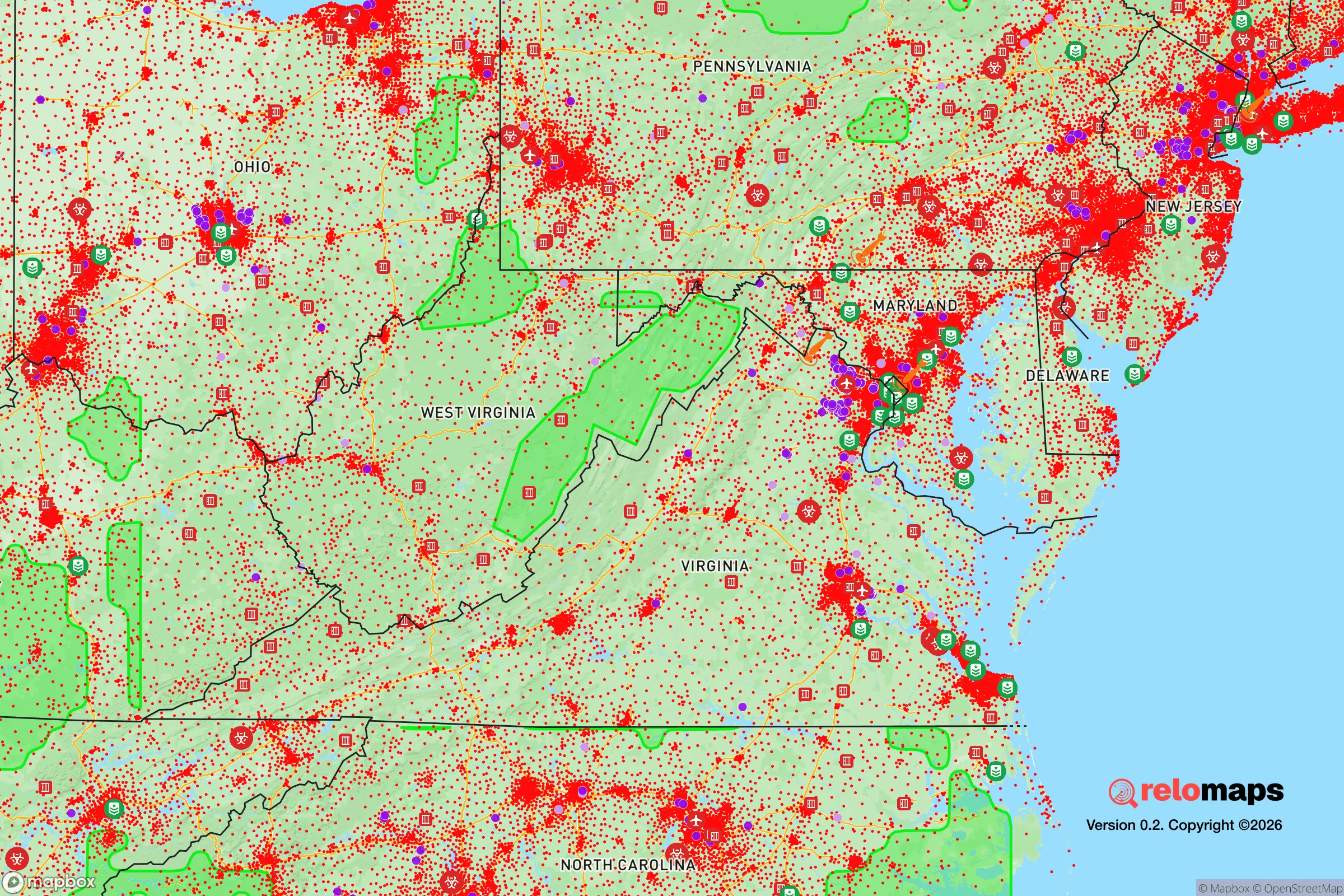
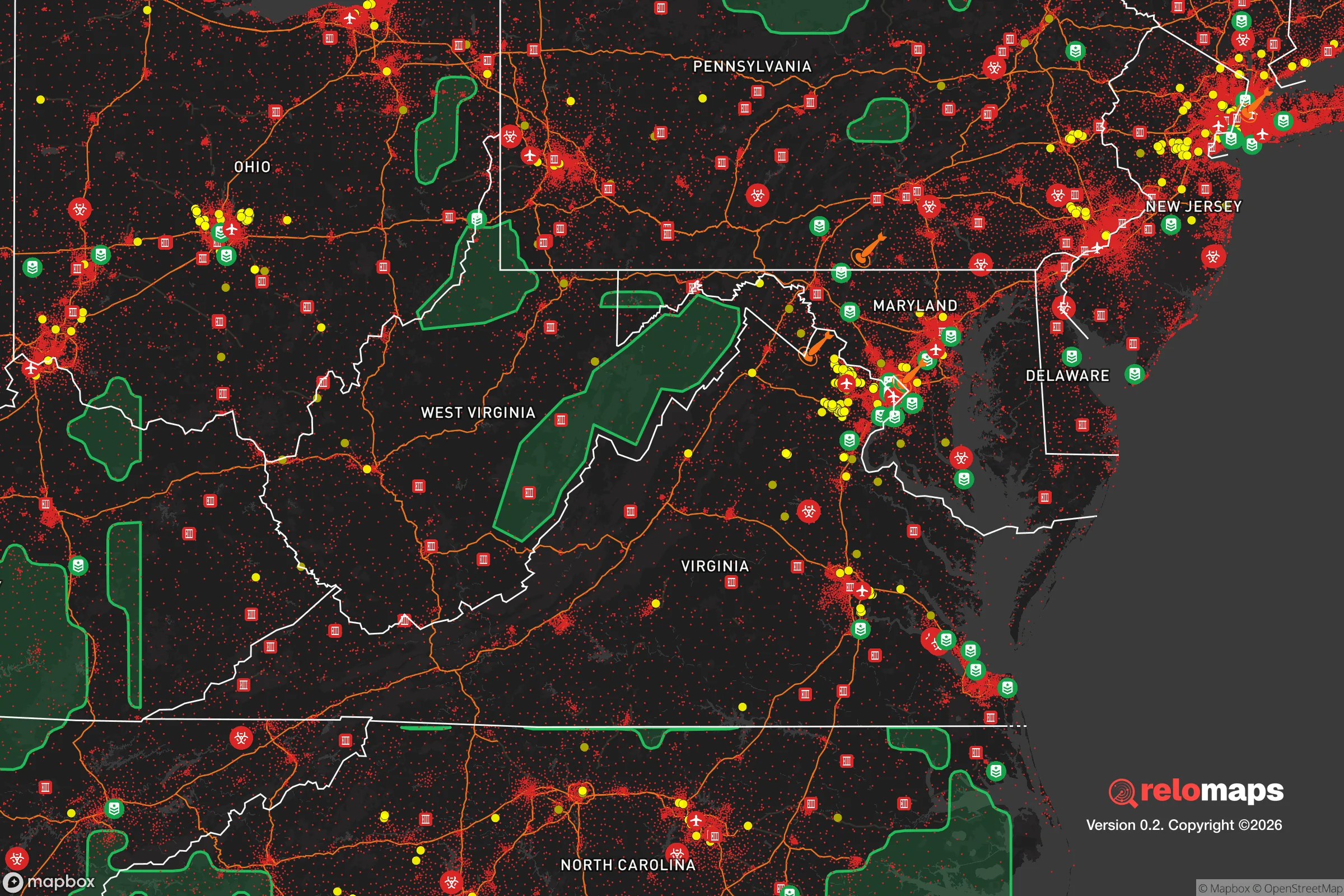


Important Note: For informational purposes only. This does not mean nothing bad ever happens in the green zones. Please use common sense. This is based on public data and modeled with AI. We tried to take a conservative approach but mistakes happen. We update this regularly as new information becomes available.
Solar Generator Recommendations
Backup power matters more here than in safer locations. We've picked three solar generators across budgets and capacity tiers — start with the budget unit if you only need a few essentials, or step up if you want to run a fridge and HVAC for days at a time.

Jackery Portable Power Station Explorer 300
Budget OptionPower on the Go: Weighing only 11 lbs, it's convenient to set up and store with book-sized foldable solar panels

BLUETTI Portable Power Station AC180
Designed for both indoor and outdoor scenarios, AC180 is highly capable as it has a robost capacity and continuous output power.

EF ECOFLOW DELTA Pro Ultra Power Station
Upgraded PickEcoFlow DELTA Pro Ultra is a whole-home energy system designed to grow with your family. Integrated with the Smart Home Panel 2, it scales to meet your evolving energy needs — keeping your home powered, intelligent, and secure through every stage of life.
We earn a commission, at no additional cost to you.
Strategic Assessment Analysis
Morgantown, West Virginia, offers a surprisingly strong strategic position for those prioritizing resilience and self-sufficiency, largely due to its location within the rugged Appalachian foothills and its distance from major metropolitan targets. While not a remote wilderness outpost, the city's geography provides natural buffers against the cascading effects of civil unrest, supply chain disruptions, and mass casualty events that could plague larger urban centers. For the conservative-minded relocator—whether a single individual or a family—Morgantown presents a viable balance of access to essential infrastructure and a defensible, low-profile setting, provided you understand its specific vulnerabilities and prepare accordingly.
Geographic position and natural defensive advantages
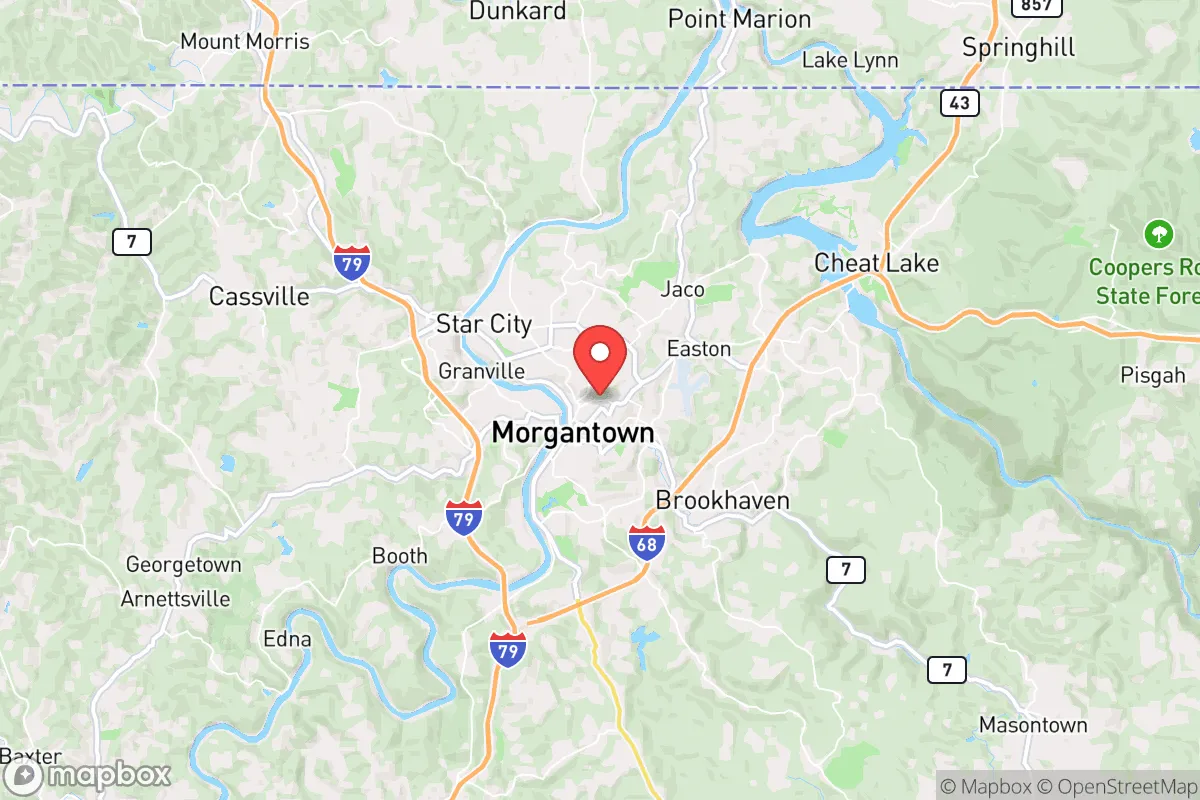
Morgantown sits in the Monongahela River Valley, surrounded by steep, forested hills that create a natural funnel for access and egress. This topography is a double-edged sword: it limits approach routes, making the area inherently more defensible than a flat, sprawling city, but it also means that the few major roads—primarily I-79 and US-119—become critical chokepoints during any evacuation or supply movement. The city itself is nestled within Monongalia County, which borders Pennsylvania to the north and is roughly 70 miles south of Pittsburgh. That distance is significant: while Pittsburgh is a potential target for a range of fallout-related events (from industrial accidents to civil unrest), Morgantown is far enough removed to avoid the immediate blast or riot zones, yet close enough to feel secondary effects like refugee flows or resource shortages. The surrounding countryside offers ample undeveloped land, dense forests for cover, and numerous small streams and creeks, which can support off-grid water collection and foraging. The area's elevation—averaging around 800 to 1,200 feet—also provides vantage points for observation and reduces the risk of flooding in the higher neighborhoods, though the river valley itself is prone to flash flooding during heavy rains.
Risks, exposures, and proximity to fallout-relevant landmarks
The most significant strategic risk for Morgantown is its proximity to the Marcellus Shale natural gas fields and associated infrastructure. The region is dotted with well pads, compressor stations, and pipelines, including the massive Mountaineer XPress pipeline system that runs through nearby counties. A major industrial accident—a well blowout, pipeline rupture, or intentional sabotage—could release toxic clouds or trigger fires that would make large areas uninhabitable for days or weeks. Additionally, Morgantown is home to West Virginia University (WVU), a large public university with roughly 30,000 students. In a scenario of civil unrest or mass casualty event, a dense, transient student population can become a liability: a source of panic, resource competition, and potential ideological conflict. The university's presence also means the city has a higher-than-average concentration of out-of-state residents who may not have deep local ties, which can erode community cohesion during a crisis. On the positive side, Morgantown is not near any major military bases, nuclear power plants, or high-value government targets. The closest nuclear facility is the Beaver Valley Power Station in Pennsylvania, about 50 miles north—close enough to be a concern for fallout in a worst-case accident, but far enough that prevailing winds typically carry contamination away from Morgantown. The city's location in a valley also means that any airborne contamination from distant events would likely be diluted or blocked by the surrounding ridges, though this same topography can trap local pollutants or smoke from wildfires.
Practical resilience for a relocator: food, water, energy, and defensibility
For the prepper-minded relocator, Morgantown's practical resilience hinges on a few key factors. Water is abundant: the Monongahela River runs through the city, and numerous smaller streams and springs are accessible in the surrounding hills. However, surface water in a populated area requires treatment—boiling, filtration, or chemical purification—especially if upstream industrial or sewage releases occur. The city's municipal water supply comes from the river, so a grid-down scenario would cut off treated water, but a motivated individual with a gravity-fed filter and a nearby creek can secure a reliable source. Food production is feasible but not automatic. The growing season in Morgantown runs roughly from April to October, with fertile soil in the river bottoms and hillside terraces. Local farmers' markets and a handful of small-scale farms exist, but the area is not a breadbasket; most food is trucked in via I-79. For long-term self-sufficiency, you would need to establish a garden, secure heirloom seeds, and consider small livestock (chickens, rabbits) on a few acres outside the city limits. Energy resilience is a mixed bag. The region is coal country, and while coal-fired plants are declining, natural gas is plentiful. A well-prepared relocator can tap into propane or install solar panels with battery storage—solar insolation is moderate (about 4.5 peak sun hours per day), but the frequent cloud cover in winter can reduce output. Wood heating is a strong option, given the abundant forests; a wood stove or outdoor boiler can provide both heat and cooking fuel without relying on the grid. Defensibility is the area's strongest suit. The hilly terrain, winding roads, and limited entry points make it easy to monitor and control access to a rural homestead. The local population is predominantly rural, conservative, and self-reliant, which means a higher likelihood of community mutual aid compared to urban areas. However, Morgantown itself has a more liberal-leaning university culture, so the ideal strategic location is likely 15–30 minutes outside the city, in one of the surrounding unincorporated communities like Dellslow, Osage, or Wadestown. These areas offer lower population density, better water access, and more privacy.
Overall, Morgantown presents a solid strategic option for the conservative relocator who values natural barriers, resource availability, and distance from primary targets, but it is not a bug-out paradise. The proximity to Pittsburgh and the presence of critical energy infrastructure mean you cannot ignore the risk of secondary effects like refugee influx or industrial accidents. The key is to position yourself on the outskirts, build a self-sufficient homestead with redundant water and power systems, and cultivate relationships with like-minded neighbors. If you do that, Morgantown offers a defensible, livable base from which to weather the storms ahead—whether they come from economic collapse, civil unrest, or larger geopolitical shocks. It is a place where preparation meets practicality, but only if you treat it as a long-term investment in resilience, not a quick escape hatch.

* Values derived from national, state, county, city and local statistics and may differ in a specific area. Last updated: 2026-04-23T05:54:11.000Z
Narrative content on this page is AI-generated and may contain mistakes. Verify any details that matter before acting on them.
ReloMaps may earn a commission from affiliate links at no extra cost to you.

