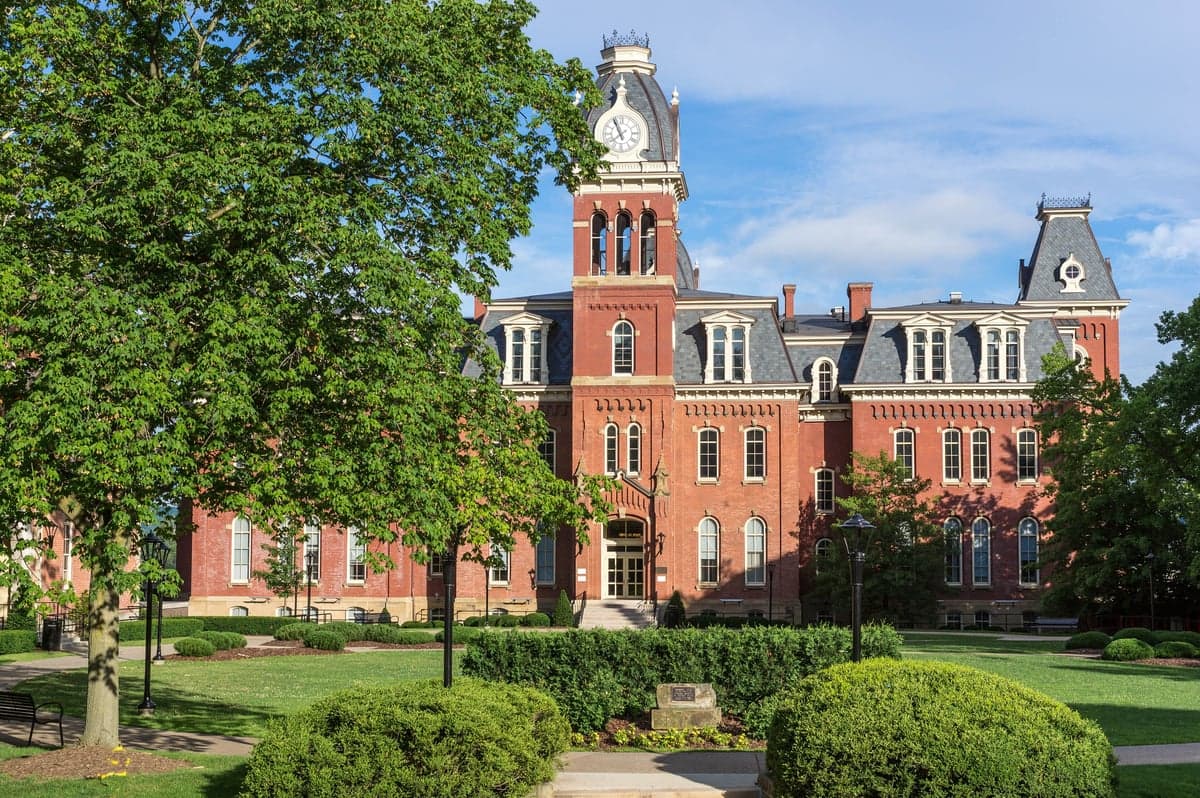
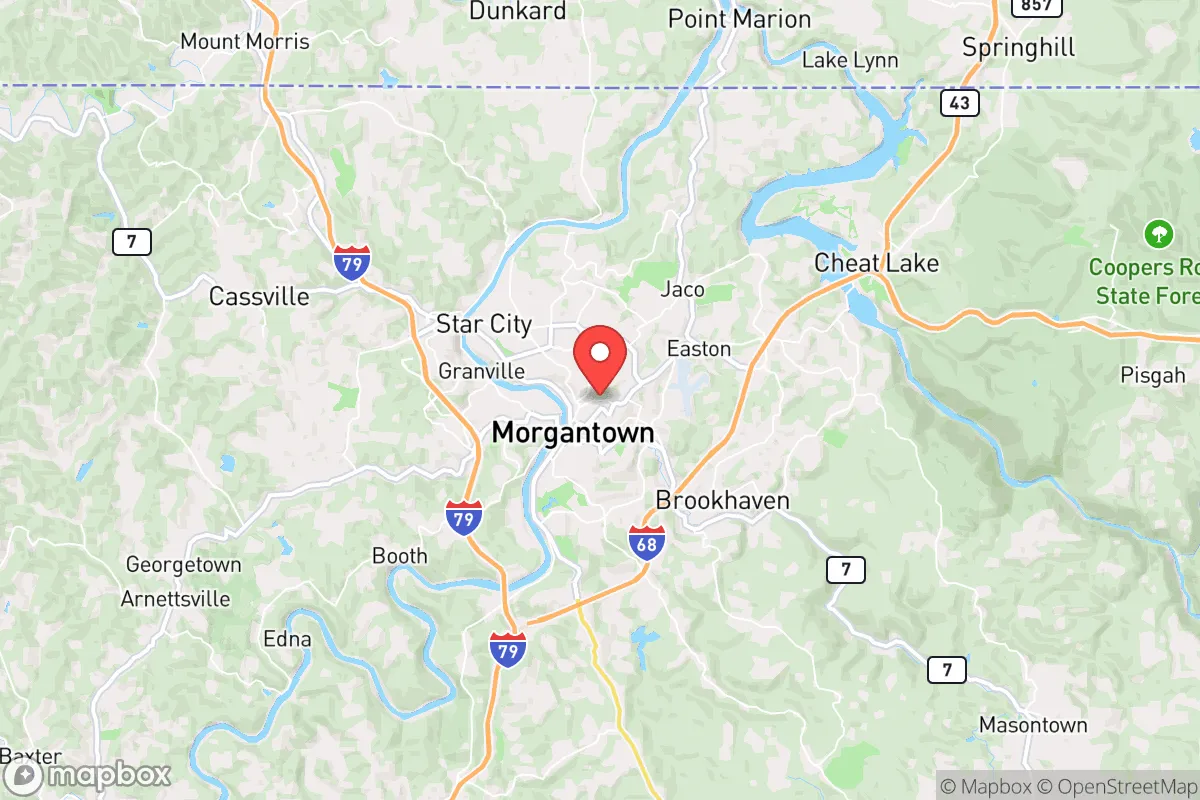
Photo: Wikipedia
Personal Sovereignty in Morgantown, WV
Viable for self-reliance. Generally workable, though some barriers may limit total independence.
What does Personal Sovereignty tell us?
Personal Sovereignty measures your capacity for self-reliance and independence with minimal government friction. Higher scores mean fewer barriers between you and the way you want to live... but it assumes you have the space you need and good neighbors.
What does this tell us?
Personal Sovereignty measures your capacity for self-reliance and independence with minimal government friction. Higher scores mean fewer barriers between you and the way you want to live... but it assumes you have the space you need and good neighbors.
State Policy
Energy independence: Net exporter (200% of energy produced in-state)
Personal Liberty
Homesteading

Personal Liberty Analysis
Morgantown, West Virginia, offers a notably high degree of personal sovereignty compared to many parts of the United States, particularly for those who prioritize autonomy from federal and state overreach. The city sits within a state that has a long-standing tradition of individual liberty, low taxation, and a legal framework that generally respects the rights of its citizens to live, work, and defend themselves without excessive government interference. For a conservative-leaning individual or family evaluating relocation, Morgantown presents a strategic balance of small-city amenities and a legal environment that still values self-reliance, though it is not without its local political nuances that require careful consideration.
Tax burden and regulatory posture in West Virginia
West Virginia’s tax structure is one of the most favorable in the nation for those seeking to keep more of their earnings and minimize government entanglement. The state has no gross receipts tax, no estate tax, and no inheritance tax, which directly protects wealth transfer and business ownership. Personal income tax rates are progressive but capped at a relatively low 5.12% for the highest bracket, and the state has been actively reducing this rate in recent years. Property taxes are among the lowest in the country, with effective rates averaging around 0.5% of assessed value, and there is no state-level property tax—only county and municipal levies. This means a home in Morgantown carries a far lighter annual tax burden than comparable properties in neighboring Pennsylvania or Maryland. The regulatory environment is similarly restrained. West Virginia is a right-to-work state, meaning no one can be forced to join a union as a condition of employment, and occupational licensing requirements are generally less burdensome than in more regulated states. For a prepper or survivalist, this translates to fewer bureaucratic hurdles when starting a home-based business, running a small farm, or engaging in trades like welding, construction, or firearms repair. The state’s overall regulatory climate ranks in the top 10 nationally for business freedom, which directly supports self-employment and independent contracting—key components of a self-reliant lifestyle.
Self-defense and gun law specifics in Morgantown
West Virginia is a constitutional carry state, meaning that as of 2016, any law-abiding adult 21 or older can carry a concealed firearm without a permit. This is a foundational liberty for anyone concerned with personal and family security. Morgantown itself is a college town, home to West Virginia University, and while the campus has its own firearm restrictions (carry is prohibited in university buildings and at sporting events), the city and surrounding Monongalia County are otherwise fully aligned with state preemption laws. Local governments cannot enact their own gun control ordinances, so there is no patchwork of city-level bans on magazine capacity, ammunition types, or carry in parks. Stand-your-ground laws are in effect, with no duty to retreat in any place where a person has a legal right to be. Castle doctrine protections extend to occupied vehicles and workplaces, not just homes. For the prepper mindset, this legal certainty is critical: you can train, carry, and defend your household without fear of prosecution for exercising a fundamental right. The state also has strong firearm preemption laws that prevent local authorities from creating their own registration schemes or waiting periods. While Morgantown’s city council has occasionally floated symbolic resolutions on gun safety, they carry no legal weight, and the state legislature has consistently pushed back against any infringement. This makes the area a safe harbor for those who view the Second Amendment as a non-negotiable pillar of personal sovereignty.
Self-reliance and homesteading viability in Monongalia County
For those looking to reduce dependence on fragile supply chains and government systems, Morgantown’s surrounding rural areas offer genuine homesteading potential. Zoning in Monongalia County is minimal outside the city limits, with most unincorporated land zoned for agricultural or residential use with few restrictions on livestock, gardens, or outbuildings. Lot sizes vary widely, but it is possible to find parcels of 1 to 5 acres within a 15-minute drive of downtown Morgantown, and larger tracts of 10 to 50 acres are available further out in the county. The soil in the region is generally acidic but workable for vegetables, berries, and nut trees, and the climate supports a growing season from April to October. Water access is reliable, with many properties having private wells, and the state has relatively lax regulations on rainwater collection compared to western states. Off-grid living is legally feasible, though building codes apply to new structures. However, West Virginia does not have a statewide building code for rural residential construction in many counties, and owner-built homes are permitted as long as they meet basic safety standards. Solar panel installation is straightforward, and net metering is available for grid-tied systems. For the serious prepper, the ability to raise chickens, goats, or even a few head of cattle, combined with the low property taxes and minimal zoning interference, makes this region one of the more viable places in the eastern United States to establish a self-sufficient homestead without constant government oversight.
Personal liberties: parental rights, medical autonomy, and property
West Virginia has a mixed record on parental rights and medical autonomy, but the trend is positive for conservatives. The state passed a Parents’ Bill of Rights in 2023, which affirms that parents have the fundamental right to direct the upbringing, education, and healthcare of their children. This includes the right to opt out of school curricula and to be notified of any medical or mental health services provided to minors. Homeschooling is legal and relatively unregulated, requiring only a simple notice of intent and an annual assessment, with no state-mandated curriculum or teacher qualifications. This is a significant advantage for families who want to control their children’s education without government interference. On medical autonomy, West Virginia has some of the strongest protections against vaccine mandates in the country, with broad religious and medical exemptions available for school and employment requirements. The state also banned COVID-19 vaccine mandates for state employees and contractors. However, Morgantown’s local health department and WVU’s medical system have occasionally pushed for more aggressive public health measures, so individuals should be aware that the city itself may lean more interventionist than the state as a whole. Property rights are strongly protected, with no statewide rent control and a relatively straightforward eminent domain process that requires just compensation. The state also has a right-to-farm law that protects agricultural operations from nuisance lawsuits, which is valuable for anyone running a homestead or small farm near suburban developments.
In the broader context of personal sovereignty, Morgantown and West Virginia rank well above the national average for individual liberty, particularly when compared to the Northeast corridor or West Coast states. The combination of constitutional carry, low taxes, minimal zoning, strong parental rights, and a culture of self-reliance creates an environment where a determined individual can live largely outside the reach of government overreach. The main trade-offs are the presence of a large university with its own progressive politics and the occasional local government friction, but state preemption laws and a conservative legislature provide a strong backstop. For a survivalist or prepper looking for a base of operations that still offers access to jobs, healthcare, and education, Morgantown represents a rare sweet spot: a place where you can exercise your freedoms without having to retreat entirely off the grid. It is not a libertarian utopia, but it is one of the more strategically viable locations in the eastern United States for those who value personal sovereignty above all else.

* Values derived from national, state, county, city and local statistics and may differ in a specific area. Last updated: 2026-04-23T05:54:11.000Z
Narrative content on this page is AI-generated and may contain mistakes. Verify any details that matter before acting on them.
ReloMaps may earn a commission from affiliate links at no extra cost to you.

