Photo: Wikipedia
Political ClimatePolitical Climate in Morgantown, WV
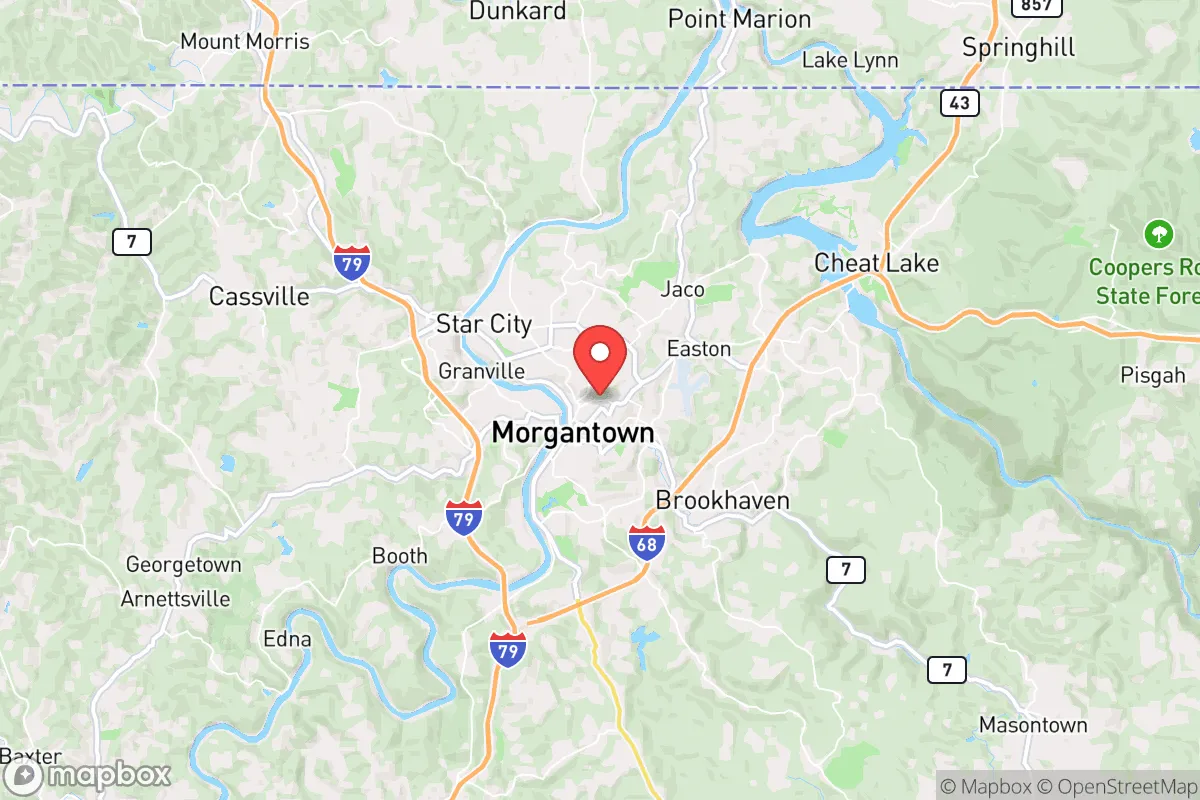
District shown is the primary district for this city’s centroid. Cities may span multiple districts.
Local Political AnalysisPolitical Analysis of Morgantown, WV
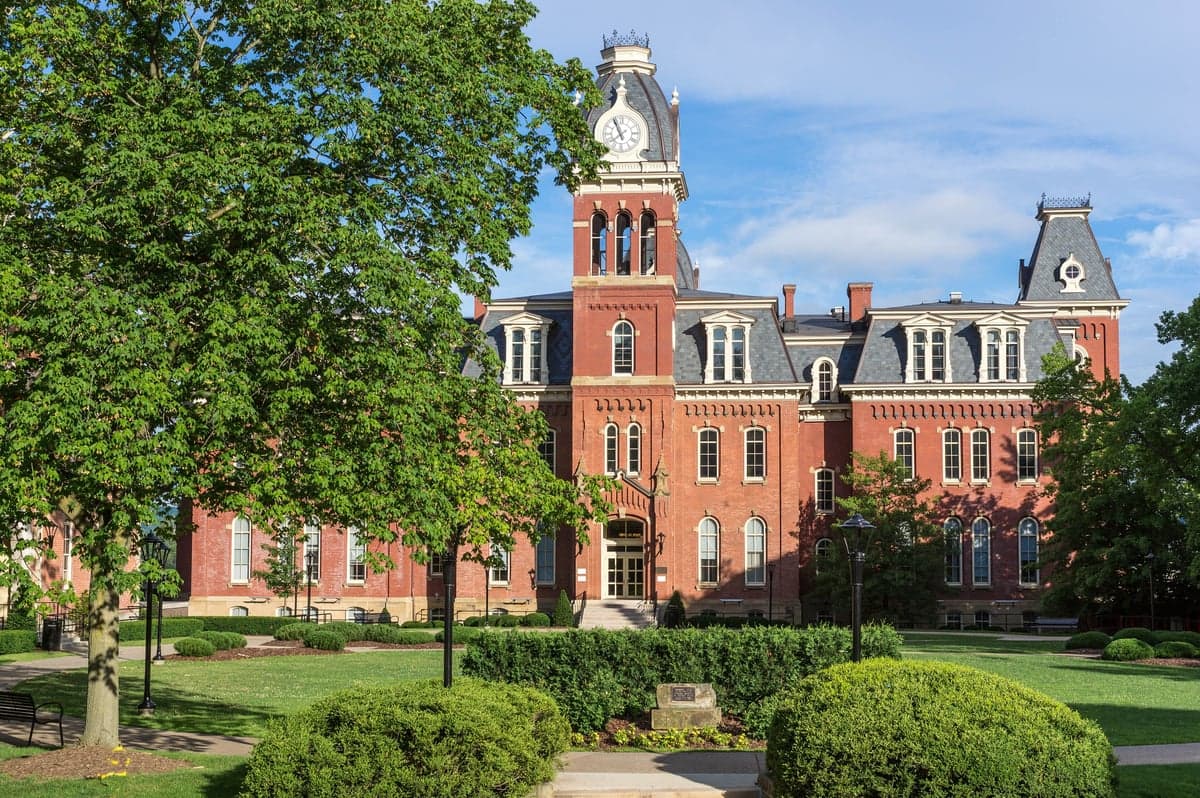
Morgantown sits in a county that votes solidly red — the Cook PVI is R+20 — but if you’ve been around here long enough, you know the city itself has a split personality. The university, West Virginia University, pulls in a transient population of students and faculty from out of state, and that’s been nudging local politics leftward over the past decade. Still, the surrounding Monongalia County and the wider region lean heavily conservative, and most long-time residents I know see the recent progressive drift as something to keep an eye on, especially when it comes to local ordinances and school board decisions.
How it compares
Drive 15 minutes south to Fairmont or 30 minutes west to Waynesburg, Pennsylvania, and you’ll find communities that haven’t budged an inch from traditional values — lower taxes, fewer regulations, and a general distrust of government overreach. Morgantown, by contrast, has seen city council debates over things like non-discrimination ordinances and zoning changes that feel more like what you’d expect in Pittsburgh or Columbus. The contrast is stark: while the county as a whole voted +20 points Republican in the last presidential race, the city’s precincts around the university campus flipped blue. That split means you get two different worlds in one small metro area — and the tension shows up in everything from property tax levies to how the police department is funded.
What this means for residents
For families and retirees who moved here to escape the bureaucracy of bigger cities, the creeping expansion of local government is a real concern. New rental registration fees and stricter short-term rental rules have been floated in recent years, and while none have passed yet, the conversation alone signals a shift. Property taxes in Monongalia County are already higher than in neighboring Preston or Marion counties, and any new mandates — like energy-efficiency codes or inclusionary zoning — could push costs up further. On the flip side, the conservative majority on the county commission has held the line on most major spending increases, and the Second Amendment sanctuary resolution passed in 2020 still stands as a reminder that this area isn’t ready to surrender local control. If you value personal freedom — whether it’s choosing your own health care, homeschooling without endless paperwork, or keeping your property rights intact — Morgantown’s political climate is still better than most college towns, but you’ll want to watch city council elections closely.
Culturally, Morgantown remains a place where WVU football Saturdays and church potlucks define the rhythm of life more than any political rally. The biggest policy distinction you’ll notice is the absence of a city income tax — a rarity among college towns — and a general reluctance to adopt the kind of progressive social policies that have reshaped places like Ann Arbor or Boulder. That said, the university’s influence on local media and civic groups means you’ll hear more about diversity initiatives and climate goals than you would in, say, Clarksburg. My advice: if you’re looking for a place where government stays out of your business, Morgantown is still a decent bet, but keep your ear to the ground — the next few city council races could tip the balance.

State Political ClimatePolitical Climate in West Virginia
State Political AnalysisPolitical Environment in the State
West Virginia has long been one of the most reliably Republican states in the nation, but that wasn't always the case. As recently as the 1990s, the Mountain State was a Democratic stronghold at the state and local level, but a seismic shift began in the early 2000s and accelerated through the 2010s. Today, the state is deeply red: Donald Trump carried it by nearly 39 points in 2020 and by over 42 points in 2024, making it his strongest state nationally. The state legislature holds a supermajority Republican, and both U.S. Senate seats are held by the GOP. The dominant coalition is a mix of rural, working-class voters who abandoned the national Democratic Party over cultural and energy issues, combined with a growing influx of conservative retirees and remote workers seeking lower taxes and fewer regulations. The trajectory over the last 20 years has been a steady march rightward, with the only real question being how far and how fast.
Urban vs. rural divide
The political map of West Virginia is starkly divided between a handful of small urban centers and the vast, deeply conservative rural expanse. The state's largest city, Charleston, and its surrounding Kanawha County, lean slightly more moderate but still vote Republican in most statewide races; Kanawha went +18 for Trump in 2024. Morgantown, home to West Virginia University, is the state's most liberal enclave, with Monongalia County voting +8 for Trump in 2024—a far cry from the rest of the state but still right of the national average. Huntington and Cabell County are reliably red, with Trump winning by +30 there. The real engine of the state's conservatism is the rural south and east: counties like Mingo, Logan, McDowell, and Wyoming routinely deliver 75-80% of their votes to Republicans. The Eastern Panhandle—including Martinsburg and Charles Town—has seen an influx of former D.C. metro residents, and while it remains conservative, it's slightly more moderate than the rest of the state, with Berkeley County going +28 for Trump. The divide isn't really urban vs. suburban; it's more about the presence of universities and government employment versus the coal and natural gas economies that dominate everywhere else.
Policy environment
West Virginia's policy environment is aggressively conservative by national standards, though it still has room to improve. The state has no personal income tax on Social Security benefits and has been phasing down its personal income tax rate, which is currently a flat 3.99% as of 2025, with a path to elimination by 2028 if revenue targets are met. The corporate net income tax is a flat 6.5%, and property taxes are among the lowest in the nation, with no state-level property tax—only county and municipal levies. The regulatory posture is business-friendly, with a right-to-work law on the books and a tort reform system that caps noneconomic damages. On education, the state passed a robust school choice law in 2021, the West Virginia Hope Scholarship, which allows parents to use state education funds for private school tuition, homeschooling, or other educational expenses. Over 12,000 students were using it by 2025. Healthcare is a mixed bag: the state expanded Medicaid under the Affordable Care Act, which many conservatives oppose, but it also has some of the lowest per-capita healthcare spending in the nation. Election laws are solid: voter ID is required, early voting is available, and the state has no mail-in ballot expansion beyond what was already in place. The legislature has also passed laws restricting ballot harvesting and requiring timely post-election audits.
Trajectory & freedom
West Virginia is trending more free in several key areas, but there are warning signs. On gun rights, the state became a Constitutional Carry state in 2016, allowing permitless carry of firearms, and in 2023 passed a Second Amendment Preservation Act that prohibits state cooperation with federal gun laws deemed unconstitutional. On parental rights, the 2021 Parental Bill of Rights law requires schools to notify parents of any medical or mental health services offered to their children and to obtain consent before administering surveys on sensitive topics. The state also passed a Save Women's Sports Act in 2021, banning biological males from competing in female sports. On medical autonomy, West Virginia passed a law in 2024 prohibiting COVID-19 vaccine mandates by private employers and government entities, and it has one of the strongest religious freedom restoration acts in the country. However, the state's property rights record is mixed: while there is no statewide zoning, the state has aggressively used eminent domain for natural gas pipelines, most notably the Mountain Valley Pipeline, which faced years of legal battles. The state also has a broadband expansion program that some conservatives worry could lead to government overreach in internet regulation. Overall, the trajectory is positive for personal liberty, but the pipeline fights and lingering Medicaid expansion are points of concern.
Civil unrest & political movements
West Virginia has a history of labor activism that has evolved into a unique strain of conservative populism. The 2018 teacher strike shut down schools across the state for nine days and was one of the largest labor actions in the country that year, but it was driven more by pay and benefits than by progressive ideology. Since then, the state has seen a rise in Second Amendment sanctuary resolutions, with over 40 counties passing them. The Mountain Valley Pipeline protests drew both environmental activists and local landowners concerned about eminent domain, creating an unusual coalition of left-wing environmentalists and rural property-rights advocates. There have been no significant sanctuary city policies; in fact, the state passed a law in 2020 requiring local law enforcement to cooperate with federal immigration authorities. Election integrity has been a hot topic: the state's Republican secretary of state, Mac Warner, implemented a voter roll cleanup that removed over 100,000 inactive voters, and the legislature passed a law requiring post-election audits. There have been no major election fraud scandals, but the state has seen a few small protests from both sides. A new resident would notice that political discourse is generally civil in person, but the online and media environment is highly polarized, with local talk radio and Facebook groups being the primary battlegrounds.
Projection
Over the next 5-10 years, West Virginia is likely to become even more conservative, but with some demographic wrinkles. The state's population is aging and shrinking, with the 2020 census showing a 3.2% decline since 2010. However, the Eastern Panhandle and Monongalia County are growing, driven by remote workers and retirees from the D.C. area and the tech sector. These newcomers tend to be more moderate than native West Virginians, but they are still conservative by national standards—they're moving for lower taxes and fewer regulations. The coal economy will continue to decline, but natural gas and renewable energy (wind and solar) are picking up some slack, and the state's political leadership is doubling down on energy independence. The income tax phase-out, if completed, will make the state even more attractive to high-income earners and retirees. The biggest wildcard is the opioid crisis and its long-term effects on the workforce and family stability, which could dampen economic growth. A new resident moving in now should expect to find a state that is politically stable, increasingly free in terms of taxes and personal liberties, but with a shrinking population and an economy that is slowly transitioning away from its coal roots. The culture will remain deeply traditional, with a strong emphasis on family, church, and community.
For a conservative individual or family considering relocation, West Virginia offers a rare combination of low taxes, strong gun rights, parental control in education, and a political culture that is unlikely to shift leftward anytime soon. The trade-offs are a slower economy, limited job opportunities outside of healthcare and energy, and a population that is older and less diverse than the national average. If you value personal freedom over career dynamism, and if you're comfortable with a rural or small-town lifestyle, West Virginia is one of the safest bets in the country for maintaining a conservative way of life for the next decade and beyond. Just be prepared for the winters and the winding mountain roads.
* Values derived from national, state, county, city and local statistics and may differ in a specific area. Last updated: 2026-04-23T05:54:11.000Z
Narrative content on this page is AI-generated and may contain mistakes. Verify any details that matter before acting on them.
ReloMaps may earn a commission from affiliate links at no extra cost to you.

