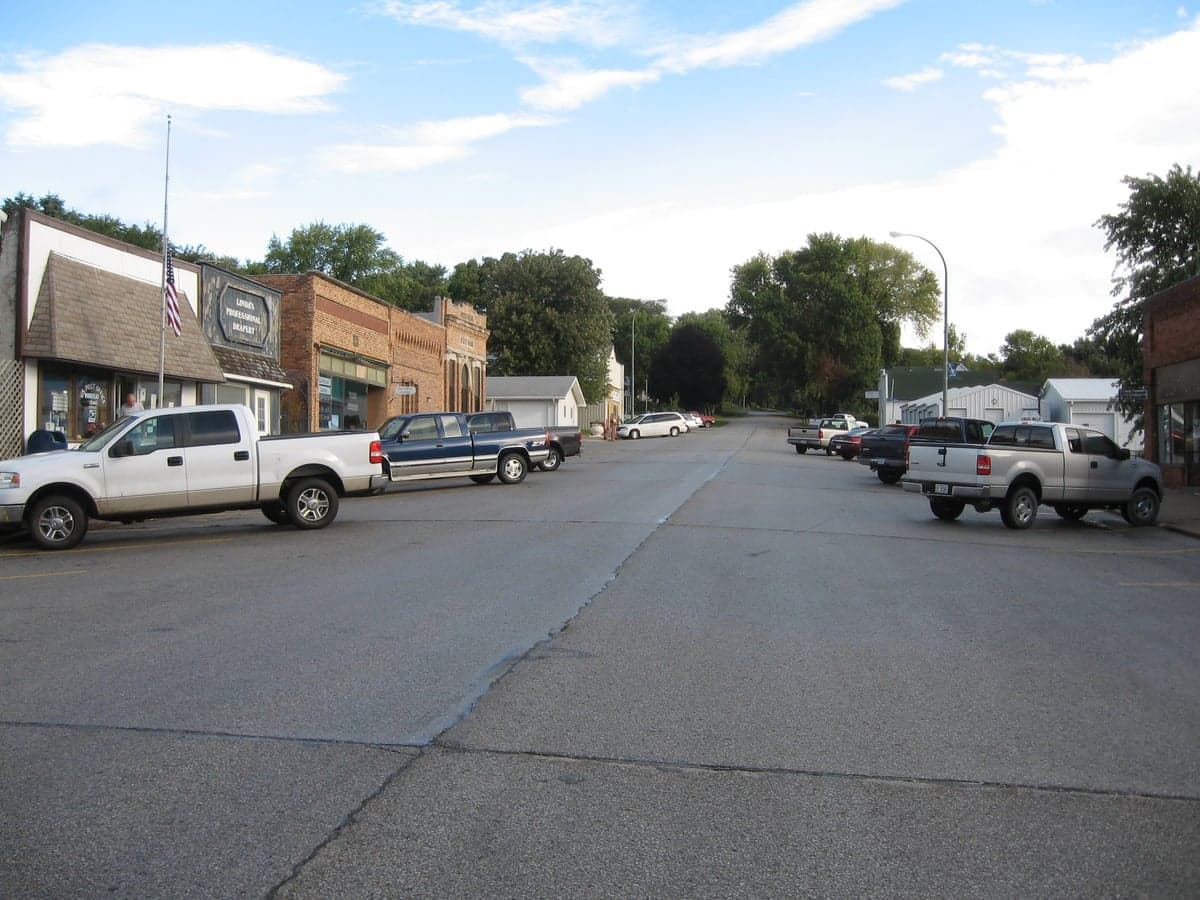
Photo: Wikipedia
Political ClimatePolitical Climate in Moorhead, IA
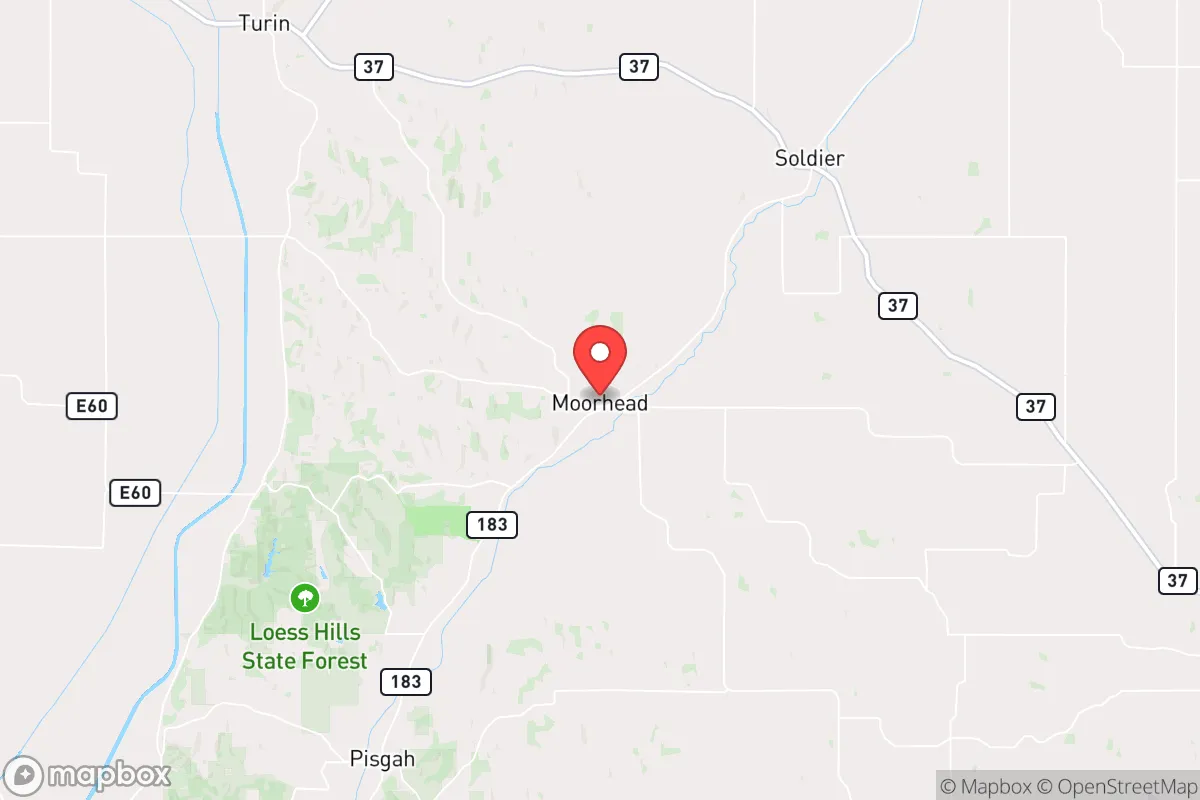
District shown is the primary district for this city’s centroid. Cities may span multiple districts.
Local Political AnalysisPolitical Analysis of Moorhead, IA
Moorhead, Iowa, sits deep in the western part of the state, and politically, it’s about as reliably red as the cornfields that surround it. The area’s Cook Partisan Voting Index (PVI) of R+15 means Republicans typically win by a comfortable 15-point margin over the national average, which is a solid 9 points more conservative than the state of Iowa as a whole (R+6). This isn’t a recent shift—Moorhead has been a Republican stronghold for decades, and the trend is holding steady. If you look at the last few presidential cycles, the county-level results here have consistently run 20-25 points to the right of the national popular vote, with no sign of that changing anytime soon.
How it compares
The contrast between Moorhead and the rest of Iowa is noticeable but not dramatic. While the state as a whole leans Republican (R+6), it’s a much more competitive place—think of the Des Moines suburbs or the Quad Cities, where races can flip between parties. Moorhead, by contrast, is a different animal. It’s more like the neighboring towns of Onawa or Mapleton, which also vote heavily Republican, but it’s a world away from the more liberal enclaves like Iowa City or Ames. Even within the same county, you’ll find pockets of difference—say, the small town of Soldier to the east, which is a bit more moderate, but nothing that changes the overall picture. The R+15 rating isn’t just a number; it means that in local elections, Republicans often run unopposed or face only token opposition, and the primary is usually the real contest.
What this means for residents
For conservative residents, this is a comfortable place to live. Your vote carries weight, and local policy—from school board decisions to county zoning—tends to align with traditional Republican values like low taxes, limited regulation, and a focus on agriculture. You’ll find that most of your neighbors share your views, and political discussions at the coffee shop or the feed store are more about fine-tuning than fighting. For liberal residents, it’s a different story. You’re in the minority, and that can feel isolating. You might not find many like-minded people at the local diner, and your vote in a general election won’t change the outcome. But it’s not hostile—most folks are polite and respectful, even if they disagree. The real challenge is that progressive policy ideas, like expanding public transit or stricter environmental rules, rarely get a serious hearing. You learn to pick your battles and focus on community issues where you can find common ground, like keeping the local school open or supporting the volunteer fire department.
One thing that sets Moorhead apart from the broader state is its cultural and policy focus. Iowa as a whole has a mix of urban and rural concerns, but here, it’s almost entirely about agriculture and small-town life. You won’t see much debate about urban housing or tech industry incentives—it’s all about crop prices, ethanol mandates, and keeping the local grocery store in business. The political climate is stable, maybe even a little sleepy, but that’s how most folks here like it. Looking ahead, I don’t see the area shifting much. The younger generation often moves to cities for work, and those who stay tend to hold the same values as their parents. If anything, the R+15 lean might even deepen as the state’s urban centers grow more diverse and the rural areas hold steady. For anyone moving here, the takeaway is simple: if you’re conservative, you’ll feel right at home; if you’re liberal, you’ll need to be patient and find your niche. Either way, the community is tight-knit, and people judge you more by your character than your party registration.

State Political ClimatePolitical Climate in Iowa
State Political AnalysisPolitical Environment in the State
Iowa has shifted from a classic purple swing state to a solidly Republican one, carrying a Cook PVI of R+6 after backing Donald Trump by 8 points in 2020 and 13 points in 2024. The state’s political transformation over the past two decades has been dramatic: it voted for Al Gore in 2000, Barack Obama twice, then swung hard right as rural voters abandoned the Democratic Party and the once-influential labor and farm coalitions realigned. Today, the GOP holds all four U.S. House seats, both Senate seats, the governorship, and supermajorities in the state legislature, making it one of the most reliably Republican states in the Midwest.
Urban vs. rural divide
The political map of Iowa is a textbook study in urban-rural polarization. The Democratic strongholds are concentrated in the state’s three major metro areas: Des Moines (Polk County), Iowa City (Johnson County), and Davenport (Scott County). Polk County, home to the capital, voted for Biden by 10 points in 2020 and Harris by 8 in 2024, but its margins have shrunk as suburban precincts in Ankeny and Waukee trend right. Johnson County, anchored by the University of Iowa, remains the bluest county in the state, delivering 68% for Biden. Meanwhile, the rest of the state is deeply red. Rural counties like Plymouth (Le Mars) and Sioux (Orange City) routinely vote 75-80% Republican, driven by evangelical voters and agricultural interests. The real story is the exurbs and small cities: Cedar Rapids (Linn County) flipped from blue to purple, and Council Bluffs (Pottawattamie County) has become reliably red as Omaha’s influence wanes. The Quad Cities region (Scott and Rock Island counties) remains a rare competitive zone, but even there, GOP gains in rural precincts have offset Democratic margins in Davenport proper.
Policy environment
Iowa’s policy environment is aggressively conservative, shaped by unified GOP control since 2017. The state has a flat income tax of 3.8% (phased down from 8.53% in 2018), with a plan to reach 3.5% by 2027. Property taxes are relatively low, with a median effective rate of 1.5%, but local levies vary widely. The regulatory posture is business-friendly: Iowa is a right-to-work state, has no state-level minimum wage above the federal $7.25, and offers generous tax credits for manufacturing and renewable energy (though wind and solar incentives have been scaled back). Education policy is a flashpoint: the state passed a universal school voucher program in 2023 (HF 68), allowing any family to use public funds for private or homeschool expenses, with an income cap phased out by 2025. Healthcare is mixed—Iowa expanded Medicaid under the Affordable Care Act but has since imposed work requirements and premiums for able-bodied adults, leading to coverage losses. Election laws have tightened: voter ID is required, absentee ballot drop boxes are restricted, and early voting windows have been shortened from 40 to 20 days. The state also banned abortion at roughly six weeks (fetal heartbeat) in 2023, with no exceptions for rape or incest, though a court challenge is pending.
Recent policy direction
The last three years have seen a cascade of legislation that defines Iowa’s current trajectory. On gun rights, the state enacted permitless carry in 2021 (SF 507), allowing any legal adult to carry a concealed firearm without a permit, and preempted all local gun ordinances. On parental rights and education, the 2023 “Parents’ Bill of Rights” (HF 595) requires schools to notify parents of any curriculum involving sexual orientation or gender identity, and bans instruction on these topics through sixth grade. Speech and privacy laws have tightened: the state passed a law in 2024 requiring social media platforms to verify the ages of Iowa users and restrict minors’ access to “harmful” content, modeled on Florida’s approach. Medical and bodily autonomy is sharply restricted: the six-week abortion ban is paired with a 2024 law banning gender-affirming care for minors (HF 68), including puberty blockers and hormone therapy, with no exceptions for existing patients. Property rights remain strong—Iowa has no statewide rent control and limits eminent domain for economic development. Taxation continues to trend downward: the 2022 tax reform package cut corporate rates from 12% to a flat 8.4% and eliminated the inheritance tax. Voting access has narrowed, but the state maintains same-day voter registration and no-excuse absentee voting (with ID), keeping it more accessible than some Southern states.
Civil unrest & political movements
Iowa has seen relatively low levels of civil unrest compared to coastal states, but flashpoints exist. The 2020 Black Lives Matter protests in Des Moines and Iowa City were large but mostly peaceful, leading to local police reform debates but no major policy changes. The state’s immigration politics are tense but not explosive: Iowa has no sanctuary cities, and a 2024 law (SF 2340) requires local law enforcement to cooperate with ICE detainers, with penalties for noncompliance. The “election integrity” movement is strong—the 2020 audit of the presidential results in Iowa found no widespread fraud, but GOP legislators used the controversy to pass the voting restrictions mentioned above. Organized activist movements are visible: the Iowa Firearms Coalition is a powerful lobbying force, while the progressive group One Iowa has led fights against the anti-LGBTQ+ laws. A notable flashpoint is the University of Iowa campus in Iowa City, where protests over the Gaza war in 2024 led to arrests and a faculty senate resolution criticizing the administration’s response. Secession or nullification rhetoric is minimal—Iowa is not a “state sovereignty” hotbed like Texas or Idaho, though some rural county supervisors have passed symbolic resolutions opposing federal gun or vaccine mandates.
Projection
Over the next 5-10 years, Iowa is likely to become more Republican, not less. Demographic trends favor the GOP: the state’s population is aging (median age 38.5), with out-migration of young college graduates from rural areas and in-migration of conservative retirees from Illinois and Minnesota. The Des Moines metro is growing, but its suburbs (Ankeny, Waukee, Johnston) are trending red faster than the core city can offset. The University of Iowa’s liberal influence will persist in Johnson County, but the state’s rural-to-exurban shift means the GOP’s legislative supermajorities are likely to hold or expand. The flat tax and business-friendly climate will continue to attract some relocators, but the restrictive social policies (abortion, transgender care, education) may deter younger, more liberal families. Expect further tax cuts, continued erosion of public school funding in favor of vouchers, and potential new restrictions on ballot access (e.g., ending same-day registration). The wildcard is the 2026 gubernatorial race—if Governor Kim Reynolds (term-limited after 2026) is replaced by a more moderate Republican, the policy pace could slow, but the legislature’s conservative majority will keep the direction steady.
For a new resident, the bottom line is this: Iowa offers low taxes, strong gun rights, and a business-friendly environment, but you’ll be living in a state where social policy is moving decisively rightward. If you’re conservative, you’ll find a welcoming political climate and a government that shares your values. If you’re liberal, you’ll find your voice concentrated in Des Moines, Iowa City, and Davenport, but you’ll face an uphill battle on nearly every policy issue. The practical takeaway is that Iowa is no longer a swing state—it’s a reliably red state with a blue urban archipelago, and that reality shapes everything from school boards to state budgets. Choose accordingly.
* Values derived from national, state, county, city and local statistics and may differ in a specific area. Last updated: 2026-10-17T20:07:41.000Z
Narrative content on this page is AI-generated and may contain mistakes. Verify any details that matter before acting on them.
ReloMaps may earn a commission from affiliate links at no extra cost to you.

