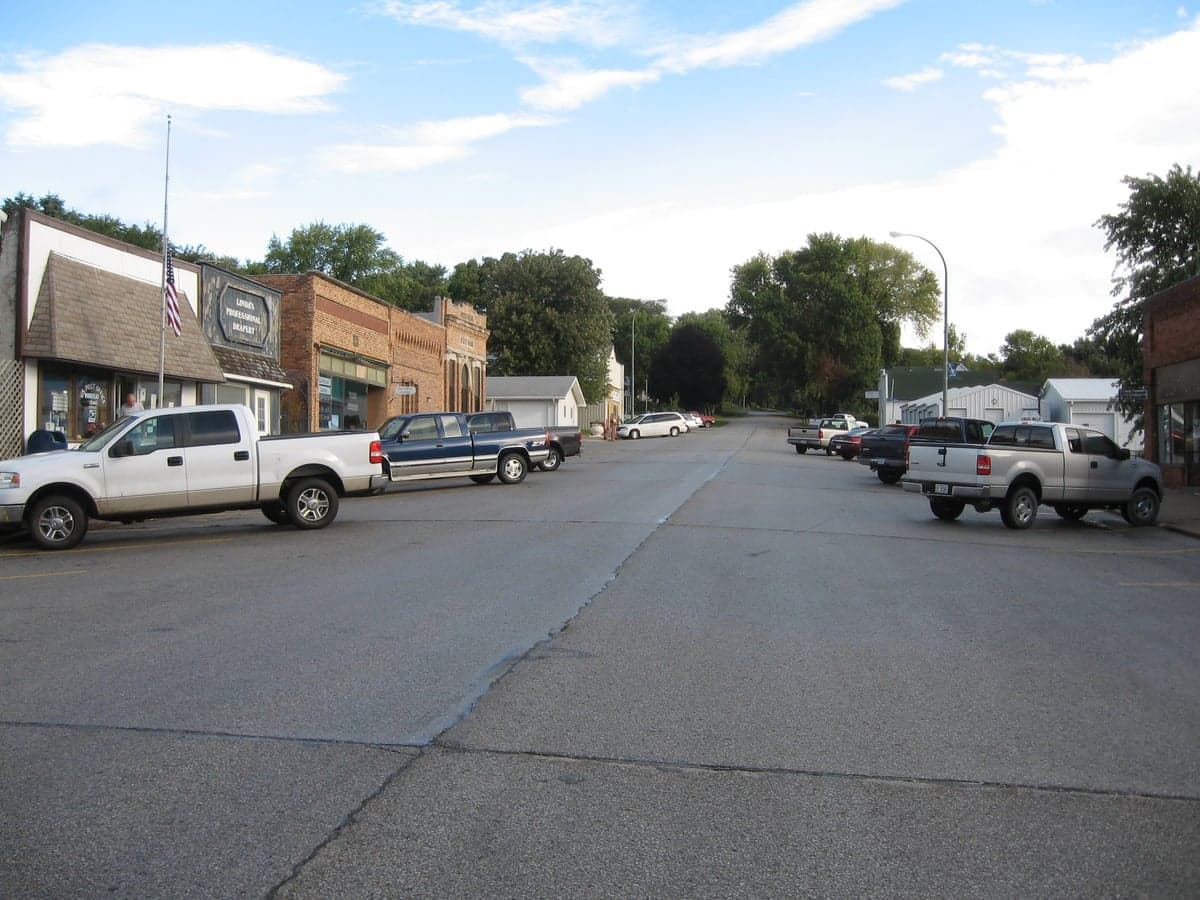
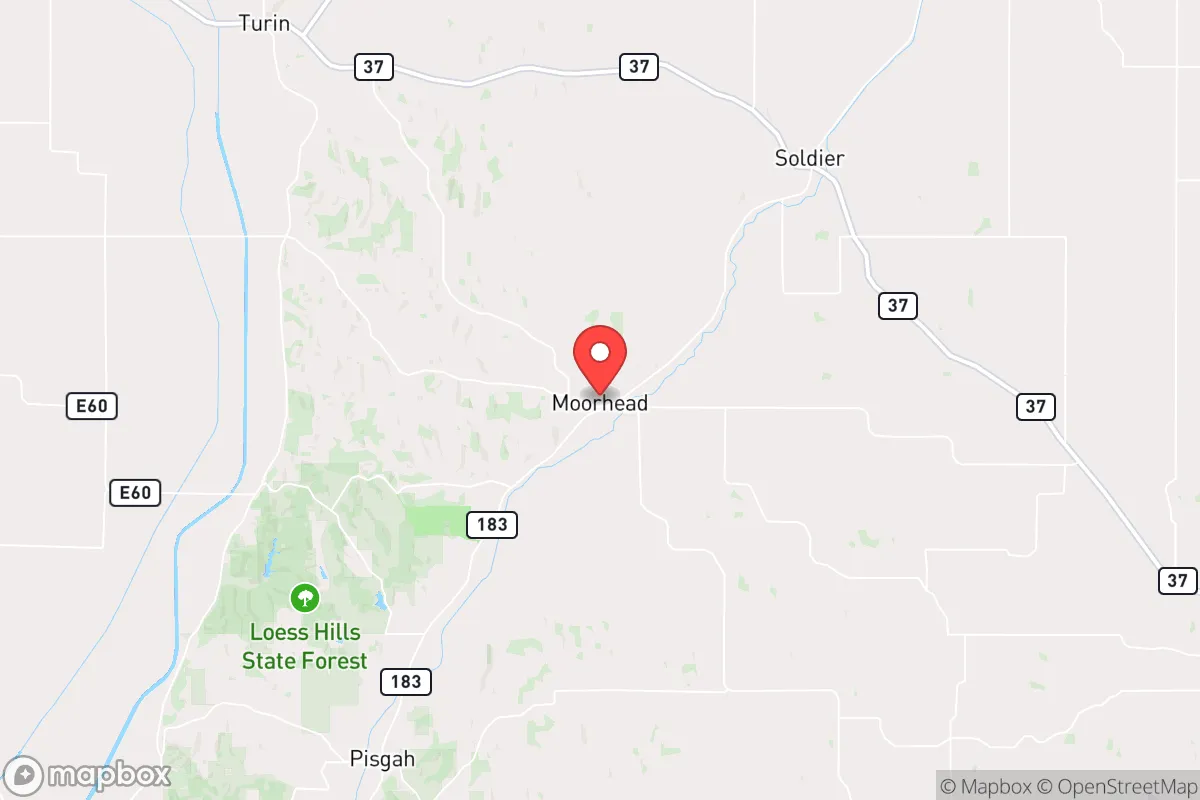
Photo: Wikipedia
Personal Sovereignty in Moorhead, IA
Viable for self-reliance. Generally workable, though some barriers may limit total independence.
What does Personal Sovereignty tell us?
Personal Sovereignty measures your capacity for self-reliance and independence with minimal government friction. Higher scores mean fewer barriers between you and the way you want to live... but it assumes you have the space you need and good neighbors.
What does this tell us?
Personal Sovereignty measures your capacity for self-reliance and independence with minimal government friction. Higher scores mean fewer barriers between you and the way you want to live... but it assumes you have the space you need and good neighbors.
State Policy
Energy independence: Importer (50% of energy produced in-state)
Personal Liberty
Homesteading

Personal Liberty Analysis
Moorhead, Iowa, offers a personal sovereignty environment that is among the most permissive in the Midwest, shaped by the state’s consistently low tax burden, minimal regulatory footprint, and strong protections for individual rights. For a relocation reader prioritizing autonomy and self-reliance, this small Monona County community sits within a state that ranks near the bottom nationally in both tax burden and regulatory activity, creating a baseline of freedom that is notably higher than in neighboring states like Minnesota or Illinois. The practical effect for residents is a daily life with fewer government-imposed constraints on property use, self-defense, and personal decision-making, though the trade-off includes limited local services and infrastructure that require a higher degree of self-sufficiency.
Tax burden and regulatory posture in Iowa’s low-cost environment
Iowa’s tax structure is among the most favorable for individuals seeking to keep more of their earnings and property. The state has a flat individual income tax rate of 3.8% as of 2026, down from a progressive top rate of 8.53% just a few years prior, following a series of phased reductions. Property taxes in Monona County are well below the national average, with effective rates typically ranging from 1.2% to 1.5% of assessed home value, and agricultural land is taxed at a preferential rate that benefits rural landowners. There is no state-level estate or inheritance tax, and the state sales tax is 6%, with no local option surcharges in Moorhead itself. The regulatory posture at the state level is consistently light-touch: Iowa has a right-to-work law, no state-level minimum wage above the federal $7.25, and a permitting environment for businesses that is among the fastest in the nation. For a resident of Moorhead, this means fewer layers of bureaucracy when starting a small farm, home-based business, or construction project compared to more regulated states. The county government’s role is primarily limited to road maintenance, law enforcement, and basic zoning, with no significant local ordinances that add to the state’s already minimal regulatory load.
Self-defense and gun law specifics in a constitutional carry state
Iowa is a constitutional carry state as of July 2021, meaning any law-abiding adult 21 or older can carry a concealed firearm without a permit. Moorhead residents enjoy the full scope of this law: no permit, no training, and no license required for either open or concealed carry. For those who want a permit for reciprocity when traveling, a non-expiring professional permit is available for a nominal fee, with no additional training requirement beyond a simple background check. The state has a strong Stand Your Ground law, codified in Iowa Code §704.1, which removes any duty to retreat before using deadly force in self-defense when lawfully present in any place. Castle Doctrine protections extend to homes, vehicles, and workplaces. There are no state-level magazine capacity restrictions, no assault weapon bans, and no firearm registration requirements. The only notable restrictions are a 3-day waiting period for handgun purchases (waived for permit holders) and a prohibition on carrying in certain locations like courthouses and schools. For the self-reliant individual, this legal framework provides maximum latitude for personal protection without government interference, and the local sheriff’s office in Monona County is known for a pro-Second Amendment stance in issuing permits for those who choose to obtain them.
Self-reliance and homesteading viability in rural Monona County
Moorhead’s rural character makes it highly viable for homesteading and off-grid living. Residential lots in town are typically 0.25 to 0.5 acres, while unincorporated county land can be purchased in parcels ranging from 1 to 40 acres at prices often below $3,000 per acre. Zoning in Monona County is minimal: there are no county-wide building codes for single-family homes, no permit requirements for fences or outbuildings under 200 square feet, and no restrictions on keeping chickens, goats, or other livestock on residential lots within the town limits. Off-grid feasibility is high: the county has no mandate to connect to municipal water or sewer for rural properties, and many residents rely on private wells and septic systems. Solar panel installation requires no county permit, and net metering is available through the local electric cooperative, though at a wholesale rate. Rainwater collection is unrestricted. The primary regulatory hurdle is the state’s requirement for a building permit for any new structure over 200 square feet, but enforcement is lax in rural areas. For a family seeking to grow food, raise animals, and reduce reliance on external systems, Moorhead offers one of the least restrictive environments in the Corn Belt, with the caveat that the short growing season (Zone 5a) and clay soils require careful planning.
Personal liberties: parental rights, medical autonomy, speech, and property
Iowa has enacted several laws that strengthen personal liberties in areas of concern to conservative-leaning individuals. Parental rights are explicitly protected under Iowa Code §280.20, which requires schools to notify parents of any medical or mental health services provided to students and to obtain parental consent for any non-emergency treatment. The state also has a Parents’ Bill of Rights that guarantees the right to direct a child’s education, medical care, and moral upbringing, and prohibits schools from withholding information about a child’s gender identity or sexual orientation from parents. On medical autonomy, Iowa has no state-level vaccine mandate for adults, and while childhood vaccines are required for school attendance, religious and medical exemptions are available with minimal paperwork. The state does not have a right-to-try law specifically, but it does allow terminally ill patients to access investigational treatments under federal expanded access programs. Free speech protections are robust: Iowa has no hate speech laws that criminalize expression, and the state’s public universities have been subject to litigation over free speech zones, resulting in a generally permissive environment for political and religious expression on public property. Property rights are strongly protected by Iowa’s eminent domain laws, which require just compensation and a demonstrated public use, and the state has no statewide rent control or landlord licensing schemes. For the property owner in Moorhead, this means the ability to use land for hunting, recreation, or business with minimal interference, and the county assessor’s office is responsive to appeals on property valuations.
Overall, Moorhead offers a level of personal sovereignty that ranks among the highest in the Midwest, comparable to rural areas in South Dakota or Nebraska, but with the added benefit of Iowa’s lower income tax and stronger parental rights laws. The combination of constitutional carry, minimal zoning, low taxes, and strong property rights creates an environment where self-reliant individuals and families can operate with few government-imposed constraints. The trade-off is that this freedom comes with limited local services—Moorhead has no hospital, no full-service grocery store, and no public transit—meaning that true autonomy here requires a willingness to drive 20-30 minutes for most needs and to handle many problems without institutional support. For the reader who values independence over convenience, this is a feature, not a bug.

* Values derived from national, state, county, city and local statistics and may differ in a specific area. Last updated: 2026-10-17T20:07:41.000Z
Narrative content on this page is AI-generated and may contain mistakes. Verify any details that matter before acting on them.
ReloMaps may earn a commission from affiliate links at no extra cost to you.

