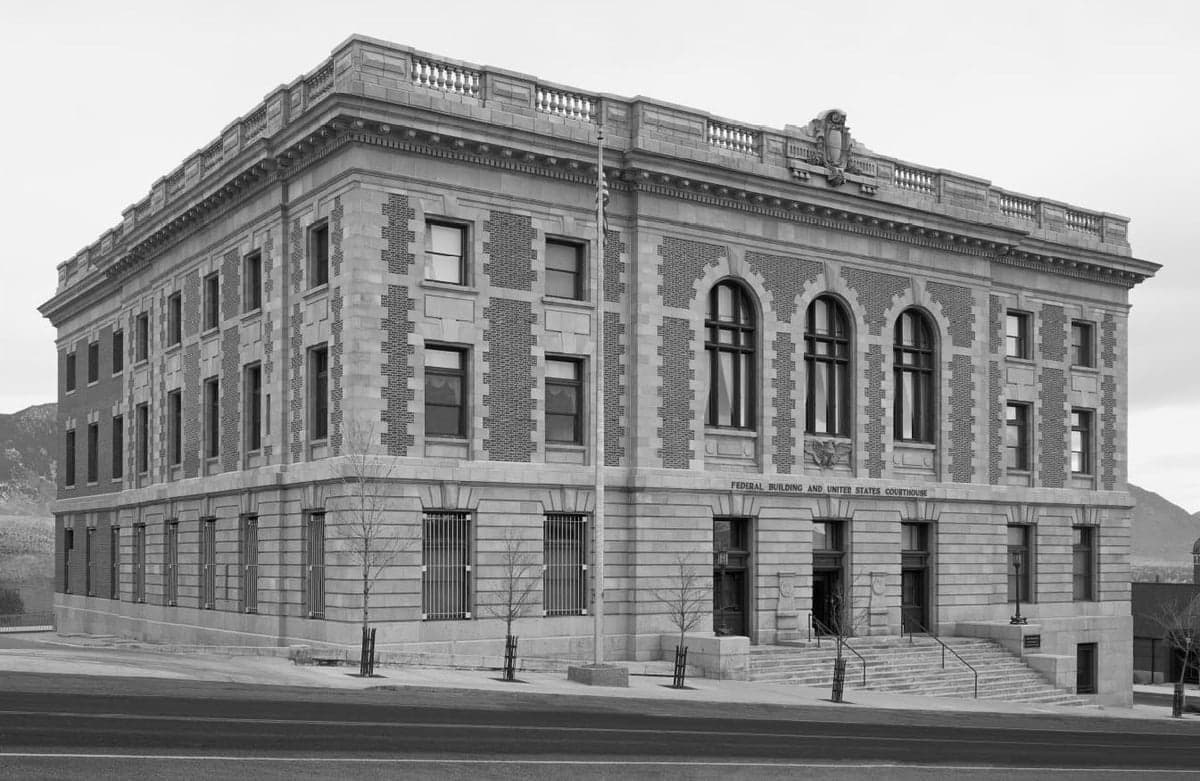
Photo: Wikipedia
Political ClimatePolitical Climate in Silver Bow County
Showing district-level results — no local-only data available.
Local Political AnalysisPolitical Analysis of Silver Bow County
Silver Bow County, anchored by the city of Butte, is a genuine political outlier in Montana. While the state as a whole carries a Cook PVI of R+10, Silver Bow County sits at R+5, making it significantly more competitive and Democratic-leaning than its surroundings. This isn't a recent shift; Butte's history as a union-heavy mining town has given it a stubborn blue streak that persists even as the rest of the state has moved decisively to the right. In the 2024 presidential race, the county voted for Donald Trump by a narrower margin than almost any other county in the state, a pattern that holds true down the ballot for state legislative races and local offices.
How it compares
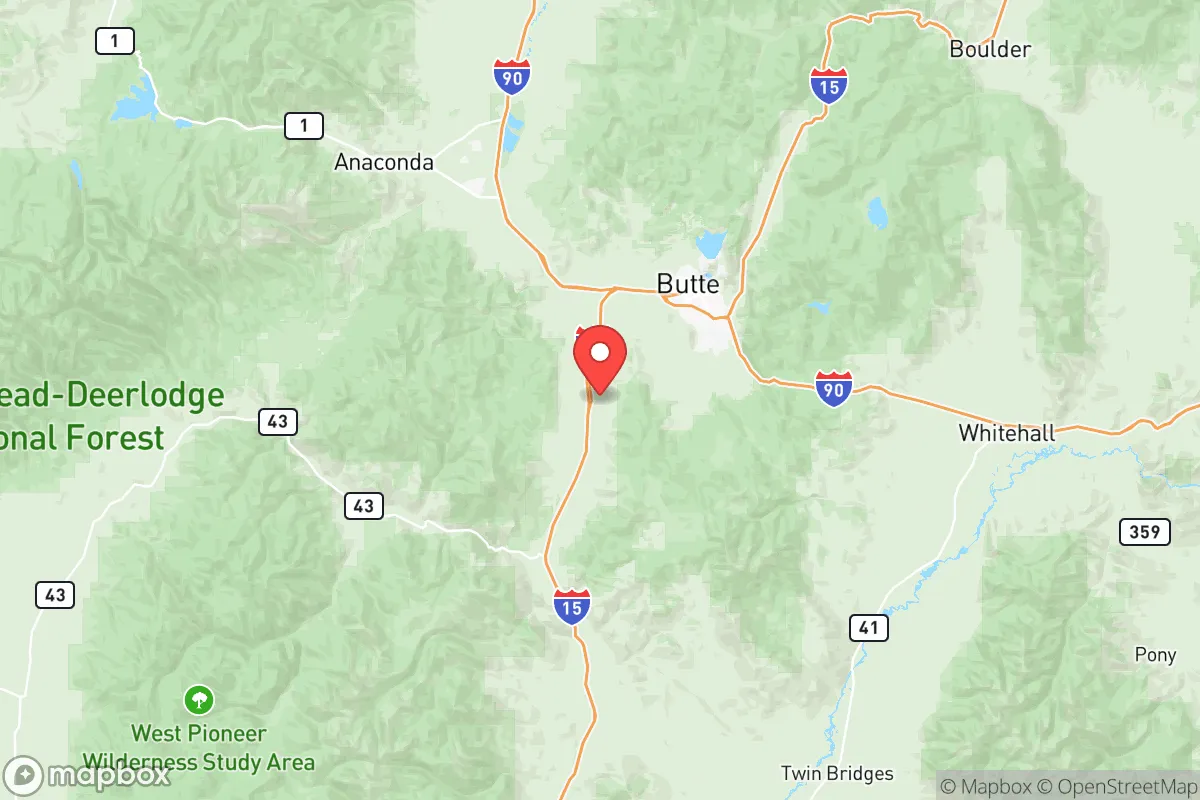
The difference between Silver Bow and the rest of Montana isn't subtle. In neighboring counties like Jefferson (R+18) or Deer Lodge (R+16), Republican candidates routinely win by 20 points or more. But in Silver Bow, the political map is split right down the middle. The city of Butte itself is the Democratic stronghold, with precincts around the old mining district and the Montana Tech campus regularly voting blue. Walkerville, a small town just north of Butte, leans even further left, often delivering some of the highest Democratic percentages in the county. In contrast, the rural areas outside Butte—places like the communities along the Big Hole River or the ranching country near Melrose—vote heavily Republican. The swing precincts are in the newer subdivisions on Butte's outskirts, where transplants from other states and younger families are making the races tighter. Statewide, Montana's R+10 rating reflects a broad, rural conservatism, but Silver Bow's R+5 is a reminder that the state's political identity isn't monolithic.
What this means for residents
For a conservative living in Silver Bow, you're in the minority in Butte proper but part of the majority in the county's rural precincts. You'll find plenty of like-minded neighbors in the county commission races, which often split along this urban-rural divide. For a liberal, Butte offers a rare pocket of political comfort in an otherwise red state. You can reliably find Democratic candidates on the ballot for county offices, and the local Democratic Party is active and organized. However, the practical effect of the county's lean is that state-level representation is a mixed bag. Silver Bow's state house and senate districts are among the few in Montana that regularly elect Democrats, meaning your voice in Helena is stronger than it would be in, say, Bozeman or Billings. But on national issues, the county's R+5 PVI means it's still a battleground—campaign ads for both parties air here, and your vote in a presidential race actually carries weight in a way it doesn't in deep-red counties.
Culturally, this political split creates a unique atmosphere. Butte's identity is proudly working-class and union-rooted, which translates into a strong sense of community and a "live and let live" attitude that often transcends party lines. You'll see Trump flags and Pride flags within blocks of each other, and people generally get along. The county's policy debates tend to focus on local issues—mining reclamation, water rights, and the future of the historic district—rather than the national culture wars. This isn't a place where politics dominates daily life; it's more of a quiet, pragmatic divide. For anyone moving here, the key takeaway is that Silver Bow offers a political middle ground that's increasingly rare in Montana, where you can find both conservative and liberal neighbors without the tension you might expect elsewhere in the state.

State Political ClimatePolitical Climate in Montana
State Political AnalysisPolitical Environment in the State
Montana is a solidly Republican state with a Cook PVI of R+10, but that number only tells part of the story. The state has been trending rightward for the past two decades, driven by a combination of rural cultural conservatism, an influx of new residents from blue states, and a growing libertarian streak that resists federal overreach. However, the political landscape is far from monolithic — the western mountain towns and the university hub of Missoula are reliably blue, while the eastern plains and smaller cities like Kalispell and Bozeman have become increasingly red. The result is a state where Republicans hold every statewide office and both U.S. Senate seats, but where local politics can feel like a tug-of-war between competing visions of what "Montana freedom" actually means.
Urban vs. rural divide
The political map of Montana is a study in contrasts. The state's largest city, Billings, leans Republican but is more moderate than the surrounding rural areas — think of it as a business-friendly, pragmatic conservative hub. Missoula, home to the University of Montana, is the state's most reliably Democratic city, with a strong progressive activist scene and a city council that has pushed for rent control and climate action. Bozeman has undergone a dramatic shift: once a sleepy college town, it's now a fast-growing tech and outdoor recreation hub that votes Republican, though its newcomers often bring a mix of libertarian and conservative values that differ from the traditional ranching culture. The rural eastern two-thirds of the state — places like Glendive, Miles City, and Havre — vote overwhelmingly Republican, often by margins of 70-80%. The western mountain counties, including Flathead County (Kalispell) and Ravalli County (Hamilton), have also become deeply red, fueled by an influx of conservative-leaning retirees and remote workers from California and Washington. The only reliably blue counties are Missoula, Silver Bow (Butte), and parts of the Blackfeet Nation in Glacier County. This urban-rural split means that statewide elections are decided by the rural vote, but local control varies dramatically — a relocator moving to Missoula will find a very different political environment than someone settling in Kalispell.
Policy environment
Montana's policy environment is defined by a strong preference for low taxes, limited regulation, and local control. The state has no sales tax, a flat income tax rate of 5.9% (recently reduced from 6.75%), and property taxes that are moderate compared to the national average. The regulatory posture is generally business-friendly, with minimal zoning restrictions outside of incorporated cities — a boon for those wanting to build or start a business. Education policy is a flashpoint: the state has a robust school choice movement, with a new education savings account program passed in 2023 that allows parents to use public funds for private or homeschool expenses. Healthcare is mixed — Montana expanded Medicaid under the Affordable Care Act in 2015, but the state also has some of the most restrictive abortion laws in the nation, with a near-total ban after 20 weeks and a 2023 law requiring parental consent for minors. Election laws are relatively straightforward: same-day voter registration is allowed, but voter ID is required. The state has no automatic mail-in voting, though absentee ballots are available without an excuse. For a conservative relocator, the tax and regulatory environment is a clear draw; for a liberal one, the social policies and limited public services may be a challenge.
Recent policy direction
The last five years have seen Montana move decisively in a conservative direction on multiple fronts. In 2021, the legislature passed a constitutional carry law allowing permitless concealed carry of firearms, and in 2023 it expanded self-defense protections with a "stand your ground" law that eliminates the duty to retreat. On education, the 2023 session passed a parental rights bill requiring schools to notify parents of any curriculum involving sexuality or gender identity, and a separate law banning transgender girls from participating in K-12 girls' sports. Medical freedom has been a hot topic: the state passed a law in 2021 prohibiting employers from mandating COVID-19 vaccines, and in 2023 it banned any future vaccine mandates for public employees. On privacy and surveillance, Montana passed one of the nation's strongest data privacy laws in 2023, giving residents the right to opt out of data collection and sue companies for violations. Property rights are strongly protected — the state has a "right to farm" constitutional amendment and limits on eminent domain. On voting, the legislature tightened absentee ballot rules in 2021, requiring a notarized signature or witness for mail ballots, though a court challenge is ongoing. The overall direction is toward maximizing individual liberty in the traditional conservative sense — gun rights, parental control, property rights — while limiting government intervention in private life. A relocator should note that this freedom comes with trade-offs: limited public transit, fewer social services, and a healthcare system that is stretched thin in rural areas.
Civil unrest & political movements
Montana has a long history of anti-government sentiment, but organized political movements have become more visible in recent years. The Yellowstone County area (Billings) has seen periodic protests over land use and federal grazing rights, with ranchers and environmentalists clashing over public lands management. In Missoula, progressive activists have organized large marches for abortion rights and climate action, while conservative groups have held counter-protests at the state capitol in Helena. Immigration politics are less heated than in border states, but there have been flashpoints over the state's small but growing immigrant population in meatpacking towns like Great Falls and Hardin, where local officials have debated sanctuary policies — though no Montana city has formally adopted one. Election integrity controversies flared after 2020, with Republican legislators pushing for audits and tighter rules, though no widespread fraud was ever documented. The most visible political movement is the Montana Freedom Caucus, a hardline conservative faction that has pushed for even more aggressive tax cuts, school choice expansion, and restrictions on federal land management. A new resident would notice the strong libertarian undercurrent — many Montanans view government at any level with suspicion, and local politics often revolve around property rights, gun access, and resistance to federal mandates.
Projection
Over the next 5-10 years, Montana is likely to become more conservative, but with a distinct flavor shaped by its new arrivals. The state is growing fast — population increased by nearly 10% between 2020 and 2024 — and most of those newcomers are coming from blue states like California, Washington, and Oregon. However, they are not uniformly liberal; many are conservative-leaning or libertarian, drawn by the low taxes and outdoor lifestyle. This influx is already shifting the political center of gravity: Gallatin County (Bozeman) and Flathead County (Kalispell) are becoming more Republican, while Missoula remains a blue island. The state's rural areas are depopulating, which could eventually dilute the Republican advantage, but for now, the rural vote still dominates. Expect continued battles over land use, as newcomers clash with longtime ranchers over development and water rights. The education savings account program will likely expand, and further restrictions on abortion and transgender rights are probable. The biggest wildcard is the federal government — Montana's economy is heavily tied to public lands and energy extraction, so shifts in federal policy on mining, logging, and grazing could reshape local politics. A relocator moving in now should expect a state that is solidly red but internally divided between traditional conservatives, libertarian newcomers, and a resilient progressive minority in the western cities.
For a new resident, the bottom line is this: Montana offers a political environment that is broadly conservative on taxes, guns, and education, but with significant local variation. If you're a conservative, you'll find a welcoming policy landscape and a growing community of like-minded transplants. If you're a liberal, you'll need to be comfortable being in the minority, though Missoula and parts of Bozeman offer progressive enclaves. The state's political trajectory is toward more individual liberty in the traditional sense, but with a libertarian edge that sometimes surprises — expect less government intrusion in your personal life, but also fewer public services and a "live and let live" attitude that can feel both freeing and isolating. The key is to choose your location carefully: the politics of Kalispell are not the politics of Missoula, and the difference will shape your daily experience more than the statewide lean.
* Values derived from national, state, county, city and local statistics and may differ in a specific area. Last updated: 2026-07-10T07:15:37.000Z
Narrative content on this page is AI-generated and may contain mistakes. Verify any details that matter before acting on them.
ReloMaps may earn a commission from affiliate links at no extra cost to you.

