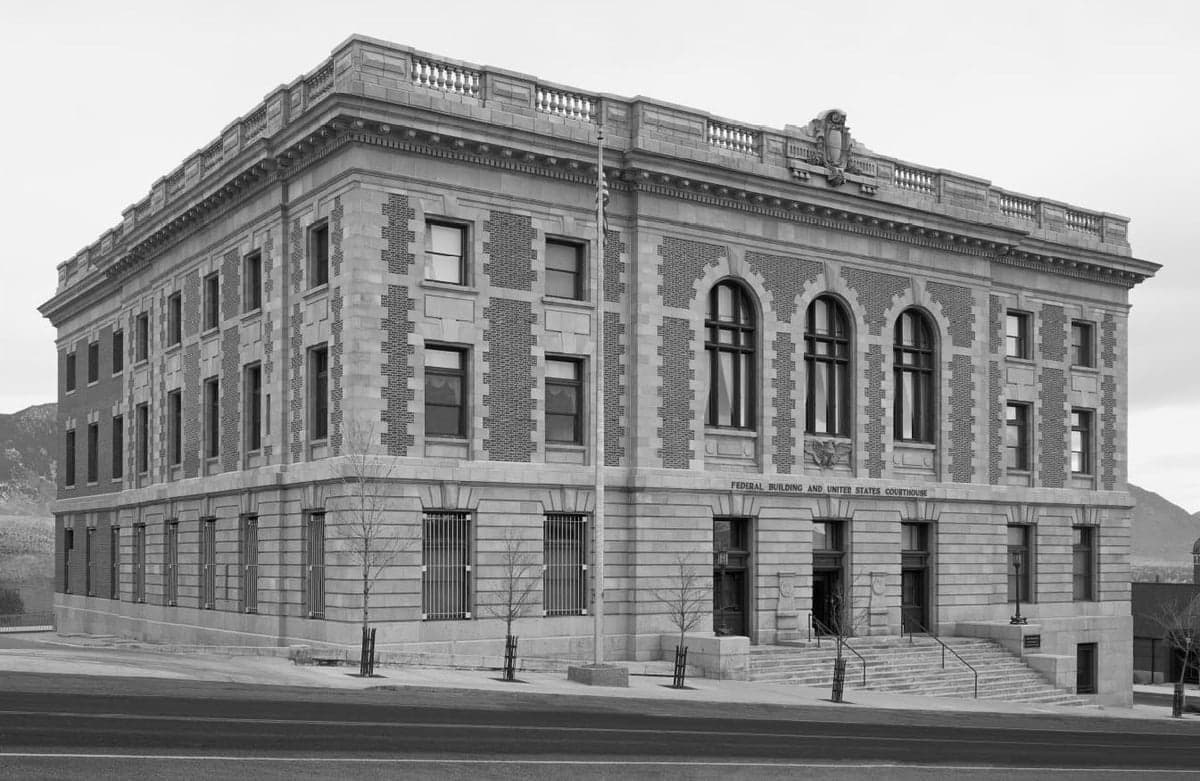
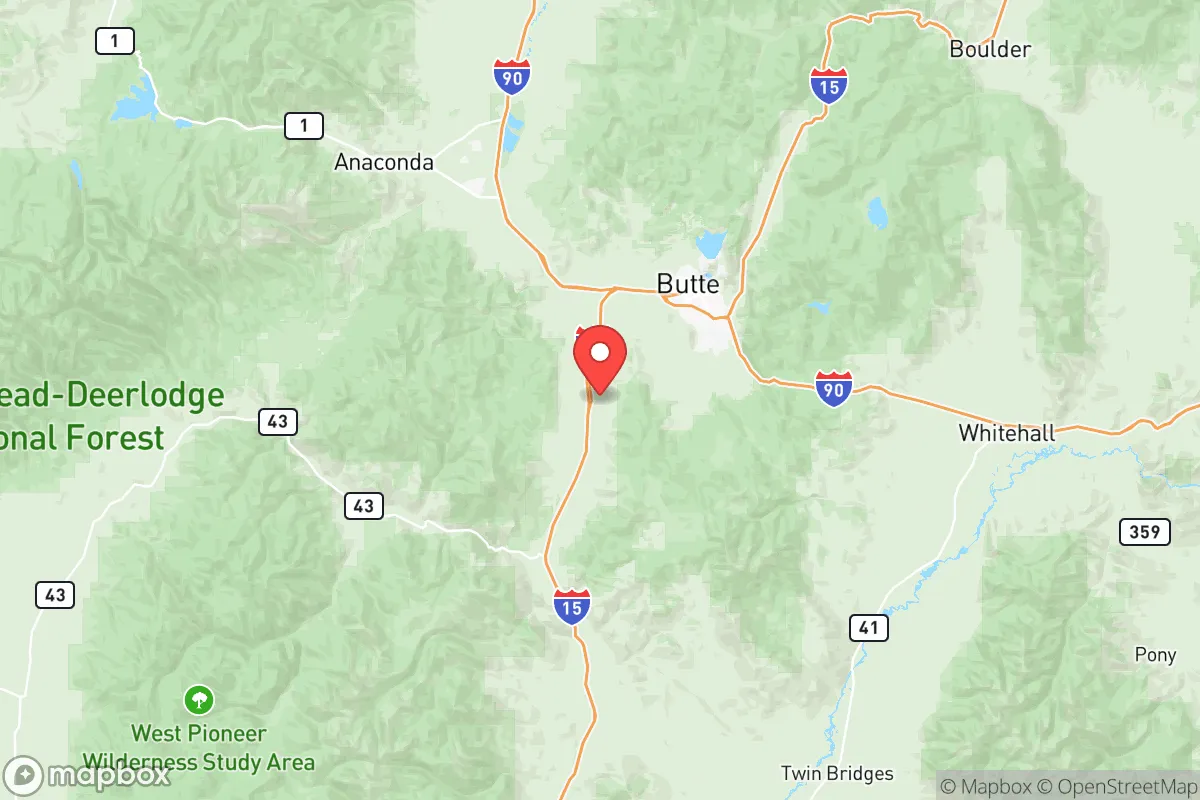
Photo: Wikipedia
Demographics of Silver Bow County
Affluence Level in Silver Bow County
A below-average socioeconomic profile. Incomes, home values, and educational attainment trail the U.S., with higher poverty and unemployment.
People of Silver Bow County
The people of Silver Bow County, Montana, are overwhelmingly white and native-born, a population shaped by a century of hard-rock mining, labor struggles, and a distinctly Irish-Catholic and Eastern European cultural imprint that remains visible today. With 35,589 residents, the county is anchored by the city of Butte, a historic mining camp that once rivaled San Francisco in wealth and diversity, but today is one of the least ethnically diverse counties in the nation—89.3% white, 4.6% Hispanic, and a foreign-born share of just 0.8%. The county’s identity is fiercely local, working-class, and rooted in a sense of place that outsiders often find both insular and welcoming, a paradox born from generations of shared hardship underground.
Settlement & growth (pre-1960)
Long before European settlers arrived, the area now known as Silver Bow County was seasonal hunting and gathering territory for several Native nations, including the Salish, Kootenai, and Shoshone. The Bitterroot Salish used the upper Clark Fork River valley for summer camps and buffalo jumps, but no permanent villages existed within the county’s boundaries. The first recorded non-Native presence came with the Lewis and Clark Expedition in 1805, but sustained settlement did not begin until the discovery of placer gold in Silver Bow Creek in 1864. That strike drew a flood of prospectors, and the town of Butte was founded the same year, quickly becoming a rough-and-tumble mining camp.
The real transformation came with the shift from placer gold to hard-rock silver and copper mining in the 1870s and 1880s. The Anaconda Copper Mining Company, formed in 1881, turned Butte into the "Richest Hill on Earth," and the demand for labor pulled in a massive wave of immigrants. Irish immigrants arrived first, dominating the mining workforce and the city’s politics; by 1900, Butte had one of the highest concentrations of Irish-born residents of any U.S. city. They were followed by Cornish miners (known as "Cousin Jacks"), who brought deep-shaft mining expertise, and then by Italians, Finns, Serbs, Croats, and Slovenes, each group clustering in distinct neighborhoods. The Irish settled around Dublin Gulch and the East Side; the Italians concentrated in Meaderville and McQueen; the Finns and Slavs formed enclaves in Walkerville and Centerville. These neighborhoods were not just residential—they had their own churches, saloons, and mutual-aid societies, creating a patchwork of ethnic identity that persisted for decades.
By the 1910s, Butte’s population peaked at over 60,000, making it the largest city between Minneapolis and Seattle. The workforce was overwhelmingly male, transient, and prone to labor radicalism; the Industrial Workers of the World (IWW) organized the 1914 miners’ strike, and the 1917 Speculator Mine disaster—the deadliest hard-rock mining accident in U.S. history—killed 168 men. The Great Depression and the decline of copper demand after World War II triggered a long population slide. The Anaconda Company began scaling back operations in the 1950s, and the 1959 closure of the Kelley Mine, the last major underground operation, marked the end of the era. By 1960, the county’s population had fallen to roughly 46,000, and the ethnic neighborhoods that had defined Butte were already thinning out as younger generations left for jobs elsewhere.
Modern era (post-1965)
The 1965 Hart-Cellar Act had almost no effect on Silver Bow County. The county’s foreign-born population today is just 0.8%, and the overwhelming majority of those are Canadian or European retirees, not new immigrants from Asia or Latin America. The county did not participate in the post-1965 immigration waves that transformed other parts of Montana, such as the Hmong refugee settlement in Missoula or the growing Hispanic population in the state’s agricultural counties. Instead, the demographic story of the past 60 years has been one of out-migration and aging.
From the 1960s through the 1990s, Silver Bow County lost roughly one-third of its population as the mining economy contracted. The Anaconda Company’s 1983 closure of the Berkeley Pit, an open-pit copper mine that had operated since 1955, eliminated the last major industrial employer. Young adults left for Billings, Denver, and Seattle; the county’s median age rose steadily. The Hispanic population, now 4.6%, grew slowly through natural increase and a small number of Mexican-American families who moved in for construction and service jobs during the 1990s mining reclamation projects, but they remain dispersed rather than concentrated in any single neighborhood. The tiny Asian population (0.3%) is mostly Chinese-American families who own restaurants in Butte, a legacy of the city’s 19th-century Chinatown, which was demolished in the 1920s.
Suburbanization within the county has been minimal. The only incorporated town besides Butte is Walkerville, a former mining camp on the hill north of Butte that never grew beyond a few hundred residents. Most new housing since 2000 has been built on the outskirts of Butte itself, in areas like Rocker and Ramsay, but these are low-density subdivisions, not suburban sprawl. The county remains overwhelmingly rural and small-town in character, with no significant exurban development from Bozeman or Missoula, which are both over 100 miles away.
The future
Silver Bow County’s population has stabilized in the 35,000–36,000 range since 2010, and projections suggest a slow decline over the next 20 years as the population ages and out-migration continues. The county’s birth rate is below replacement, and in-migration is limited to a small number of remote workers and retirees attracted by low housing costs—the median home price in Butte is roughly half that of Bozeman. The county is not becoming more diverse; the white share has actually increased slightly since 2000 as the small Hispanic and Asian populations have not grown fast enough to offset the departure of younger, more diverse residents. The foreign-born share is likely to remain below 1% for the foreseeable future.
Culturally, the county is evolving in subtle ways. The old ethnic identities—Irish, Italian, Slavic—are fading into a generalized "Butte pride" that emphasizes the mining heritage and the annual St. Patrick’s Day parade, which remains the largest in Montana. The Catholic Church, once the dominant institution, has seen declining attendance, and the county’s political leanings have shifted from reliably Democratic (a legacy of the union era) to a more competitive mix; Silver Bow County voted for Donald Trump in 2020 and 2024, though by narrower margins than the rest of the state. The biggest wild card is the potential for a new mining boom—the Butte Highlands gold project and the Continental Pit copper-molybdenum operation could bring hundreds of jobs and a modest influx of workers, but these projects face regulatory hurdles and local opposition over environmental concerns.
What Silver Bow County is becoming is a quieter, older, and more insular version of its mining-era self—a place where the past is deeply felt but the future is uncertain. For someone moving in now, the appeal is low cost of living, strong community ties, and a tangible sense of history, but the trade-offs are limited economic opportunity, a shrinking job market, and a population that is not growing or diversifying. The county will likely remain a white, native-born, working-class enclave for at least another generation, with the same character—proud, stubborn, and slightly faded—that has defined it since the last mine closed.

* Values derived from national, state, county, city and local statistics and may differ in a specific area. Last updated: 2026-07-10T07:15:37.000Z
Narrative content on this page is AI-generated and may contain mistakes. Verify any details that matter before acting on them.
ReloMaps may earn a commission from affiliate links at no extra cost to you.

