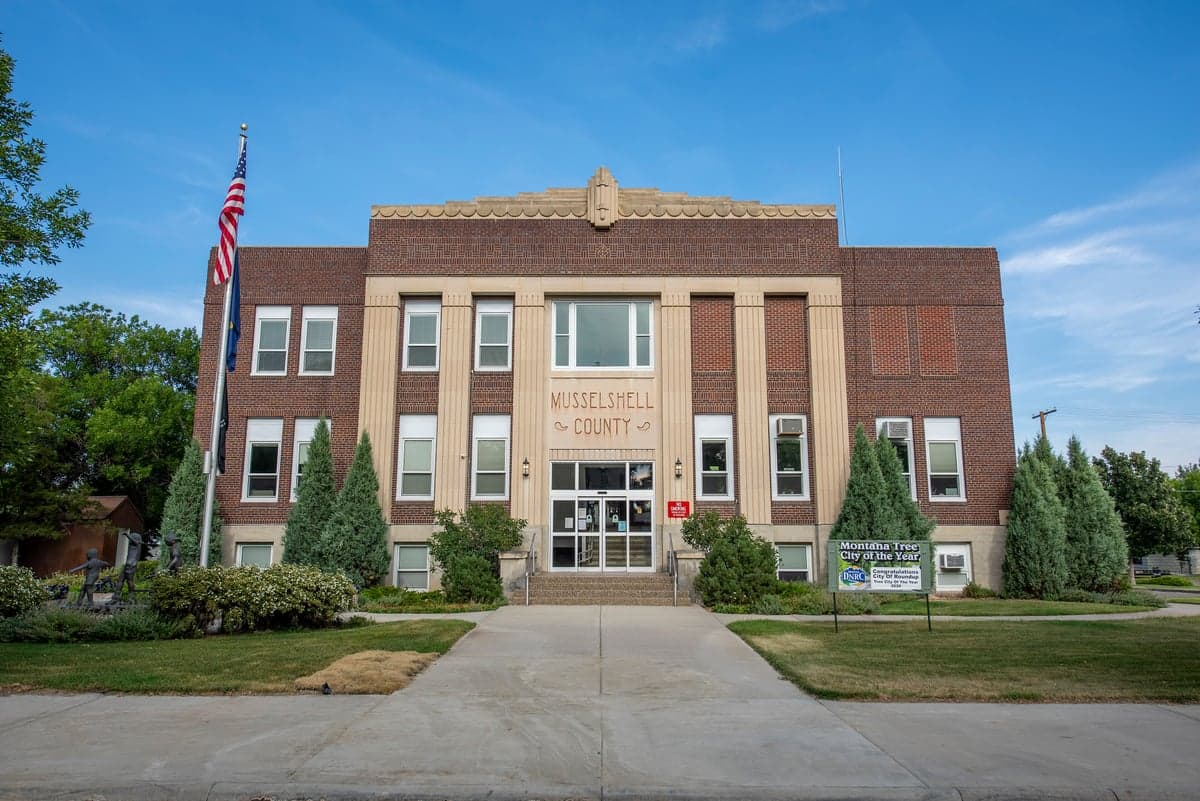
Photo: Wikipedia
Political ClimatePolitical Climate in Musselshell County
Showing district-level results — no local-only data available.
Local Political AnalysisPolitical Analysis of Musselshell County
Musselshell County is a reliably Republican stronghold, carrying a Cook Partisan Voting Index (PVI) of R+15, which makes it significantly more conservative than the state of Montana as a whole (R+10). This isn't a recent shift; the county has voted for the GOP presidential candidate by wide margins for decades, with the 2024 election seeing a roughly 40-point spread between the Republican and Democratic candidates. The political center of gravity here is firmly right of center, and that's unlikely to change in the near term given the county's demographic and economic makeup.
How it compares
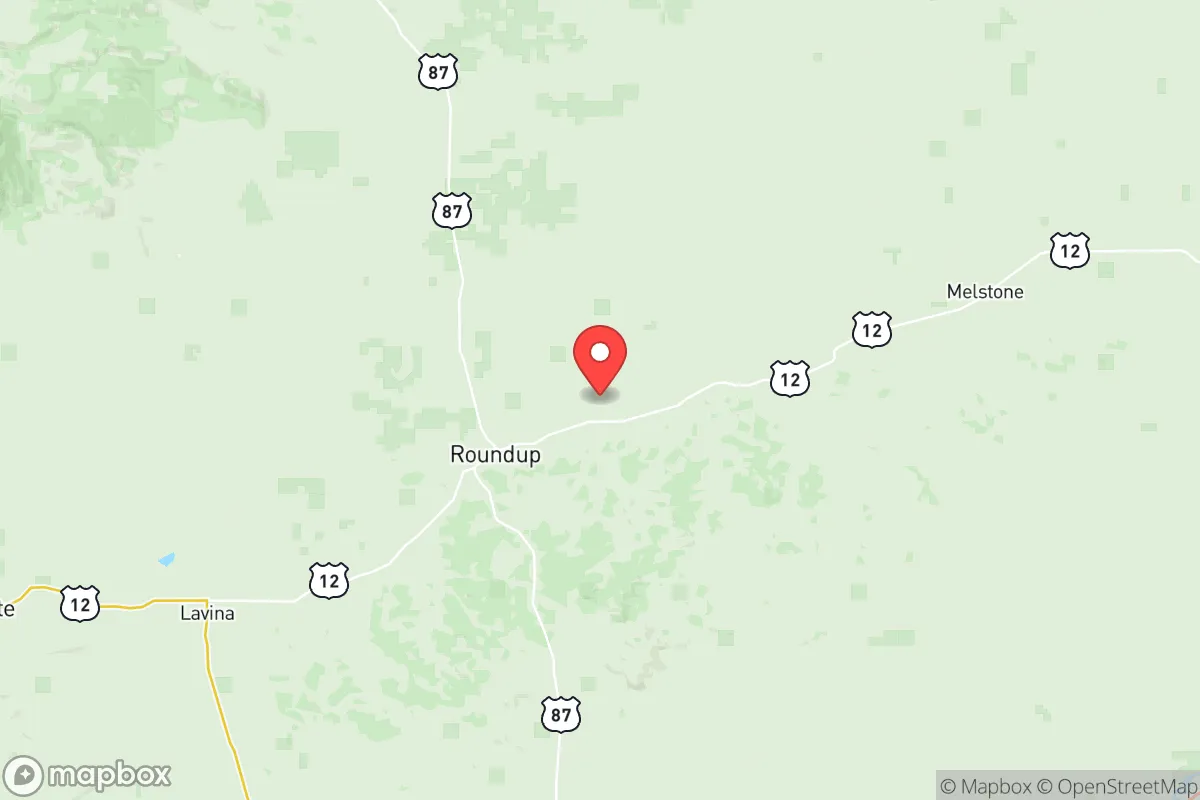
The R+15 rating places Musselshell County among the more conservative rural counties in Montana, but it's not an outlier. The key difference from the state's R+10 average is the lack of any significant blue-leaning population centers within the county. While Montana's overall PVI is moderated by liberal strongholds like Missoula and Bozeman, Musselshell County has no such counterweight. The county seat, Roundup, is the largest town and votes heavily Republican, often delivering margins of 70% or more for GOP candidates. Smaller communities like Musselshell and Melstone are even more conservative, with precincts that can exceed 80% Republican. There are no towns that lean blue; the closest thing to a swing precinct might be a few scattered rural areas around the county's edges, but even those consistently break for the GOP by double digits. This uniformity means the county's political climate is more monolithic than the state's, with less internal ideological friction.
What this means for residents
For conservative residents, the political climate is deeply affirming. Local government, school boards, and county commissions are reliably aligned with their values, and there's little need to engage in political organizing to see their views represented. Policy debates tend to focus on issues like property rights, energy development (particularly coal and oil), and agricultural regulations, all of which are approached from a limited-government perspective. For liberal or moderate residents, the reality is more isolating. They are a distinct minority, and their political views are rarely reflected in local leadership or public discourse. This can lead to a sense of being out of step with the community, though it rarely results in open conflict—most people simply avoid political topics in casual conversation. The practical effect is that national political trends have less immediate impact here; local elections are often decided in the primary, and the general election is a formality.
Culturally, the county's politics are intertwined with its identity as a working-class, resource-extraction and agricultural area. There's a strong emphasis on self-reliance and a skepticism of federal oversight, particularly regarding land management and environmental regulations. This isn't a place where you'll find many yard signs for third-party candidates or active grassroots movements on the left. The dominant political culture is one of pragmatic conservatism, where the focus is on local issues like maintaining rural roads, supporting the local hospital, and keeping taxes low. While the county's deep red hue might seem extreme to outsiders, for those who live here, it's simply the natural order of things—a reflection of a community that values tradition, independence, and a steady hand in governance.

State Political ClimatePolitical Climate in Montana
State Political AnalysisPolitical Environment in the State
Montana has been a reliably Republican state for decades, with a Cook Partisan Voting Index of R+10, meaning it votes about 10 points more Republican than the national average. The dominant coalition is a mix of rural conservatives, libertarian-leaning ranchers, and a growing number of conservative transplants from California and the Pacific Northwest. Over the last 10-20 years, the state has shifted rightward in statewide elections, driven by in-migration to places like Bozeman and Kalispell, even as the old Democratic strongholds in Butte and the Hi-Line have shrunk. The last Democrat to win a statewide federal race was Jon Tester in 2018, and the state’s two U.S. House seats and both Senate seats are now held by Republicans.
Urban vs. rural divide
The political map breaks down sharply between the fast-growing, amenity-rich mountain towns and the rest of the state. The largest metro area, Billings (Yellowstone County), leans Republican but is more moderate than the rural hinterlands, often splitting tickets in local races. Missoula County is the state’s most reliable Democratic stronghold, driven by the University of Montana and a younger, more progressive population; it regularly votes 15-20 points more Democratic than the state average. Bozeman (Gallatin County) was a swing county as recently as 2012 but has trended right as wealthy, conservative-leaning newcomers have poured in—it voted for Trump by 8 points in 2024. The rural plains counties, like Phillips, Garfield, and McCone, routinely vote 80%+ Republican. The Flathead Valley, anchored by Kalispell and Whitefish, is a mixed bag: Whitefish is a liberal enclave, while the surrounding county is deeply red. The old mining towns of Butte and Anaconda have shifted from solidly Democratic to competitive, with many working-class voters now backing Republicans on cultural and gun-rights issues.
Policy environment
Montana’s policy environment is shaped by a strong libertarian streak and a suspicion of federal overreach. The state has no sales tax, a low flat income tax (recently cut to 5.9%), and property taxes that are moderate by national standards. Regulatory posture is light—permitting for new homes or businesses is generally faster than in coastal states. Education policy is locally controlled, with school choice limited to charter schools and a growing homeschool population; the state does not have a voucher program. Healthcare is a mixed bag: Montana expanded Medicaid under the ACA, but the program faces annual reauthorization fights. Election laws are moderately restrictive—voter ID is required, same-day registration is allowed, and mail-in voting is universal for all active voters. The state has no “stand your ground” law, but it has a strong castle doctrine and permits open carry without a license. Gun laws are among the most permissive in the nation: no permit needed to carry concealed, no waiting periods, and no magazine capacity limits.
Recent policy direction
The last five years have seen a clear conservative push on multiple fronts. In 2021, the legislature passed a near-total abortion ban (triggered by Dobbs), which now prohibits abortion at all stages with narrow exceptions. Parental rights in education were strengthened with a 2023 law requiring schools to notify parents of any curriculum involving “sexuality” and allowing parents to opt their children out. Gun rights were expanded in 2021 with a law preempting local gun ordinances and allowing firearms on college campuses. On property rights, the state passed a 2023 law limiting the ability of homeowners’ associations to restrict solar panels and short-term rentals. Privacy and surveillance saw a 2023 law restricting the use of facial recognition technology by law enforcement without a warrant. Voting access was tightened slightly in 2021 with a law requiring a photo ID for absentee ballots, though same-day registration remains. On taxes, the 2023 session cut the top income tax rate from 6.75% to 5.9% and expanded the earned income tax credit. The state also passed a 2022 law banning transgender girls from participating in K-12 girls’ sports, and a 2023 law banning gender-affirming care for minors.
Civil unrest & political movements
Montana has seen relatively little large-scale civil unrest compared to coastal states, but there are active movements on both sides. The Yellowstone County Republican Party has been a flashpoint for internal faction fights between establishment conservatives and more populist, Trump-aligned activists. On the left, the Montana Human Rights Network and Indivisible chapters in Missoula and Bozeman organize regular protests on abortion rights and climate issues. Immigration politics are less heated than in border states, but the 2023 legislature passed a law requiring local law enforcement to cooperate with ICE, and there are no sanctuary cities. Secession or nullification rhetoric is rare but surfaces occasionally in rural counties over federal land management—Montana is 30% federally owned, and disputes over grazing, logging, and mining rights are perennial. Election integrity controversies flared after 2020, with a GOP-led audit of the 2020 election in several counties that found no evidence of widespread fraud, but the issue remains a rallying point for conservative activists. A visible flashpoint for newcomers is the tension between long-time residents and wealthy out-of-state buyers, which has fueled local ballot measures in places like Bozeman and Whitefish to limit short-term rentals and slow growth.
Projection
Over the next 5-10 years, Montana is likely to become more Republican at the state level, but the nature of that Republicanism may shift. In-migration from California, Washington, and Oregon is bringing a mix of conservative and liberal newcomers, but the net effect so far has been to boost GOP margins in fast-growing counties like Gallatin and Flathead. The Democratic Party’s base is increasingly concentrated in Missoula and a few college towns, making it harder for them to win statewide. The state’s aging population and low birth rate mean that growth will continue to come from migration, which tends to be wealthier and more conservative. Expect continued fights over land use, property taxes, and school funding as the state grows. The abortion ban is likely to remain in place, but ballot initiatives to protect access could emerge if the legislature doesn’t moderate. Gun laws will likely stay permissive, and the state may move toward a flat income tax or even a consumption tax. Someone moving in now should expect a state that is culturally conservative, fiscally cautious, and increasingly shaped by the tension between long-time locals and newcomers.
For a new resident, the bottom line is that Montana offers a deeply conservative political environment with strong protections for gun rights, low taxes, and a light regulatory touch, but also a growing progressive minority concentrated in Missoula and Bozeman. If you value individual liberty, limited government, and a rural lifestyle, you’ll find a lot to like. If you’re more liberal, you’ll find a small but active community in the college towns, but you’ll be swimming against the current in statewide elections. The state’s trajectory is toward more conservative governance, but with enough internal friction to keep things interesting.
* Values derived from national, state, county, city and local statistics and may differ in a specific area. Last updated: 2026-06-17T06:00:25.000Z
Narrative content on this page is AI-generated and may contain mistakes. Verify any details that matter before acting on them.
ReloMaps may earn a commission from affiliate links at no extra cost to you.

