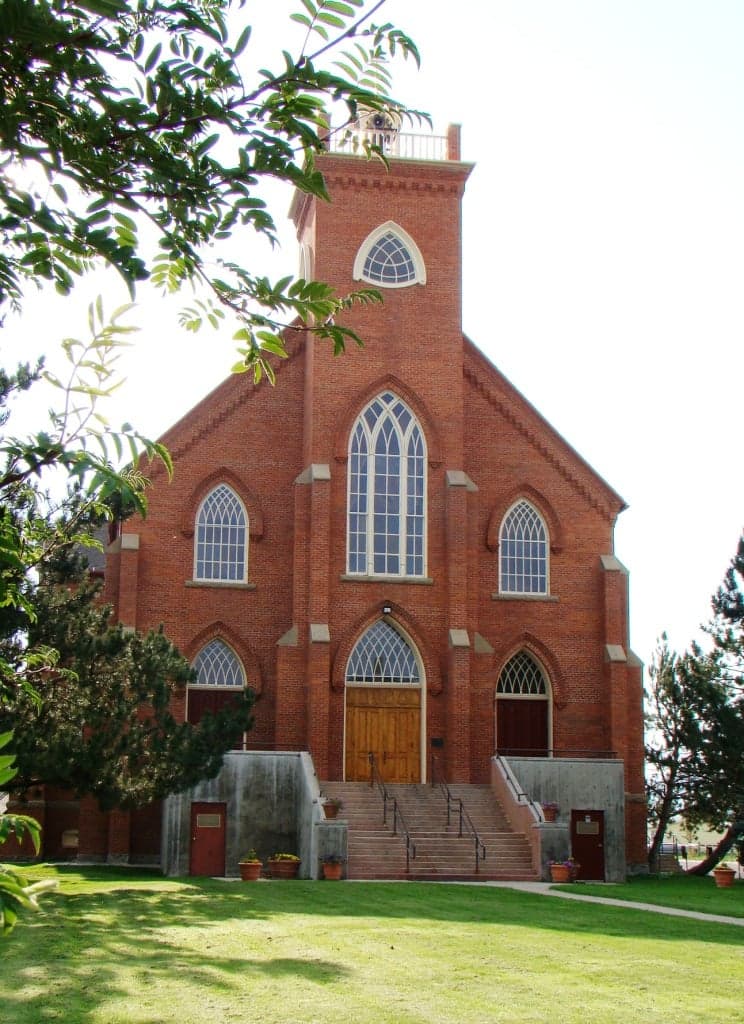
Photo: Wikipedia
Political ClimatePolitical Climate in Lake County
Showing district-level results — no local-only data available.
Local Political AnalysisPolitical Analysis of Lake County
Lake County, Montana, is a political outlier in the state, leaning Republican but with a Cook PVI of R+5, which is significantly more moderate than the surrounding state of Montana’s R+10 rating. This means the county is about 5 points more Democratic than the state average, a gap driven largely by the presence of the Confederated Salish and Kootenai Tribes (CSKT) and the Flathead Reservation, which covers most of the county. In practice, this creates a real split: the county has voted for the Republican presidential candidate in every election since 2000, but by margins that are often half of what you see in neighboring Lake County, MT. The trajectory is subtle—while the state has lurched rightward over the past decade, Lake County has held relatively steady, with Democratic candidates sometimes pulling 45-48% of the vote in countywide races, a feat almost unheard of in the rest of the state.
How it compares
Compared to Montana as a whole, Lake County is a blue island in a red sea. The state’s R+10 PVI reflects a deep Republican dominance in rural areas like the Hi-Line and eastern Montana, where margins can hit 70-80% for GOP candidates. In Lake County, the political geography is more nuanced. The town of Polson, the county seat, leans Republican but has swing precincts—especially around the hospital and the lakefront—where independent voters can tip a race. Ronan and St. Ignatius, both with large Native American populations, are reliably Democratic, often voting 60-65% for Democratic candidates. Meanwhile, Dayton and Elmo, smaller lakeside communities, are more conservative, driven by a mix of retirees and second-home owners from out of state. The key difference is that in most of Montana, a Republican primary is the only contest that matters; in Lake County, general elections are genuinely competitive, with the Democratic base on the reservation and in Polson’s working-class neighborhoods providing a counterweight to the rural GOP vote.
What this means for residents
For conservative residents, Lake County is a comfortable place to live, but not a lock. You can expect Republican candidates to win most countywide offices—sheriff, county commissioner, state legislative seats—but the margins are tight enough that you can’t take anything for granted. The local GOP is active, with strong turnout in precincts like Pablo and Charlo, but they have to work for it. For liberal residents, the county offers a rare refuge in Montana where your vote actually matters. You can find like-minded neighbors in Polson’s downtown core or around the tribal college in Pablo, and local Democratic clubs are small but engaged. The practical reality is that policy leans conservative—taxes are low, gun laws are permissive, and the county commission is Republican-controlled—but the tribal government’s influence on land use, natural resources, and law enforcement creates a unique dual-power structure that moderates some of the state’s hard-right tendencies. For example, the CSKT’s strong stance on water rights and environmental protection often clashes with state-level Republican priorities, giving liberal residents a powerful institutional ally.
Culturally, Lake County is distinct from the rest of Montana. The reservation’s presence means that issues like tribal sovereignty, land management, and cultural preservation are front and center in a way they aren’t in, say, Billings or Bozeman. You’ll see more bilingual signs (Salish and English), and the annual Arlee Celebration is a major event that draws people from across the political spectrum. The policy distinction is real: while the state legislature in Helena pushes for more state control over public lands and water, Lake County residents live with a patchwork of tribal, county, and federal jurisdiction that forces compromise. For a conservative, this can be frustrating—tribal police have their own authority, and the CSKT’s environmental regulations can feel like an extra layer of bureaucracy. For a liberal, it’s a welcome check on state power. Either way, the county’s political climate is less about red vs. blue and more about navigating a unique, place-based balance that you won’t find anywhere else in Montana.

State Political ClimatePolitical Climate in Montana
State Political AnalysisPolitical Environment in the State
Montana is a solidly Republican state with a Cook PVI of R+10, but that number doesn't tell the full story of a place that's been shifting rightward over the last decade while also seeing a surge of new residents from blue states. The dominant coalition is a mix of rural conservatives, libertarian-leaning ranchers, and a growing number of out-of-state transplants, many of whom are drawn by low taxes and wide-open spaces but bring more moderate or even left-leaning views on certain social issues. Over the past 20 years, the state has gone from a competitive purple battleground—it voted for Clinton in 1992 and split tickets regularly—to a reliably red stronghold, with Donald Trump winning by 16 points in 2020 and 20 points in 2024, a trend that shows no sign of reversing.
Urban vs. rural divide
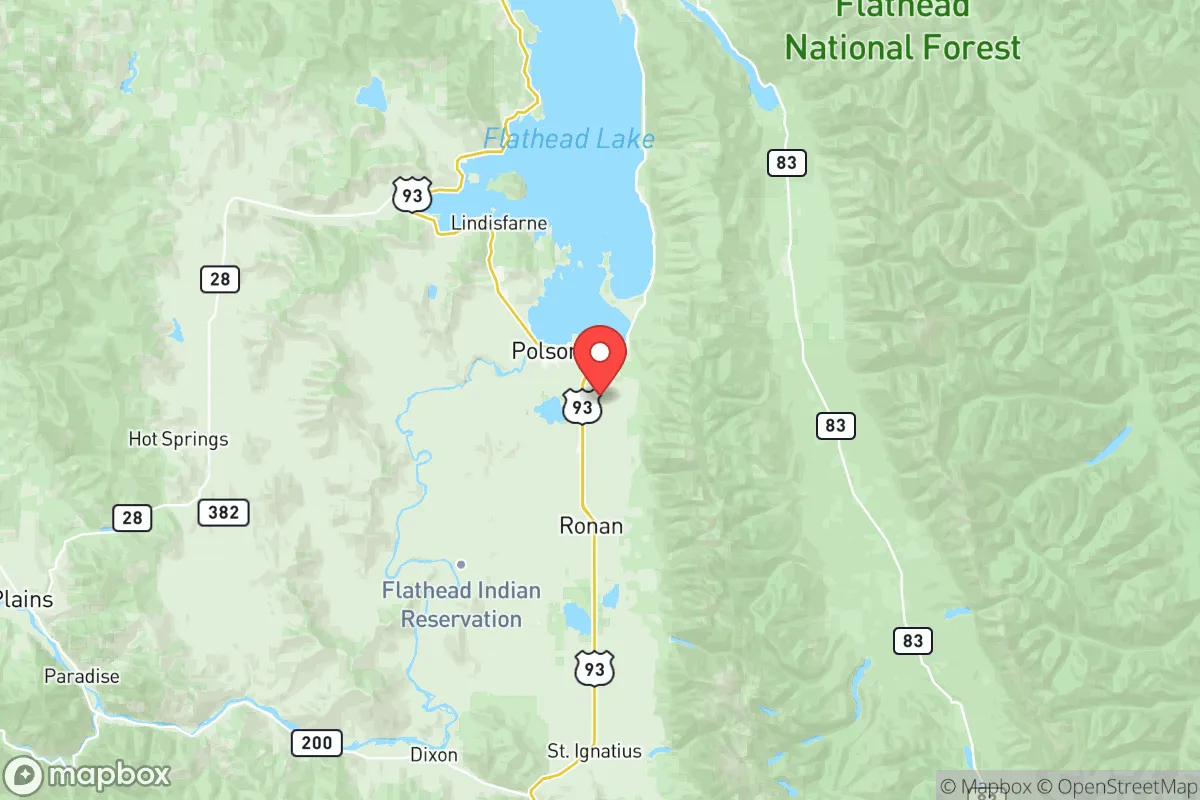
The political map of Montana is a textbook case of the urban-rural split. The state's two population centers, Billings and Missoula, anchor opposite ends of the spectrum. Billings, the largest city, leans Republican but is more moderate than the surrounding countryside, with a strong business and energy sector that keeps it reliably red. Missoula, home to the University of Montana, is the state's liberal stronghold—it voted for Biden by 20 points in 2020 and is the epicenter of environmental activism and progressive organizing. Bozeman and Kalispell are the wild cards: both have exploded in population due to in-migration, and while they lean Republican overall, the influx of remote workers and outdoor enthusiasts from California and the Pacific Northwest has created a noticeable libertarian streak—pro-gun, pro-property rights, but skeptical of the GOP on environmental and social issues. The rural counties, like Phillips County in the northeast and Beaverhead County in the southwest, routinely vote 80%+ Republican, while the state's Native American reservations, such as the Flathead Reservation near Polson, are reliably Democratic. The key battleground is the suburban fringe around Helena and Great Falls, where moderate voters often decide state legislative races.
Policy environment
Montana's policy environment is defined by a low-tax, low-regulation philosophy that appeals strongly to conservative relocators. There is no state sales tax, and the income tax is a flat 5.9%—one of the lowest in the region. Property taxes are moderate, though they vary by county, with Gallatin County (Bozeman) seeing rapid increases due to soaring home values. The state has a right-to-work law, and the regulatory climate is business-friendly, particularly for agriculture, mining, and energy extraction. Education policy is a mixed bag: Montana has a strong tradition of local control, with school funding tied to property taxes, but the state has seen recent battles over curriculum transparency and parental rights. Healthcare is a perennial issue—Montana expanded Medicaid under the ACA, but the state legislature has repeatedly tried to impose work requirements, and rural hospital closures are a constant concern. Election laws are moderately restrictive: voter ID is required, same-day registration is allowed, and mail-in voting is widespread, though the 2021 legislature passed laws tightening ballot drop box rules and banning private funding of elections.
Recent policy direction
The last four years have seen a conservative legislative wave that has reshaped the state's legal landscape. On gun rights, Montana is one of the most permissive states in the nation: constitutional carry became law in 2021, meaning no permit is needed to carry a concealed firearm, and the state has a strong preemption law that prevents local governments from enacting their own restrictions. Parental rights and education have been a major focus: the 2023 legislature passed a bill requiring schools to notify parents of any curriculum involving "sexuality" and another allowing parents to opt their children out of any instructional materials they object to. On speech and privacy, Montana passed one of the nation's first laws banning TikTok on state devices and government networks, and it has a robust open records law. Medical and bodily autonomy is a flashpoint: Montana's Supreme Court has repeatedly struck down abortion restrictions based on a 1999 state constitutional right to privacy, but the legislature continues to pass new limits, including a 20-week ban and a requirement that abortion providers have admitting privileges at local hospitals. Property rights are strongly protected, with a 2021 law limiting the use of eminent domain for carbon pipelines. On voting, the state has moved to require proof of citizenship for voter registration and has shortened the absentee ballot request window.
Civil unrest & political movements
Montana has a long history of anti-government sentiment, but large-scale civil unrest is rare. The most visible political movements are the Yellowstone Club crowd—wealthy out-of-state conservatives who have poured money into local GOP politics—and the environmental activist community centered in Missoula, which has organized protests against mining and oil drilling on public lands. Immigration politics are relatively low-key, as Montana has a small foreign-born population, but the state has seen a few high-profile incidents of anti-immigrant rhetoric, particularly around the Hardin area, where a proposed detention center sparked local controversy. There is no sanctuary city policy anywhere in the state; in fact, the 2021 legislature passed a law requiring local law enforcement to cooperate with federal immigration authorities. Election integrity controversies have been muted compared to other states, though a 2022 audit of the 2020 election in Flathead County found no evidence of widespread fraud, despite some local activists pushing for a full hand recount. The most visible flashpoint for a new resident would be the constant tension between development and conservation, particularly in the Gallatin Valley, where housing prices have skyrocketed and long-time residents blame newcomers for changing the character of their towns.
Projection
Over the next 5-10 years, Montana is likely to become more Republican at the state level, but with a growing libertarian and moderate faction that could complicate the GOP's ability to govern. The in-migration from blue states—which has added roughly 100,000 new residents since 2020—is not uniformly conservative; many of these newcomers are fiscally conservative but socially moderate, and they are concentrated in the fast-growing counties around Bozeman, Missoula, and Kalispell. This demographic shift could lead to more competitive races in the state house, particularly in suburban districts, but the rural vote is so lopsided that the overall partisan lean is unlikely to change. The biggest wildcard is the state's water supply and climate: as drought intensifies, the politics of water rights and land use will become more contentious, potentially pitting agricultural interests against the growing recreation and tourism economy. A relocator moving in now should expect a state that remains deeply conservative on taxes and guns, but where the culture wars over education and abortion will continue to intensify, with the state Supreme Court acting as a check on the legislature's most aggressive moves.
For a new resident, the bottom line is that Montana offers a genuinely conservative policy environment—low taxes, strong gun rights, and a business-friendly regulatory climate—but it's not a monolith. The urban centers are blue islands, and the fast-growing suburbs are politically fluid, meaning you'll find a range of views depending on where you land. If you're looking for a place where your vote will reliably count in a Republican primary, the rural counties are your best bet. If you want a more mixed community with access to outdoor recreation and a vibrant local culture, Bozeman or Missoula might be a better fit, but be prepared for higher housing costs and a more active political scene. Either way, Montana's trajectory is clear: it's getting redder, more expensive, and more polarized, but the wide-open spaces and independent spirit that define the state are still very much intact.
* Values derived from national, state, county, city and local statistics and may differ in a specific area. Last updated: 2026-07-25T20:18:41.000Z
Narrative content on this page is AI-generated and may contain mistakes. Verify any details that matter before acting on them.
ReloMaps may earn a commission from affiliate links at no extra cost to you.

