Photo: Wikipedia
Demographics of Lake County
Affluence Level in Lake County
A middle-class area roughly in line with national averages across income, home values, education, and employment.
People of Lake County
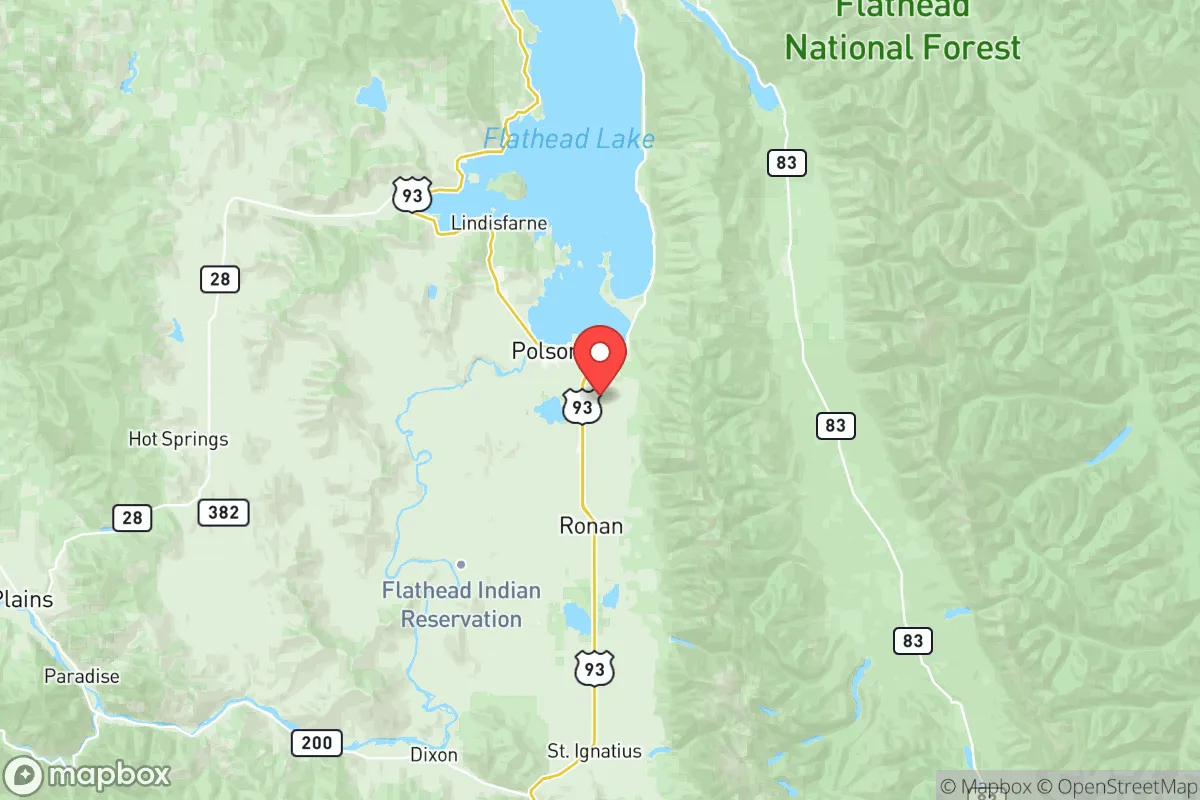
Lake County, Montana, is home to roughly 32,000 people, making it one of the more sparsely populated counties in the state, yet its human story is dense with layered migrations. The county’s defining characteristic is its significant Native American population—the Confederated Salish and Kootenai Tribes of the Flathead Reservation—which gives the area a unique cultural and political identity distinct from much of the rest of Montana. Today, the population is predominantly white (64.5%) but with a substantial Native American presence (over 25%), a very small foreign-born share (1.1%), and a modest Hispanic community (4.2%). The county is a place where the legacy of treaty lands, Catholic mission settlements, and 20th-century homesteading all converge, creating a community that is simultaneously rural, reservation-based, and increasingly tied to outdoor recreation and second-home development.
Settlement & growth (pre-1960)
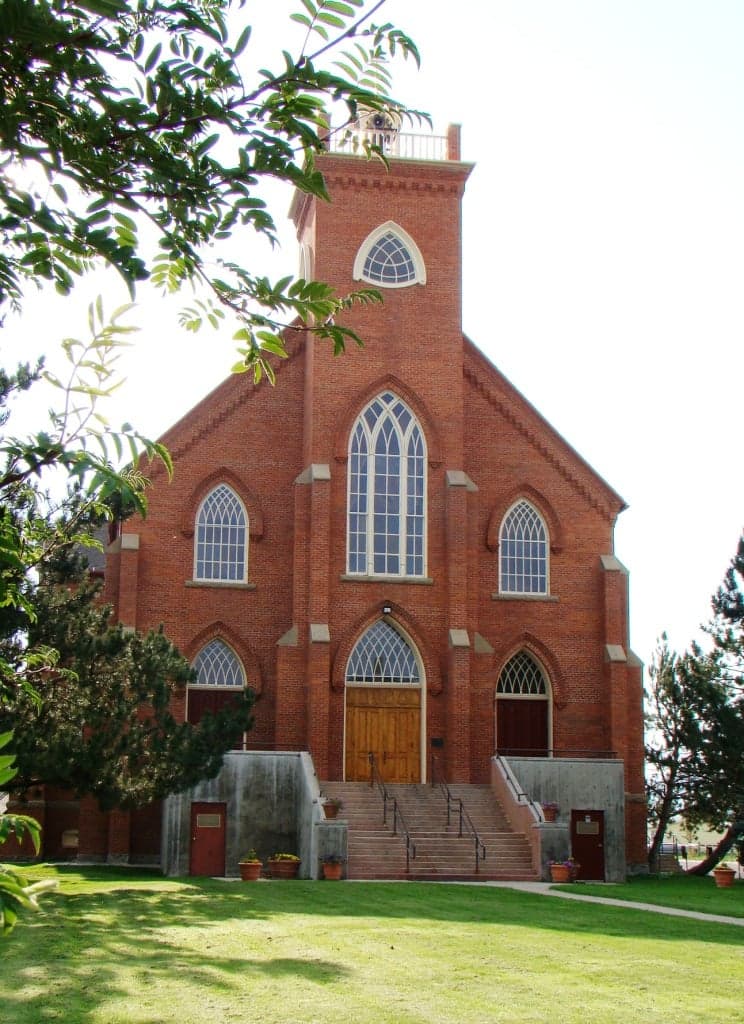
Long before any European or American settlement, the area now known as Lake County was the ancestral homeland of the Salish, Kootenai, and Pend d’Oreille peoples. These tribes lived in seasonal villages along the Flathead River and around the shores of Flathead Lake, relying on fishing, hunting, and gathering bitterroot and camas. The first sustained non-Native presence came with Catholic missionaries. In 1854, Jesuit priest Father Pierre-Jean De Smet established St. Ignatius Mission in the southern part of the county, near present-day St. Ignatius. This mission became a central hub for the Salish and Kootenai, who were pressured to adopt farming and Christianity. The mission’s iconic brick church, built in 1891, still stands as a landmark of this early period.
The defining event for the region’s modern settlement was the creation of the Flathead Indian Reservation under the 1855 Hellgate Treaty. The treaty reserved a large swath of western Montana for the tribes, but subsequent federal policies—especially the Dawes Act of 1887 and the 1904 Flathead Allotment Act—opened up much of the reservation land to non-Native homesteaders. Starting around 1910, the U.S. government began selling “surplus” reservation lands to white settlers. This drew a wave of homesteaders, many of them of Northern European stock—Germans, Norwegians, Swedes, and Scots-Irish—who arrived to take up 160-acre parcels. They established small farming communities like Ronan, Polson, and Charlo, which grew as agricultural service centers for wheat, hay, and cattle operations. The town of Polson, located on the southern shore of Flathead Lake, became the county seat and a commercial hub, especially after the Kerr Dam was completed in 1938, providing irrigation and hydroelectric power.
By the 1920s and 1930s, the county’s population was a mix of tribal members living on allotted lands and white homesteaders farming adjacent plots. The Great Depression hit hard, but the construction of the Mission Dam (now Kerr Dam) and the expansion of the railroad through Ravalli and Arlee (the latter just north of the county line) provided some economic stability. The post-World War II period saw little new immigration; the county remained rural and agricultural, with a stable population of around 13,000 through the 1950s. The Native American population, while present, was largely marginalized economically and politically until the tribal sovereignty movements of the 1970s.
Modern era (post-1965)
The 1965 Hart-Cellar Act had minimal direct impact on Lake County, as the foreign-born population remains very low at just 1.1%. Instead, the major demographic shifts since the 1970s have been driven by domestic migration and a resurgence of tribal identity. The most significant change has been the return of tribal members to the reservation, spurred by the Indian Self-Determination and Education Assistance Act of 1975, which gave tribes greater control over their own governance and services. The Confederated Salish and Kootenai Tribes (CSKT) now operate their own schools, health clinics, and the KwaTaqNuk Resort & Casino in Polson, which has become a major employer. This has reversed a long trend of out-migration, with younger Native families moving back to the reservation to work in tribal government, natural resource management, and cultural preservation.
Simultaneously, Lake County has seen a steady influx of amenity migrants—retirees, remote workers, and second-home buyers—drawn by the scenery of Flathead Lake and the Mission Mountains. This wave began in earnest in the 1990s and accelerated after 2020. These newcomers are predominantly white, often from California, Washington, and the Mountain West, and they tend to settle in lakeside communities like Big Arm, Elmo, and the Finley Point area. This has driven up housing prices and created tension with longtime residents, both Native and non-Native, who face a tight housing market. The Hispanic population, while small at 4.2%, has grown modestly, largely through agricultural labor in the cherry orchards around Flathead Lake and in the hay fields near Ronan. Many of these families are of Mexican descent and have settled in the Polson and Ronan areas, though they remain a small minority.
The county’s racial composition has shifted only slightly. The white share has declined from over 80% in 1990 to 64.5% today, primarily because the Native American population has grown through higher birth rates and return migration, not because of significant non-white immigration. The Black population (0.2%) and East/Southeast Asian population (0.4%) remain negligible, and the Indian-subcontinent population (0.1%) is essentially nonexistent. The county remains one of the least diverse in Montana by most measures, but its Native-white dynamic makes it culturally distinct.
The future
Lake County’s population is projected to grow slowly, perhaps reaching 35,000 by 2040, driven almost entirely by domestic in-migration of retirees and remote workers. The Native American share is likely to remain stable or increase slightly, as tribal members continue to return and birth rates among the CSKT remain above the national average. The white population will continue to age, with many of the 1970s-era homesteaders’ grandchildren moving away for jobs, while new arrivals fill the gap. The Hispanic population may grow slowly as agricultural labor needs persist, but it is unlikely to become a major share without a significant shift in local industry.
The most contentious issue will be housing. The influx of wealthier newcomers is already pushing up property taxes and home prices, making it harder for Native families and working-class whites to stay in the county. The CSKT have begun developing tribal housing projects in Pablo and St. Ignatius to address this, but the supply is limited. Politically, the county leans conservative but with a strong libertarian streak, and the tribal government adds a layer of complexity—the reservation is a sovereign nation, and disputes over water rights, land use, and taxation are ongoing. The cultural identity of the county is likely to remain a blend of rural white Montana and Salish-Kootenai heritage, with the latter becoming more visible in public life through place names, cultural centers, and tribal governance.
For someone moving in now, Lake County offers a low-density, nature-oriented lifestyle with a strong sense of place, but it is not a place of rapid demographic change or ethnic diversity. The community is defined by its dual identity—reservation and rural homestead—and newcomers should expect to navigate that reality. The county is becoming more expensive and more connected to the wider Mountain West economy, but it remains a place where the past is very much present, from the mission church in St. Ignatius to the tribal council chambers in Pablo.

* Values derived from national, state, county, city and local statistics and may differ in a specific area. Last updated: 2026-07-25T20:18:41.000Z
Narrative content on this page is AI-generated and may contain mistakes. Verify any details that matter before acting on them.
ReloMaps may earn a commission from affiliate links at no extra cost to you.

