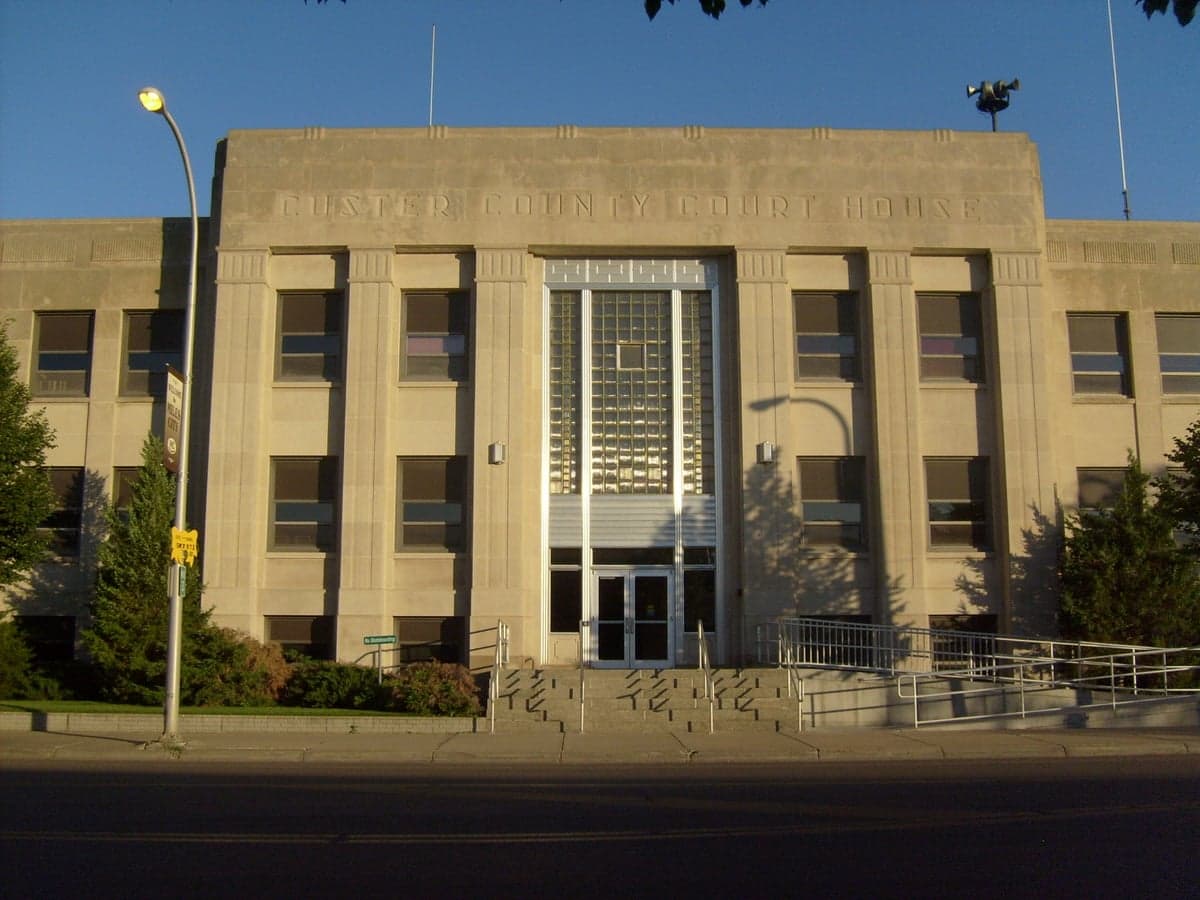
Photo: Wikipedia
Political ClimatePolitical Climate in Custer County
Showing district-level results — no local-only data available.
Local Political AnalysisPolitical Analysis of Custer County
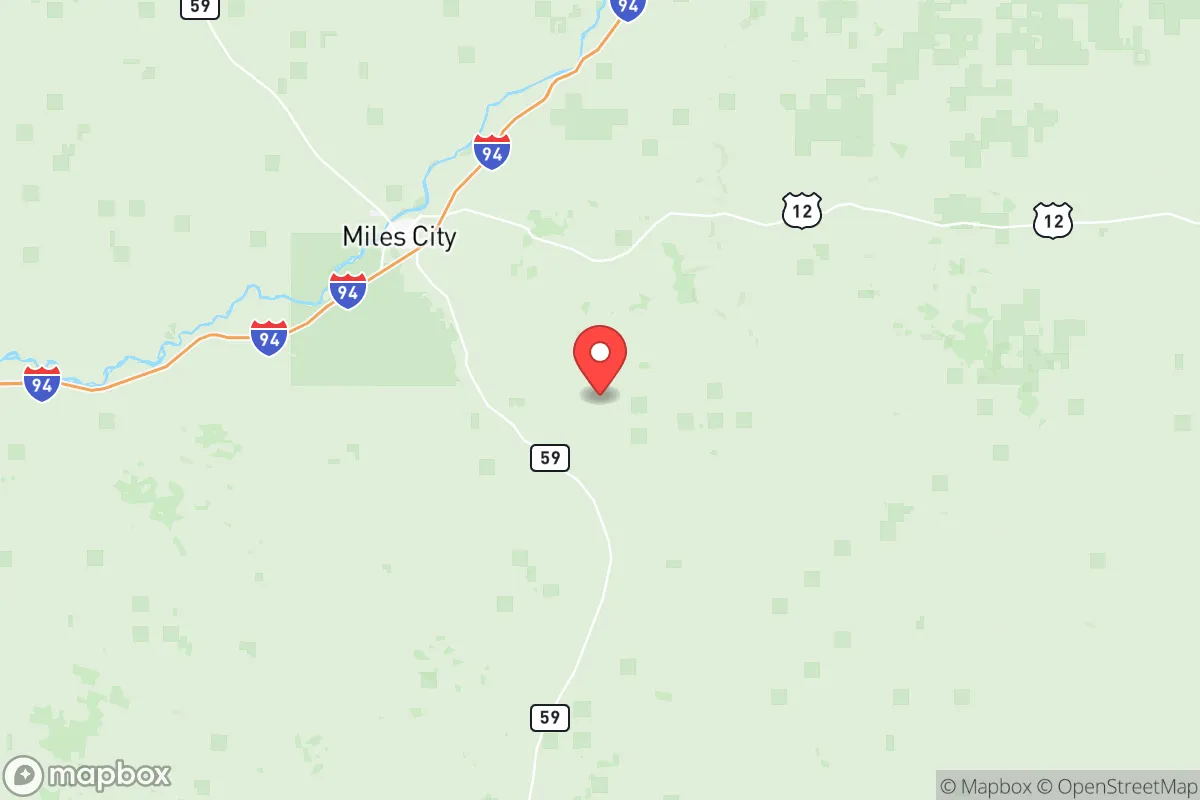
Custer County, Montana, is about as reliably conservative as they come, with a Cook PVI of R+15 that puts it a solid five points to the right of the state as a whole. That isn't just a number on a map—it reflects a deep-rooted, live-and-let-live attitude that's been the backbone of this area for generations. The county seat, Miles City, is the political anchor, and it votes overwhelmingly red, but you'll find the real conservative strongholds in the smaller towns like Ismay and Volborg, where folks still remember when the county was even more lopsided. The trajectory here is steady: if anything, the shift has been a slow, stubborn hardening against the progressive tide washing over places like Bozeman or Missoula.
How it compares
Compared to Montana's statewide R+10, Custer County is noticeably more resistant to the kind of purple-tinged moderation you see in fast-growing areas. The state has seen some suburban drift toward the center, especially around Billings or Kalispell, but Custer County hasn't budged. In Miles City, the precincts around the fairgrounds and the older neighborhoods near Main Street are reliably red, while the rural precincts out toward Kinsey and the Powder River country are even deeper red—think 80-20 splits in some years. There's a tiny pocket near the college that might lean a bit more independent, but it's not a swing precinct; it's just a handful of folks who vote third-party or stay home. The real contrast is with the state's left-leaning islands: you won't find a single precinct in Custer County that votes like Missoula or Bozeman. That's a comfort to those of us who worry about government overreach—here, the local commissioners and school boards still answer to the people, not to some distant party line.
What this means for residents
For someone living here, the political climate means your personal freedoms—whether it's how you raise your kids, what you do on your land, or how you run your business—aren't constantly under the microscope. The county's conservative majority keeps state-level progressive overreach at arm's length, especially on issues like property rights, gun laws, and local control of schools. You don't see the kind of zoning fights or mask mandates that plague other parts of Montana. The downside? It can feel insular, and if you're not part of the old guard, it takes time to earn trust. But for those of us who've been here a while, that's a feature, not a bug. The near-term outlook is stable—Custer County isn't growing fast enough to attract the kind of transplants who'd flip a precinct blue. Long-term, the worry is that state-level policies from Helena could start chipping away at local autonomy, but for now, the county's political DNA is holding strong.
Culturally, Custer County stands apart from Montana's urban centers in a way that's hard to miss. There's no pretense here—folks are direct, and they expect their government to stay out of the way. The policy distinctions are clear: lower taxes, fewer regulations, and a school system that still teaches civics without the woke jargon. The annual Bucking Horse Sale in Miles City isn't just a rodeo; it's a statement of identity. If you're looking for a place where the government respects your right to live your own life, this is it. Just don't expect the county to change its stripes anytime soon—and that's exactly how most of us want it.

State Political ClimatePolitical Climate in Montana
State Political AnalysisPolitical Environment in the State
Montana is a solidly Republican state with a Cook PVI of R+10, but don’t let that single number fool you into thinking it’s a monolith. Over the last 20 years, the state has shifted from a reliably red, libertarian-leaning frontier to a more polarized battleground between a growing progressive urban corridor and a deeply conservative rural expanse. The dominant coalition is still conservative, but the internal tensions are real—and they’re reshaping everything from property taxes to school boards.
Urban vs. rural divide
The political map of Montana is a study in contrasts. The western third, anchored by Missoula and Bozeman, has become the state’s progressive engine. Missoula County voted for Joe Biden by 20 points in 2020, and Gallatin County (Bozeman) flipped from red to blue in the same election—a seismic shift driven by an influx of out-of-state tech workers and remote professionals. Meanwhile, Helena and Butte lean left but are more moderate, while Billings, the largest city, remains a conservative stronghold in Yellowstone County. The eastern two-thirds of the state—places like Glendive, Miles City, and Havre—vote Republican by margins of 40 to 60 points. The divide isn’t just about population density; it’s about culture. In the rural counties, the dominant ethos is self-reliance, gun ownership, and resistance to federal land management. In the urban islands, it’s increasingly about climate action, diversity initiatives, and government-funded services. This urban-rural split is the single most important political fact about Montana today.
Policy environment
Montana’s policy environment is a mixed bag for a conservative. On the plus side, there is no state sales tax, and the income tax was flattened to a single rate of 5.9% under the 2021 tax reform (HB 303). Property taxes are moderate but rising fast, especially in high-growth counties like Gallatin and Missoula. The regulatory posture is generally light—no state-level occupational licensing for many trades, and a right-to-work law is on the books. Education policy is a flashpoint: the state has a robust school choice movement, with a new Education Savings Account program (HB 393, 2023) that lets parents use public funds for private or homeschool expenses. However, the state’s public schools are heavily unionized, and curriculum battles over critical race theory and gender ideology have erupted in districts like Bozeman and Missoula. Election laws are solid: voter ID is required, and the 2021 legislative session passed a ban on ballot harvesting and tightened absentee voting rules. Healthcare is a mixed bag—Montana expanded Medicaid under the ACA, which many conservatives oppose, but the state also has a strong network of rural hospitals and a growing direct-primary-care movement.
Trajectory & freedom
On the freedom front, Montana is a tale of two trajectories. On one hand, the state has been a national leader in gun rights—constitutional carry has been law since 2021 (SB 116), and there are no state-level restrictions on magazine capacity or firearm types. The 2023 session also passed a law (HB 372) prohibiting enforcement of federal gun laws that don’t exist in state statute—a direct challenge to federal overreach. On parental rights, the 2023 session passed a Parents’ Bill of Rights (HB 361), requiring schools to notify parents before discussing gender identity or sexual orientation with minors. On the other hand, the state has seen a troubling expansion of government power in the name of public health. During COVID, Governor Greg Gianforte (R) imposed a statewide mask mandate in 2020, and the state’s health department has aggressively pursued vaccine mandates for healthcare workers. More recently, the 2023 session saw a push for a data privacy law (HB 813) that, while well-intentioned, creates new regulatory burdens on small businesses. The biggest threat to freedom in Montana right now is the property tax crisis: valuations have skyrocketed 40-60% in some counties since 2020, and the state legislature has been slow to cap increases, leaving homeowners feeling squeezed by government.
Civil unrest & political movements
Montana is not a hotbed of street protests, but there are visible flashpoints. The most organized activist movement on the right is the Montana Freedom Caucus, a group of state legislators who have pushed for nullification of federal gun laws, school choice expansion, and a crackdown on “sanctuary cities” (though none exist in Montana). On the left, the Montana Environmental Information Center and local climate groups have staged protests against new fossil fuel projects, particularly the proposed Keystone XL pipeline (now dead) and coal mining in the Powder River Basin. Immigration politics are relatively quiet—Montana has a small foreign-born population (about 2%), but there have been localized tensions in agricultural areas like Hardin and Billings over H-2A visa workers. Election integrity remains a live issue: after the 2020 election, a Republican-led audit of the 2020 results in Flathead County found no fraud, but the distrust lingers among some grassroots activists. The most visible flashpoint for a new resident would be the school board meetings in Bozeman and Missoula, where debates over library books, transgender policies, and mask mandates have drawn large, heated crowds.
Projection
Over the next 5-10 years, Montana’s political trajectory is likely to become more polarized, not less. The in-migration wave—mostly from California, Washington, and Colorado—is disproportionately young, educated, and left-leaning. These newcomers are clustering in Bozeman, Missoula, and increasingly in Kalispell and Whitefish, which are seeing their own progressive influx. This will continue to flip suburban and exurban precincts blue, while the rural counties hold firm red. The state legislature will likely remain Republican-controlled, but the margin will narrow, and the internal GOP split between the Freedom Caucus and the more establishment “Gianforte wing” will intensify. The biggest wildcard is property taxes: if the legislature fails to enact meaningful relief, expect a populist backlash that could empower third-party or independent candidates. For a conservative moving in now, expect to find a state where your vote still counts heavily in rural areas, but where the cultural and political center of gravity is slowly shifting west. The Montana of 2035 will be more like Colorado in 2015—still red-leaning, but with a strong, vocal blue minority that controls the cities and the media narrative.
Bottom line for a new resident: If you’re a conservative looking for a state where your values are still the majority, Montana is a solid bet—but don’t expect it to stay that way forever. The urban islands are already lost to progressive control, and the rural strongholds are holding the line. Your best bet for a like-minded community is to look at the smaller towns east of the Rockies—places like Lewistown, Colstrip, or Baker—where the culture is still rooted in hunting, church, and self-reliance. Avoid Bozeman and Missoula unless you’re ready for a constant cultural fight. And keep an eye on the property tax situation—it’s the issue that could break the conservative coalition if left unaddressed.
* Values derived from national, state, county, city and local statistics and may differ in a specific area. Last updated: 2026-06-02T14:49:56.000Z
Narrative content on this page is AI-generated and may contain mistakes. Verify any details that matter before acting on them.
ReloMaps may earn a commission from affiliate links at no extra cost to you.

